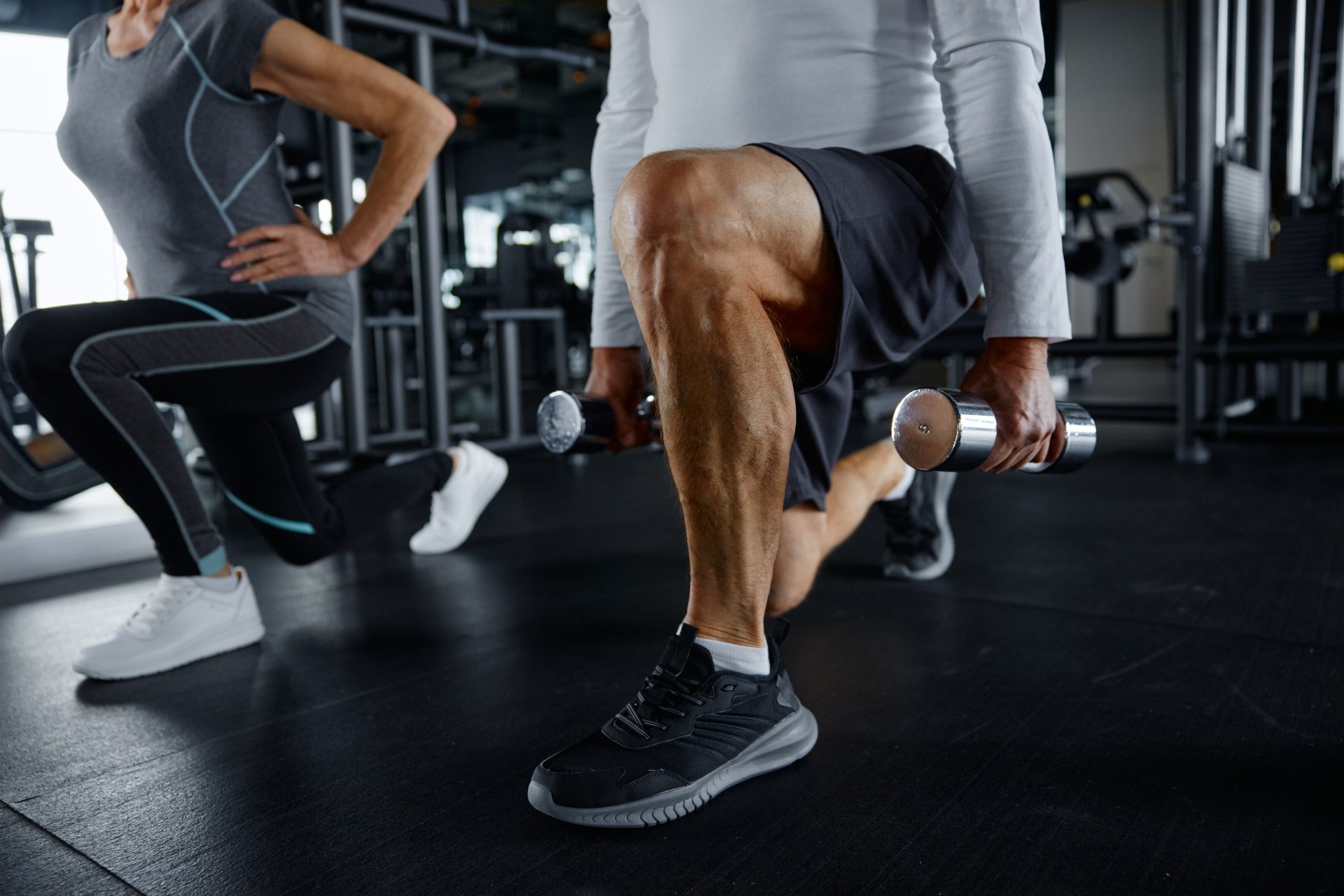
Vertical jump workouts are not general leg training. They are specifically programmed to develop fast-twitch muscle fibres, reactive strength, and triple extension — the simultaneous explosive movement of the ankle, knee, and hip. General squats and lunges build slow-strength endurance. Vertical jump training goes further by training the speed of force production, not just its magnitude. Two athletes with equal leg strength can have very different vertical jump heights depending on how fast their muscles can recruit and fire. The mechanism works through three interconnected adaptations. Plyometric loading (depth jumps, box jumps) trains the stretch-shortening cycle — the ability to store elastic energy on landing and release it instantly on take-off. Concentric strength work (heavy squats, trap bar deadlifts) builds the raw force base. Ankle and calf stiffness drills improve ground contact efficiency so that more of your strength becomes upward momentum rather than wasted sideways movement. Together, these three mechanisms create a jump that is both higher and more consistent.
Benefit 1 — Greater Athletic Output Across Every Sport The most direct benefit of a vertical jump workout is measurable improvement in explosive athletic performance. A higher vertical correlates directly with faster sprint acceleration, more powerful court movements, and quicker directional changes. Every lower body muscle — glutes, quads, hamstrings, calves — is trained to fire at peak speed simultaneously. Stat: Research published in the Journal of Strength and Conditioning Research found that an 8-week plyometric programme produced average vertical jump improvements of 4–6 cm in recreational athletes. Benefit 2 — Relief from the Feeling of Heavy, Sluggish Legs Most people who want to jump higher also report feeling slow, stiff, or sluggish during movement. Vertical jump training directly supports management of this. Exercises like jump squats, single-leg bounds, and ankle hops increase neuromuscular activation — your nervous system learns to recruit more muscle fibres per movement, making everyday movement feel lighter and quicker, not just your jump height. Benefit 3 — Long-Term Lower Body Strength and Joint Resilience Consistent vertical jump training builds tendon stiffness and knee joint stability over months of progressive loading. This reduces the risk of strains in the knees and ankles — the joints most commonly affected in court sports and high-impact activities. Stat: The WHO recommends at least 150 minutes of moderate-to-vigorous muscle-strengthening activity per week — a structured vertical jump programme comfortably meets this threshold while supporting joint resilience over time. Benefit 4 — Improved Coordination, Balance, and Body Awareness Jumping and landing correctly demands proprioceptive control — your body’s sense of its position in space. Training this ability cascades into better balance during everyday movement, reduced fall risk, and improved coordination that transfers across every physical activity you do.
What you eat directly determines how fast you recover, how much you progress, and how consistently you can train. Here is what your nutrition plan should look like to support your vertical jump training effectively. Protein — Preventing Muscle Loss During Cardio Cardio training breaks down muscle over time if protein intake is insufficient — aim for 1.4–1.8 g/kg/day. Prioritise fast-digesting sources like eggs or whey post-session, and slower sources like dal and paneer at other meals. Chicken, tofu, and low-fat curd are convenient everyday options. Calcium and Vitamin D — Joint and Bone Health Strong bones provide the structural foundation for all movement — include calcium-rich foods like milk, curd, paneer, ragi, and sesame seeds (til) daily. Vitamin D is essential for calcium absorption; aim for 15–20 minutes of morning sunlight alongside dietary sources like eggs and fatty fish. Deficiency in either nutrient accelerates joint wear over time. Anti-Inflammatory Foods — Faster Recovery Recovery speed is directly influenced by your body’s inflammatory status. Turmeric with black pepper (curcumin + piperine), fresh ginger, and omega-3 fatty acids from flaxseeds, walnuts, and fatty fish all actively reduce exercise-induced inflammation. Include these consistently rather than only on hard training days. Hydration — Performance and Joint Lubrication Cardio sessions drive significant fluid and electrolyte loss through sweat. Target 3–3.5 L of water daily, with at least 500 ml consumed before your morning session. On days exceeding 45 minutes of continuous cardio, consider adding a small pinch of rock salt and lemon to water to replace lost sodium and potassium. Magnesium — Muscle Function and Sleep Quality Magnesium governs over 300 enzymatic reactions including muscle contraction and relaxation — making it essential for any movement-based training. Include pumpkin seeds, bananas, dark chocolate (70%+), spinach, and whole grains in your daily diet. Many Indians are mildly deficient; if you experience frequent muscle cramps or poor sleep quality, a magnesium glycinate supplement may help.
Starting a new training programme is often the hardest part. Here is a clear, week-by-week plan to begin your vertical jump training without injury or overwhelm. Before You Begin — Setting Your Baseline Assess your current baseline with a simple test: walk briskly for 10 minutes and note your heart rate and breathlessness level. If you can hold a conversation throughout, your starting fitness is reasonable; if not, begin at a very gentle pace. Set a concrete goal — completing a 30-minute continuous session at moderate intensity — as your 8-week target. Week 1–2: Foundation Begin with 15–20 minute sessions at low-to-moderate intensity where you can still hold a full conversation. Focus on establishing a rhythm and learning to breathe through your nose during the easier portions. Do not worry about speed or distance in this phase — showing up consistently matters most. Week 3–4: Building Consistency Increase session duration by 5 minutes every week once you can complete your current duration without excessive fatigue. Commit to exercising at the same time each morning; your cardiovascular system responds strongly to consistent circadian-timed training. You should begin to notice better energy levels and lower resting heart rate around week 3. Week 5–8: Progression By weeks 5–8, you are ready to introduce interval-style work: 30 seconds at higher intensity followed by 60–90 seconds of easy pace. Most people see their first significant endurance milestone — completing a full session without stopping — somewhere between weeks 4 and 6. Track your progress by how you feel at the same intensity, not just by time or distance. With cardio training, showing up every morning consistently matters infinitely more than occasional high-intensity efforts.
Exercise 1 — Box Jump — Glutes, Quads, Calves — 4 × 6 reps What it does: Box jumps train the full triple extension pattern — ankle, knee, and hip all extending explosively at once. The controlled landing phase also builds the eccentric strength needed to absorb force safely. This is the single most effective plyometric drill for direct vertical jump carry-over. Dosage: 4 sets × 6 reps, 3–4 times per week. Rest fully between sets (90–120 seconds) — power output drops sharply when jumps are performed fatigued. Beginner modification: Start with a low box (15–20 cm). Focus on a soft, controlled two-foot landing before progressing height. Step down rather than jumping down until landing mechanics are solid. Exercise 2 — Depth Jump — Hamstrings, Quads, Achilles Tendon — 3 × 5 reps What it does: Step off a box, land briefly, and immediately explode upward. This trains the stretch-shortening cycle at its highest intensity — the rapid transition from landing to take-off is exactly what separates a good jumper from a great one. A dedicated hamstring workout underpins the pulling strength that makes this explosive transition possible. Dosage: 3 sets × 5 reps. Use only 2–3 times per week maximum — depth jumps are high-stress on the central nervous system and tendons. Beginner modification: Replace with a simple squat jump until landing mechanics are consistent. Progress to depth jumps only after 4–6 weeks of foundational plyometric work. Exercise 3 — Heavy Goblet Squat — Quads, Glutes, Core — 4 × 8 reps What it does: Raw strength is the foundation under all plyometric work. Without sufficient concentric leg strength, the nervous system has nothing to express explosively. The goblet squat builds deep quad and glute strength while keeping the spine safe — it is a cornerstone of any serious leg workouts programme for jump athletes. Dosage: 4 sets × 8 reps, 3 times per week. Load progressively — add 2–4 kg per session when form is solid. Beginner modification: Use bodyweight or a very light dumbbell. Sit into a wall squat first to learn depth and knee tracking before adding load.
Mistake 1 — Training at High Volume While Fatigued — Correction: Prioritise Quality Over Quantity What it is: Performing 5–6 sets of box jumps back-to-back without adequate rest. When your nervous system is fatigued, explosive output drops significantly — you are essentially training slow-twitch endurance, not the fast-twitch power that improves your vertical. You build the habit of jumping weakly. What to do instead: Treat each jump set like a sprint — rest 90–120 seconds between sets. Cap plyometric volume at 40–60 total foot contacts per session until you have a solid base of at least 6 weeks. Mistake 2 — Skipping Calf and Ankle Stiffness Work — Correction: Add Ankle Hops and Calf Raises Weekly What it is: Most people focus entirely on quad and glute strength and neglect the ankle complex. The calves and Achilles tendon function like a spring — they store and return elastic energy during every jump. Weak ankle stiffness means energy leaks at ground contact. A consistent calf strength workout routine is non-negotiable for jump improvement. What to do instead: Include 3 × 20 single-leg calf raises and 2 × 30 seconds of fast ankle hops in every lower body session. These take under 5 minutes and have an outsized return on jump performance. Mistake 3 — Neglecting the Eccentric Landing Phase — Correction: Train Controlled Landings Deliberately What it is: Jumpers who land with stiff, locked knees or collapse into a deep squat on every landing are either risking injury or leaking reactive strength. A poor landing position means the next jump starts from a mechanically disadvantaged position — height suffers and injury risk rises. What to do instead: Land each jump in an athletic quarter-squat position — soft knees, hips back slightly, weight distributed across the whole foot. Pause, reset, then jump again. Never rush the landing.
Vertical Jump training is not a one-size-fits-all programme — but it is far more broadly accessible than most people assume. Here is who benefits most. Complete Beginners Starting from Zero You do not need any prior fitness experience to begin vertical jump exercises. Every movement in a well-structured programme comes with easier modifications — for example, performing the exercise seated, with a reduced range of motion, or using a wall or chair for support. The only requirement is willingness to show up consistently; the strength and technique will follow. People With Low Cardiovascular Fitness or High Resting Heart Rate This training is especially valuable for people managing Low Cardiovascular Fitness or High Resting Heart Rate. Vertical Jump exercises specifically target the muscular imbalances and movement patterns that drive these conditions. Always begin at a reduced intensity and range, and increase gradually as your body adapts. Office Workers and Sedentary Adults Sedentary desk-based work dramatically reduces daily energy expenditure and cardiovascular fitness. A structured morning cardio routine provides the cardiovascular stimulus that the workday eliminates, improving energy, mood, and metabolic health. Studies consistently show that morning exercisers maintain better adherence than those who train in the evening. Active Adults and Athletes Experienced gym-goers and recreational athletes use vertical jump training to address specific movement gaps and build functional capacity. This style of training bridges the gap between general fitness and sport-specific performance, reducing injury risk in the process. It works well as a primary programme or as targeted supplementary work alongside your existing routine. Seniors Maintaining Functional Independence Cardiovascular fitness declines with age but responds strongly to consistent training at any age. Low-to-moderate intensity vertical jump sessions maintain heart health, improve circulation, and sustain the energy levels needed for an active daily life. The key for seniors is maintaining consistency over years, not pushing intensity — steady daily movement produces compounding benefits.
Vertical Jump–Specific Programming — Not a Generic Fitness Class Every exercise selection in Habuild’s strength training sessions is sequenced for a reason. Sessions open with activation and ankle stiffness drills that prime the neuromuscular system before heavy loading — ensuring fast-twitch fibres are firing before your first squat or jump. Sessions close with targeted hip flexor and hamstring mobility work to offset the tightening effect of explosive training. This sequencing reflects how jump athletes should structure their training for maximum adaptation with minimum recovery cost. Live Daily Sessions with Real-Time Form Correction The most common vertical jump training errors — landing with straight knees, leaning forward on take-off, under-loading the hip hinge — are invisible to the person making them. Habuild’s live daily format means your instructor sees your movement in real time and corrects it before the pattern becomes ingrained. This is fundamentally different from following a pre-recorded video where no one sees your jump mechanics. Progressive Overload Built into Every Session Members do not need to self-programme. Jump volume, landing intensity, load, and movement complexity are systematically increased week by week inside the Habuild programme. Beginners start with controlled squat jumps and progress to depth jumps and loaded plyometrics as their joint resilience and strength base develop. The progression is built in — you simply show up. Accountability, Streaks and Community Vertical jump improvement requires 8–12 weeks of consistent training before measurable gains appear. The Habuild streak system, daily WhatsApp check-ins, and a community of 50,000+ active members create the accountability structure that keeps you consistent through the weeks when results are not yet visible. Members who reach a 60-day streak almost universally report that the structure — not motivation — is what made the difference.
Due to knee pain and joint problems, I couldn't stand for even an hour or fold my legs. I couldn't continue yoga anywhere else. With Habuild's at-home sessions, those problems are completely resolved — I can now stand for 2–3 hours, sit in Padmasana, and even run. My blood circulation improved dramatically and my pulse rate, which was irregular, normalised too. When my husband had a spinal injury and was on a wheelchair, surgery was recommended — but consistent yoga helped him recover fully without going under the knife. I can't express in words what Habuild has done for me.

I am a lawyer, 50 years of age, with 390+ yoga days. Habuild takes care of my flexibility and meditation every single day. I tried to attend as many community sessions as possible. The reflexology session was wonderful. I've become more consistent in everything — yoga taught me that showing up daily is the most powerful thing you can do.


Practice Strong Everyday with Trishala Bothra, an IIT-B and London School of Business alumni
Trishala is focused on making movement feel lighter, more engaging, and something you actually look forward to.
In just 3 years, over 50,000 people began their strength journey, and 10,000+ join every week to keep getting stronger.