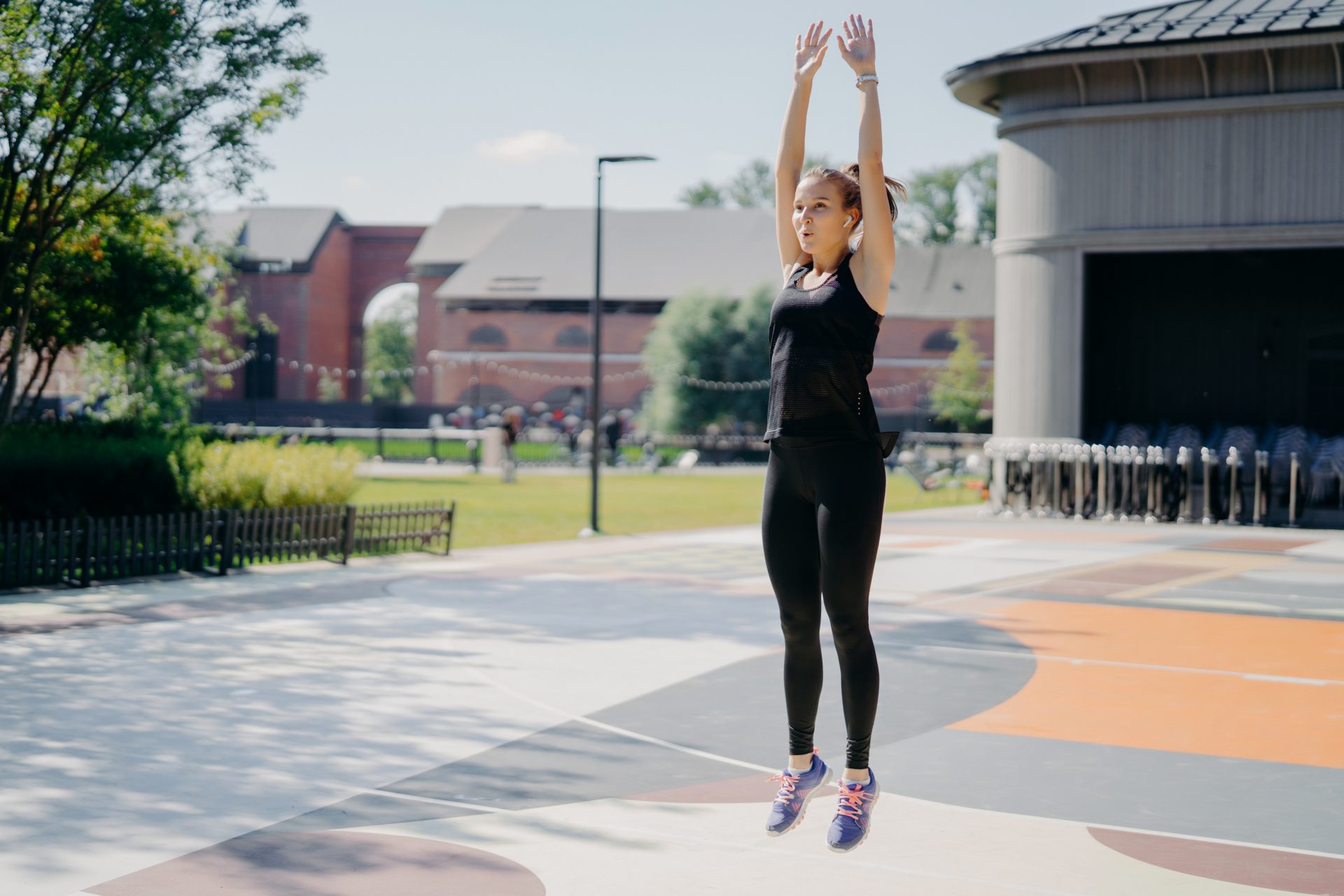
What are tuck jumps: a plyometric bodyweight exercise performed by squatting down to a quarter-depth, then jumping explosively straight up while simultaneously pulling both knees up toward the chest at the peak of the jump (the “tuck” position), and finally landing softly with knees bent to absorb impact before immediately repeating. The combined explosive jump + knee-tuck creates one of the most demanding bodyweight movements in any home routine — training the entire lower body (quads, glutes, hamstrings, calves) plus the hip flexors (which pull the knees up) plus the core (which stabilises the trunk during the airborne tuck) plus the cardiovascular system (heart rate climbs into the cardio zone within 15 seconds). What muscles do tuck jumps work: literally every muscle from the calves to the abdominals fires during a single rep, which is why tuck jumps appear in athletic training programmes ranging from sprint preparation to mixed martial arts conditioning.
The mechanism is what makes tuck jumps both highly effective AND high-risk. The explosive jump trains the stretch-shortening cycle — the rapid eccentric (loading) to concentric (pushing) transition that produces athletic power. This is the same physiological mechanism that produces faster sprint times, higher vertical leaps and stronger cuts in sports. The trade-off: the eccentric impact during landing places significant stress on the knees, ankles, hips and lumbar spine. Done with proper landing mechanics on a cushioned surface, tuck jumps are powerful tools for athletic development. Done with bad form on hard surfaces, they’re a fast track to chronic knee pain or ankle injuries. How to do tuck jumps correctly is therefore the most important question searchers should be asking — and it’s covered extensively in this guide. For broader integrated lower-body programming that builds the foundational strength tuck jumps require, the programme covers them as part of a complete progression toolkit.
Builds Explosive Power and Athletic Performance
Tuck jumps benefits include trained explosive power — the same physiological adaptation that produces faster sprints, higher vertical leaps, and stronger lateral cuts in sports. Stat: research on plyometric training and athletic performance (e.g., Markovic 2007 meta-analysis on jump training) shows meaningful vertical jump and sprint-time improvements when plyometrics are added to existing programmes over 8–12 week protocols.
Burns 12–15 Calories Per Minute (Highest Among Bodyweight Exercises)
Tuck jumps are among the highest-calorie-burn bodyweight exercises that exist — typical burn is 12–15 calories per minute at sustainable pace. A 5-minute tuck jump finisher at the end of a workout adds ~70 calories of additional burn while elevating heart rate into the cardio training zone for the rest of the session. The metabolic afterburn (EPOC effect) extends 2–4 hours post-workout.
Trains Full Lower-Body Strength + Hip Flexor Power
The explosive jump trains quads, glutes, hamstrings and calves through their full range. The knee-tuck at peak height trains the deep hip flexors (psoas, iliacus) eccentrically. The combined demand makes tuck jumps one of the few single-exercise movements that hit the entire lower-body kinetic chain plus the often-neglected hip flexors. EMG research on plyometric and explosive lower-body movements (sport-science literature on jump biomechanics) shows tuck jumps produce high glute and quadriceps activation, particularly during the propulsive phase of the jump.
Improves Cardio Fitness Fast (HIIT-Compatible)
Few movements push heart rate into the 85–95% maximum zone as fast as tuck jumps. 20-second tuck jump intervals followed by 40-second rest produces the kind of cardiovascular adaptation associated with elite HIIT protocols. Stat: research on HIIT and aerobic capacity (Milanović et al, 2015 meta-analysis on HIIT vs continuous training) shows meaningful VO2 max improvements with consistent HIIT practice over 8–12 week protocols. Particularly valuable for time-pressed adults who want maximum cardio benefit per minute of training.
Exercise 1: Tuck Jumps for Beginners (Squat Jump Without Tuck) — Plyometric Entry — 3 sets × 8 reps
Stand with feet hip-width apart. Squat down to a quarter-depth, then jump straight up explosively without tucking the knees (legs extend straight in the air). Land softly with bent knees, immediately squat down for the next rep. 3 sets × 8 reps. The tuck jumps for beginners progression — builds the foundational explosive power and landing mechanics before adding the more demanding knee-tuck. Modification: reduce jump height initially; build to higher jumps over 2–3 weeks; if even squat jumps feel demanding, start with regular bodyweight squats for 4 weeks first.
Exercise 2: Standard Tuck Jumps — Full Plyometric Power — 3 sets × 6 reps
Stand feet hip-width apart, arms by sides. Quarter-squat, then explosively jump straight up while simultaneously pulling both knees up toward the chest (knees should reach roughly hip-height or higher at peak). Hands can briefly tap the knees at peak. Land softly with bent knees, absorbing impact through the legs. 3 sets × 6 reps with 60-second rest between sets. The full how to do tuck jumps standard variation. Modification: reduce knee-tuck height initially — knees only need to reach mid-thigh range, not full chest height; reduce reps to 5 if landing form deteriorates.
Exercise 3: Slow-Tempo Tuck Jumps (Recovery Variation) — Plyometric With Reset — 3 sets × 5 reps
Standard tuck jump movement, but with a deliberate full reset between each rep — land softly, hold the squat position for 2 seconds (recovery and form check), then explode up for the next rep. 3 sets × 5 reps. The slow-tempo variation reduces cardio demand while preserving the strength and power benefit, making it ideal for those building plyometric capacity, returning from injury, or rehearsing form. Modification: hold the reset position for 3 seconds initially; reduce knee-tuck height as needed.
Mistake 1: Landing With Locked Knees and Stiff Legs — Correction: Land Soft, Bend Knees to Absorb Impact
The single most dangerous tuck jumps error: landing with stiff, locked knees and slamming the heels into the floor. The impact transfers directly through the joints, causing knee, ankle and lower-back stress. This is the primary mechanism of tuck-jump-related injuries. What to do instead: land with a soft knee bend (knees flex on contact), absorb the impact through the leg musculature rather than the joints, land on the balls of the feet or mid-foot rather than the heels. Imagine landing as if you’re sneaking up on someone — silent and absorbed. If your landing makes a loud thud, you’re landing too hard.
Mistake 2: Going Too Fast Without Form Reset — Correction: Pause Briefly Between Reps
Speed-doing tuck jumps by jumping immediately into the next rep without resetting the squat position trains nothing of value AND multiplies impact stress on the joints. What to do instead: brief pause at the bottom of each squat to reset form and breath. Each rep should feel like a deliberate explosive movement, not a chaotic bouncing pattern. 6 quality reps beat 15 sloppy ones for both power development and joint health.
Mistake 3: Doing Tuck Jumps on Hard Surfaces — Correction: Always Use a Cushioned Surface
Tuck jumps on hard concrete, tile or wooden floors multiply the impact stress and dramatically increase injury risk. What to do instead: always perform tuck jumps on a yoga mat, exercise mat, padded gym floor, or grass. The cushion absorbs a portion of the landing impact, sparing the knees, ankles and shins from cumulative damage. Outdoor training on grass works excellently; indoor training on hard tile WITHOUT a mat does not. The programme reinforces appropriate surface and equipment choices for all impact-loaded movements.

Plyometric Programming Built on Strength Foundation
Most home workout videos throw beginners straight into tuck jumps and burpees without building the lower-body strength foundation needed for safe plyometric work. Habuild’s daily sessions explicitly programme plyometric progression — starting with bodyweight squats, then squat jumps, then tuck jumps — building the strength base that makes plyometrics safe and effective.
Live Daily Sessions With Real-Time Form Correction
The locked-knee landing, the speed-rep error, the inadequate-surface error — all corrected within seconds on the live call. Tuck jumps done badly on hard surfaces are a fast track to knee or ankle injury; tuck jumps done well on cushioned surfaces are elite athletic training. The difference is form and setup, both of which require live coaching.
Progressive Overload Built Into Every Session
Week 1–4: bodyweight squats and squat jumps only (no full tuck jumps). Week 5–8: tuck jumps for beginners (squat jump without tuck) at low reps. Week 9–12: standard tuck jumps with progressive volume. Week 13+: HIIT-style tuck jump intervals for cardio-power combination. Members don’t programme this — duration, complexity and impact load build progressively within the live class flow, in line with proper plyometric training principles.
Accountability, Streaks and Community
Plyometric training requires recovery — daily tuck jumps would cause overuse injuries. Daily streak tracking, the WhatsApp community and live morning sessions integrate tuck jumps appropriately (2–3 times per week as part of a varied programme) rather than abusing the high-impact movement daily.
Complete Beginners Starting from Zero
Tuck jumps begin with a modified version — a small hop with a partial knee raise rather than a full tuck. This reduces impact and allows the landing mechanics to be established before adding height and power. The only requirement is showing up consistently — strength and technique follow from that.
Intermediate Trainees Looking to Fill a Gap
Tuck jumps are a plyometric exercise that builds explosive leg power, raises the heart rate rapidly, and improves fast-twitch muscle fibre recruitment. They are used by athletes across sports that require jumping, sprinting, and change of direction — but are equally effective as a high-intensity cardio interval for general fitness. Adding tuck jumps to an existing routine addresses a specific conditioning gap that most general workouts miss.
Athletes, HIIT Trainees, and Those Building Explosive Power
Tuck jumps are a plyometric exercise that builds explosive leg power, raises the heart rate rapidly, and improves fast-twitch muscle fibre recruitment. They are used by athletes across sports that require jumping, sprinting, and change of direction — but are equally effective as a high-intensity cardio interval for general fitness.
Senior Citizens and Older Adults (50+)
Tuck Jumps can be adapted for older adults by controlling tempo, reducing range of motion, and using supported variations. Habuild’s live instructors modify exercises in real time for different fitness levels and physical conditions in the same session.
Is Tuck Jumps Good for Beginners?
Yes — absolutely. Tuck Jumps begin at very low intensity with fully accessible entry-level variations. Habuild’s live instructor adapts the session in real time so beginners and experienced trainees can train together without either being left behind.
How Often to Do Tuck Jumps — Frequency Guide
Train tuck jumps 3–4 times per week. This frequency gives the muscle and nervous system adequate stimulus without outpacing recovery. Consistency matters more than intensity in the early weeks — showing up regularly produces better results than infrequent all-out sessions.
When in Your Workout to Do Tuck Jumps
Place tuck jumps in the explosive or cardio block of a session, or as a high-intensity interval paired with rest periods. Sequencing exercises correctly ensures you bring maximum quality to tuck jumps rather than performing them under accumulated fatigue from earlier work.
What to Pair Tuck Jumps With
Combine tuck jumps with squat jumps, burpees, and box jumps for a complete plyometric training circuit. This combination develops complementary muscle groups in the same session and builds the balanced strength that prevents compensation and injury.
How to Progress Tuck Jumps Over Time
Once the base movement feels controlled and repeatable, increase tuck height, reduce rest between sets, add a landing-to-immediate-jump sequence (reactive jumps), then progress to weighted vest tuck jumps for resistance. Progress only when form is consistent — adding difficulty before mastering the base movement reinforces poor mechanics and stalls long-term results.
Habuild is India’s First Habit Building Program — and through its strength and fitness sessions, it brings the same habit-based philosophy to targeted exercise training. Every session is structured around your specific goal, not a one-size-fits-all class.
Goal-Specific Programming — Not a Generic Fitness Class
Every exercise, rep range, and rest period in Habuild’s tuck jumps sessions is chosen because it produces results for tuck jumps specifically. Habuild does not run the same session for every goal — the programme is structured to drive your specific outcome with every session, not general fitness that happens to include tuck jumps.
Live Daily Sessions with Real-Time Form Correction
Unlike pre-recorded videos, Habuild’s live daily sessions allow the instructor to see and correct your form in real time — the specific errors that limit tuck jumps results and increase injury risk. This live correction is the difference between training that works and training that wastes effort and creates bad habits.
Progressive Overload Built into Every Session
Members do not need to design their own progressive overload for tuck jumps — it is built into the programme structure. Each week, sessions are deliberately more challenging than the last, ensuring the body never fully adapts and results continue coming rather than stalling.
Accountability, Streaks, and Community
The most common reason people stop exercising is not effort — it is missing sessions until the habit breaks. Habuild’s streak system, live session accountability, and community of members training the same goal alongside you resolves this directly. Members who join with a specific goal like tuck jumps and stay consistent for 30 days almost universally report that showing up has become automatic.
"120-day streak. Recreational basketball player. Ten weeks of progressive Habuild plyometric programming including tuck jumps — vertical jump up 5 inches measured against the same wall mark. Pure power transfer."

"180-day streak. Plateau on weight loss for 6 months. Adding tuck jumps to my Habuild routine 2 times a week (HIIT format) — 4 kg gone in 8 weeks. The afterburn effect was real, energy levels through the roof."


Practice Strong Everyday with Trishala Bothra, an IIT-B and London School of Business alumni
Trishala is focused on making movement feel lighter, more engaging, and something you actually look forward to.
In just 3 years, over 50,000 people began their strength journey, and 10,000+ join every week to keep getting stronger.