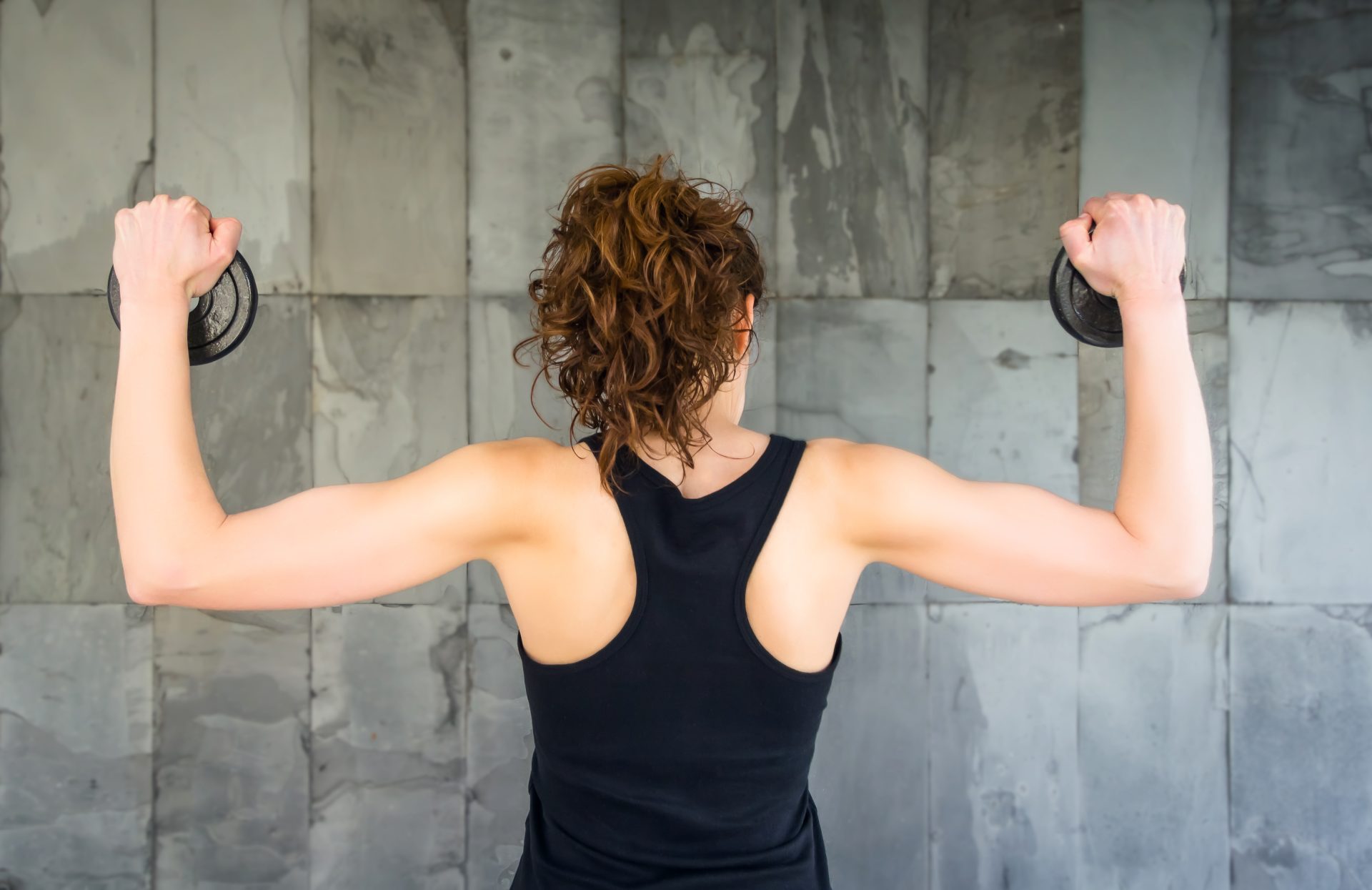
Scapular stabilization exercises are movements specifically designed to train the muscles that anchor and position the shoulder blades — the serratus anterior, middle and lower trapezius, and rhomboids. Unlike general shoulder pressing or rowing movements, these exercises isolate the control layer beneath big surface muscles. The goal is not to build mass but to restore and maintain the shoulder blade’s ability to glide, tilt, and rotate in sync with arm movement. Without this, every overhead reach, push, or pull is compromised from the start. The mechanism is straightforward. When you raise your arm, your scapula should upwardly rotate about 60 degrees to give the shoulder joint clearance. If the stabilizers — particularly the serratus anterior and lower trapezius — are weak or inhibited, the scapula shifts instead of rotating. This creates impingement in the subacromial space, overloads the rotator cuff, and causes the rounded-shoulder posture most people recognize as “bad posture.” Exercises that involve scapular depression, retraction, protraction, and upward rotation train the neuromuscular patterns that correct this chain. The benefit shows up not just in the shoulder, but in neck tension, mid-back stiffness, and even breathing mechanics.
Benefit 1 — Restored Shoulder Joint Mechanics and Pain-Free Movement The most direct outcome of consistent scapular training is that your shoulder moves the way it is designed to move. Every reach, lift, and rotation becomes smoother because the ball-and-socket joint now has its full range of clearance. Tendons and bursae stop being pinched with each arm raise. People who have lived with a dull shoulder ache for months often notice the difference within three to four weeks of consistent stabilization work. Research published in the Journal of Orthopaedic and Sports Physical Therapy found that scapular-focused exercise programmes reduced shoulder impingement symptoms in 73% of participants within six weeks — without any invasive intervention. Muscles, tendons, and joint capsules all benefit when the scapula is positioned correctly at the start of every movement. Benefit 2 — Reduced Neck Tension and Upper Back Stiffness Most people searching for scapular stabilization work are dealing with something very specific: that tight, grinding feeling between the shoulder blades, or a neck that stiffens by mid-afternoon. These symptoms are almost always downstream of a scapula that is not doing its job. When the stabilizers are weak, the upper trapezius and levator scapulae compensate — they are not built for sustained load, so they fatigue quickly and become chronically tight. Exercises like wall slides, prone Y raises, and scapular push-up progressions directly counteract this by activating the lower and middle trapezius, taking the neck out of the equation. Pairing these with targeted posture-improvement exercises accelerates the relief, because posture and scapular control are two sides of the same problem. Benefit 3 — Long-Term Shoulder Resilience and Injury Prevention The longer-term adaptation from scapular training is a shoulder girdle that can handle load without breaking down. Over eight to twelve weeks of progressive work, the serratus anterior and trapezius fibres thicken and coordinate better. This is relevant whether you lift weights, play a racquet sport, swim, or simply carry bags and children through daily life. The World Health Organization recommends 150 minutes of moderate activity per week for adults — but that activity is only safe and sustainable if the supporting musculature is adequately trained. Scapular stability is the foundation all upper-body training should sit on. Benefit 4 — Better Breathing, Posture Confidence, and Daily Energy A well-positioned scapula creates space for the ribcage to expand. When the shoulder blades are pulled forward and downward by weak stabilizers, the chest collapses slightly, which restricts diaphragm movement. Correcting this through stabilization work improves resting lung volume and makes breathing feel less effortful. Members often report feeling less fatigued and more upright by mid-day — not because they are “trying” to sit up straight, but because their body now defaults to a more efficient position. This cascades into focus, mood, and overall energy in a way that is hard to quantify but easy to feel.
What you eat directly determines how fast you recover, how much you progress, and how consistently you can train. Here is what your nutrition plan should look like to support your scapular stabilization training effectively. Protein and Collagen — Nourishing Your Connective Tissue Mobility and flexibility training still requires adequate protein (1.2–1.6 g/kg/day) to support connective tissue repair. Collagen synthesis — critical for joint and fascia health — needs dietary amino acids as raw material. Include eggs, bone broth, paneer, dal, and lean meats across your meals. Calcium and Vitamin D — Joint and Bone Health Joint and connective tissue health depends heavily on calcium and Vitamin D working together. Aim for 1000–1200 mg of calcium daily from dairy (milk, curd, paneer), ragi, sesame seeds (til), and leafy greens. Get 15–20 minutes of morning sunlight on exposed skin to maintain Vitamin D levels and improve calcium absorption. Anti-Inflammatory Foods — Faster Recovery Recovery speed is directly influenced by your body’s inflammatory status. Turmeric with black pepper (curcumin + piperine), fresh ginger, and omega-3 fatty acids from flaxseeds, walnuts, and fatty fish all actively reduce exercise-induced inflammation. Include these consistently rather than only on hard training days. Hydration — Performance and Joint Lubrication Adequate hydration supports joint lubrication, muscle function, and nutrient transport — aim for 2.5–3 L of water daily. Drink at least 500 ml before your morning exercise session to prime circulation and joint mobility. Herbal teas and coconut water count toward your fluid intake and provide additional micronutrients. Magnesium — Muscle Function and Sleep Quality Magnesium governs over 300 enzymatic reactions including muscle contraction and relaxation — making it essential for any movement-based training. Include pumpkin seeds, bananas, dark chocolate (70%+), spinach, and whole grains in your daily diet. Many Indians are mildly deficient; if you experience frequent muscle cramps or poor sleep quality, a magnesium glycinate supplement may help.
Starting a new training programme is often the hardest part. Here is a clear, week-by-week plan to begin your scapular stabilization training without injury or overwhelm. Before You Begin — Setting Your Baseline Start by assessing your current range of motion in the target joints — you can do this simply by attempting the movement and noticing where you feel restriction or discomfort. Set a realistic goal like achieving a specific range of motion or eliminating a recurring tightness within 6 weeks. Mobility work is most effective when done daily, even if each session is short. Week 1–2: Foundation In week one and two, hold each stretch or mobility drill for 30–45 seconds and focus on breathing into the stretch rather than forcing range. Expect mild discomfort at end-range — this is normal — but stop immediately if you feel sharp or pinching pain. Two 15-minute sessions daily (morning and evening) produce faster adaptation than one longer session. Week 3–4: Building Consistency Your nervous system begins to ‘trust’ the end-range positions around weeks 3–4, allowing you to go slightly deeper without effort. Anchor your morning session to an existing habit — right after waking, before your first cup of tea — to build automaticity. Increase hold times to 45–60 seconds and begin adding active mobility work (controlled movement through full range) alongside passive stretching. Week 5–8: Progression By weeks 5–8, the mobility gains become functional: you will notice them during daily activities like sitting, climbing stairs, and getting up from the floor. Begin loading the newly acquired range with light strengthening work to make the mobility permanent rather than temporary. Progress that is earned through daily practice at this stage tends to be retained long-term. With mobility training, daily consistency across months matters far more than any single intense session.
Exercise 1 — Wall Slides — Serratus Anterior and Lower Trapezius — 3 × 12 reps What it does: Wall slides train the serratus anterior — the primary muscle responsible for keeping the shoulder blade flat against the ribcage and rotating it upward during arm elevation. By pressing the forearms into the wall and sliding them overhead, you load the serratus in its functional range without placing stress on the rotator cuff. This makes it one of the safest entry points into scapular training and one of the best exercises for overall scapular stabilization. Dosage: 3 sets of 12 reps. Pause for 2 seconds at the top of each slide to reinforce end-range control. Beginner modification: Begin with the forearms on a smooth wall at chest height rather than overhead. Reduce the range of slide until shoulder or neck discomfort disappears. Exercise 2 — Prone Y Raises — Lower Trapezius — 3 × 10 reps What it does: Lying face down and raising both arms into a Y shape overhead directly targets the lower trapezius — the muscle most commonly inhibited in people with rounded shoulders and winging scapulae. This fibre group is responsible for depressing and upwardly rotating the scapula simultaneously, which is the precise action needed during any overhead movement. Strengthening it reduces compensatory upper trapezius activation and gradually pulls the scapula into a healthier resting position. Dosage: 3 sets of 10 reps with a 2-second hold at the top. Use bodyweight only or very light dumbbells (0.5–1 kg). Beginner modification: Perform on the floor with thumbs pointing toward the ceiling. If neck discomfort occurs, place the forehead on a folded towel and reduce range of motion. Exercise 3 — Scapular Push-Up — Serratus Anterior — 3 × 15 reps What it does: The scapular push-up isolates protraction and retraction of the shoulder blade without involving the elbow joint. Starting in a plank position with straight arms, you allow the scapulae to pinch together (retraction), then actively push the floor away to separate them (protraction). This teaches the serratus anterior to generate force at the correct moment in a push pattern — a deficit that causes the characteristic scapular winging seen in many people. It is also one of the best advanced scapular stabilization exercises for those who have already built basic control. Dosage: 3 sets of 15 reps. Move slowly — 2 seconds in each direction. Beginner modification: Perform from the knees rather than full plank. Focus on feeling the shoulder blades separate and squeeze rather than on the number of reps.
Mistake 1 — Shrugging the Shoulders During Every Rep — Correction: Depress Before You Move What it is: The most common error in scapular exercises is allowing the upper trapezius to take over. This shows up as the shoulders creeping toward the ears during wall slides, Y raises, or rows. When the upper traps dominate, the lower trapezius and serratus get no meaningful stimulus — you are reinforcing the exact compensation pattern you are trying to correct. What to do instead: Before each rep, consciously draw your shoulder blades down and slightly back — imagine trying to tuck them into your back pockets. Hold that depression cue throughout the movement. If your shoulders shrug, reduce the range or load until the pattern is clean. Mistake 2 — Progressing Load Before Earning Control — Correction: Nail Bodyweight First What it is: Adding dumbbells or resistance bands before the stabilization pattern is wired in is counterproductive. Heavier load simply gets taken over by larger, stronger muscles — the upper traps, anterior deltoid, and pectorals — masking the weakness underneath. This is especially common in people who already train regularly and assume their strength will transfer. What to do instead: Spend at least three weeks with bodyweight or very light resistance (under 1 kg), focusing on the quality of scapular movement — upward rotation, depression, protraction. Only add load when you can complete a full set without any shoulder shrug or compensatory neck tension. Mobility-focused exercises used alongside this approach help the joint stay supple as you build control. Mistake 3 — Training Only in One Plane — Correction: Cover All Four Scapular Movements What it is: Many people do only pulling movements — face pulls and band rows — and call it scapular work. These exercises train retraction and some depression, but they largely ignore protraction (serratus anterior) and upward rotation under load (lower trap). A scapula that can only retract is still an unstable scapula. What to do instead: Ensure your programme includes at least one exercise for each of the four primary scapular movements: retraction (face pull or prone row), protraction (scapular push-up), upward rotation (wall slide), and depression (Y raise). This is exactly how Habuild structures its strength sessions — every plane of movement is addressed in a single session, not spread across a week. 50,000+ members already training with Habuild every morning. Live daily sessions · Expert instructor · Cancel anytime.
Scapular Stabilization training is not a one-size-fits-all programme — but it is far more broadly accessible than most people assume. Here is who benefits most. Complete Beginners Starting from Zero You do not need any prior fitness experience to begin scapular stabilization exercises. Every movement in a well-structured programme comes with easier modifications — for example, performing the exercise seated, with a reduced range of motion, or using a wall or chair for support. The only requirement is willingness to show up consistently; the strength and technique will follow. People With Stiffness, Tight Muscles, or Restricted Range of Motion This training is especially valuable for people managing Stiffness, Tight Muscles, or Restricted Range of Motion. Scapular Stabilization exercises specifically target the muscular imbalances and movement patterns that drive these conditions. Always begin at a reduced intensity and range, and increase gradually as your body adapts. Office Workers and Sedentary Adults Sedentary adults who spend 6–8 hours sitting daily experience progressive losses in scapular stabilization capacity — this training directly reverses that trend. A 20–30 minute morning session creates a positive hormonal and metabolic shift that persists throughout the working day. Even three sessions per week produce measurable improvements in energy levels, concentration, and posture. Active Adults and Athletes Active adults and athletes who train hard but neglect mobility work accumulate joint restrictions that eventually limit performance and cause injury. Incorporating scapular stabilization training 3–4 times per week restores range of motion, improves movement efficiency, and reduces recovery time between sessions. Many experienced athletes report that mobility work produces faster performance improvements than adding more conditioning volume. Seniors Maintaining Functional Independence Age-related loss of joint mobility is a primary contributor to falls, reduced independence, and chronic pain in older adults. Regular scapular stabilization practice maintains the range of motion needed for daily tasks — getting up from a chair, reaching overhead, and walking without pain. Gentle, consistent practice is safe for most older adults and produces meaningful functional improvements within 4–6 weeks.
Scapular-Specific Programming — Not a Generic Fitness Class Every session in the Habuild strength programme is sequenced with scapular mechanics in mind. Sessions open with scapular activation work — wall slides and scapular push-ups — to wake up the serratus anterior and lower trapezius before any compound load is introduced. They close with prone Y raises and supported rows that consolidate the neuromuscular patterns trained earlier. Loading tired, already-compensating muscles without first activating the stabilizers is the fastest way to entrench the problem rather than fix it. Habuild’s instructors understand this sequence and apply it consistently, so members get the benefit of intelligent programming without having to design it themselves. The core strength foundation built in parallel sessions reinforces scapular stability from the ground up — because a stable trunk is what the shoulder girdle ultimately anchors to. Live Daily Sessions with Real-Time Form Correction Pre-recorded videos cannot catch the moment your shoulders start to shrug, or the point where your neck is compensating for a tired serratus. Habuild’s live format means the instructor sees you in real time and calls out specific corrections — “drop the shoulder,” “push the floor away,” “don’t let the blade wing” — that turn mediocre reps into effective ones. This is particularly important for scapular work, where the difference between training the right muscle and reinforcing a compensation is often invisible to the person doing the exercise. Progressive Overload Built into Every Session Members do not need to self-programme their progression. Habuild builds it in. In the first two weeks, sessions emphasize movement quality and body awareness. In weeks three and four, range of motion and hold duration increase. From week five onward, light resistance is introduced incrementally, and movement complexity grows — for example, combining Y raises with a controlled rotation or adding a band to the scapular push-up. Accountability, Streaks and Community Scapular stability does not improve in two sessions. Meaningful neuromuscular adaptation takes six to twelve weeks of consistent practice. Habuild’s streak tracking and WhatsApp community are specifically designed to bridge the gap between knowing you should show up and actually doing it every morning. Members hold each other accountable, share wins, and keep each other honest — and lasting habits are what produce lasting results.
I have been with Habuild for 1,050 days. My energy has increased and I don't feel drained by work anymore. My patience has grown — things that used to stress me out don't affect me the same way. My kids at home have also picked up the yoga habit. Most importantly, my knowledge about breathing and how it affects the entire body has transformed. My nervous system feels calmer, my digestion is better, and there is a steadiness in my body and mind that I had never experienced before.

My homeopathy doctor suggested yoga and I found Habuild. In the free 14 days, I already felt changes. The biggest surprise: I used to be unable to get down from a pavement by myself. Now I can jump. My core and lower body strength have rebuilt themselves through consistent practice. Habuild is a complete package — it strengthens everything, not just flexibility.


Practice Strong Everyday with Trishala Bothra, an IIT-B and London School of Business alumni
Trishala is focused on making movement feel lighter, more engaging, and something you actually look forward to.
In just 3 years, over 50,000 people began their strength journey, and 10,000+ join every week to keep getting stronger.