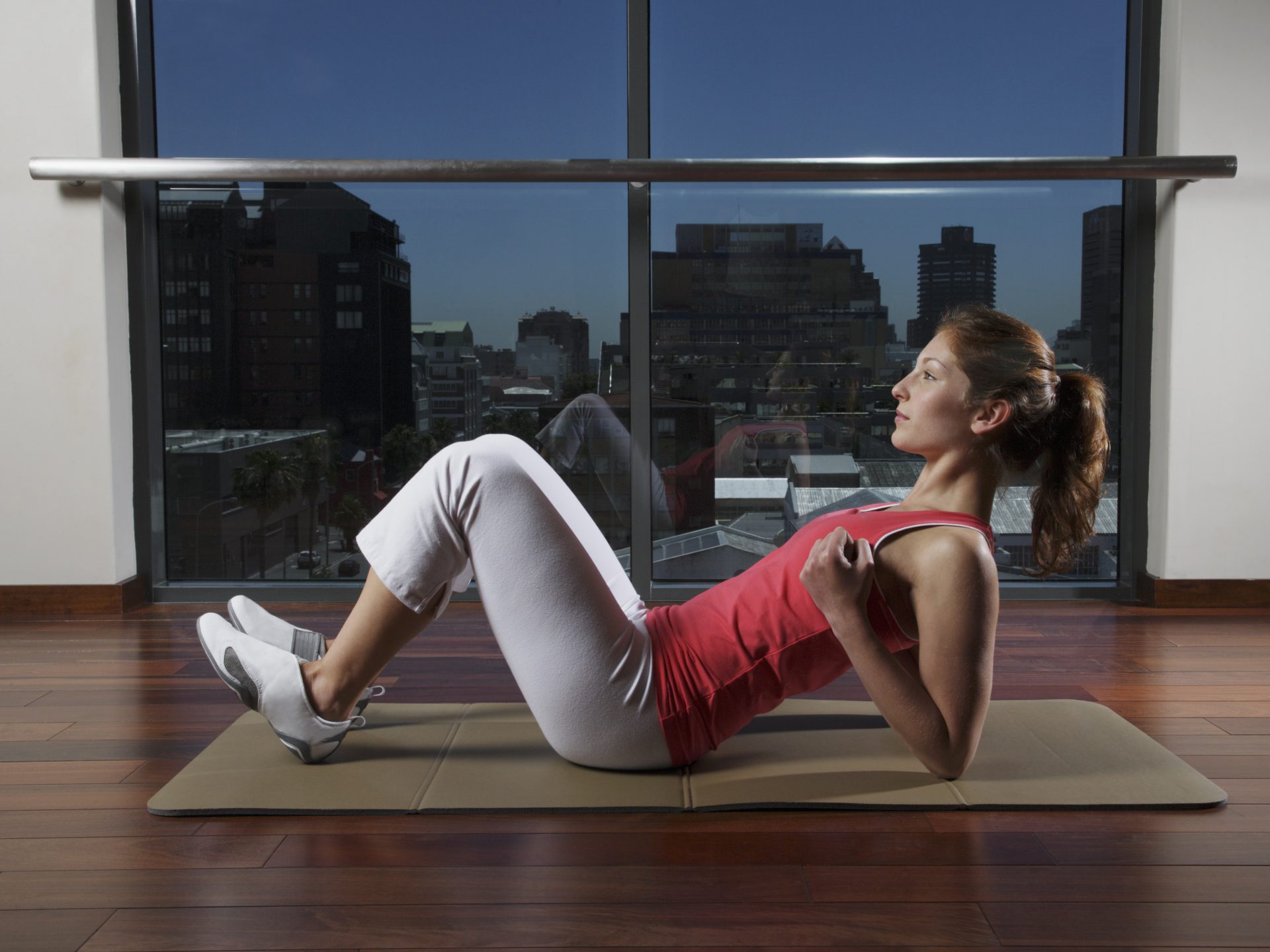
Reverse crunches exercises flip the direction of the standard crunch. In a regular crunch, you keep the lower body anchored and curl the upper body upward — which engages the upper portion of the rectus abdominis most strongly. In a reverse crunch, you keep the upper body anchored and curl the lower body upward — which engages the lower portion of the same muscle. This matters because the lower abs are notoriously difficult to develop with standard ab work alone, and the lower abdomen is where most adults carry stubborn fat plus weak musculature underneath. Reverse crunch training closes that specific gap.
The mechanism: lying on your back, with legs lifted to 90° (knees bent), you contract the lower abs to roll the pelvis off the floor, lifting the hips toward the ribcage. Done correctly with control, this isolates the lower rectus abdominis fibres better than any other unweighted ab exercise. Variations expand the toolkit — the exercise ball reverse crunch adds instability training; the standing reverse crunch removes floor compression for those with lower-back issues; weighted reverse crunches at home add progressive overload as strength builds. Combined with overall fat-loss work, reverse crunch training produces the flat, defined lower abdomen that hundreds of crunches and forward-direction work alone cannot deliver. For broader integrated core development, the programme covers reverse crunches alongside the obliques and deep stabilisers.
Targets the Hard-to-Train Lower Abs Specifically
Standard crunches predominantly hit the upper portion of the rectus abdominis — leaving the lower abs underdeveloped, which is why the lower belly stays soft even in people who do daily ab work. Reverse crunches reverse this — direct contraction of the lower abdominal fibres. Stat: EMG research on abdominal exercises (Escamilla et al., 2010, Journal of Orthopaedic & Sports Physical Therapy) shows reverse crunch variants produce significantly higher lower-rectus activation than standard crunches.
Reduces Lower Back Strain Compared to Standard Crunches
Reverse crunches keep the upper spine and neck completely neutral on the floor — eliminating the neck strain and cervical spine flexion that bothers many people during standard crunches. The pelvic tilt drives the movement, not spinal flexion, which is gentler on the lower back too.
Strengthens the Hip Flexors and Pelvic Stabilisers
The reverse crunch motion engages not just the lower abs but also the deep hip flexors and pelvic floor stabilisers — the muscle groups responsible for lower-body control in walking, running and lifting. Building this lower-trunk integration translates directly into better performance in and daily movement.
Builds Lower Ab Definition When Body Fat Drops
The “lower ab line” — that visible V-cut just below the navel — only appears when two conditions are met: low body fat AND developed lower-ab muscle. Reverse crunches build the latter. Combined with overall fat loss, the lower ab definition lands within 8–12 weeks of consistent practice.
Exercise 1: Standard Reverse Crunch — The Foundational Reverse Abs Exercise at Home — 3 sets × 12–15 reps
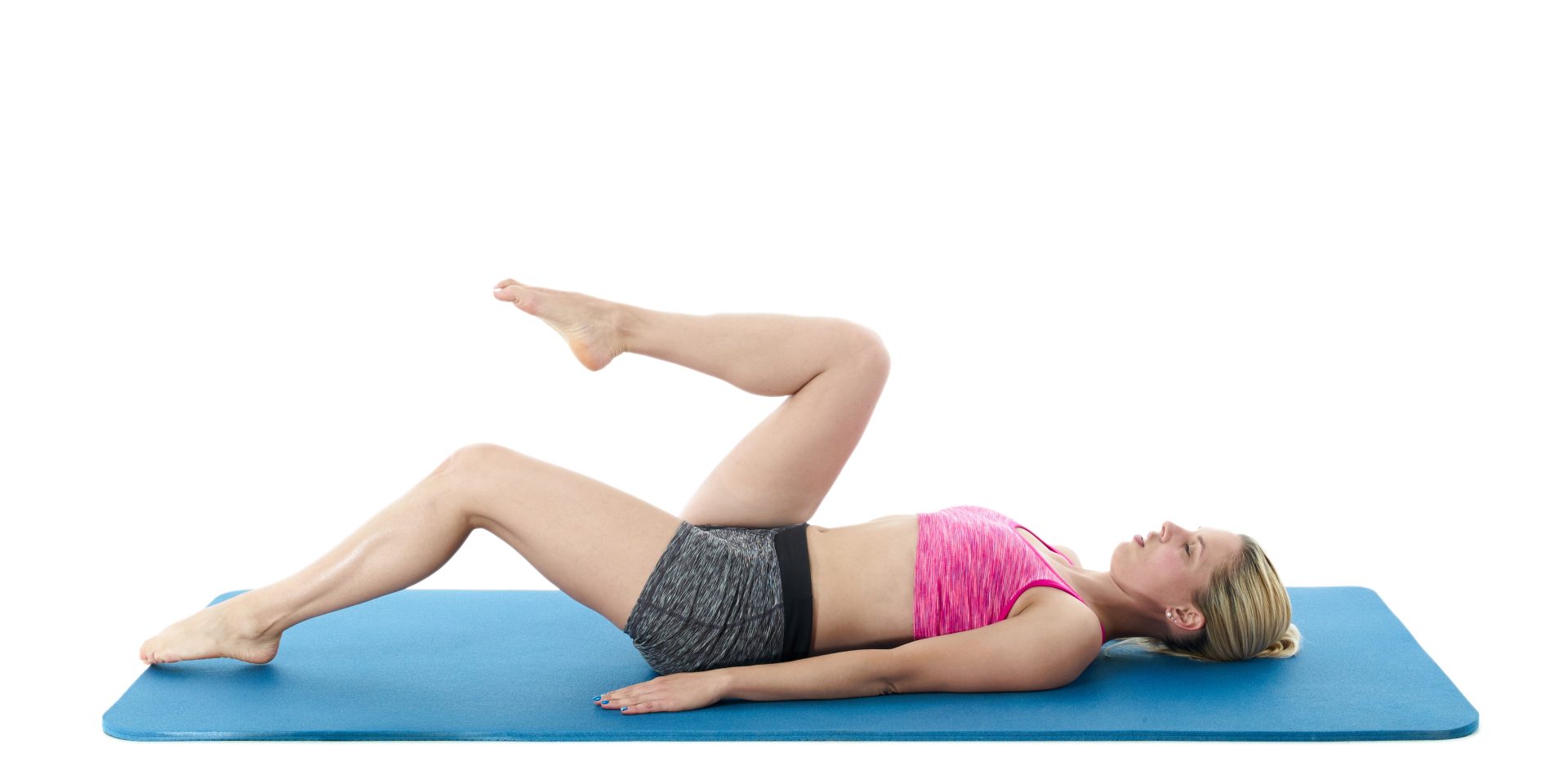
Lie on your back, arms by your sides palms down, legs lifted with knees bent at 90°. Exhale and contract the lower abs to roll the pelvis off the floor, bringing the knees toward the chest. Lower with control. 3 sets × 12–15 reps. Use the abs to lift, not momentum from the legs. Modification: place hands under the lower back if it lifts off the floor; reduce range of motion until form is locked.
Exercise 2: Exercise Ball Reverse Crunch — Lower Abs + Stability — 3 sets × 10–12 reps
Lie on your back, place a stability ball between the knees and ankles (lightly squeezing it), arms by sides. Lift legs and ball to 90°, then perform reverse crunch — bringing the ball toward the ribcage. 3 sets × 10–12 reps. The ball forces additional inner-thigh and stabiliser engagement, increasing the difficulty and the deep core demand. Modification: use a small pillow or rolled towel if a stability ball is not available.
Exercise 3: Standing Reverse Crunch — Lower Abs Without Floor Compression — 3 sets × 12 reps each side
Stand tall, hands on hips or behind head. Lift one knee toward the chest while contracting the lower abs and gently rounding the upper back. Slowly lower. 3 sets × 12 reps each leg. Excellent for those with lower-back sensitivity, hip arthritis or pregnancy concerns where floor-based reverse crunches aren’t comfortable. Modification: hold a wall lightly with one hand for balance until the movement pattern is grooved.
Mistake 1: Using Momentum to Swing the Legs — Correction: Slow Tempo, Pelvis Drives the Movement
The most common reverse crunch error: kicking the legs upward to generate momentum, then letting them drop. The hip flexors do all the work and the lower abs barely engage. What to do instead: 2-second lift, 1-second pause at the top with conscious lower-ab squeeze, 2-second lower. Slow tempo forces the abs to do the work the hip flexors otherwise steal.
Mistake 2: Arching the Lower Back Off the Floor — Correction: Press Lower Back Flat Throughout
If the lower back lifts off the floor during the lower-back-down portion of the movement, the spine is hyperextending and the abs disengage. What to do instead: consciously press the lower back into the floor before starting each rep. If the back keeps arching, place hands palms-down under the lower back as a tactile cue, or reduce range of motion until the back stays planted.
Mistake 3: Ignoring Breath — Correction: Exhale on the Lift, Inhale on the Lower
Breath-holding during reverse crunches dramatically reduces lower-ab activation and spikes blood pressure. What to do instead: exhale forcefully as you lift the pelvis (this naturally engages the transverse abdominis), inhale as you lower. Coordinated breath increases ab activation by 20–25% in the same rep.
Reverse-Crunch-Specific Programming, Not Generic Ab Routines
Most online ab workouts are 80% standard crunches and 20% planks — leaving the lower abs underdeveloped. Habuild’s daily sessions explicitly programme reverse crunches alongside forward crunches in the right proportion (40/40/20 reverse/forward/oblique), the ratio research suggests is optimal for complete rectus abdominis development.
Live Daily Sessions With Real-Time Form Correction
The momentum-swing, the back-arch, the breath-hold — all corrected within seconds on the live call. Reverse crunches done with bad form are ineffective AND risky for the lower back. Live correction makes the difference.
Progressive Overload Built Into Every Session
Week 1: standard reverse crunch with hands under lower back. Week 4: clean reverse crunch with arms by sides. Week 8: exercise ball variation. Week 12: weighted reverse crunch (knees holding a light dumbbell). Members don’t programme this — it’s built into the live class flow.
Accountability, Streaks and Community
Lower ab development is the slowest part of the abdominal wall to show results. Daily streak tracking, the WhatsApp community and live morning sessions keep members on the mat through the 8–12 week window where the lower abs are building but visible change happens last.
Complete Beginners Starting from Zero
Reverse crunches are done lying on the floor with no equipment. The movement — drawing the knees toward the chest — is intuitive and low-impact. The difficulty is controlled entirely by how extended the legs are at the bottom position. The only requirement is showing up consistently — strength and technique follow from that.
Intermediate Trainees Looking to Fill a Gap
Reverse crunches shift the load to the lower rectus abdominis — the region that standard crunches barely engage — while generating significantly less disc pressure than sit-ups or leg raises. They are the most lower-back-friendly way to directly work the lower abs. Adding reverse crunches exercises to an existing routine addresses a specific conditioning gap that most general workouts miss.
Those Targeting the Lower Abs with a Spine-Friendly Alternative to Sit-Ups
Reverse crunches shift the load to the lower rectus abdominis — the region that standard crunches barely engage — while generating significantly less disc pressure than sit-ups or leg raises. They are the most lower-back-friendly way to directly work the lower abs.
Senior Citizens and Older Adults (50+)
Reverse Crunches Exercises can be adapted for older adults by controlling tempo, reducing range of motion, and using supported variations. Habuild’s live instructors modify exercises in real time for different fitness levels and physical conditions in the same session.
Is Reverse Crunches Exercises Good for Beginners?
Yes — absolutely. Reverse Crunches Exercises begin at very low intensity with fully accessible entry-level variations. Habuild’s live instructor adapts the session in real time so beginners and experienced trainees can train together without either being left behind.
How Often to Do Reverse Crunches Exercises — Frequency Guide
Train reverse crunches exercises 4–5 times per week. This frequency gives the muscle and nervous system adequate stimulus without outpacing recovery. Consistency matters more than intensity in the early weeks — showing up regularly produces better results than infrequent all-out sessions.
When in Your Workout to Do Reverse Crunches Exercises
Place reverse crunches exercises in the core block, either as the primary lower-ab movement or as a superset with planks. Sequencing exercises correctly ensures you bring maximum quality to reverse crunches exercises rather than performing them under accumulated fatigue from earlier work.
What to Pair Reverse Crunches Exercises With
Combine reverse crunches exercises with crunches, planks, and dead bugs for a complete core programme that hits all layers of the abdominal wall. This combination develops complementary muscle groups in the same session and builds the balanced strength that prevents compensation and injury.
How to Progress Reverse Crunches Exercises Over Time
Once the base movement feels controlled and repeatable, extend the legs further on each rep (straighter legs increase difficulty), add a pause at the top, then progress to decline reverse crunches or hanging reverse crunches. Progress only when form is consistent — adding difficulty before mastering the base movement reinforces poor mechanics and stalls long-term results.
Habuild is India’s First Habit Building Program — and through its strength and fitness sessions, it brings the same habit-based philosophy to targeted exercise training. Every session is structured around your specific goal, not a one-size-fits-all class.
Goal-Specific Programming — Not a Generic Fitness Class
Every exercise, rep range, and rest period in Habuild’s reverse crunches exercises sessions is chosen because it produces results for reverse crunches exercises specifically. Habuild does not run the same session for every goal — the programme is structured to drive your specific outcome with every session, not general fitness that happens to include reverse crunches exercises.
Live Daily Sessions with Real-Time Form Correction
Unlike pre-recorded videos, Habuild’s live daily sessions allow the instructor to see and correct your form in real time — the specific errors that limit reverse crunches exercises results and increase injury risk. This live correction is the difference between training that works and training that wastes effort and creates bad habits.
Progressive Overload Built into Every Session
Members do not need to design their own progressive overload for reverse crunches exercises — it is built into the programme structure. Each week, sessions are deliberately more challenging than the last, ensuring the body never fully adapts and results continue coming rather than stalling.
Accountability, Streaks, and Community
The most common reason people stop exercising is not effort — it is missing sessions until the habit breaks. Habuild’s streak system, live session accountability, and community of members training the same goal alongside you resolves this directly. Members who join with a specific goal like reverse crunches exercises and stay consistent for 30 days almost universally report that showing up has become automatic.
"120-day streak. I'd done standard crunches for two years and the lower belly stayed soft. 12 weeks of Habuild's daily reverse crunch programming and the lower ab V-line appeared for the first time in my life. Same body fat, completely different shape."
"180-day streak. Standard crunches always flared up my lower back. Habuild moved me onto reverse crunches at home plus standing reverse crunches — back pain dropped 80%, abs improved more in 4 months than 4 years of regular crunches."



Practice Strong Everyday with Trishala Bothra, an IIT-B and London School of Business alumni
Trishala is focused on making movement feel lighter, more engaging, and something you actually look forward to.
In just 3 years, over 50,000 people began their strength journey, and 10,000+ join every week to keep getting stronger.