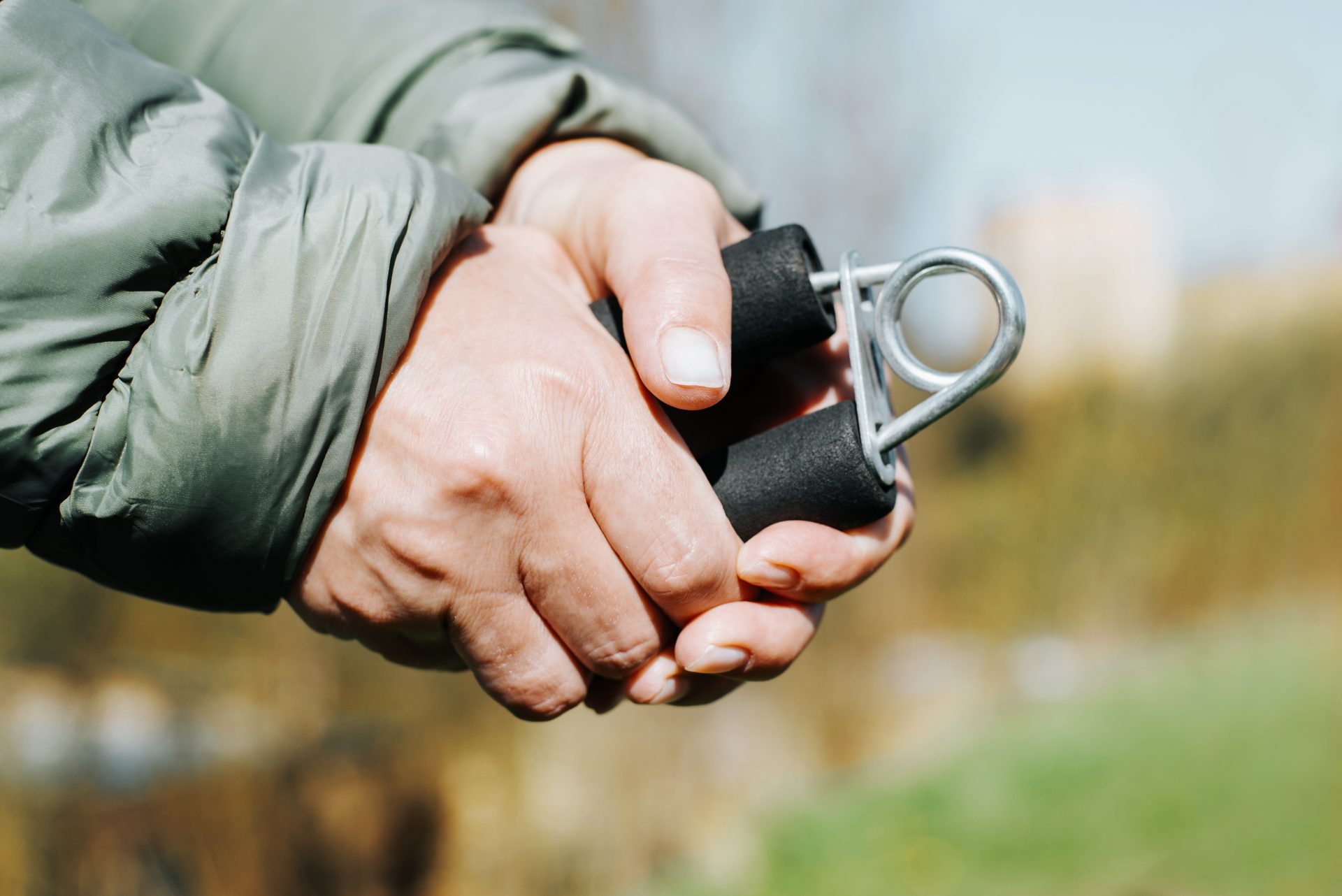
Isometric hand grip exercises are a specific category of resistance training where the muscles of your hand, forearm, and wrist contract against a fixed load or surface without producing any visible movement at the joint. Unlike traditional exercises that use full range of motion — curls, rows, or presses — these are static holds. The defining characteristic is sustained tension without lengthening or shortening of the muscle. This makes them fundamentally different from general fitness workouts, which primarily develop strength through dynamic movement patterns. The mechanism behind their effectiveness is rooted in how static muscle contractions affect the cardiovascular and nervous systems. When you hold a grip contraction at roughly 30–40% of your maximum voluntary contraction, blood flow is partially restricted and then dramatically restored when you release. This repeated cycle of occlusion and reperfusion trains blood vessel walls to dilate more efficiently — a process called vascular remodelling. Over weeks, this reduces peripheral vascular resistance, which is a primary driver of elevated blood pressure. Additionally, sustained grip tension activates slow-twitch muscle fibres and motor units in the forearm that are rarely recruited in explosive or dynamic movements, building endurance-based hand strength progressively.
Benefit 1 — Meaningful Support for Blood Pressure Management The most direct benefit is cardiovascular. Consistently practicing isometric handgrip exercise may gradually help your blood vessels become more responsive and elastic — which supports healthier resting blood pressure over time. Better vascular tone means every organ, muscle, and tissue receives more consistent, efficient circulation, reducing the strain placed on your heart with each beat. Stat: A meta-analysis published in the Journal of Human Hypertension found that isometric handgrip training produced a mean reduction of approximately 10 mmHg in systolic blood pressure — one of the largest effects observed among non-pharmacological interventions. Benefit 2 — Relief from Weak, Fatigued, or Painful Hands Most people searching for grip-related exercises are already experiencing something — jars they can’t open, wrists that fatigue after typing, or hands that feel weak during daily tasks. Targeted exercises like sustained grip holds, finger extension work, and pinch holds progressively counteract these complaints by building the specific muscles — the flexor digitorum superficialis, flexor pollicis longus, and the intrinsic hand muscles — that daily life consistently underloads. Benefit 3 — Long-Term Improvement in Forearm Endurance and Neuromuscular Control With consistent isometric work over six to twelve weeks, you develop measurable improvements in time-to-fatigue, motor unit recruitment efficiency, and forearm muscular endurance. These adaptations don’t just help your hands — they improve your performance in every pulling, carrying, or gripping task you perform. A structured grip strength workout programme provides the progressive framework that accelerates these gains. Stat: The WHO recommends at least 150 minutes per week of moderate-intensity physical activity for cardiovascular health. Isometric handgrip training, practiced three to four times weekly, contributes meaningfully to this threshold with minimal joint stress. Benefit 4 — Downstream Improvements in Energy, Focus, and Stress Tolerance Improved cardiovascular efficiency — the downstream effect of lower peripheral vascular resistance — translates directly into daily quality of life. People who consistently practice isometric grip training often report better mental clarity, less mid-afternoon fatigue, and improved stress tolerance. The calming effect of controlled, breath-synchronised static contractions also activates the parasympathetic nervous system, producing a measurable reduction in resting heart rate over time.
What you eat directly determines how fast you recover, how much you progress, and how consistently you can train. Here is what your nutrition plan should look like to support your isometric hand grip training effectively. Protein — Supporting Muscle Under Sustained Tension Isometric training creates sustained muscular tension that demands repair — target 1.4–1.8 g of protein per kg of body weight. Distribute intake across 3–4 meals for optimal muscle protein synthesis rather than loading it all at once. Good sources include eggs, paneer, lentils, chicken, and low-fat curd. Calcium and Vitamin D — Joint and Bone Health Joint and connective tissue health depends heavily on calcium and Vitamin D working together. Aim for 1000–1200 mg of calcium daily from dairy (milk, curd, paneer), ragi, sesame seeds (til), and leafy greens. Get 15–20 minutes of morning sunlight on exposed skin to maintain Vitamin D levels and improve calcium absorption. Anti-Inflammatory Foods — Faster Recovery Recovery speed is directly influenced by your body’s inflammatory status. Turmeric with black pepper (curcumin + piperine), fresh ginger, and omega-3 fatty acids from flaxseeds, walnuts, and fatty fish all actively reduce exercise-induced inflammation. Include these consistently rather than only on hard training days. Hydration — Performance and Joint Lubrication Adequate hydration supports joint lubrication, muscle function, and nutrient transport — aim for 2.5–3 L of water daily. Drink at least 500 ml before your morning exercise session to prime circulation and joint mobility. Herbal teas and coconut water count toward your fluid intake and provide additional micronutrients. Magnesium — Muscle Function and Sleep Quality Magnesium governs over 300 enzymatic reactions including muscle contraction and relaxation — making it essential for any movement-based training. Include pumpkin seeds, bananas, dark chocolate (70%+), spinach, and whole grains in your daily diet. Many Indians are mildly deficient; if you experience frequent muscle cramps or poor sleep quality, a magnesium glycinate supplement may help.
Starting a new training programme is often the hardest part. Here is a clear, week-by-week plan to begin your isometric hand grip training without injury or overwhelm. Before You Begin — Setting Your Baseline Before starting isometric training, note which movements or joint angles currently cause pain or significant discomfort. Isometric contractions can be performed at pain-free joint angles, making them ideal for working around existing injuries. Set a goal like holding each contraction for 45–60 seconds with full effort by the end of week 8. Week 1–2: Foundation Begin with hold durations of 15–20 seconds per contraction at moderate effort (60–70% of your maximum). Focus on maintaining perfect alignment — isometric exercises expose postural weaknesses very clearly. Initial muscle soreness will be mild compared to dynamic training because there is no eccentric component. Week 3–4: Building Consistency Progress hold durations to 30–40 seconds and begin increasing the effort level toward 75–80% of maximum. Practising at the same time each morning helps because joint stiffness (worst in the morning) gradually reduces through consistent isometric work. Add one new isometric variation per week as your form and endurance improve. Week 5–8: Progression Full-duration holds of 45–60 seconds at high effort become achievable for most people between weeks 5 and 7. You may notice improved joint stability and reduced discomfort during daily activities — this is the training transferring to real life. Consider adding dynamic work alongside isometrics to build through full ranges once your baseline strength has improved. Isometric training rewards patience and precision — consistency at moderate effort outperforms sporadic maximum-effort sessions.
Exercise 1 — Sustained Grip Hold — Full Forearm and Hand Flexors — 4 × 2-Minute Protocol What it does: This is the cornerstone isometric handgrip exercise studied in blood pressure research. You squeeze a grip trainer, rolled towel, or tennis ball at approximately 30–40% of your maximum effort — the level where you feel clear tension but could hold it comfortably. This intensity range is specifically where vascular remodelling occurs most efficiently. Dosage: 4 sets of 2 minutes per hand, with 1–2 minutes rest between sets. Three to four sessions per week. Beginner modification: Start with 30-second holds at low effort. Build duration by 15 seconds per week until you reach 2 minutes comfortably. Exercise 2 — Finger Extension Isometric Hold — Finger Extensors and Dorsal Forearm — 3 × 30 Seconds What it does: Most grip work neglects the extensor side of the hand and forearm — the muscles that open the hand and counterbalance the flexors. Wrapping a rubber band around your fingers and spreading them against resistance creates an isometric contraction in the often-weak extensor digitorum. This balance is critical: neglecting extensors while only training flexors increases the risk of forearm imbalance and reduces long-term grip development. Dosage: 3 sets of 30-second holds per hand. Alternate with flexor work in the same session. Beginner modification: Use a very light rubber band. Focus on evenly spreading all five fingers rather than generating maximum force. Exercise 3 — Pinch Grip Isometric Hold — Thumb, Index Finger, and Thenar Muscles — 3 × 45 Seconds What it does: The pinch grip — compressing an object between thumb and fingers without full hand closure — targets the thenar eminence and first dorsal interosseous, two muscle groups highly active in fine motor tasks, writing, and tool use but rarely trained directly. Strong pinch grip reduces fatigue during sustained gripping tasks. For those focused on broader upper-body strength, structured hand strength exercise programmes complement this pinch work effectively. Dosage: 3 sets of 45 seconds per hand. Use a folded cloth, a plate, or a pinch trainer. Beginner modification: Use a folded piece of paper or a thin book. Focus on maintaining even pressure across all fingers rather than maximum force.
Mistake 1 — Gripping at Maximum Effort — Correction: Work at 30–40% of Maximum What it is: Most people assume harder grip equals faster results. But for blood pressure benefits specifically, squeezing at maximum effort bypasses the vascular adaptation zone. At maximum contraction, blood vessels are fully occluded throughout the hold — the reperfusion response that drives vascular remodelling is diminished. You also fatigue out within seconds, making the protocol unsustainable. What to do instead: Use a grip trainer with resistance markings, or self-calibrate by gripping as hard as you can, then deliberately reducing effort to roughly a third of that level. Sustained moderate tension — not white-knuckle effort — is the mechanism that supports blood pressure improvement over time. Mistake 2 — Holding Your Breath During the Hold — Correction: Breathe Slowly and Continuously What it is: Breath-holding during any isometric exercise causes a Valsalva manoeuvre — a sharp, temporary spike in intrathoracic pressure that dramatically elevates blood pressure during the set. For someone already managing elevated BP, repeated Valsalva responses work directly against the goal of the training. What to do instead: Breathe slowly and continuously throughout every hold. Inhale for 4 counts, exhale for 4 counts. Your breath rhythm should be audible and relaxed. If you find yourself holding your breath involuntarily, reduce grip intensity until you can breathe freely throughout. Mistake 3 — Training Only One Side — Correction: Balance Both Hands Equally What it is: Many people unconsciously favour their dominant hand, performing more sets or higher-quality holds on one side. For blood pressure outcomes, the cardiovascular stimulus needs to be bilateral — unilateral training creates asymmetric neuromuscular adaptation and leaves cardiovascular benefit incomplete. What to do instead: Perform every set and protocol on both hands, alternating between them with consistent rest intervals. Log both sides separately if you’re tracking progress.
Isometric Hand Grip training is not a one-size-fits-all programme — but it is far more broadly accessible than most people assume. Here is who benefits most. Complete Beginners Starting from Zero You do not need any prior fitness experience to begin isometric hand grip exercises. Every movement in a well-structured programme comes with easier modifications — for example, performing the exercise seated, with a reduced range of motion, or using a wall or chair for support. The only requirement is willingness to show up consistently; the strength and technique will follow. People With Joint Pain or Recovering from Injury This training is especially valuable for people managing Joint Pain or Recovering from Injury. Isometric and low-impact variations allow you to build strength at pain-free joint angles without aggravating sensitive tissues. Always begin at a reduced intensity and range, and increase gradually as your body adapts. Office Workers and Sedentary Adults Sedentary adults who spend 6–8 hours sitting daily experience progressive losses in isometric hand grip capacity — this training directly reverses that trend. A 20–30 minute morning session creates a positive hormonal and metabolic shift that persists throughout the working day. Even three sessions per week produce measurable improvements in energy levels, concentration, and posture. Active Adults and Athletes Isometric training is used by elite athletes for tendon strengthening, reactivating inhibited muscles, and maintaining strength during injury recovery. Adding isometric hand grip work alongside dynamic training creates a more complete strength profile and improves force transmission through joints. It is particularly effective as a complement to weightlifting, running, and team sports. Seniors Maintaining Functional Independence Isometric training is ideal for seniors because it builds strength without placing dynamic stress on ageing joints. Joint-angle-specific strengthening improves stability during daily movements — standing up, navigating stairs, carrying groceries — reducing fall risk significantly. The absence of impact and eccentric loading makes isometric work particularly well-tolerated by older adults.
Blood-Pressure-Specific Programming — Not a Generic Fitness Class Every exercise selection, sequencing decision, and rest period in Habuild’s strength sessions is chosen for a specific physiological outcome — not just general fitness. Sessions open with breath-synchronised warm-up movements that lower resting heart rate and prime parasympathetic tone before any grip work begins. They close with progressive static holds structured at the clinically relevant 30–40% effort threshold — the zone where vascular remodelling actually occurs. This deliberate sequencing is something a generic fitness class or YouTube tutorial rarely provides. Live Daily Sessions with Real-Time Form Correction The Habuild format is live — not pre-recorded. This matters for isometric training because the most common errors (breath-holding, over-gripping, asymmetric effort) are invisible in a recorded class. Habuild instructors observe and correct these errors in real time, ensuring that effort in each session actually contributes to the cardiovascular and neuromuscular adaptations you’re training for — rather than reinforcing compensatory patterns. Progressive Overload Built into Every Session Members do not need to self-programme progression — it is built in. Each week, hold durations increase incrementally, rest intervals shorten slightly, and grip intensity protocols are layered in with greater precision. Breath control complexity also advances as members become more consistent, shifting from basic 4-count breathing into more demanding respiratory patterns that further support parasympathetic activation. You simply show up — the structure does the rest. Accountability, Streaks and Community The single biggest predictor of grip strength improvement and blood pressure response is consistency over six to twelve weeks. Habuild’s streak tracking, daily session reminders, and active WhatsApp community are designed specifically to maintain that consistency. Members who build streaks beyond 30 days consistently report the most tangible results — not because they trained harder, but because they trained more regularly.
I am a retired Army officer, 65 years old. I had undergone bypass surgery and was unsure what physical activity I could safely do. My doctor cleared me for yoga. After joining Habuild and completing 550 days, my muscle strength and mobility have improved, my stamina has increased, I started walking regularly, and my sugar levels stay in a healthy range. Flexibility and positivity have both increased. My wife is very active in Create Everyday — we are both truly grateful.
My homeopathy doctor suggested yoga and I found Habuild. In the free 14 days, I already felt changes. The biggest surprise: I used to be unable to get down from a pavement by myself. Now I can jump. My core and lower body strength have rebuilt themselves through consistent practice. Habuild is a complete package — it strengthens everything, not just flexibility.


Practice Strong Everyday with Trishala Bothra, an IIT-B and London School of Business alumni
Trishala is focused on making movement feel lighter, more engaging, and something you actually look forward to.
In just 3 years, over 50,000 people began their strength journey, and 10,000+ join every week to keep getting stronger.