Hamstring isometric exercises are movements in which the hamstring muscle group — the biceps femoris, semitendinosus, and semimembranosus running along the back of the thigh — generates significant contractile force while the muscle itself stays the same length. There is no joint movement during the hold. This distinguishes them sharply from isotonic exercises, where the muscle shortens (concentric) or lengthens under load (eccentric) through a range of motion. A leg curl is isotonic. Pressing your heel into the floor while lying on your back and holding that tension for 30–45 seconds is isometric. Both build strength, but through very different mechanisms — and for tendon health, injury prevention, and pain-free loading, isometric training has a distinct physiological advantage that isotonic work alone cannot replicate. The mechanism behind isometric hamstring training involves two key processes. First, the sustained muscular contraction compresses the veins and capillaries running through the posterior thigh, generating a pumping effect that moves venous blood back toward the heart — particularly valuable for people who spend hours seated, where gravity encourages blood pooling in the lower legs. Second, isometric holds at specific joint angles produce collagen synthesis in the tendons at those angles, which is why sports medicine practitioners use them extensively in hamstring tendinopathy rehabilitation. You are loading the tendon without the shear forces that repetitive isotonic loading can create during recovery.
Benefit 1: Significant Posterior Chain Strength Gains Without Joint Stress
Isometric training at long muscle lengths — such as holding a hip-hinged position with hamstrings under tension — produces strength gains that transfer across the full range of motion, not just at the held angle. Your hamstrings function as hip extensors, knee flexors, and pelvic stabilisers simultaneously, so building isometric strength here improves posture, protects the lower back, and enhances every lower-body movement pattern.
Research indicates that isometric training protocols can produce strength improvements of 20–40% in target muscles over 6–8 weeks when performed consistently at appropriate intensity.
Benefit 2: Injury Prevention and Tendon Rehabilitation
Hamstring strains are among the most common sports and daily-life injuries, and a significant proportion of people who strain a hamstring once will re-injure it — often because the tendon never fully recovered its load-bearing capacity. Isometric loading directly stimulates tendon collagen synthesis and reduces the neural inhibition that the body imposes on a previously injured muscle as a protective reflex.
This means isometric holds help rebuild the structural integrity of the tendon, not just the muscle belly. For anyone managing proximal hamstring tendinopathy or recovering from a Grade 1 or 2 strain, isometric exercises are typically the first movement modality cleared by physiotherapists because they produce zero tissue shear. The hamstring muscle workout guide offers complementary isotonic progressions to pair with isometric work once tissue tolerance allows.
Benefit 3: Improved Lower-Limb Circulation and Reduced Leg Heaviness
One of the most overlooked benefits of hamstring isometric holds is their direct effect on venous circulation. The posterior thigh houses major venous structures, and sustained hamstring contraction compresses these vessels, generating a meaningful circulatory stimulus. People who work seated for 6–8 hours per day often experience leg heaviness, mild ankle puffiness, and cold feet — all signs of venous pooling.
Regular hamstring isometric holds during the day — as brief as 3 sets of 30-second floor presses — can gradually ease these symptoms over two to four weeks of consistent practice. For a broader understanding of how movement patterns support vascular health, yoga for blood circulation covers the complementary inversion and breath-work approaches that pair well with isometric training.
Benefit 4: Sharper Neuromuscular Control, Better Energy, and Reduced Fatigue
Isometric training improves the rate at which the nervous system can recruit motor units — a quality called rate of force development. For everyday movement, this translates as better balance, faster reflexive responses when stepping on uneven surfaces, and more stable hips and knees during walking or stair-climbing.
Improved lower-limb circulation from regular isometric work also means more oxygenated blood reaches the brain and peripheral tissues, which many Habuild members report as noticeably better afternoon energy and reduced end-of-day fatigue — both markers of improved vascular efficiency.
What you eat directly determines how fast you recover, how much you progress, and how consistently you can train. Here is what your nutrition plan should look like to support your hamstring isometric training effectively. Protein — Supporting Muscle Under Sustained Tension Isometric training creates sustained muscular tension that demands repair — target 1.4–1.8 g of protein per kg of body weight. Distribute intake across 3–4 meals for optimal muscle protein synthesis rather than loading it all at once. Good sources include eggs, paneer, lentils, chicken, and low-fat curd. Calcium and Vitamin D — Joint and Bone Health Joint and connective tissue health depends heavily on calcium and Vitamin D working together. Aim for 1000–1200 mg of calcium daily from dairy (milk, curd, paneer), ragi, sesame seeds (til), and leafy greens. Get 15–20 minutes of morning sunlight on exposed skin to maintain Vitamin D levels and improve calcium absorption. Anti-Inflammatory Foods — Faster Recovery Recovery speed is directly influenced by your body’s inflammatory status. Turmeric with black pepper (curcumin + piperine), fresh ginger, and omega-3 fatty acids from flaxseeds, walnuts, and fatty fish all actively reduce exercise-induced inflammation. Include these consistently rather than only on hard training days. Hydration — Performance and Joint Lubrication Adequate hydration supports joint lubrication, muscle function, and nutrient transport — aim for 2.5–3 L of water daily. Drink at least 500 ml before your morning exercise session to prime circulation and joint mobility. Herbal teas and coconut water count toward your fluid intake and provide additional micronutrients. Magnesium — Muscle Function and Sleep Quality Magnesium governs over 300 enzymatic reactions including muscle contraction and relaxation — making it essential for any movement-based training. Include pumpkin seeds, bananas, dark chocolate (70%+), spinach, and whole grains in your daily diet. Many Indians are mildly deficient; if you experience frequent muscle cramps or poor sleep quality, a magnesium glycinate supplement may help.
Starting a new training programme is often the hardest part. Here is a clear, week-by-week plan to begin your hamstring isometric training without injury or overwhelm. Before You Begin — Setting Your Baseline Before starting isometric training, note which movements or joint angles currently cause pain or significant discomfort. Isometric contractions can be performed at pain-free joint angles, making them ideal for working around existing injuries. Set a goal like holding each contraction for 45–60 seconds with full effort by the end of week 8. Week 1–2: Foundation Begin with hold durations of 15–20 seconds per contraction at moderate effort (60–70% of your maximum). Focus on maintaining perfect alignment — isometric exercises expose postural weaknesses very clearly. Initial muscle soreness will be mild compared to dynamic training because there is no eccentric component. Week 3–4: Building Consistency Progress hold durations to 30–40 seconds and begin increasing the effort level toward 75–80% of maximum. Practising at the same time each morning helps because joint stiffness (worst in the morning) gradually reduces through consistent isometric work. Add one new isometric variation per week as your form and endurance improve. Week 5–8: Progression Full-duration holds of 45–60 seconds at high effort become achievable for most people between weeks 5 and 7. You may notice improved joint stability and reduced discomfort during daily activities — this is the training transferring to real life. Consider adding dynamic work alongside isometrics to build through full ranges once your baseline strength has improved. Isometric training rewards patience and precision — consistency at moderate effort outperforms sporadic maximum-effort sessions.
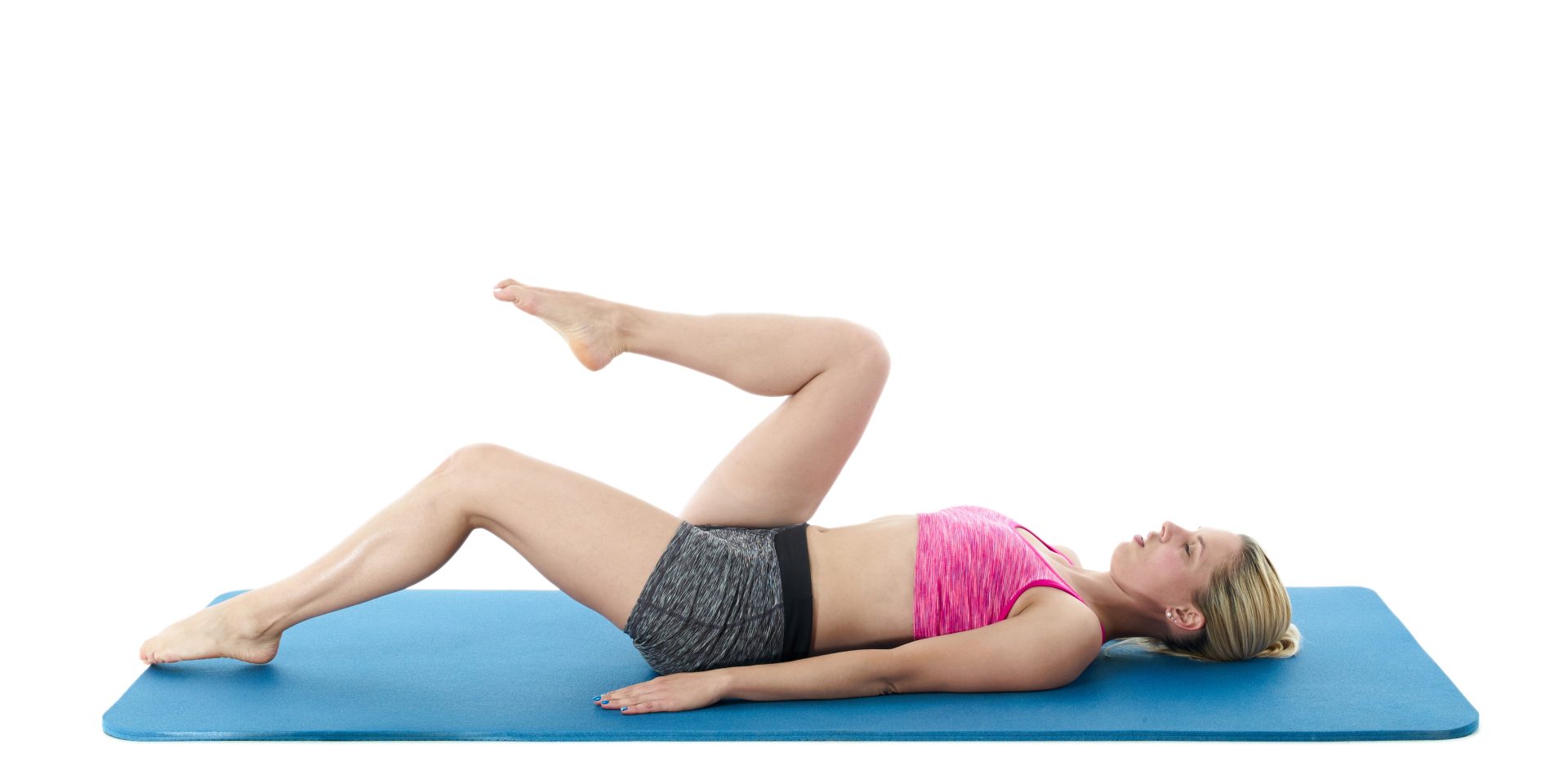
Exercise 1: Supine Hamstring Floor Press — Hamstrings, Glutes — 3 Sets × 30–45 Second Holds
Lie flat on your back with both knees bent to approximately 90 degrees, feet flat on the floor hip-width apart. Press your heels firmly downward into the floor as if trying to drag them toward your hips, but keep your feet from actually moving. You will feel an intense contraction through the back of both thighs and into the glutes.
This is the safest and most accessible entry point for hamstring isometric training because the spine is fully supported, there is zero compressive load on the knees, and the position is easy to replicate consistently. Hold each contraction for 30–45 seconds, breathing steadily throughout — do not hold your breath. Rest 60 seconds between sets.
Beginner modification: Start with 20-second holds and build to 45 seconds over two weeks. Press at roughly 60–70% of perceived maximum effort before progressing to full intensity.
Exercise 2: Wall Hamstring Isometric Press — Hamstrings, Knee Stabilisers — 3 Sets × 30–40 Second Holds Per Leg
Stand approximately 30 centimetres from a wall with your back against it. Lift one foot and press the heel firmly back into the wall at knee height, creating a 90-degree bend at the hip and knee. Drive the heel into the wall with steady, sustained force — the wall doesn’t move, so the hamstring contracts isometrically at a functional joint angle that directly mirrors stair-climbing and walking mechanics.
This single-leg variation also challenges hip stability and reveals asymmetries between left and right that bilateral exercises mask. Hold for 30–40 seconds per side, 3 sets each.
Beginner modification: Use a lower wall contact point (shin height) to reduce the leverage demand, and hold for 20 seconds. Progress to heel height as strength builds.
Exercise 3: Prone Isometric Hamstring Curl — Posterior Thigh, Popliteal Region — 3 Sets × 30–45 Second Holds
Lie face down on a mat with your legs straight. Flex one knee to approximately 60 degrees by lifting the foot off the floor. Now imagine someone is pressing down on your ankle trying to straighten your knee — resist that imaginary force by contracting the hamstring hard and holding the position without letting the angle change.
This targets the hamstring at a shorter muscle length than the floor press, which is important because strength at different lengths does not always transfer automatically — training at multiple joint angles builds a more complete strength profile. The prone position also gently extends the hip, engaging the gluteal fibres alongside the hamstrings. Perform 3 sets of 30–45 second holds per leg, resting 60 seconds between each.
Beginner modification: Start with 15-degree flexion (barely off the floor) and gradually increase the angle as control improves. This minimises early-stage tendon loading.
Mistake 1: Holding Your Breath During the Contraction — Correction: Exhale Slowly Throughout the Hold
Breath-holding during an isometric effort is the most common technical error, and it is circulation-specific in its harm: the Valsalva effect briefly impedes venous return to the heart and spikes blood pressure. For someone training specifically to support vascular health, this directly counteracts the circulatory benefit of the hold itself.
The correction is to exhale slowly and continuously through the entire hold. A slow exhale over 4–6 counts, then a relaxed inhale, repeated throughout the hold, maintains the circulatory benefit while sustaining full muscular tension.
Mistake 2: Using Insufficient Contractile Intensity — Correction: Build to 70–80% of Maximum Effort
Many beginners perform isometric holds at 20–30% of their maximum contractile capacity, which produces almost no meaningful tendon stimulus or strength adaptation. An isometric hold that does not create at least moderate discomfort in the muscle is providing a stretch, not a training stimulus.
Research on isometric protocols for tendinopathy specifically recommends 70–80% of maximum voluntary contraction as the threshold for producing collagen synthesis. In practice, the muscle should feel intensely worked within the first 10 seconds of the hold. If you can hold for 60 seconds without noticeable effort, the intensity is too low — increase it or add a resistance band.
Mistake 3: Training Only at One Joint Angle — Correction: Rotate Through Three Angles Each Session
Isometric strength gains are partially angle-specific — meaning strength built at 30 degrees of knee flexion does not fully transfer to 60 or 90 degrees. This is unique to isometric training and not a factor in isotonic work. Training exclusively at one angle builds a gap in your strength profile that leaves you vulnerable at other positions.
The correction is straightforward: include one exercise at a short, one at a medium, and one at a long hamstring length in each session. The prone curl (short), the wall press (medium), and the supine floor press (long) cover this distribution neatly.
50,000+ members already training with Habuild every morning
Live daily sessions · Expert instructor · Cancel anytime
Hamstring Isometric training is not a one-size-fits-all programme — but it is far more broadly accessible than most people assume. Here is who benefits most. Complete Beginners Starting from Zero You do not need any prior fitness experience to begin hamstring isometric exercises. Every movement in a well-structured programme comes with easier modifications — for example, performing the exercise seated, with a reduced range of motion, or using a wall or chair for support. The only requirement is willingness to show up consistently; the strength and technique will follow. People With Joint Pain or Recovering from Injury This training is especially valuable for people managing Joint Pain or Recovering from Injury. Isometric and low-impact variations allow you to build strength at pain-free joint angles without aggravating sensitive tissues. Always begin at a reduced intensity and range, and increase gradually as your body adapts. Office Workers and Sedentary Adults Sedentary adults who spend 6–8 hours sitting daily experience progressive losses in hamstring isometric capacity — this training directly reverses that trend. A 20–30 minute morning session creates a positive hormonal and metabolic shift that persists throughout the working day. Even three sessions per week produce measurable improvements in energy levels, concentration, and posture. Active Adults and Athletes Isometric training is used by elite athletes for tendon strengthening, reactivating inhibited muscles, and maintaining strength during injury recovery. Adding hamstring isometric work alongside dynamic training creates a more complete strength profile and improves force transmission through joints. It is particularly effective as a complement to weightlifting, running, and team sports. Seniors Maintaining Functional Independence Isometric training is ideal for seniors because it builds strength without placing dynamic stress on ageing joints. Joint-angle-specific strengthening improves stability during daily movements — standing up, navigating stairs, carrying groceries — reducing fall risk significantly. The absence of impact and eccentric loading makes isometric work particularly well-tolerated by older adults.
Circulation-Specific Programming — Not a Generic Fitness Class Habuild sessions open with lower-body activation — hamstring isometric holds, leg swings, and glute bridges — to engage the posterior chain muscle pump from the very first minute. They close with inversion-based recovery positions and controlled breath work that facilitates venous return from the legs. This architecture is deliberate: every exercise selection and sequencing decision is made with vascular benefit in mind, not just calorie burn or aesthetic goals. Live Daily Sessions with Real-Time Form Correction The errors that undermine isometric training outcomes — breath-holding, insufficient contractile intensity, wrong body position — are invisible in pre-recorded videos. Habuild sessions are delivered live every morning, and instructors correct these in real time. If your prone hold is collapsing at 15 seconds, your instructor sees it and cues the correction before the set is wasted. Progressive Overload Built into Every Session Members never need to manage their own progression. Hold durations increase week by week, contractile intensity targets are verbally cued upward, and movement complexity — such as transitioning from bilateral to unilateral isometric work — is introduced at the right time according to a structured plan. The vascular and strength stimulus stays meaningful as fitness improves because the programme evolves with you. Accountability, Streaks and Community Tendon remodelling and meaningful circulatory adaptation both require 8–12 weeks of consistent training. Habuild’s daily streak tracking, session reminders, and WhatsApp community are the structural supports that keep members showing up across that window. The members who see the clearest results are the ones who trained most consistently, and the accountability structures exist specifically to support that.
I have been with Habuild for 1,050 days. My energy has increased and I don't feel drained by work anymore. My patience has grown — things that used to stress me out don't affect me the same way. My kids at home have also picked up the yoga habit. Most importantly, my knowledge about breathing and how it affects the entire body has transformed. My nervous system feels calmer, my digestion is better, and there is a steadiness in my body and mind that I had never experienced before.

My homeopathy doctor suggested yoga and I found Habuild. In the free 14 days, I already felt changes. The biggest surprise: I used to be unable to get down from a pavement by myself. Now I can jump. My core and lower body strength have rebuilt themselves through consistent practice. Habuild is a complete package — it strengthens everything, not just flexibility.


Practice Strong Everyday with Trishala Bothra, an IIT-B and London School of Business alumni
Trishala is focused on making movement feel lighter, more engaging, and something you actually look forward to.
In just 3 years, over 50,000 people began their strength journey, and 10,000+ join every week to keep getting stronger.