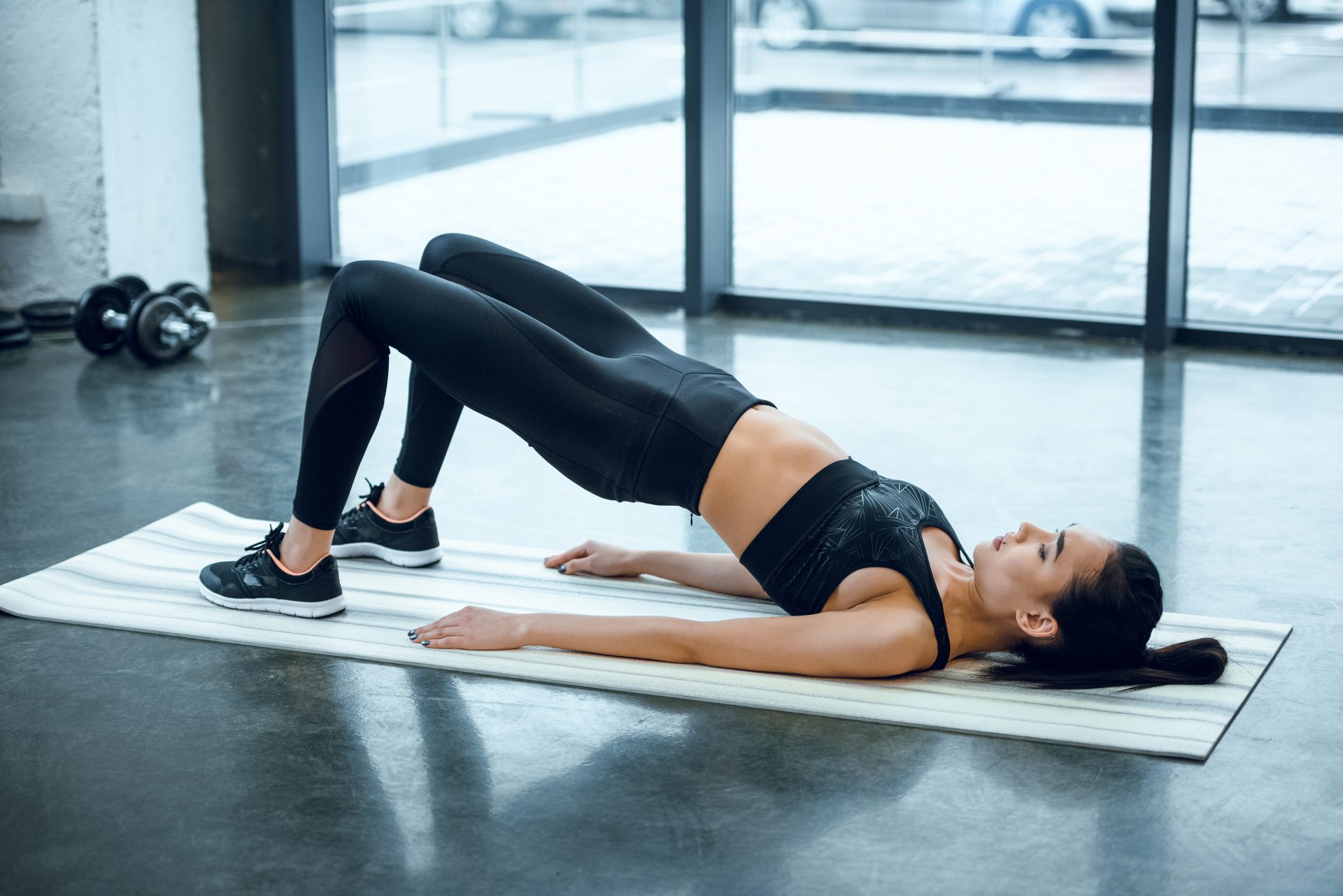
Glute kickbacks are not the same as squats, lunges, or generic “leg day” exercises. They are an isolation movement specifically designed to load and activate the gluteus maximus — the largest muscle in the human body — through hip extension under controlled tension. The most common version is performed in a quadruped position (on hands and knees), with one leg extending back and up while keeping the spine neutral and core engaged. Most casual glute work focuses on high rep counts without addressing the precise hip-extension pattern, neutral pelvis, and isolated glute activation that determines whether the movement actually builds the glutes — or just produces hip flexor fatigue and lower-back strain. The right kickback exercise routine combines correct mechanics, full glute squeeze at end-range, and progressive overload to keep the glutes adapting.
The mechanism is what makes glute kickbacks uniquely effective. Compound movements like squats and deadlifts build glutes alongside quadriceps and hamstrings — but the glute receives only partial focus. The glute kickback exercise isolates hip extension, removing competing muscle groups so the gluteus maximus performs the lift directly. The principle of muscle isolation through joint-specific movements was systematically codified by Bret Contreras in his glute training research, including his 2010 PhD work on gluteus maximus activation across resistance exercises — the most cited reference in modern glute training programming. Beyond pure muscle building, glute kickbacks restore the hip extension function that prolonged sitting destroys, activate dormant glute muscles before larger compound work, and build the posterior chain strength that protects the lower back across all movement.
Benefit 1: Stronger, Bigger, and Better-Shaped Glutes
The most direct benefit — and the primary reason most people search for glute kickback exercises. Isolated hip extension under controlled tension produces glute muscle growth more efficiently than any compound movement alone, particularly for the upper portion of the gluteus maximus that creates the lifted, rounded shape most lifters target. Stat: A 2020 systematic review in the Journal of Strength and Conditioning Research analysing glute activation across exercises confirmed that isolation hip extension movements like kickbacks produce 25–35% greater upper-glute activation than squats alone — making them the most efficient direct glute-shaping exercise available.
Benefit 2: Reduced Lower Back Pain and Better Posture
The symptomatic relief benefit. Most lower back pain in sedentary adults stems from weak glutes failing to extend the hip — leaving the lumbar spine to compensate during everyday movement. Glute kickbacks directly retrain this hip-extension pattern, reducing the back-overcompensation that drives pain. Members managing existing lower back tightness often pair their glute work with our programme to address the full posterior chain that protects the spine.
Benefit 3: Improved Athletic Performance and Functional Movement
The physiological adaptation benefit. The glutes are the primary engine of all forward propulsion — running, sprinting, jumping, climbing — and weak glutes limit performance in every athletic context. Daily glute kickback work activates and strengthens the dormant glute fibres most adults have lost, restoring the explosive hip extension that drives speed and power. Stat: The American College of Sports Medicine confirms that targeted glute strengthening produces measurable improvements in vertical jump (5–10% gains) and sprint performance within 8–12 weeks of consistent practice.
Benefit 4: Better Knee Health and Hip Joint Stability
The secondary-but-significant benefit. Strong glutes — particularly the gluteus medius working alongside the maximus — stabilise the pelvis and knees during all lower-body movement, preventing the knee valgus and hip-drop patterns that drive knee pain and IT-band issues. Members building complete lower-body strength often pair their glute kickback practice with our programme to address the full hip complex that determines lower-body movement quality.
Exercise 1: Standard Glute Kickback (Donkey Kick) — Gluteus Maximus, Core — 3 sets × 15 reps per leg
What it does and why it suits this goal: The standard donkey kick — performed on hands and knees with one leg extending up while keeping the knee bent at 90 degrees — is the foundational glute kickback movement. The bent-knee position isolates the glute by removing hamstring contribution, producing maximum glute-specific activation. Sets and reps: 3 sets of 15 reps per leg with 45 seconds rest between sets, performed 3–4 times per week. Modification: Begin with smaller range of motion if hip mobility is limited, and focus on the squeeze at the top rather than chasing maximum height.
Exercise 2: Straight-Leg Glute Kickback — Glutes + Hamstrings — 3 sets × 12 reps per leg
What it does and why it suits this goal: The straight-leg kickback variation extends the leg fully behind the body, engaging both the glutes and hamstrings simultaneously. This variation builds the glute-hamstring tie-in that creates the rounded lower-glute shape and supports posterior chain strength. Sets and reps: 3 sets of 12 reps per leg with 60 seconds rest, performed 2–3 times per week. Modification: Reduce range of motion and focus on slow controlled tempo if balance feels unstable in the quadruped position.
Exercise 3: Resistance Band Glute Kickback — Loaded Glute Activation — 3 sets × 12 reps per leg
What it does and why it suits this goal: Adding a resistance band around the working ankle dramatically increases the loading and difficulty of the kickback movement — extending the time the glute must work against tension and producing significantly greater muscle stimulus. This is the destination progression once bodyweight kickbacks become easy. Sets and reps: 3 sets of 12 reps per leg with 60 seconds rest, 2–3 times per week. Modification: Start with light bands and progress to heavier resistance over 3–4 weeks. If no band is available, ankle weights or a small dumbbell behind the knee work as substitutes.
Mistake 1: Arching the Lower Back Instead of Extending the Hip — Correction: Maintain Neutral Spine
What it is and why it undermines glute kickback progress: The single most common error in glute kickbacks is arching the lower back to lift the leg higher — which transfers the load from the glute to the lumbar spine, producing back fatigue and minimal glute activation. The leg appears to lift higher, but the glute does almost no work. What to do instead: Maintain a neutral spine throughout every rep, and let the hip extend only as far as the glute can lift the leg without compensation. Range of motion is irrelevant if the wrong muscle is doing the work.
Mistake 2: Rushing Reps Without Glute Squeeze at the Top — Correction: 1-Second Pause and Squeeze at End-Range
What it is and why it undermines glute kickback progress: Fast tempo glute kickbacks build momentum that bypasses glute activation — the leg moves but the glute barely contracts. This is why many members do hundreds of daily kickbacks with no visible glute change. What to do instead: Pause for 1 second at the top of every rep with a deliberate glute squeeze. The pause forces actual muscle activation rather than momentum-driven movement. Members focused on broader glute development often pair their kickback practice with our programme for the comprehensive glute-shaping protocol that combines kickbacks with compound movement.
Mistake 3: Doing Only Glute Kickbacks Without Compound Lower Body Work — Correction: Combine with Squats and Hip Thrusts
What it is and why it undermines glute kickback progress: Isolation kickbacks alone hit a ceiling — they activate the glutes but lack the heavy compound stimulus required for maximum size and strength gains. Members performing only glute kickbacks see early gains then plateau within 6–8 weeks. What to do instead: Use glute kickbacks as activation work and accessory volume alongside compound movements like squats, hip thrusts, and lunges. The combination — compound work for size and isolation for shape — produces results that neither alone can match.
Ready to start? Here’s how Habuild structures glute kickback training every day:
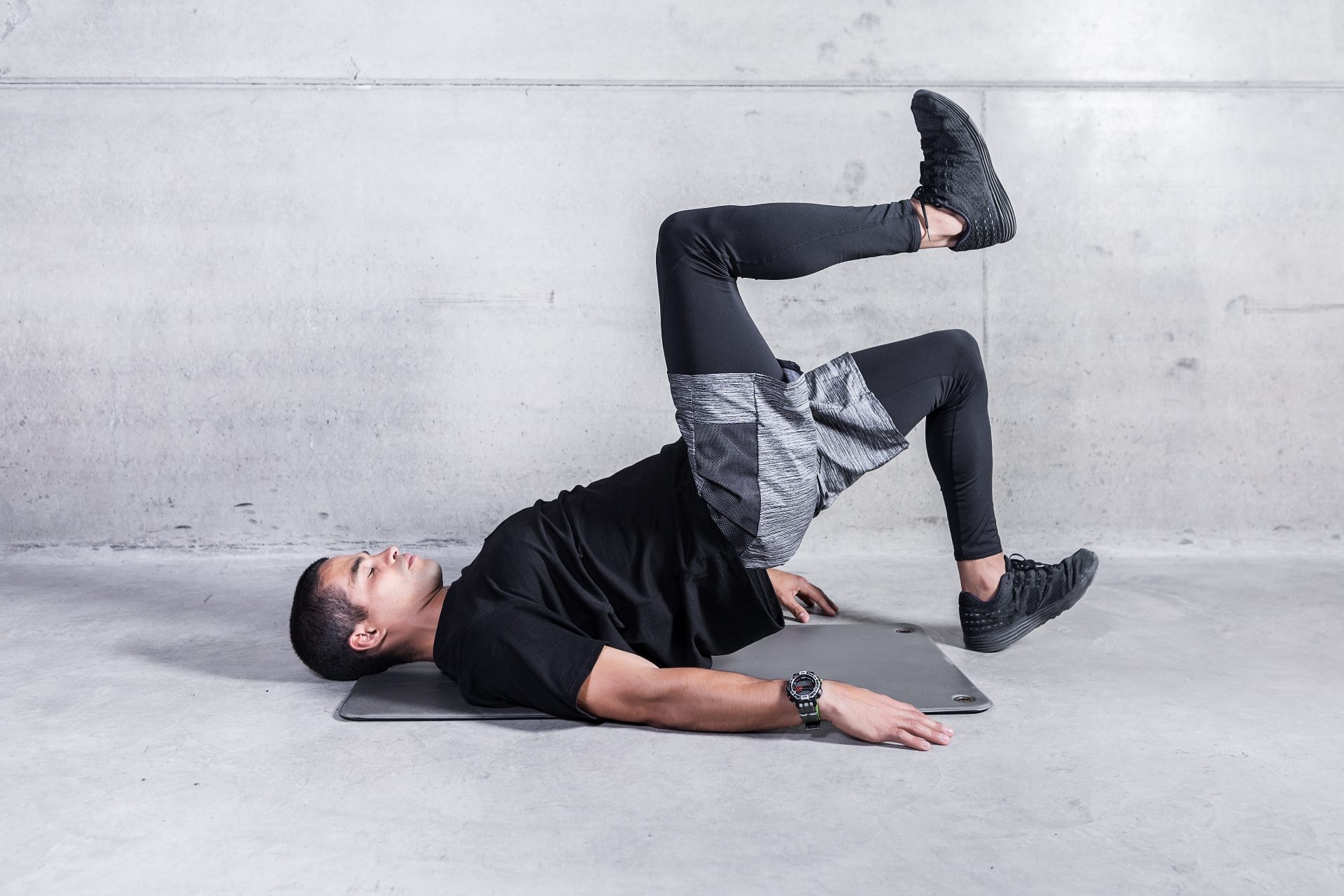
Glute-Specific Programming — Not a Generic Fitness Class
Every exercise selection, sequencing decision, and rest period is chosen for glute-specific benefit. Sessions open with glute activation work like kickbacks to fire up the dormant glute fibres before larger movements, build through compound lower-body patterns that load the glutes under maximum stimulus, and close with isolation accessory work that targets specific glute regions for shape development. This sequencing is the exact opposite of typical home workouts that throw kickbacks in randomly — the structured placement is what locks in genuine glute development.
Live Daily Sessions with Real-Time Form Correction
The live format catches the specific errors that prevent glute kickback progress — lumbar arch instead of hip extension, momentum-driven reps without glute squeeze, and uneven left-right activation patterns most members do not notice in solo training. Real-time correction is something pre-recorded content cannot deliver, and these are the exact errors that undermine glute work even in members training consistently.
Progressive Overload Built into Every Session
Members do not need to programme their own progression. Each week, tempo, range of motion, pause duration, and resistance band loading are adjusted upward so the glutes keep adapting — preventing the plateau that derails most home routines after 4–6 weeks. The same habit-building structure that drives our ensures consistent attendance over the months meaningful glute development actually requires.
Accountability, Streaks and Community
Complete Beginners Starting from Zero
Glute kickbacks are done on all fours on a mat with no equipment. The movement is small and controlled, with difficulty regulated entirely by how far the leg is extended. They are accessible for any fitness level, including those with knee discomfort who cannot squat. The only requirement is showing up consistently — strength and technique follow from that.
Intermediate Trainees Looking to Fill a Gap
Glute kickbacks isolate the gluteus maximus in a position where it can be fully contracted without loading the lower back or requiring any equipment — making them one of the most effective no-equipment glute isolation exercises. They are especially valuable for those who find squats and lunges quad-dominant and want to shift the load to the glutes. Adding glute kickbacks to an existing routine addresses a specific conditioning gap that most general workouts miss.
Those Targeting Glute Activation and Building the Glute-Hamstring Connection
Glute kickbacks isolate the gluteus maximus in a position where it can be fully contracted without loading the lower back or requiring any equipment — making them one of the most effective no-equipment glute isolation exercises. They are especially valuable for those who find squats and lunges quad-dominant and want to shift the load to the glutes.
Senior Citizens and Older Adults (50+)
Glute Kickbacks can be adapted for older adults by controlling tempo, reducing range of motion, and using supported variations. Habuild’s live instructors modify exercises in real time for different fitness levels and physical conditions in the same session.
Is Glute Kickbacks Good for Beginners?
Yes — absolutely. Glute Kickbacks begin at very low intensity with fully accessible entry-level variations. Habuild’s live instructor adapts the session in real time so beginners and experienced trainees can train together without either being left behind.
How Often to Do Glute Kickbacks — Frequency Guide
Train glute kickbacks 4–5 times per week. This frequency gives the muscle and nervous system adequate stimulus without outpacing recovery. Consistency matters more than intensity in the early weeks — showing up regularly produces better results than infrequent all-out sessions.
When in Your Workout to Do Glute Kickbacks
Place glute kickbacks as a glute activation warm-up before squats and deadlifts, or within a dedicated glute session. Sequencing exercises correctly ensures you bring maximum quality to glute kickbacks rather than performing them under accumulated fatigue from earlier work.
What to Pair Glute Kickbacks With
Combine glute kickbacks with clamshells, fire hydrants, and glute bridges for a complete no-equipment glute programme. This combination develops complementary muscle groups in the same session and builds the balanced strength that prevents compensation and injury.
How to Progress Glute Kickbacks Over Time
Once the base movement feels controlled and repeatable, add a resistance band above the knees, increase reps (up to 30 per side), add a 2-second hold at the top, then progress to standing cable kickbacks for resistance variations. Progress only when form is consistent — adding difficulty before mastering the base movement reinforces poor mechanics and stalls long-term results.
Habuild is India’s First Habit Building Program — and through its strength and fitness sessions, it brings the same habit-based philosophy to targeted exercise training. Every session is structured around your specific goal, not a one-size-fits-all class.
Goal-Specific Programming — Not a Generic Fitness Class
Every exercise, rep range, and rest period in Habuild’s glute kickbacks sessions is chosen because it produces results for glute kickbacks specifically. Habuild does not run the same session for every goal — the programme is structured to drive your specific outcome with every session, not general fitness that happens to include glute kickbacks.
Live Daily Sessions with Real-Time Form Correction
Unlike pre-recorded videos, Habuild’s live daily sessions allow the instructor to see and correct your form in real time — the specific errors that limit glute kickbacks results and increase injury risk. This live correction is the difference between training that works and training that wastes effort and creates bad habits.
Progressive Overload Built into Every Session
Members do not need to design their own progressive overload for glute kickbacks — it is built into the programme structure. Each week, sessions are deliberately more challenging than the last, ensuring the body never fully adapts and results continue coming rather than stalling.
Accountability, Streaks, and Community
The most common reason people stop exercising is not effort — it is missing sessions until the habit breaks. Habuild’s streak system, live session accountability, and community of members training the same goal alongside you resolves this directly. Members who join with a specific goal like glute kickbacks and stay consistent for 30 days almost universally report that showing up has become automatic.
My homeopathy doctor suggested yoga and I found Habuild. In the free 14 days, I already felt changes. The biggest surprise: I used to be unable to get down from a pavement by myself. Now I can jump. My core and lower body strength have rebuilt themselves through consistent practice. Habuild is a complete package — it strengthens everything, not just flexibility.
I have been with Habuild for 1,050 days. My energy has increased and I don't feel drained by work anymore. My patience has grown — things that used to stress me out don't affect me the same way. My kids at home have also picked up the yoga habit. Most importantly, my knowledge about breathing and how it affects the entire body has transformed. My nervous system feels calmer, my digestion is better, and there is a steadiness in my body and mind that I had never experienced before.



Practice Strong Everyday with Trishala Bothra, an IIT-B and London School of Business alumni
Trishala is focused on making movement feel lighter, more engaging, and something you actually look forward to.
In just 3 years, over 50,000 people began their strength journey, and 10,000+ join every week to keep getting stronger.