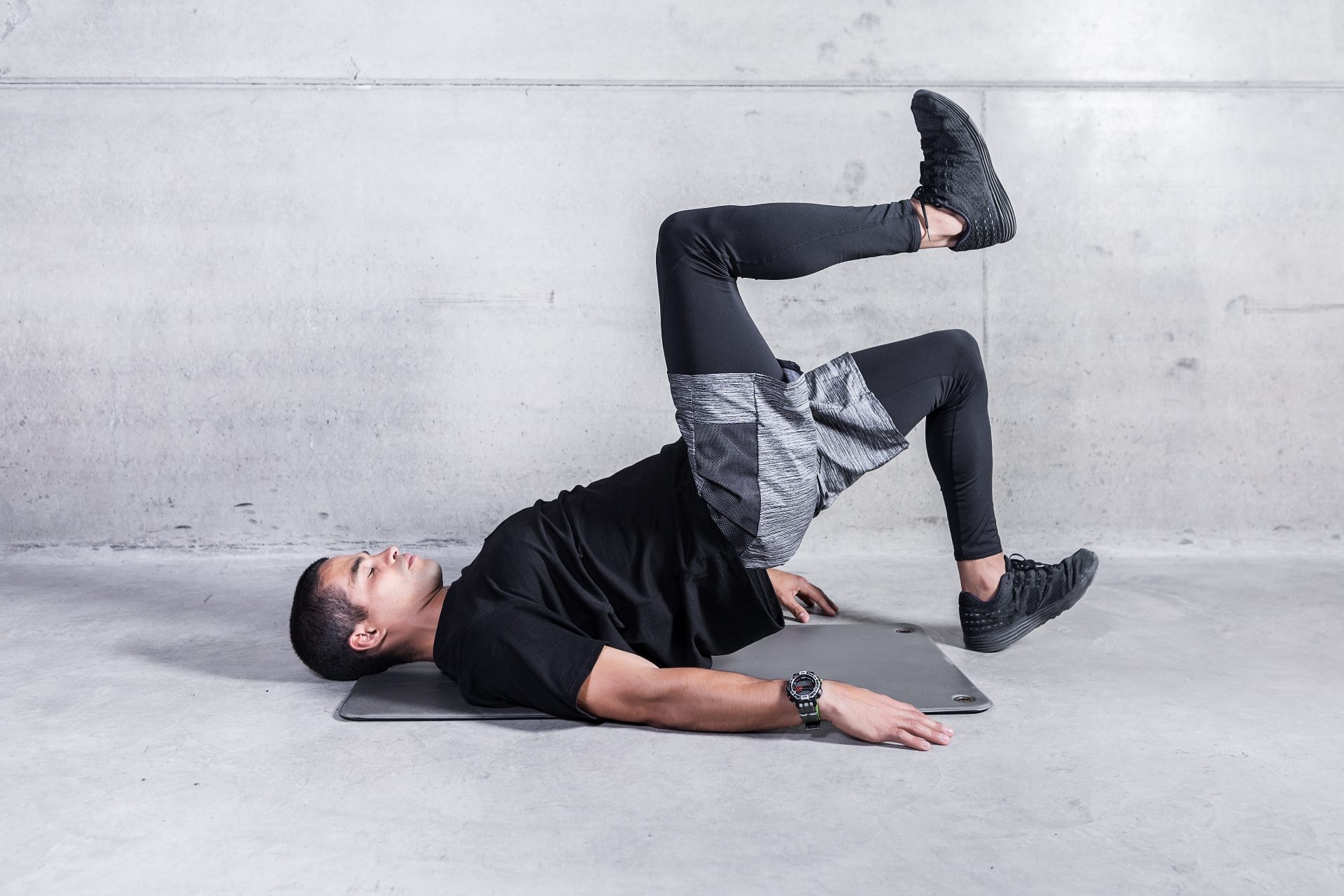
Fire hydrants exercises are a quadruped bodyweight movement performed on hands and knees. Starting in a tabletop position — wrists under shoulders, knees under hips, neutral spine — you lift one bent leg out to the side until the thigh is roughly parallel to the floor, then return with control. The name comes from the unmistakable resemblance to the gesture a dog makes at a fire hydrant. Despite the comedic origin, the exercise is one of the highest-yield glute-shaping movements in any home routine. Variations expand the toolkit: the dog fire hydrant exercise (with leg straight rather than bent) emphasises the hip flexor angle differently; donkey hydrants combine the lift with a leg extension to engage the glute maximus more directly; and weighted versions add ankle weights or resistance bands for advanced trainees.
The mechanism is what makes fire hydrants uniquely effective for the glutes. Most lower-body exercises (squats, lunges, deadlifts) train the gluteus maximus through hip extension. Fire hydrants train a different muscle group — the gluteus medius — through hip abduction (lifting the leg out to the side). The gluteus medius is the side glute responsible for hip stability when standing on one leg, walking, running, or climbing stairs. Weak gluteus medius leads to a “valley” shape on the side hip, knee tracking issues, and lower back compensation patterns. Fire hydrant exercise muscles worked also include the hip abductors (tensor fasciae latae and the deep external rotators), which together create the rounded “side shelf” shape most fitness-focused trainees are after. For broader lower-body programming that integrates glute medius work with compound lifts, the programme covers fire hydrants alongside squats, lunges and deadlifts.
Targets the Often-Neglected Gluteus Medius
Squats and lunges hit the gluteus maximus (the largest glute muscle) but neglect the gluteus medius — the side glute responsible for hip width and stability. Fire hydrants are one of the few unweighted bodyweight exercises that directly train this muscle. EMG research on hip-abduction exercises (Distasio et al. and follow-up gluteus medius literature) shows fire hydrants produce high maximum voluntary contraction in the gluteus medius — comparable to weighted hip abduction machines.
Improves Hip Stability and Single-Leg Function
The gluteus medius is responsible for keeping the pelvis level during single-leg loading — walking, running, climbing stairs, standing on one foot. Weak medius produces hip drop, knee valgus (knees caving inward) and lower back compensation. Daily fire hydrant training corrects this within 4–6 weeks, improving every form of locomotion. Stat: research on hip-abductor strength and lower-extremity injury rates (Khayambashi and follow-up running biomechanics literature) shows runners with stronger hip abductors have meaningfully lower knee injury rates over 12-month observation periods.
Sculpts the Side Glute “Shelf” Shape
The rounded side-glute appearance most fitness-focused trainees are after comes from gluteus medius hypertrophy. Fire hydrants build this muscle directly and visibly within 8–12 weeks of consistent practice combined with reasonable eating. The “valley” between hip and quad fills in; the silhouette of the side hip becomes rounded and athletic.
Reduces Lower Back Pain From Hip Compensation
Many cases of chronic lower back pain stem from weak hips — the back overworks because the hips can’t stabilise the pelvis correctly. Fire hydrants reduce this compensation by building the lateral hip muscles that should be doing the stabilising. Members who add daily fire hydrants frequently report unexpected back-pain reduction within 4–6 weeks.
Exercise 1: Standard Fire Hydrant — Gluteus Medius + Hip Abductors — 3 sets × 15 reps each side
Start on hands and knees, wrists under shoulders, knees under hips, spine neutral, core braced. Keeping the right knee bent at 90°, lift the right leg out to the side until the thigh is parallel to the floor (or as high as you can without rotating the torso). Lower with control. 3 sets × 15 reps, switch sides. The foundational fire hydrant. Modification: reduce the lift height if the hip abductors fatigue early; place a yoga block or rolled towel under the supporting hand for wrist relief.
Exercise 2: Donkey Hydrants (Fire Hydrant + Kick) — Gluteus Medius + Maximus — 3 sets × 12 reps each side
Same starting position. Lift the bent leg out to the side (fire hydrant), then extend the leg straight back into a donkey kick (squeezing the glute), then return through the side position to start. That’s 1 rep. 3 sets × 12 reps each side. The combined movement engages both gluteus medius (via the side lift) and gluteus maximus (via the rear extension) — one of the most metabolically demanding glute exercises in any home routine. Modification: separate the two movements (do 8 fire hydrants, then 8 donkey kicks each side) until the combined pattern feels coordinated.
Exercise 3: Banded Fire Hydrant — Loaded Gluteus Medius — 3 sets × 12 reps each side
Loop a mini-resistance band around both legs just above the knees. Standard fire hydrant position, lift the bent leg out to the side against the band’s resistance. 3 sets × 12 reps each side. The added resistance forces deeper gluteus medius engagement and significantly accelerates muscle development. Save this for week 4+ once standard fire hydrant form is locked. Modification: use a lighter band initially; start with a thinner activation band before progressing to a thicker glute band.
Mistake 1: Leaning to the Opposite Side as You Lift — Correction: Keep Hips Square, Spine Neutral
The most common fire hydrant error: as the leg lifts, the upper body rotates and leans onto the supporting hand to make the lift easier. The gluteus medius barely engages — the obliques and shoulder do all the work. What to do instead: imagine balancing a glass of water on your lower back. Keep hips square to the floor, shoulders square to the floor, and let the lift come purely from the hip joint. If you can’t lift as high without leaning, that’s fine — reduce the range of motion and do the work properly.
Mistake 2: Rotating the Hip Instead of Abducting — Correction: Lead With the Outer Knee, Not the Toe
Fire hydrants done with poor hip control turn into hip rotation rather than hip abduction — the knee opens, the toe points up, but the leg doesn’t actually move out to the side. The gluteus medius doesn’t engage. What to do instead: imagine the outer knee leading the movement, not the toe. Keep the foot relatively neutral throughout. If you watch yourself in a mirror, the knee should travel directly out to the side, not up toward the ceiling.
Mistake 3: Doing Only Glute-Isolation Without Compound Lifts — Correction: Pair With Squats and Lunges
Fire hydrants are excellent for gluteus medius isolation, but they don’t build overall lower-body strength on their own. Members who do only fire hydrants stay weak in compound movements that matter for daily life. What to do instead: use fire hydrants as a glute activation/isolation pre-workout, then move to compound lifts (squats, lunges, deadlifts). Programmes like integrate this combination so the side glutes AND the full posterior chain develop together.

Glute-Specific Programming, Not Generic Lower-Body Work
Most online lower-body routines are 80% squats and lunges with token “glute work” added at the end. Habuild’s daily sessions explicitly programme fire hydrants alongside other glute-isolation work (clamshells, glute bridges, hip thrusts) AND compound lifts in a balanced weekly rotation, ensuring all three glute heads (maximus, medius, minimus) develop together.
Live Daily Sessions With Real-Time Form Correction
The lean-to-the-side error, the hip-rotation error, the wrist-collapse error — all corrected within seconds on the live call. Fire hydrants done with bad form do nothing for the gluteus medius and may flare wrists or lower back. Live correction is what makes the difference.
Progressive Overload Built Into Every Session
Week 1: standard fire hydrant, 12 reps with focus on form. Week 4: clean fire hydrant with full range, 15 reps. Week 6: donkey hydrants combining lift and kick. Week 8: banded fire hydrant for added resistance. Members don’t programme this — duration, complexity and load build progressively within the live class flow.
Accountability, Streaks and Community
Visible glute change takes 8–12 weeks of unbroken practice. Daily streak tracking, the WhatsApp community and live morning sessions keep members on the mat through the slow window where the gluteus medius is rebuilding silently before any visible shape change appears.
Complete Beginners Starting from Zero
Fire hydrants are done on all fours on the floor with no equipment. The movement is small and controlled, making it appropriate for complete beginners and those with hip or lower back sensitivity. The only requirement is showing up consistently — strength and technique follow from that.
Intermediate Trainees Looking to Fill a Gap
Fire hydrants directly target the hip abductors and gluteus medius — muscles that are chronically underused in desk-based adults and often weak in runners and cyclists. Strengthening these muscles corrects hip drop, reduces lower back pain, and improves the stability of every lower-body movement. Adding fire hydrants exercises to an existing routine addresses a specific conditioning gap that most general workouts miss.
Those with Hip Weakness, Glute Imbalances, and Lower Back Pain
Fire hydrants directly target the hip abductors and gluteus medius — muscles that are chronically underused in desk-based adults and often weak in runners and cyclists. Strengthening these muscles corrects hip drop, reduces lower back pain, and improves the stability of every lower-body movement.
Senior Citizens and Older Adults (50+)
Fire Hydrants Exercises can be adapted for older adults by controlling tempo, reducing range of motion, and using supported variations. Habuild’s live instructors modify exercises in real time for different fitness levels and physical conditions in the same session.
Is Fire Hydrants Exercises Good for Beginners?
Yes — absolutely. Fire Hydrants Exercises begin at very low intensity with fully accessible entry-level variations. Habuild’s live instructor adapts the session in real time so beginners and experienced trainees can train together without either being left behind.
How Often to Do Fire Hydrants Exercises — Frequency Guide
Train fire hydrants exercises 3–4 times per week. This frequency gives the muscle and nervous system adequate stimulus without outpacing recovery. Consistency matters more than intensity in the early weeks — showing up regularly produces better results than infrequent all-out sessions.
When in Your Workout to Do Fire Hydrants Exercises
Place fire hydrants exercises as a glute activation warm-up before squats, lunges, or running, or within a dedicated glute session. Sequencing exercises correctly ensures you bring maximum quality to fire hydrants exercises rather than performing them under accumulated fatigue from earlier work.
What to Pair Fire Hydrants Exercises With
Combine fire hydrants exercises with clamshells, glute bridges, and donkey kicks for a complete hip abductor and glute medius programme. This combination develops complementary muscle groups in the same session and builds the balanced strength that prevents compensation and injury.
How to Progress Fire Hydrants Exercises Over Time
Once the base movement feels controlled and repeatable, add a resistance band just above the knees, increase reps (up to 25 per side), add a 2-second hold at the top, then progress to standing cable hip abductions. Progress only when form is consistent — adding difficulty before mastering the base movement reinforces poor mechanics and stalls long-term results.
Habuild is India’s First Habit Building Program — and through its strength and fitness sessions, it brings the same habit-based philosophy to targeted exercise training. Every session is structured around your specific goal, not a one-size-fits-all class.
Goal-Specific Programming — Not a Generic Fitness Class
Every exercise, rep range, and rest period in Habuild’s fire hydrants exercises sessions is chosen because it produces results for fire hydrants exercises specifically. Habuild does not run the same session for every goal — the programme is structured to drive your specific outcome with every session, not general fitness that happens to include fire hydrants exercises.
Live Daily Sessions with Real-Time Form Correction
Unlike pre-recorded videos, Habuild’s live daily sessions allow the instructor to see and correct your form in real time — the specific errors that limit fire hydrants exercises results and increase injury risk. This live correction is the difference between training that works and training that wastes effort and creates bad habits.
Progressive Overload Built into Every Session
Members do not need to design their own progressive overload for fire hydrants exercises — it is built into the programme structure. Each week, sessions are deliberately more challenging than the last, ensuring the body never fully adapts and results continue coming rather than stalling.
Accountability, Streaks, and Community
The most common reason people stop exercising is not effort — it is missing sessions until the habit breaks. Habuild’s streak system, live session accountability, and community of members training the same goal alongside you resolves this directly. Members who join with a specific goal like fire hydrants exercises and stay consistent for 30 days almost universally report that showing up has become automatic.
"120-day streak. The valley between hip and quad had bothered me for years. 10 weeks of daily fire hydrants plus banded variations and the rounded side-glute shape finally appeared. Couldn't have built this with squats alone — needed the targeted abduction work."
"180-day streak. Six years of intermittent lower back pain that physiotherapy only partially fixed. Habuild added daily fire hydrants and clamshells to my routine — back pain dropped 80% within 6 weeks. Turns out it was hip stability, not back strength."


Practice Strong Everyday with Trishala Bothra, an IIT-B and London School of Business alumni
Trishala is focused on making movement feel lighter, more engaging, and something you actually look forward to.
In just 3 years, over 50,000 people began their strength journey, and 10,000+ join every week to keep getting stronger.