Exercises for hair growth are specifically selected movements that directly improve the conditions for hair follicle health and activity — not general fitness exercises that produce only indirect benefits.
Hair follicles are among the most metabolically active tissue in the body, requiring continuous delivery of oxygen, nutrients, and hormonal signals.
Poor scalp circulation — from chronic tension, poor posture, or insufficient aerobic activity — is the most modifiable environmental factor in hair loss.
Any exercise for hair growth benefits the follicles by improving this circulation.
The mechanism operates through three pathways.
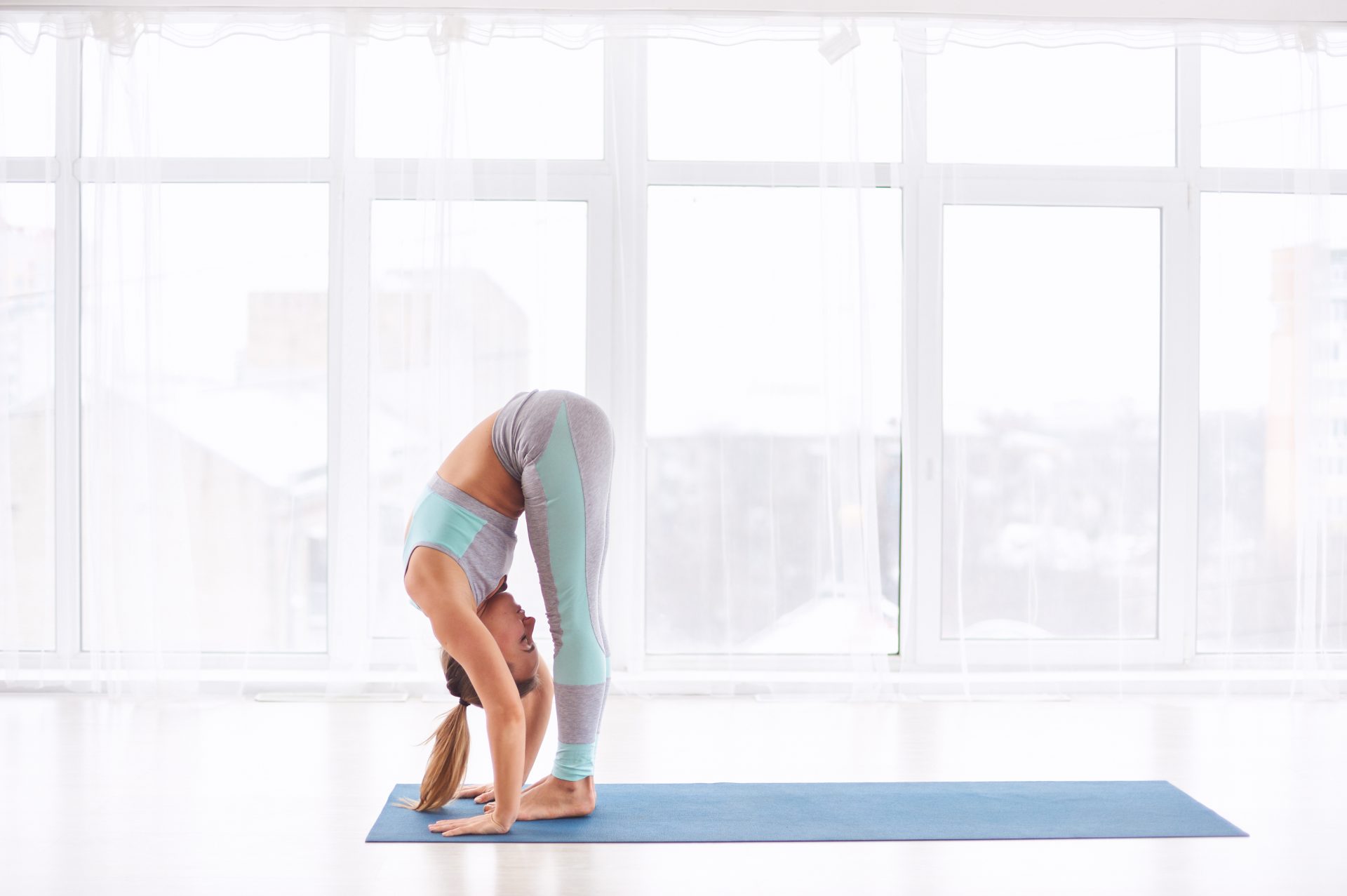
First: inversions (Sirsasana, Uttanasana) reverse gravity-driven blood pooling, sending oxygenated blood to the scalp at higher pressure than upright positions allow — direct follicular oxygen delivery.
Second: Kapalbhati and aerobic exercise reduce cortisol effluvium, the most common stress-related hair fall pattern).
Third: Balayam yoga (nail rubbing) stimulates the nerve endings in the nail beds which correspond reflexologically to the scalp, activating follicular activity through a neural pathway.
Any exercise for hair growth that combines these three mechanisms produces the most comprehensive available natural intervention.
Improved Scalp Circulation
Direct Follicular Oxygen Delivery Every hair follicle depends on a dedicated blood supply for oxygen, nutrients, and the hormonal signals that regulate its growth cycle. Exercise-driven scalp circulation improvement directly supports follicular health and can reactivate dormant follicles that have entered the resting phase due to chronic poor circulation. Research: Scalp massage (which produces similar circulatory effects to yoga inversions) applied for 24 weeks produced measurable improvement in hair thickness, with mechanical scalp stimulation showing 9.6 micron improvement in hair shaft diameter — European Journal of Dermatology, 2018.
Cortisol Reduction
Preventing Stress-Driven Hair Fall Stress-elevated cortisol produces telogen effluvium — the mass hair shedding that follows major stress events (illness, emotional trauma, work pressure) by 2–3 months. Regular yoga and aerobic exercise reduce cortisol and activate the parasympathetic state in which the anagen (growth) phase of the hair cycle is most active.
Hormonal Balance
Managing DHT and Androgen Influence Benefits of exercise for hair include significant hormonal effects relevant to androgenetic alopecia: aerobic exercise increases SHBG (which binds and reduces free DHT), yoga reduces cortisol-driven adrenal androgen production, and strength training improves insulin sensitivity (relevant in PCOS-related hair loss). WHO: Regular moderate exercise significantly improves hormonal health markers including testosterone regulation and stress hormone balance — mechanisms directly relevant to hair loss prevention.
Improved Sleep Quality
Supporting Overnight Hair Repair Growth hormone — the primary signal for hair follicle repair and growth cycle progression — is predominantly secreted during deep sleep. Yoga’s consistently documented sleep quality improvement amplifies this natural nightly hair restoration mechanism.
Protein — The Foundation of Hair Growth Training
Aim for 1.6–2.0g of protein per kg of bodyweight per day. Best sources include eggs, paneer, lentils (dal), chicken, Greek yoghurt, and whey protein. Distribute protein evenly across 3–4 meals rather than loading it all in one sitting. Adequate protein is non-negotiable — without it, training effort produces minimal adaptation regardless of programme quality.
Carbohydrates — Fuel for Hair Growth Performance
Complex carbohydrates (oats, brown rice, sweet potato, whole wheat roti) should form 40–50% of total calories. Consume a carbohydrate-containing meal 60–90 minutes before your exercises for hair growth session to ensure glycogen availability. Post-session carbohydrates restore muscle glycogen within the critical 30-minute recovery window.
Anti-Inflammatory Foods for Recovery
Include turmeric (with black pepper for bioavailability), ginger, and omega-3 rich foods (flaxseeds, walnuts, fatty fish) daily. These directly reduce the systemic inflammation that accumulates with consistent training, speeding recovery between sessions.
Hydration — Often Underestimated
Aim for 35–40ml of water per kg of bodyweight daily. Add an additional 500ml for every 30 minutes of active training. Even mild dehydration (2% body weight) measurably reduces strength output and exercise capacity.
Before You Begin — Setting Your Baseline
Before beginning, assess your current fitness level honestly. Can you complete 10 bodyweight squats with good form? Can you hold a plank for 20 seconds? These are the practical baselines for this programme. Set a specific, measurable goal — not just ‘get stronger’ but ‘complete all sessions consistently for 8 weeks’. Identify what space and equipment you have available.
Week 1–2: Foundation and Form
Focus entirely on movement quality, not load or intensity. Every exercise should be performed through full range of motion with controlled tempo. Use this phase to build the motor patterns that make exercises for hair growth training safe and effective long-term. 3 sessions per week is the optimal starting frequency — enough stimulus for adaptation, enough recovery to avoid overuse.
Week 3–4: Building Progressive Load
Once form is consistent, introduce progressive overload by adding 1–2 reps per set or a small increase in resistance each week. Track your sessions in a simple log — date, exercises, sets, reps. This data tells you exactly when to progress and prevents both undertraining and overtraining.
Ongoing: Consistency Over Intensity
The single biggest determinant of hair growth results is session consistency over 8–12 weeks. Missing one session is inconsequential; missing two consecutive weeks disrupts adaptation. Habuild’s live daily sessions are specifically designed to remove the decision-making barrier — the session is always there, always structured.
Balayam Yoga (Nail Rubbing)
Scalp Nerve Activation — 5–10 minutes daily Target: Nail bed nerve endings, scalp circulation via reflex pathways. Why it works: Balayam is the most traditional and widely practised any exercise for hair growth in the yoga system — rubbing the fingernails stimulates nerve endings that correspond reflexologically to the scalp. Daily exercise for hair growth through Balayam is accessible anywhere and at any time. Note: Avoid rubbing the thumbs — this may stimulate facial hair growth. Beginner modification: Seated, nails of both hands facing each other, brisk rubbing for 5 minutes.
Uttanasana (Standing Forward Fold)
Scalp Circulation Inversion — Hold 1–2 minutes daily Target: Scalp blood flow via gravity-assisted inversion, posterior neck muscles. Why it works: As the head drops below the heart in Uttanasana, blood flows to the scalp at higher pressure — delivering the oxygen and nutrients to follicles that upright posture cannot achieve as efficiently. Best exercises for hair growth that is beginner-appropriate. Frequency: Morning and evening, 1–2 minutes each. Beginner modification: Knees bent generously, progressive deepening as hamstrings allow.
Kapalbhati Pranayama
Cortisol + Hormonal Regulation — 10 minutes daily (empty stomach) Target: Cortisol, adrenal androgens, hormonal balance, metabolic activation. Why it works: The single most important exercise for hair growth for its hormonal effects — reducing the cortisol and adrenal androgen excess that drives the two most common hair fall patterns (telogen effluvium and androgenetic alopecia) simultaneously. Daily exercise for hair growth through Kapalbhati addresses what no topical treatment can reach. Beginner modification: Begin at 30 exhalations/minute, build to 60 over 4 weeks.
Expecting Quick Results
Abandoning Before the Hair Growth Cycle Hair follicles operate on a growth cycle of 3–6 months — any improvement in follicular health takes this long to manifest as visible new growth.
Abandoning exercises for hair growth after 4–6 weeks misses the results that were accumulating.
Fix:
Track the rate of hair fall (count hairs lost daily) as the early progress indicator — this reduces before new growth appears.
Consistent practice for 4–6 months produces the visible new hair growth that the exercise enables.
Only Doing Inversions Without Cortisol Reduction Inversions improve scalp circulation but don’t address the cortisol-driven follicular suppression that is the most common cause of accelerating hair loss.
Fix:
Combine inversions (scalp circulation) with Kapalbhati and Anulom Vilom (cortisol reduction) for the complete exercise for hair growth benefits approach.
Skipping Balayam During the Day Balayam is unique among exercises for hair growth in that it can be practised anywhere — during commuting, desk work, or television watching — yet most practitioners restrict it to formal practice sessions.
Fix:
Practise Balayam during every available idle moment throughout the day. The cumulative 30+ minutes of daily nail rubbing that this produces is far more effective than 5 minutes in formal sessions.
Stimulate Hair Growth with Expert Daily Practice
— 14-Day Free Trial
Complete Beginners Starting from Zero
No prior experience with exercises for hair growth is required to start. Every movement is taught from its most foundational form, with modifications for those who cannot yet perform the standard version. Live instructor feedback prevents the form errors that cause beginners to plateau or get injured before results arrive.
Intermediate Trainees Who Have Hit a Plateau
If you have been exercising inconsistently or without structured progressive overload, exercises for hair growth delivers the systematic load progression that general fitness classes do not. The programme targets the specific weaknesses and imbalances holding you back, producing results that months of unstructured training have failed to achieve.
Women Across All Life Stages
From managing hair growth to building long-term functional strength, women benefit from targeted, progressive training that respects hormonal fluctuations and individual capacity. Habuild’s all-women session options provide a supportive, non-intimidating environment.
Circulation-Specific Programming — Scalp First Habuild’s hair wellness sessions open with Balayam (neural scalp stimulation), progress through Kapalbhati (cortisol reduction), and close with Uttanasana and Sirsasana (gravity-assisted scalp circulation) — the combined sequencing that addresses all three hair growth mechanisms.
Live Daily Sessions with Real-Time Corrections
Balayam technique (which fingernails to use) and Kapalbhati pace for hormonal optimisation are correctable through live guidance. Saurabh provides the real-time instruction that makes every hair growth exercise maximally effective.
Progressive Overload Built In
Inversion durations, Kapalbhati session length, and Balayam frequency are progressively increased — building cumulative follicular stimulation over months.
Accountability, Streaks and Community
Hair growth exercises require 4–6 months of consistent daily practice before visible results. Habuild’s daily accountability sustains this long-term commitment.
The classes are easy to follow, perfectly suited to my fitness level, and always leave me feeling positive.
This was my first time trying strength sessions, and I absolutely loved it! I joined out of curiosity.


Practice Strong Everyday with Trishala Bothra, an IIT-B and London School of Business alumni
Trishala is focused on making movement feel lighter, more engaging, and something you actually look forward to.
In just 3 years, over 50,000 people began their strength journey, and 10,000+ join every week to keep getting stronger.