A close grip push up routine that builds triceps and inner chest through a fundamentally different loading pattern.
1. Narrow hand placement loads triceps and inner chest
2. Improved triceps strength within 3-4 weeks
3. Visible arm and chest development in 8-12 weeks
4. Guided by senior instructor Saurabh Bothra's live classes
5. Not just a harder version of the standard push up

Close grip push ups are not just a “harder version” of the standard push up — they are a fundamentally different exercise that loads the triceps, inner chest, and shoulders in a pattern standard push ups do not achieve. With hands placed roughly shoulder-width apart (or narrower) directly under the shoulders, and elbows tracking close to the ribs rather than flaring out, the movement shifts mechanical emphasis from the outer pectoralis major to the triceps brachii and the inner sternal head of the chest. Most casual push up content treats hand placement as cosmetic — missing how dramatically narrow grip changes the muscle loading and the strength outcomes the movement produces. The right close push up practice combines correct hand position, controlled elbow tracking, and progressive overload to build the triceps and inner chest in ways no other bodyweight movement matches.
The mechanism is mechanically clear. Wider push up hand positions create a longer lever arm at the shoulder and shorter at the elbow — loading the chest. Narrow hand positions reverse this: shorter lever at the shoulder, longer at the elbow — loading the triceps preferentially. The variable lever-arm principle in push up variations was systematically validated in Cogley et al.’s 2005 study published in the Journal of Strength and Conditioning Research, which used EMG analysis to confirm that narrow-grip push ups produce significantly greater triceps activation than standard hand placements. Beyond pure muscle building, close hand push ups develop the elbow stability and forearm strength most desk-bound adults systematically lose, build the lockout strength that supports overhead pressing, and create a balanced upper body where most home routines over-develop the chest at the triceps’ expense.
Benefit 1: Bigger, Stronger Triceps Without Equipment
The most direct benefit — and the primary reason serious calisthenics practitioners include narrow push ups in every upper-body routine. The triceps make up roughly two-thirds of the upper arm’s mass, and close grip push ups are the most effective bodyweight movement for building them. Stat: A 2017 study in the Journal of Sports Science and Medicine analysing push up variations confirmed that narrow-grip variations produce 30–40% greater triceps activation than standard push ups across all subjects tested.
Benefit 2: Inner Chest Development and Better Chest Definition
The aesthetic benefit most lifters do not realise narrow push ups deliver. The inner sternal head of the chest receives substantially more loading from close hand positions than from standard or wide push ups — producing the inner chest definition that creates a fuller, more sculpted appearance. Members focused on broader chest development often pair narrow push up work with our programme to address the complete chest-shaping protocol that combines narrow, standard, and wide variations.
Benefit 3: Stronger Lockout, Better Pressing Strength, and Improved Joint Stability
The functional adaptation benefit. The triceps are the primary muscles responsible for completing every pushing movement — locking out push ups, presses, and overhead extensions. Strengthening them through close hand push ups improves all upper-body pressing strength and protects the elbow joint during heavier weighted work. Stat: The National Strength and Conditioning Association confirms that bodyweight pressing variations performed with controlled tempo produce measurable strength carryover to weighted bench press performance within 6–10 weeks of consistent training.
Benefit 4: Wrist, Forearm, and Core Strength Improvements
The secondary-but-significant benefit. Close push ups engage the wrists and forearms more intensely than wider variations, while the narrower base of support requires significantly greater core engagement to maintain rigid plank position. Members building broader full-body strength alongside narrow push up work often pair their training with our programme for the complete upper-arm protocol that addresses biceps and triceps in balanced fashion.
Exercise 1: Standard Close Grip Push Up — Triceps, Inner Chest, Shoulders, Core — 3 sets × 8–12 reps
What it does and why it suits this goal: The standard close grip push up is the foundational narrow variation — hands placed shoulder-width apart directly under the shoulders, elbows tracking close to the ribs (never flaring out), and chest descending to within an inch of the floor. This is the exercise that builds the triceps and inner chest most efficiently. Sets and reps: 3 sets of 8–12 reps with 60 seconds rest, performed 3 times per week. Modification: Knee close push ups for absolute beginners — same hand position and elbow tracking, but knees on the floor to reduce loading. Build to standard close push ups over 2–4 weeks.
Exercise 2: Diamond Push Up — Maximum Triceps Isolation — 3 sets × 6–10 reps
What it does and why it suits this goal: The diamond push up brings the hands together under the chest with thumbs and index fingers touching to form a triangle — the narrowest possible hand position and the most extreme triceps-loading variation of the push up family. It is the destination exercise for serious triceps development through bodyweight training alone. Sets and reps: 3 sets of 6–10 reps with 90 seconds rest, performed 2 times per week. Modification: Begin with hands slightly wider than full diamond position, and progress hand placement closer over weeks as elbow strength builds.
Exercise 3: Tempo Close Grip Push Up — Increased Time Under Tension — 3 sets × 8 reps with 4-second descent
What it does and why it suits this goal: The tempo variation slows the eccentric phase to 4 seconds, dramatically increasing time under tension and building strength through the full range of motion. This variation is one of the most effective ways to continue progressing close push up strength once standard reps become easy without adding weight. Sets and reps: 3 sets of 8 reps with 4-second descent, 2-second pause at bottom, and explosive press up, with 90 seconds rest, performed 2 times per week. Modification: Reduce descent to 2 seconds initially and build duration as control improves.
Mistake 1: Letting Elbows Flare Out to the Sides — Correction: Keep Elbows Tracking Close to the Ribs
What it is and why it undermines close grip push up progress: Flared elbows during close push ups defeat the entire purpose of the exercise — they shift loading from the triceps back to the chest and shoulders, and place damaging stress on the shoulder joints over time. Many members perform what they think are close grip push ups while actually loading the same muscles as standard push ups. What to do instead: Keep elbows tracking close to the ribs throughout every rep, almost grazing the sides of the body during the descent. The narrow elbow path is what makes the close push up actually load the triceps.
Mistake 2: Cutting Range of Motion Short — Correction: Chest to the Floor on Every Rep
What it is and why it undermines close grip push up progress: Half-rep close push ups — common when fatigue accumulates — capture only the easy upper portion of the movement, producing minimal triceps stimulus and reinforcing weak positions in the bottom of the press. The growth is in the bottom range, not the top. What to do instead: Lower the chest to within an inch of the floor on every rep. If full depth is currently unattainable, perform from elevated hands (counter or chair) and gradually lower the elevation as strength builds. Quality of depth always beats quantity of reps.
Mistake 3: Doing Only Close Grip Push Ups Without Other Upper Body Variations — Correction: Combine with Standard and Wide Push Ups
What it is and why it undermines close grip push up progress: Performing only narrow push ups creates muscular imbalance — over-developing the triceps and inner chest while under-loading the outer chest and shoulders. The result is asymmetric upper-body development and increased shoulder injury risk over time. What to do instead: Include close grip push ups alongside standard and wider variations in a balanced upper-body routine. Members building complete upper-body strength often pair their close push up practice with our programme for the comprehensive variation protocol that builds balanced upper-body development.
Ready to start? Here’s how Habuild structures close grip push up training every day:
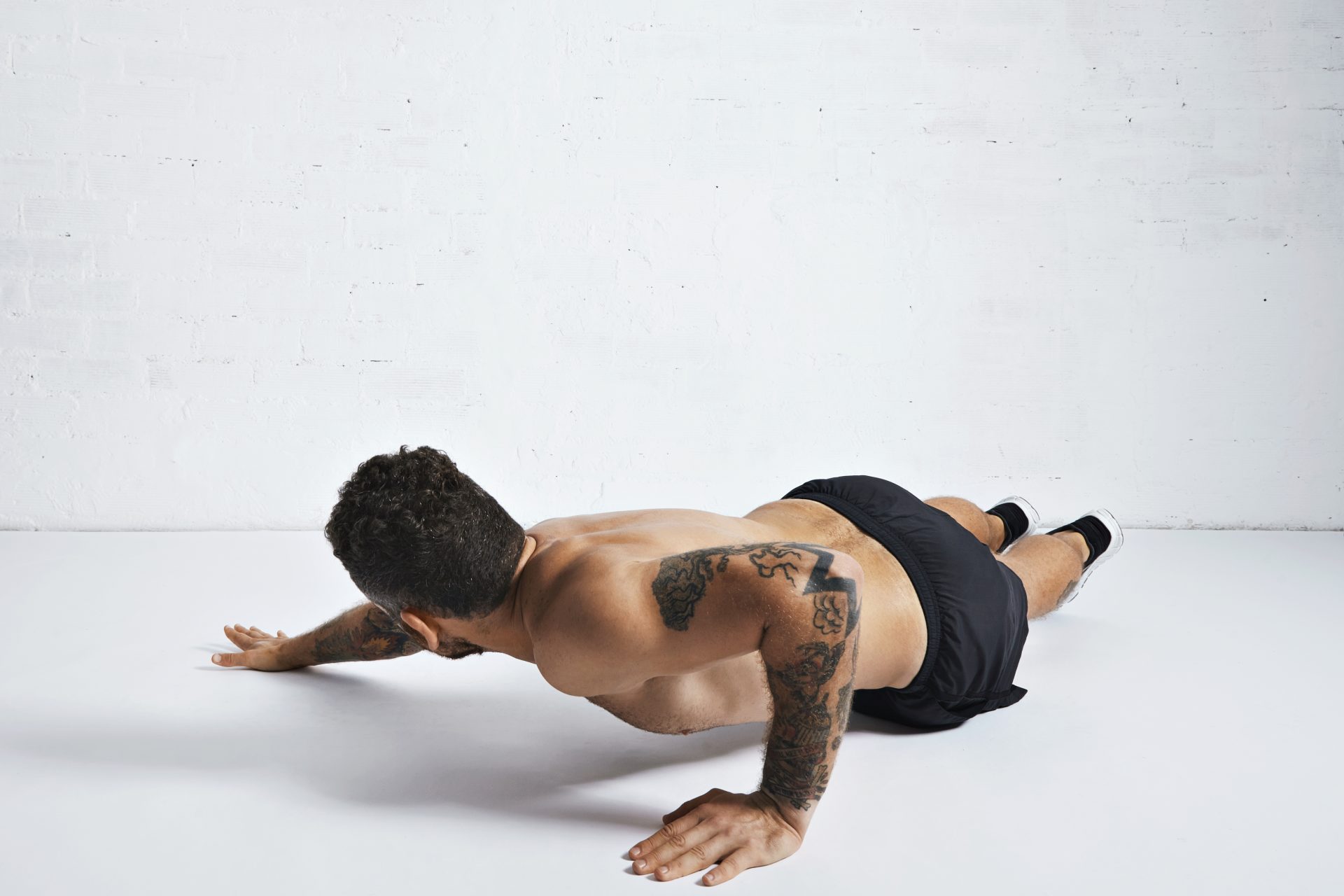
Push Up-Specific Programming — Not a Generic Fitness Class
Every exercise selection, sequencing decision, and rest period is chosen for narrow-grip-specific benefit. Sessions open with shoulder and wrist mobility work that prepares the joints for the close grip pressing pattern, build through close push up variations at progressive depth and tempo, and close with complementary pulling work that maintains the upper-body balance close push ups alone cannot deliver. This sequencing is the exact opposite of typical home workouts that throw narrow push ups into a random mix — the structured programming is what builds genuine strength rather than fatigue.
Live Daily Sessions with Real-Time Form Correction
The live format catches the specific errors that prevent close grip push up progress — flared elbows that shift loading to the chest, half-depth reps that miss the strength-building bottom range, and uneven left-right loading most members do not notice in solo training. Real-time correction is something pre-recorded content cannot deliver, and these are the exact errors that undermine narrow push up work even in members training consistently.
Progressive Overload Built into Every Session
Members do not need to programme their own progression. Each week, hand placement (gradually narrower toward diamond position), tempo, depth, and complexity (elevated feet for advanced loading) are adjusted upward so the triceps and inner chest keep adapting — preventing the plateau that derails most home routines after 4–6 weeks. The same habit-building structure that drives our ensures consistent attendance over the months meaningful close grip push up progression actually requires.
Accountability, Streaks and Community
Complete Beginners Starting from Zero
Close grip push-ups begin from the knees for those who cannot yet perform the full variation. The hand position — thumbs touching or slightly wider — is the only change from a standard push-up. Anyone who can do 5 standard push-ups can start here. The only requirement is showing up consistently — strength and technique follow from that.
Intermediate Trainees Looking to Fill a Gap
Close grip push-ups shift the primary load from the pectorals to the triceps, making them the most effective no-equipment tricep exercise. They are the ideal intermediate step between standard push-ups and diamond push-ups for anyone building pressing strength. Adding close grip push-ups to an existing routine addresses a specific conditioning gap that most general workouts miss.
Those Building Tricep Strength and Working Toward Diamond Push-Ups
Close grip push-ups shift the primary load from the pectorals to the triceps, making them the most effective no-equipment tricep exercise. They are the ideal intermediate step between standard push-ups and diamond push-ups for anyone building pressing strength.
Senior Citizens and Older Adults (50+)
Close Grip Push-Ups can be adapted for older adults by controlling tempo, reducing range of motion, and using supported variations. Habuild’s live instructors modify exercises in real time for different fitness levels and physical conditions in the same session.
Is Close Grip Push-Ups Good for Beginners?
Yes — absolutely. Close Grip Push-Ups begin at very low intensity with fully accessible entry-level variations. Habuild’s live instructor adapts the session in real time so beginners and experienced trainees can train together without either being left behind.
How Often to Do Close Grip Push-Ups — Frequency Guide
Train close grip push-ups 3–4 times per week. This frequency gives the muscle and nervous system adequate stimulus without outpacing recovery. Consistency matters more than intensity in the early weeks — showing up regularly produces better results than infrequent all-out sessions.
When in Your Workout to Do Close Grip Push-Ups
Place close grip push-ups after standard push-ups in a push-focused session, as the tricep-emphasis compound movement. Sequencing exercises correctly ensures you bring maximum quality to close grip push-ups rather than performing them under accumulated fatigue from earlier work.
What to Pair Close Grip Push-Ups With
Combine close grip push-ups with standard push-ups, triceps dips, and overhead tricep extensions for a complete tricep programme. This combination develops complementary muscle groups in the same session and builds the balanced strength that prevents compensation and injury.
How to Progress Close Grip Push-Ups Over Time
Once the base movement feels controlled and repeatable, progress from knee-supported to full close grip push-ups, then increase reps, add a pause at the bottom, and finally work toward diamond push-ups. Progress only when form is consistent — adding difficulty before mastering the base movement reinforces poor mechanics and stalls long-term results.
Habuild is India’s First Habit Building Program — and through its strength and fitness sessions, it brings the same habit-based philosophy to targeted exercise training. Every session is structured around your specific goal, not a one-size-fits-all class.
Goal-Specific Programming — Not a Generic Fitness Class
Every exercise, rep range, and rest period in Habuild’s close grip push-ups sessions is chosen because it produces results for close grip push-ups specifically. Habuild does not run the same session for every goal — the programme is structured to drive your specific outcome with every session, not general fitness that happens to include close grip push-ups.
Live Daily Sessions with Real-Time Form Correction
Unlike pre-recorded videos, Habuild’s live daily sessions allow the instructor to see and correct your form in real time — the specific errors that limit close grip push-ups results and increase injury risk. This live correction is the difference between training that works and training that wastes effort and creates bad habits.
Progressive Overload Built into Every Session
Members do not need to design their own progressive overload for close grip push-ups — it is built into the programme structure. Each week, sessions are deliberately more challenging than the last, ensuring the body never fully adapts and results continue coming rather than stalling.
Accountability, Streaks, and Community
The most common reason people stop exercising is not effort — it is missing sessions until the habit breaks. Habuild’s streak system, live session accountability, and community of members training the same goal alongside you resolves this directly. Members who join with a specific goal like close grip push-ups and stay consistent for 30 days almost universally report that showing up has become automatic.
I have been with Habuild for 1,050 days. My energy has increased and I don't feel drained by work anymore. My patience has grown — things that used to stress me out don't affect me the same way. My kids at home have also picked up the yoga habit. Most importantly, my knowledge about breathing and how it affects the entire body has transformed. My nervous system feels calmer, my digestion is better, and there is a steadiness in my body and mind that I had never experienced before.

My homeopathy doctor suggested yoga and I found Habuild. In the free 14 days, I already felt changes. The biggest surprise: I used to be unable to get down from a pavement by myself. Now I can jump. My core and lower body strength have rebuilt themselves through consistent practice. Habuild is a complete package — it strengthens everything, not just flexibility.


Practice Strong Everyday with Trishala Bothra, an IIT-B and London School of Business alumni
Trishala is focused on making movement feel lighter, more engaging, and something you actually look forward to.
In just 3 years, over 50,000 people began their strength journey, and 10,000+ join every week to keep getting stronger.