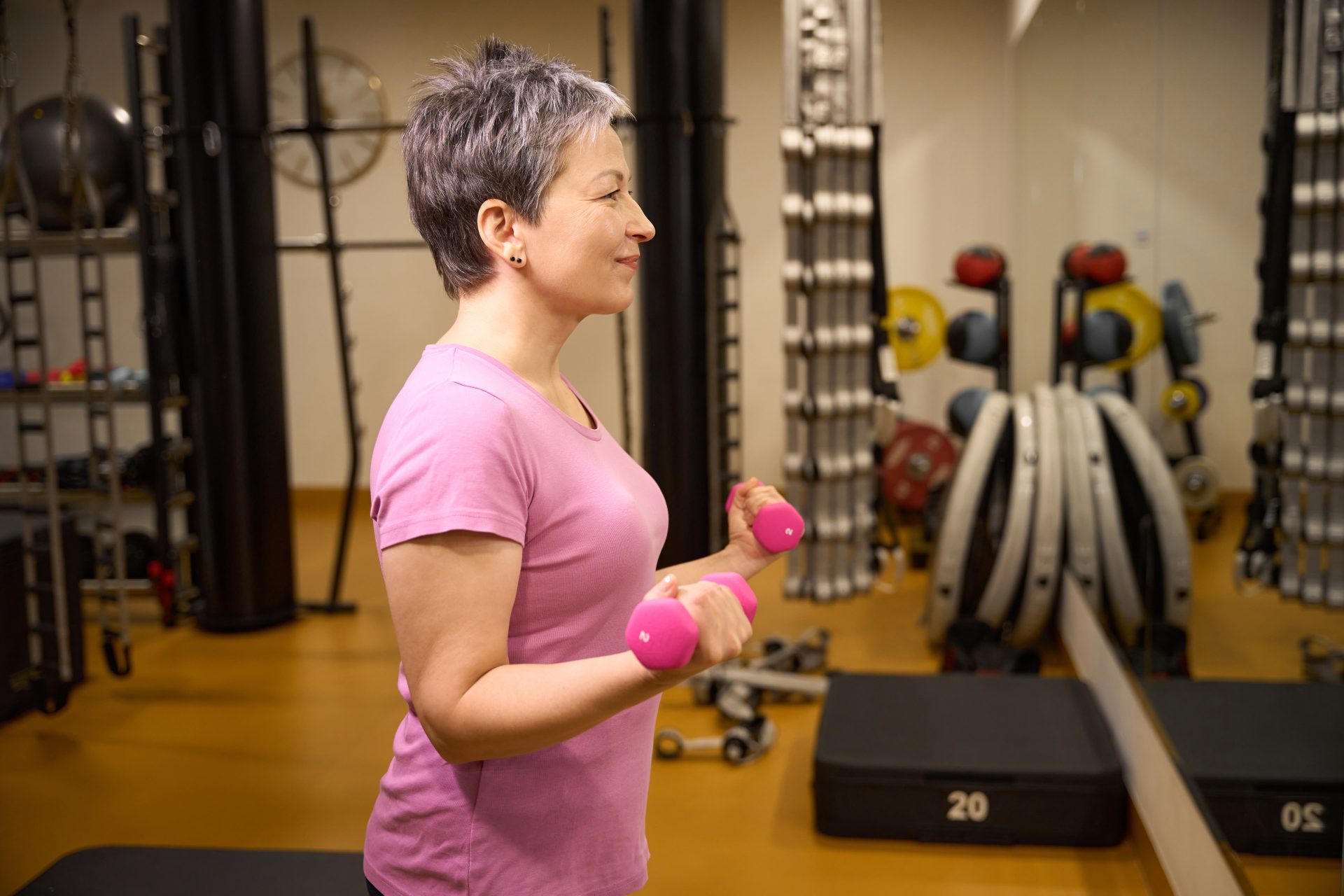
Bicep isometric exercises are movements where you contract the bicep muscle and hold that contraction at a fixed joint angle — without any shortening or lengthening of the muscle. Unlike standard curls that move through a full range of motion, isometric exercises apply continuous tension at a specific point in the range. This makes them uniquely effective for targeting weak points in the lift, building tendon resilience, and training the nervous system to recruit more muscle fibres at once. The physiological mechanism is straightforward. When you hold a position — pressing your forearm against a wall, holding a load mid-curl, or self-resisting your own arm — the bicep brachii and brachialis muscles fire maximally to maintain the angle against force. Blood flow restriction at that held position combined with sustained neural drive triggers both muscular hypertrophy and strength adaptation. Contractions at 70–100% of maximum voluntary contraction, held for 6–10 seconds, have been shown in peer-reviewed literature to produce strength gains equivalent to or greater than full-range dynamic training — particularly around the specific joint angle being trained.
Stronger Arms Across Every Movement Pattern
The most direct benefit of isometric bicep training is measurable strength gain at the joint angles you train. When the bicep becomes stronger under sustained load, every pulling movement — rows, pull-ups, carry tasks, lifting in daily life — improves. Every muscle fibre, tendon attachment, and stabilising tissue around the elbow gets progressively stronger.
Studies show that consistent isometric training produces strength gains of up to 5% per week in the trained joint angle during short-to-medium training blocks.
Relief for Elbow and Tendon Discomfort
Most people searching for bicep isometrics are experiencing some form of elbow pain, bicep tendon irritation, or discomfort during dynamic curling. Isometric loading — specifically wall presses, self-resisted holds, and fixed-angle contractions — applies controlled stress to the tendon without compressive or shear forces, supporting gradual tendon remodelling over time.
Exercises like the isometric wall curl, table-press hold, and mid-range self-resisted curl specifically counteract the tendon overload caused by repetitive dynamic movements.
Joint-Friendly Hypertrophy Without Heavy Loads
Consistent isometric bicep training builds measurable muscle size over 6–12 weeks, even at bodyweight or low external loads. The mechanism — sustained time under tension — produces the same anabolic signalling as heavier dynamic work, without the joint stress.
The WHO recommends at least 150 minutes per week of moderate-intensity muscle-strengthening activity; isometric training counts fully toward this threshold with zero equipment and near-zero injury risk.
Improved Grip, Posture, and Elbow Stability
A secondary but significant benefit: stronger bicep isometric contractions improve grip strength and elbow joint stability simultaneously. This cascades into better posture at the shoulder, reduced strain during desk or manual work, and more confident movement throughout the day.
Members who add grip strength exercises alongside isometric bicep work consistently report faster overall arm development.
What you eat directly determines how fast you recover, how much you progress, and how consistently you can train. Here is what your nutrition plan should look like to support your bicep isometric training effectively.
Protein — Supporting Muscle Under Sustained Tension
Isometric training creates sustained muscular tension that demands repair — target 1.4–1.8 g of protein per kg of body weight. Distribute intake across 3–4 meals for optimal muscle protein synthesis rather than loading it all at once. Good sources include eggs, paneer, lentils, chicken, and low-fat curd.
Calcium and Vitamin D — Joint and Bone Health
Joint and connective tissue health depends heavily on calcium and Vitamin D working together. Aim for 1000–1200 mg of calcium daily from dairy (milk, curd, paneer), ragi, sesame seeds (til), and leafy greens. Get 15–20 minutes of morning sunlight on exposed skin to maintain Vitamin D levels and improve calcium absorption.
Anti-Inflammatory Foods — Faster Recovery
Recovery speed is directly influenced by your body’s inflammatory status. Turmeric with black pepper (curcumin + piperine), fresh ginger, and omega-3 fatty acids from flaxseeds, walnuts, and fatty fish all actively reduce exercise-induced inflammation. Include these consistently rather than only on hard training days.
Hydration — Performance and Joint Lubrication
Adequate hydration supports joint lubrication, muscle function, and nutrient transport — aim for 2.5–3 L of water daily. Drink at least 500 ml before your morning exercise session to prime circulation and joint mobility. Herbal teas and coconut water count toward your fluid intake and provide additional micronutrients.
Magnesium — Muscle Function and Sleep Quality
Magnesium governs over 300 enzymatic reactions including muscle contraction and relaxation — making it essential for any movement-based training. Include pumpkin seeds, bananas, dark chocolate (70%+), spinach, and whole grains in your daily diet. Many Indians are mildly deficient; if you experience frequent muscle cramps or poor sleep quality, a magnesium glycinate supplement may help.
Starting a new training programme is often the hardest part. Here is a clear, week-by-week plan to begin your bicep isometric training without injury or overwhelm.
Before You Begin — Setting Your Baseline
Before starting isometric training, note which movements or joint angles currently cause pain or significant discomfort. Isometric contractions can be performed at pain-free joint angles, making them ideal for working around existing injuries. Set a goal like holding each contraction for 45–60 seconds with full effort by the end of week 8.
Week 1–2: Foundation
Begin with hold durations of 15–20 seconds per contraction at moderate effort (60–70% of your maximum). Focus on maintaining perfect alignment — isometric exercises expose postural weaknesses very clearly. Initial muscle soreness will be mild compared to dynamic training because there is no eccentric component.
Week 3–4: Building Consistency
Progress hold durations to 30–40 seconds and begin increasing the effort level toward 75–80% of maximum. Practising at the same time each morning helps because joint stiffness (worst in the morning) gradually reduces through consistent isometric work. Add one new isometric variation per week as your form and endurance improve.
Week 5–8: Progression
Full-duration holds of 45–60 seconds at high effort become achievable for most people between weeks 5 and 7. You may notice improved joint stability and reduced discomfort during daily activities — this is the training transferring to real life. Consider adding dynamic work alongside isometrics to build through full ranges once your baseline strength has improved.
Isometric training rewards patience and precision — consistency at moderate effort outperforms sporadic maximum-effort sessions.
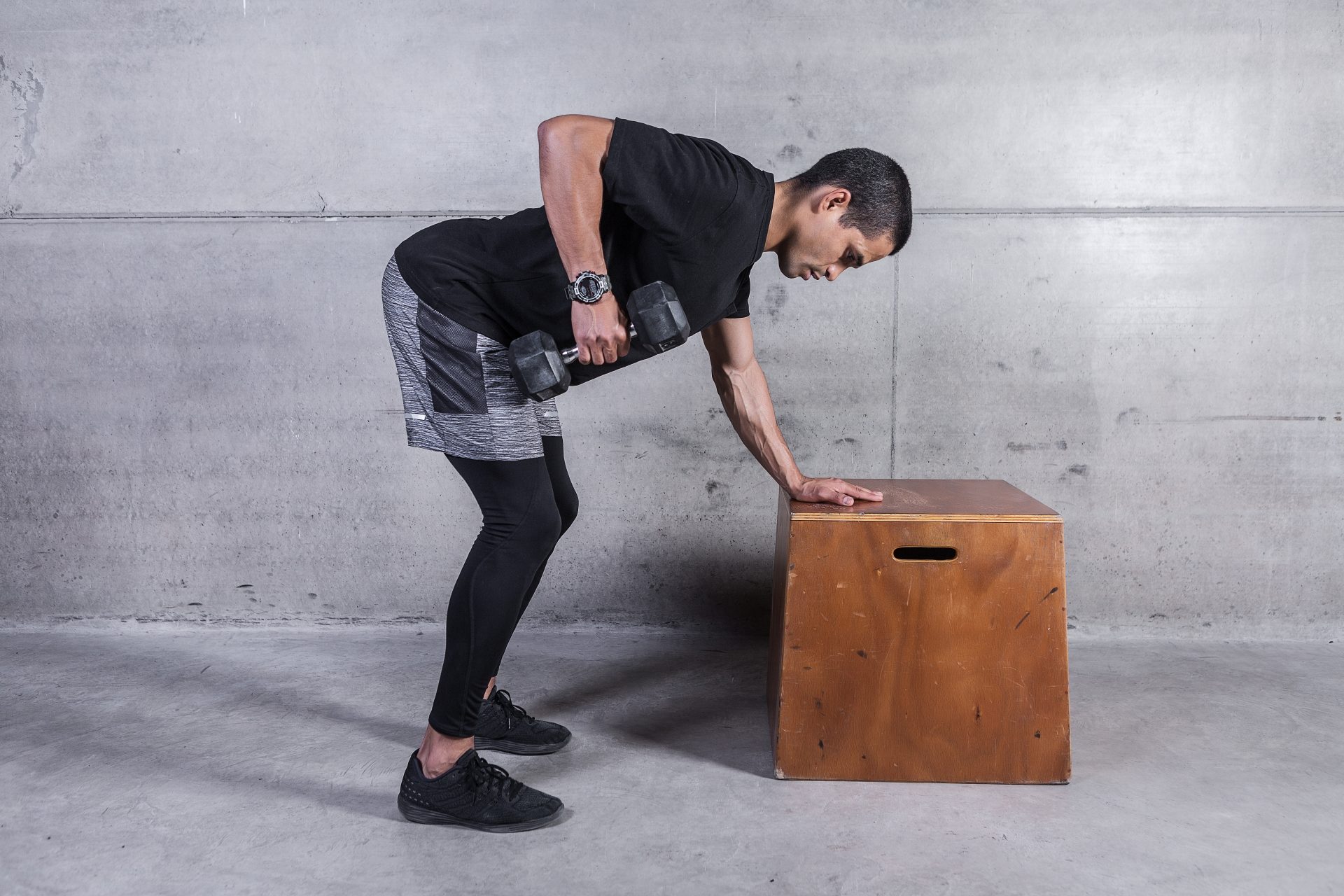
Exercise 1 — Isometric Wall Curl — Bicep Brachii and Brachialis — 6 × 10-Second Holds
What it does: Stand facing a wall, press the back of your forearm upward into the wall at a 90-degree elbow angle, and hold the contraction for 10 seconds. This isolates the bicep at its mechanically strongest position — mid-range — where peak torque production is highest. It is the single best entry point for bicep isometric training because it requires no equipment, produces no joint movement, and allows precise intensity control through pressure variation.
Dosage: 6 sets of 10-second holds, 15 seconds rest between sets, 4–5 times per week.
Beginner modification: Start with 5-second holds at 50% perceived effort. Build to full 10-second holds over two weeks before increasing pressure against the wall.
Exercise 2 — Self-Resisted Isometric Curl — Full Bicep Complex — 4 × 8-Second Holds at 3 Angles
What it does: Use your opposite hand to resist the working arm at three joint angles — 45°, 90°, and 135° — performing an 8-second isometric hold at each angle within a single set. This multi-angle approach addresses the strength curve across the entire range of motion, which single-angle isometrics miss. It is especially effective for people whose biceps feel weak at the top or bottom of a curl.
For a complete look at exercises for biceps that complement this method, pair multi-angle isometrics with tempo-controlled dynamic curls.
Dosage: 4 sets of 3-angle circuit (8 seconds per angle), 20 seconds rest between sets, 4 times per week.
Beginner modification: Perform at a single angle (90°) only for the first two weeks. Add the second and third angles once you can sustain full tension without shaking.
Exercise 3 — Table-Press Isometric Hold — Bicep Tendon and Forearm Flexors — 3 × 12-Second Holds
What it does: Seated at a table, place your palms under the table edge and press upward as hard as possible — as though trying to lift the table — while keeping the elbow at approximately 80–85 degrees. This supinated (palms-up) pressing position drives the highest activation of both the bicep brachii and the supinator muscle, making it the most functional of the three isometric variations for everyday strength. It also trains the bicep tendon under compression-free load, which supports tendon health over time.
Pairing this with structured bicep strength training creates a complete arm development routine.
Dosage: 3 sets of 12-second holds, 20 seconds rest, 5 times per week.
Beginner modification: Use a very light upward press for the first week — the goal is to feel the bicep fire, not to maximise force. Progress intensity gradually over weeks 2–3.
Mistake 1 — Training Only at One Angle — Correction: Use Three Angles Per Session
What it is: Most people perform all their isometric holds at a 90-degree elbow angle because it feels the strongest. While 90 degrees is effective, training only at this angle leaves the top and bottom thirds of the bicep’s strength curve underdeveloped. Over time, this creates a genuine weak point that limits both performance and appearance.
What to do instead: Cycle through 45°, 90°, and 120–135° holds across your weekly sessions. Dedicate two sessions per week to the angles that feel weakest — those positions are where the most strength is waiting to be built.
Mistake 2 — Holding Breath During Contractions — Correction: Exhale Steadily Through the Hold
What it is: Isometric holds naturally trigger the Valsalva manoeuvre — a breath-holding, intra-abdominal pressure response. For most people doing 6–12 second holds across multiple sets, sustained breath-holding spikes blood pressure unnecessarily and accelerates fatigue in the working muscle, reducing the quality of contraction.
This is particularly important when combining isometrics with core strength exercises in the same session.
What to do instead: Inhale before the hold, then exhale slowly and steadily through the full duration of the contraction. This maintains neural drive to the bicep while keeping cardiovascular stress minimal.
Mistake 3 — Progressing Too Fast in Hold Duration Before Intensity — Correction: Increase Contraction Force Before Duration
What it is: Beginners almost universally increase hold time — going from 10-second holds to 30-second holds — thinking longer equals more growth. A 30-second hold at 30% effort produces far less adaptive stimulus than a 10-second hold at 85–90% maximum voluntary contraction. Long, low-effort holds build local muscular endurance, not strength or hypertrophy.
What to do instead: Keep hold durations between 6–12 seconds and progressively increase the force applied — more pressure against the wall, more resistance from the opposing hand — before extending duration. Intensity drives adaptation; duration supports endurance only after intensity is established.
Bicep Isometric training is not a one-size-fits-all programme — but it is far more broadly accessible than most people assume. Here is who benefits most.
Complete Beginners Starting from Zero
You do not need any prior fitness experience to begin bicep isometric exercises. Every movement in a well-structured programme comes with easier modifications — for example, performing the exercise seated, with a reduced range of motion, or using a wall or chair for support. The only requirement is willingness to show up consistently; the strength and technique will follow.
People With Joint Pain or Recovering from Injury
This training is especially valuable for people managing Joint Pain or Recovering from Injury. Isometric and low-impact variations allow you to build strength at pain-free joint angles without aggravating sensitive tissues. Always begin at a reduced intensity and range, and increase gradually as your body adapts.
Office Workers and Sedentary Adults
Sedentary adults who spend 6–8 hours sitting daily experience progressive losses in bicep isometric capacity — this training directly reverses that trend. A 20–30 minute morning session creates a positive hormonal and metabolic shift that persists throughout the working day. Even three sessions per week produce measurable improvements in energy levels, concentration, and posture.
Active Adults and Athletes
Isometric training is used by elite athletes for tendon strengthening, reactivating inhibited muscles, and maintaining strength during injury recovery. Adding bicep isometric work alongside dynamic training creates a more complete strength profile and improves force transmission through joints. It is particularly effective as a complement to weightlifting, running, and team sports.
Seniors Maintaining Functional Independence
Isometric training is ideal for seniors because it builds strength without placing dynamic stress on ageing joints. Joint-angle-specific strengthening improves stability during daily movements — standing up, navigating stairs, carrying groceries — reducing fall risk significantly. The absence of impact and eccentric loading makes isometric work particularly well-tolerated by older adults.
Bicep-Specific Programming — Not a Generic Fitness Class
Every session in Habuild’s strength training programme is sequenced for specific muscular outcomes — not random exercise variety. For arm strength, sessions open with joint-preparation movements that increase blood flow to the elbow and wrist before any isometric loading begins.
Isometric holds are placed at the physiologically optimal point in the session — after the nervous system is activated but before metabolic fatigue accumulates — so each hold produces maximum adaptive stimulus. Sessions close with controlled lengthening work that reduces residual muscle tension and supports recovery.
Live Daily Sessions with Real-Time Form Correction
Isometric training looks simple but has precise technique requirements — elbow angle, forearm rotation (supination vs. neutral), shoulder position, and breathing pattern all determine whether a hold is building strength or simply creating fatigue.
Habuild’s live daily format means your instructor can see your positioning and correct it in real time. This is the difference between doing 10 isometric holds correctly and doing 10 holds that reinforce poor mechanics. Pre-recorded content cannot offer this.
Progressive Overload Built into Every Session
Members do not need to self-programme. Week one establishes baseline holds at moderate intensity. By week three, contraction force targets increase. By week six, multi-angle circuits and tempo variations are introduced. By week ten, members are combining isometric pre-fatigue with dynamic curl variations — a sequencing approach that produces significantly greater hypertrophy than either method alone.
Every variable — hold duration, rest period, contraction intensity, angle progression — is built into the programme.
Accountability, Streaks and Community
The single biggest predictor of training results is consistency. Habuild’s streak tracking, daily WhatsApp community check-ins, and live session format create the accountability structure that keeps members showing up daily. Members who reach a 30-day streak report measurably stronger arm contractions and visible changes in upper arm definition.
Arm training pairs naturally with exercises for energy built into the broader Habuild curriculum for a complete daily training experience.
I have been with Habuild for 1,050 days. My energy has increased and I don't feel drained by work anymore. My patience has grown — things that used to stress me out don't affect me the same way. My kids at home have also picked up the yoga habit. Most importantly, my knowledge about breathing and how it affects the entire body has transformed. My nervous system feels calmer, my digestion is better, and there is a steadiness in my body and mind that I had never experienced before.

My homeopathy doctor suggested yoga and I found Habuild. In the free 14 days, I already felt changes. The biggest surprise: I used to be unable to get down from a pavement by myself. Now I can jump. My core and lower body strength have rebuilt themselves through consistent practice. Habuild is a complete package — it strengthens everything, not just flexibility.


Practice Strong Everyday with Trishala Bothra, an IIT-B and London School of Business alumni
Trishala is focused on making movement feel lighter, more engaging, and something you actually look forward to.
In just 3 years, over 50,000 people began their strength journey, and 10,000+ join every week to keep getting stronger.