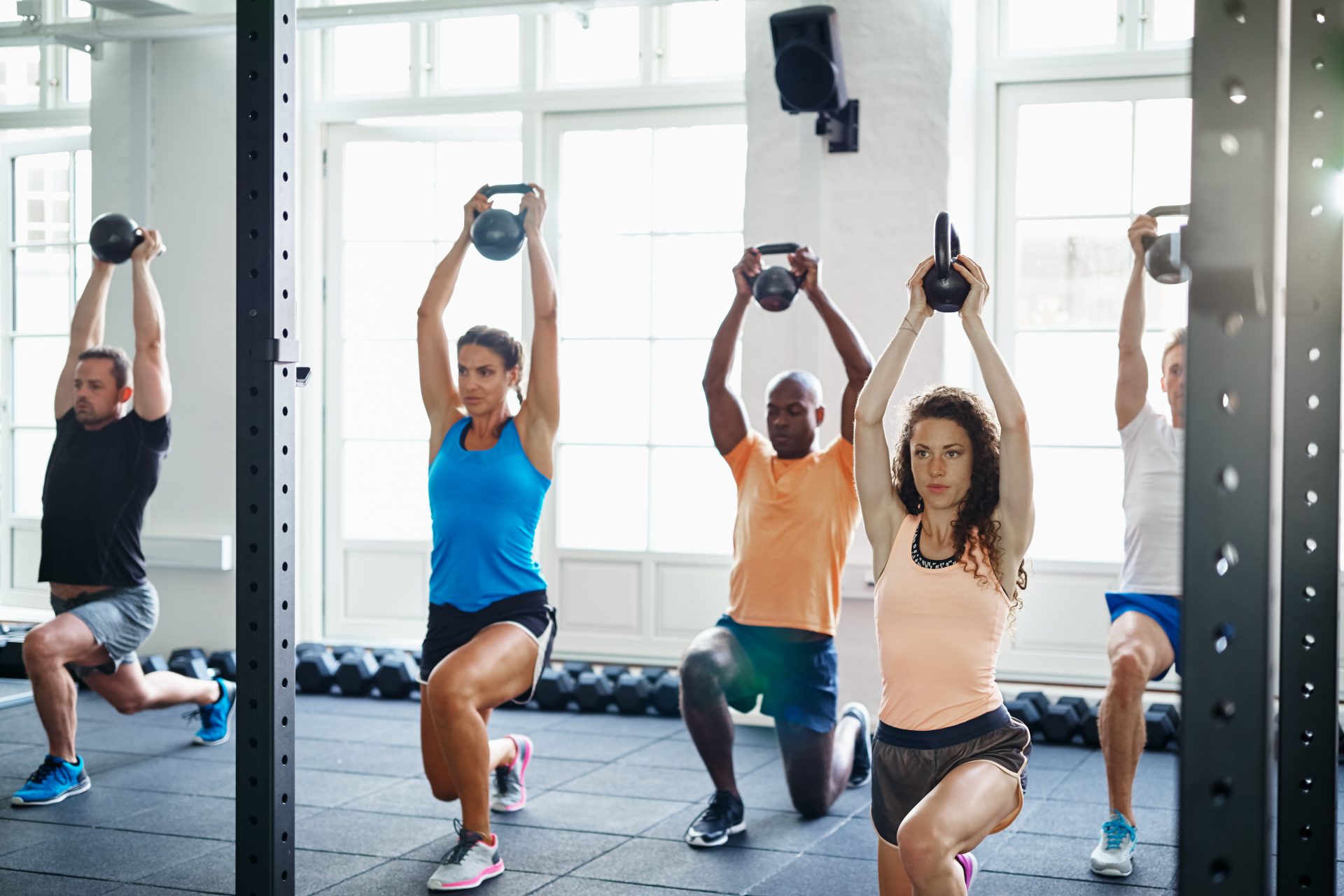
Athletic strength workouts are a specific category of training designed to develop strength that translates directly into movement quality, speed, and physical resilience — not just muscle size. Unlike general gym workouts that isolate individual muscles on controlled machines, athletic strength training targets integrated movement patterns that mirror how the body moves in real life and sport. The goal is to train muscles, joints, and the nervous system together so that the strength you build is genuinely usable — in sport, in work, and in everyday physical life. The mechanism runs through three movement principles: multi-joint compound movements that recruit large muscle groups simultaneously, power-based exercises that train the nervous system to fire muscle fibres faster, and stability work that builds the connective tissue and joint control needed to channel force efficiently. Together, these three patterns increase your strength output, reduce injury vulnerability, and build physical capacity that carries over into every demanding activity you do — from carrying heavy loads to changing direction sharply in a sport to holding your body upright through a long, taxing day.
Benefit 1 — Whole-Body Functional Strength for Daily Life The most direct outcome of athletic strength training is strength you can feel in real movement — lifting, climbing, pushing, pulling, and carrying. These demands require integrated strength across multiple muscle groups simultaneously. Athletic training builds exactly that. When compound strength training is practiced consistently, every muscle, organ, and tissue receives improved blood flow and neural activation, supporting whole-body physical health well beyond the gym environment. Stat: Research published in the Journal of Strength and Conditioning Research found that multi-joint compound training produces significantly greater functional strength gains compared to single-joint isolation exercises within the same training period. Benefit 2 — Reduced Injury Risk and Joint Stability Many people who train for athletic performance deal with a recurring problem: joint discomfort, physical instability during sport, or getting hurt doing things that should feel manageable. Specific exercises — Romanian deadlifts, split squats, and single-leg balance progressions — directly address these issues by building the stabilising muscles around the knees, hips, and shoulders, the areas most vulnerable to overuse and muscular imbalance. Benefit 3 — Long-Term Athletic Adaptation and Posture Consistent athletic strength training builds structural changes over weeks and months: improved posture, stronger connective tissue, denser bones, and a more efficient neuromuscular system. These are not surface-level changes — they represent genuine physiological adaptation that compounds progressively over time. A well-designed full body workout for strength is one of the most reliable ways to drive these adaptations systematically. Stat: The World Health Organization recommends at least 150 minutes per week of moderate-intensity activity combined with muscle-strengthening exercises on 2 or more days per week — the exact structure that athletic strength programming is built around. Benefit 4 — Better Energy, Focus, and Mood Improved physical capacity cascades into cognitive and emotional wellbeing. When your body moves with less effort and greater control, energy levels stabilise across the day. Athletic strength training has been consistently linked to better sleep quality, reduced stress hormones, and sharper mental focus — benefits that translate directly into how you feel and perform at work, at home, and in every relationship that demands your best self.
What you eat directly determines how fast you recover, how much you progress, and how consistently you can train. Here is what your nutrition plan should look like to support your athletic strength training effectively. Protein — Fuelling Athletic Power and Recovery Athletic training demands the highest protein intake — 1.8–2.2 g/kg/day — to fuel power output and accelerate recovery. Time your protein intake so that a high-quality source (eggs, chicken, whey) appears within 30–45 minutes post-session. Dal, rajma, paneer, and curd round out your daily totals effectively. Calcium and Vitamin D — Joint and Bone Health Strong bones provide the structural foundation for all movement — include calcium-rich foods like milk, curd, paneer, ragi, and sesame seeds (til) daily. Vitamin D is essential for calcium absorption; aim for 15–20 minutes of morning sunlight alongside dietary sources like eggs and fatty fish. Deficiency in either nutrient accelerates joint wear over time. Anti-Inflammatory Foods — Faster Recovery Recovery speed is directly influenced by your body’s inflammatory status. Turmeric with black pepper (curcumin + piperine), fresh ginger, and omega-3 fatty acids from flaxseeds, walnuts, and fatty fish all actively reduce exercise-induced inflammation. Include these consistently rather than only on hard training days. Hydration — Performance and Joint Lubrication Athletic performance degrades rapidly with even mild dehydration — fluid loss of just 2% body weight impairs power output. Drink 500 ml of water 30 minutes before your morning session and keep total daily intake at 3–3.5 L. Post high-intensity sessions, coconut water or a banana with water helps restore electrolyte balance quickly. Magnesium — Muscle Function and Sleep Quality Magnesium governs over 300 enzymatic reactions including muscle contraction and relaxation — making it essential for any movement-based training. Include pumpkin seeds, bananas, dark chocolate (70%+), spinach, and whole grains in your daily diet. Many Indians are mildly deficient; if you experience frequent muscle cramps or poor sleep quality, a magnesium glycinate supplement may help.
Starting a new training programme is often the hardest part. Here is a clear, week-by-week plan to begin your athletic strength training without injury or overwhelm. Before You Begin — Setting Your Baseline Begin with a frank assessment of your sport-specific limitations: where do you lose power, coordination, or speed? Identify your one or two most critical weak points and design your starting programme around improving them. Set a performance-based goal — for example, improving jump height by 3 cm or reducing 10 m sprint time — as your 8-week benchmark. Week 1–2: Foundation Focus entirely on movement quality and neuromuscular patterning in the first two weeks — speed and power come later. Athletic movements place significant eccentric demand on muscles; expect pronounced DOMS after the first few sessions. Limit plyometric or explosive work to 2–3 sets of 5–6 reps per exercise and prioritise full recovery between sets. Week 3–4: Building Consistency Begin increasing intensity and reducing rest periods as your body adapts to the movement patterns. Training first thing in the morning sharpens neuromuscular recruitment patterns over time — elite athletes frequently use morning sessions for skill-based work. Track power output or rep quality rather than just volume in this phase. Week 5–8: Progression Peak adaptation in athletic training typically occurs between weeks 6 and 8, when neuromuscular efficiency catches up with muscular conditioning. Introduce sport-specific loading scenarios — unilateral work, reactive drills, or loaded carries — to make strength transfer to your activity. Recovery becomes as important as training at this stage; prioritise sleep and nutrition around sessions. Athletic development is built on disciplined daily practice far more than on occasional maximal efforts.
Exercise 1 — Barbell Deadlift — Full Posterior Chain — 3 × 5 reps, 3×/week What it does: The deadlift is the single most effective athletic strength movement for developing posterior chain power — the glutes, hamstrings, lower back, and traps that drive every push, pull, jump, and sprint. It trains the body to produce force from the ground up, which is the foundation of all athletic movement. Pairing deadlift training with a structured lower back strength workout ensures the supporting musculature around the spine keeps pace with the load you add. Dosage: 3 sets × 5 reps at a challenging but technically clean weight, 3 times per week. Beginner modification: Romanian deadlift with dumbbells or a trap bar to reduce spinal loading while learning the hip-hinge pattern. Exercise 2 — Bulgarian Split Squat — Quads, Glutes, Hip Flexors — 3 × 10 each leg, 3×/week What it does: Single-leg strength is the hallmark of athletic performance. The Bulgarian split squat isolates each leg independently, exposing and correcting strength imbalances that increase injury risk during running, cutting, and jumping. It also demands hip flexor length and hip stability simultaneously, making it a uniquely efficient athletic movement. Building a strong foundation through a structured lunges workout helps beginners develop the single-leg stability needed before progressing to the elevated split squat variation. Dosage: 3 sets × 10 reps per leg, 3 times per week. Rest 60–90 seconds between legs. Beginner modification: Perform a standard reverse lunge on the floor before elevating the rear foot. Exercise 3 — Pull-Up / Inverted Row — Back, Biceps, Core — 4 × 6–8 reps, 3×/week What it does: Upper-body pulling strength is frequently underdeveloped in athletes who over-prioritise pressing movements. Pull-ups and inverted rows build the lats, rhomboids, and rear deltoids — the muscles responsible for shoulder stability, posture, and pulling power. A strong upper back is also the non-negotiable foundation for every overhead and pressing movement in an athletic programme. Dosage: 4 sets × 6–8 reps. For inverted rows, adjust body angle to increase or decrease difficulty. Beginner modification: Banded pull-ups or a fully horizontal inverted row using a low bar or table edge.
Mistake 1 — Training Strength Without Training Movement Patterns — Correction: Prioritise Compound, Multi-Plane Exercises What it is: Many athletes spend most of their training time on isolation exercises — bicep curls, leg extensions, cable flyes — that build muscular appearance but do not translate into athletic performance. Isolated muscles trained in a single plane of motion never develop the inter-muscular coordination that athletic output requires. The result is a body that looks strong but moves poorly and tires quickly under real demands. What to do instead: Anchor every session around compound, multi-joint movements: deadlifts, squats, rows, press variations, and loaded carries. Reserve isolation work for the final 10–15 minutes of a session as supplementary volume only. Mistake 2 — Neglecting Single-Leg and Single-Arm Work — Correction: Include Unilateral Exercises Every Session What it is: Most athletic movements — running, throwing, kicking, climbing — are unilateral. Training exclusively with bilateral exercises masks strength imbalances and allows the dominant side to compensate for the weaker side. Over time, this creates exactly the imbalances that generate overuse injuries in the knees, hips, and shoulders. What to do instead: Include at least one unilateral lower-body and one unilateral upper-body exercise every session. Split squats, single-leg Romanian deadlifts, single-arm rows, and single-arm presses are the most time-efficient choices. Mistake 3 — Progressing Load Without Progressing Recovery — Correction: Match Training Volume to Sleep and Nutrition What it is: Adding weight week over week while sleeping 5–6 hours and under-eating protein is one of the most common reasons athletic strength gains stall or reverse. Strength is built during recovery, not during training sessions. Without adequate sleep and protein, progressive overload produces accumulated fatigue rather than physiological adaptation. What to do instead: Target 7–9 hours of sleep per night, consume 1.6–2.2g of protein per kilogram of bodyweight daily, and build one full rest day per week into your programme. Progress load only when recovery is genuinely keeping pace — not on a fixed calendar schedule. 50,000+ members already training with Habuild every morning. Live daily sessions · Expert instructor · Cancel anytime.
Athletic Strength training is not a one-size-fits-all programme — but it is far more broadly accessible than most people assume. Here is who benefits most. Complete Beginners Starting from Zero You do not need any prior fitness experience to begin athletic strength exercises. Every movement in a well-structured programme comes with easier modifications — for example, performing the exercise seated, with a reduced range of motion, or using a wall or chair for support. The only requirement is willingness to show up consistently; the strength and technique will follow. People With Athletes Looking to Improve Sport-Specific Performance This training is especially valuable for people managing Athletes Looking to Improve Sport-Specific Performance. Athletic Strength exercises specifically target the muscular imbalances and movement patterns that drive these conditions. Always begin at a reduced intensity and range, and increase gradually as your body adapts. Office Workers and Sedentary Adults Sedentary adults who spend 6–8 hours sitting daily experience progressive losses in athletic strength capacity — this training directly reverses that trend. A 20–30 minute morning session creates a positive hormonal and metabolic shift that persists throughout the working day. Even three sessions per week produce measurable improvements in energy levels, concentration, and posture. Active Adults and Athletes Competitive athletes and active adults use athletic strength training to fill movement-quality gaps that sport-specific training misses. Addressing these gaps reduces injury frequency, improves technique efficiency, and extends athletic careers. This type of training complements rather than replaces sport-specific conditioning. Seniors Maintaining Functional Independence Older adults benefit significantly from athletic strength training as it maintains the functional strength, balance, and joint health required for independent daily living. Even those who have been sedentary for years can make meaningful progress with a consistent, progressive programme. Starting with modified, low-impact variations and building gradually is the safest and most effective approach.
Athletic Strength-Specific Programming — Not a Generic Fitness Class Every exercise selection, sequencing decision, and rest period in a Habuild strength session is chosen specifically for athletic performance benefit. Sessions open with a structured movement preparation and activation sequence targeting the glutes, hip flexors, and thoracic spine — the areas most commonly inhibited in people who sit for extended periods, and their activation is non-negotiable for safe, effective strength work. Sessions close with loaded carries and core anti-rotation work, because the ability to transfer force through a stable midline is the defining characteristic of an athletic body. Live Daily Sessions with Real-Time Form Correction Habuild sessions are live, not pre-recorded. This distinction matters enormously for athletic strength training, where form errors — a caved knee during a squat, a rounded lower back in a deadlift, a shrugged shoulder during a press — are the primary cause of both injury and stalled progress. Our instructors provide real-time corrections every session so that the specific errors preventing athletic development are caught and corrected before they become ingrained habits. Progressive Overload Built into Every Session Habuild members do not need to self-programme their progression. Load, rep range, movement complexity, and rest periods are all structured into the weekly plan. In weeks one and two, emphasis is on movement quality and baseline strength. By weeks five through eight, intensity and volume increase in a planned, evidence-based pattern. Members simply show up — the progression is already designed and managed. Accountability, Streaks and Community Consistency is the variable that separates people who experience real athletic transformation from people who plateau. Habuild’s streak tracking system, WhatsApp accountability community, and live daily format build the daily habit loop that makes consistency sustainable — not dependent on willpower alone. Members track their streaks within the community, creating a social commitment mechanism that dramatically improves attendance and long-term adherence.
I have been with Habuild for 1,050 days. My energy has increased and I don't feel drained by work anymore. My patience has grown — things that used to stress me out don't affect me the same way. My kids at home have also picked up the yoga habit. Most importantly, my knowledge about breathing and how it affects the entire body has transformed. My nervous system feels calmer, my digestion is better, and there is a steadiness in my body and mind that I had never experienced before.

My homeopathy doctor suggested yoga and I found Habuild. In the free 14 days, I already felt changes. The biggest surprise: I used to be unable to get down from a pavement by myself. Now I can jump. My core and lower body strength have rebuilt themselves through consistent practice. Habuild is a complete package — it strengthens everything, not just flexibility.


Practice Strong Everyday with Trishala Bothra, an IIT-B and London School of Business alumni
Trishala is focused on making movement feel lighter, more engaging, and something you actually look forward to.
In just 3 years, over 50,000 people began their strength journey, and 10,000+ join every week to keep getting stronger.