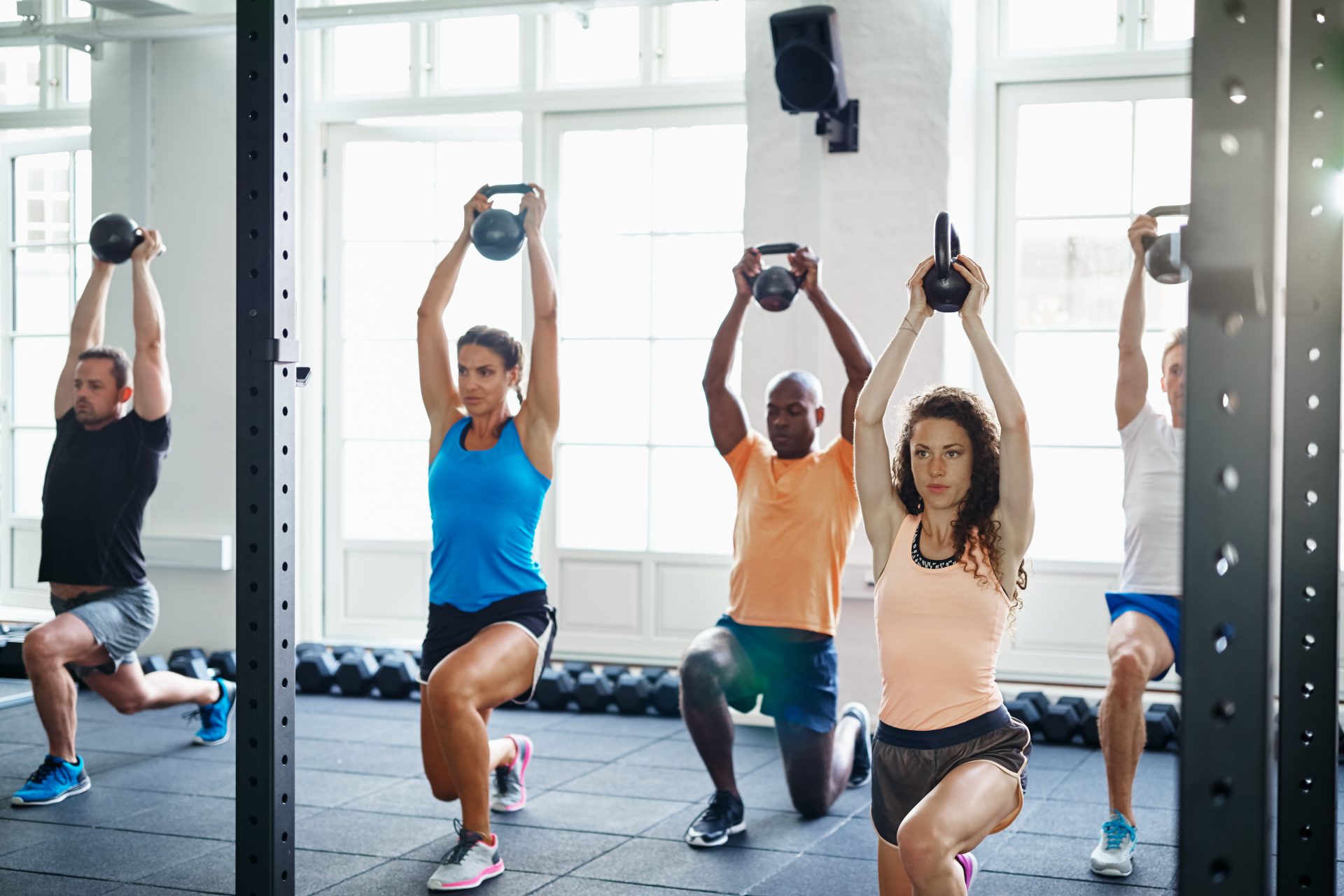
Athletic body workouts are distinct from general gym sessions because every exercise is selected with a specific physiological goal: developing the combination of strength, speed, mobility, and coordination that underpins real-world physical performance. While a generic fitness class cycles through movements for calorie burn, athletic training is built around multi-joint compound patterns that train your neuromuscular system, not just isolated muscles. The mechanism is straightforward. Compound pulling movements like rows and pull-ups recruit the posterior chain and improve force transfer from the ground up. Explosive pushing patterns such as push-up variations and overhead presses build upper-body power and shoulder stability. Hinge and squat movements — deadlifts, Romanian hinges, goblet squats — develop the glutes, hamstrings, and spinal erectors that generate athletic power. Together, these categories condition the nervous system to coordinate large muscle groups efficiently, which is what separates a body that looks athletic from one that actually performs that way.
Benefit 1 — Full-Body Functional Strength That Transfers to Daily Life The most direct outcome of consistent athletic training is the kind of strength that shows up everywhere — carrying groceries, climbing stairs, playing sport, or performing under physical demands at work. Because athletic workouts target multiple muscle groups in coordinated patterns, every joint, tendon, and connective tissue adapts together rather than in isolation. Research published in the Journal of Strength and Conditioning Research shows that compound multi-joint training produces up to 58% greater strength gains compared to single-joint isolation work over an equivalent training period. Benefit 2 — Improved Posture and Reduced Musculoskeletal Discomfort Most people searching for an athletic body workout are also dealing with tight hips, a stiff lower back, or rounded shoulders from desk-bound hours. Athletic training directly counteracts these patterns. Hip-hinge movements strengthen the posterior chain and reduce load on the lumbar spine; scapular rows pull the shoulders back and retrain upright posture. With consistent practice, many members find that persistent upper-back tension gradually becomes more manageable — not because the workout treats any medical condition, but because balanced strength supports better movement mechanics over time. Benefit 3 — Cardiovascular Efficiency and Metabolic Adaptation Compound athletic training — when structured with appropriate density and rest — delivers meaningful cardiovascular conditioning alongside strength gains. The WHO recommends at least 150 minutes of moderate-intensity or 75 minutes of vigorous physical activity per week; a well-designed athletic programme running five days a week fulfils this while simultaneously building lean muscle mass, which elevates resting metabolic rate. This dual adaptation is why athletic body workout programmes tend to produce visible body composition changes faster than steady-state cardio alone. A strength training for body recomposition approach maximises this effect by preserving muscle while reducing excess fat. Benefit 4 — Sharper Focus, Better Energy, and Improved Mood Resistance-based compound training increases BDNF (brain-derived neurotrophic factor), supporting memory, focus, and stress regulation. Members who train consistently with Habuild regularly report reduced afternoon energy slumps, improved sleep quality, and greater composure under workplace pressure — not because of any single session, but because the daily training habit builds a foundation of physical and mental resilience over time.
What you eat directly determines how fast you recover, how much you progress, and how consistently you can train. Here is what your nutrition plan should look like to support your athletic body training effectively. Protein — Fuelling Athletic Power and Recovery Athletic training demands the highest protein intake — 1.8–2.2 g/kg/day — to fuel power output and accelerate recovery. Time your protein intake so that a high-quality source (eggs, chicken, whey) appears within 30–45 minutes post-session. Dal, rajma, paneer, and curd round out your daily totals effectively. Calcium and Vitamin D — Joint and Bone Health Strong bones provide the structural foundation for all movement — include calcium-rich foods like milk, curd, paneer, ragi, and sesame seeds (til) daily. Vitamin D is essential for calcium absorption; aim for 15–20 minutes of morning sunlight alongside dietary sources like eggs and fatty fish. Deficiency in either nutrient accelerates joint wear over time. Anti-Inflammatory Foods — Faster Recovery Recovery speed is directly influenced by your body’s inflammatory status. Turmeric with black pepper (curcumin + piperine), fresh ginger, and omega-3 fatty acids from flaxseeds, walnuts, and fatty fish all actively reduce exercise-induced inflammation. Include these consistently rather than only on hard training days. Hydration — Performance and Joint Lubrication Athletic performance degrades rapidly with even mild dehydration — fluid loss of just 2% body weight impairs power output. Drink 500 ml of water 30 minutes before your morning session and keep total daily intake at 3–3.5 L. Post high-intensity sessions, coconut water or a banana with water helps restore electrolyte balance quickly. Magnesium — Muscle Function and Sleep Quality Magnesium governs over 300 enzymatic reactions including muscle contraction and relaxation — making it essential for any movement-based training. Include pumpkin seeds, bananas, dark chocolate (70%+), spinach, and whole grains in your daily diet. Many Indians are mildly deficient; if you experience frequent muscle cramps or poor sleep quality, a magnesium glycinate supplement may help.
Starting a new training programme is often the hardest part. Here is a clear, week-by-week plan to begin your athletic body training without injury or overwhelm. Before You Begin — Setting Your Baseline Begin with a frank assessment of your sport-specific limitations: where do you lose power, coordination, or speed? Identify your one or two most critical weak points and design your starting programme around improving them. Set a performance-based goal — for example, improving jump height by 3 cm or reducing 10 m sprint time — as your 8-week benchmark. Week 1–2: Foundation Focus entirely on movement quality and neuromuscular patterning in the first two weeks — speed and power come later. Athletic movements place significant eccentric demand on muscles; expect pronounced DOMS after the first few sessions. Limit plyometric or explosive work to 2–3 sets of 5–6 reps per exercise and prioritise full recovery between sets. Week 3–4: Building Consistency Begin increasing intensity and reducing rest periods as your body adapts to the movement patterns. Training first thing in the morning sharpens neuromuscular recruitment patterns over time — elite athletes frequently use morning sessions for skill-based work. Track power output or rep quality rather than just volume in this phase. Week 5–8: Progression Peak adaptation in athletic training typically occurs between weeks 6 and 8, when neuromuscular efficiency catches up with muscular conditioning. Introduce sport-specific loading scenarios — unilateral work, reactive drills, or loaded carries — to make strength transfer to your activity. Recovery becomes as important as training at this stage; prioritise sleep and nutrition around sessions. Athletic development is built on disciplined daily practice far more than on occasional maximal efforts.
Exercise 1 — Barbell / Bodyweight Deadlift — Posterior Chain and Core — 3 × 8–10 Reps What it does: The deadlift trains the glutes, hamstrings, erector spinae, and upper back simultaneously, reinforces a neutral spine under load, and develops the hip-hinge pattern that underpins sprinting, jumping, and virtually every sport-specific movement. It recruits more total muscle mass than almost any other exercise, driving the highest hormonal response for muscle growth and fat metabolism. Dosage: 3 sets of 8–10 reps, 3–4 times per week. Rest 90–120 seconds between sets. Beginner modification: Start with a Romanian deadlift using bodyweight or light dumbbells, focusing on hinging at the hip rather than squatting. Keep a slight knee bend and maintain a flat back throughout. Exercise 2 — Push-Up Progressions — Chest, Shoulders, Triceps, Core — 3 × 12–20 Reps What it does: Push-ups build pressing strength while simultaneously demanding core stability and scapular control — qualities a bench press alone does not develop. Progressing through variations (incline, standard, decline, single-arm negative) ensures continuous adaptation without equipment. The combination of pushing strength and rotational core control is more transferable to sport and daily function than isolated machine pressing. Habuild’s upper body workout programming extends this with structured variation across training cycles. Dosage: 3 sets of 12–20 reps, 4–5 times per week. Beginner modification: Begin with an incline push-up against a wall or sturdy bench. Focus on a rigid body line from head to heel and full range of motion rather than speed. Exercise 3 — Goblet Squat — Quads, Glutes, Core, Thoracic Spine — 3 × 12–15 Reps What it does: The goblet squat builds athletic lower-body strength while simultaneously opening the hips and improving thoracic extension — two mobility limitations that restrict athletic movement in most adults. Holding a weight at the chest counterbalances the body and allows a deeper, more upright squat pattern than a back-loaded barbell squat, making it ideal for those building athletic foundations. Dosage: 3 sets of 12–15 reps, 3–4 times per week. Rest 60–90 seconds between sets. Beginner modification: Perform the squat using a light water bottle or no weight. Place a folded mat under the heels if ankle mobility restricts depth. Focus on sitting down between the heels rather than forward onto the toes.
Mistake 1 — Prioritising Isolation Exercises Over Compound Movements — Correction: Anchor Every Session Around Multi-Joint Patterns What it is: Spending the majority of sessions on bicep curls, lateral raises, and leg extensions builds visible muscle but does not develop the inter-muscular coordination, force transfer, and joint stability that define athletic performance. Training exclusively in isolation produces a body that looks muscular in the mirror but moves poorly under real-world demands. What to do instead: Structure every session so that a compound movement — a hinge, a squat, a vertical or horizontal pull — is the primary lift. Isolation work, if included, follows the main compound blocks and stays under 20–25% of total training volume. Mistake 2 — Skipping Mobility and Movement Prep — Correction: Treat the Warm-Up as Skill Work, Not Optional What it is: Jumping straight from a desk into heavy compound work without addressing hip, thoracic, and shoulder mobility leads to compensatory patterns — the body finds a way to complete the movement, but distributes load onto passive structures like ligaments and discs rather than muscles. Over time, this compounds into persistent stiffness and reduced training capacity. What to do instead: Spend 8–10 minutes on targeted mobility before each session — hip 90/90 stretches, thoracic rotations, and band pull-aparts are sufficient. Habuild sessions build this prep into the programme structure so members never skip it. Mistake 3 — Inconsistent Training Frequency — Correction: Build the Daily Habit Before Chasing Intensity What it is: Athletic adaptation — particularly the neuromuscular coordination that separates athletic movement from muscle bulk — is cumulative. Training hard for two weeks, disappearing for ten days, and repeating this cycle prevents the progressive overload and neuromuscular learning that athletic training depends on. This is the consistency gap that stops most people from seeing results despite genuine effort in individual sessions. What to do instead: Commit to a minimum of four sessions per week on a fixed schedule. Lower intensity on low-motivation days rather than skipping the session. Showing up consistently at 70% effort produces far greater athletic adaptation than sporadic maximum-effort sessions.
Athletic Body training is not a one-size-fits-all programme — but it is far more broadly accessible than most people assume. Here is who benefits most. Complete Beginners Starting from Zero You do not need any prior fitness experience to begin athletic body exercises. Every movement in a well-structured programme comes with easier modifications — for example, performing the exercise seated, with a reduced range of motion, or using a wall or chair for support. The only requirement is willingness to show up consistently; the strength and technique will follow. People With Athletes Looking to Improve Sport-Specific Performance This training is especially valuable for people managing Athletes Looking to Improve Sport-Specific Performance. Athletic Body exercises specifically target the muscular imbalances and movement patterns that drive these conditions. Always begin at a reduced intensity and range, and increase gradually as your body adapts. Office Workers and Sedentary Adults Sedentary adults who spend 6–8 hours sitting daily experience progressive losses in athletic body capacity — this training directly reverses that trend. A 20–30 minute morning session creates a positive hormonal and metabolic shift that persists throughout the working day. Even three sessions per week produce measurable improvements in energy levels, concentration, and posture. Active Adults and Athletes Competitive athletes and active adults use athletic body training to fill movement-quality gaps that sport-specific training misses. Addressing these gaps reduces injury frequency, improves technique efficiency, and extends athletic careers. This type of training complements rather than replaces sport-specific conditioning. Seniors Maintaining Functional Independence Older adults benefit significantly from athletic body training as it maintains the functional strength, balance, and joint health required for independent daily living. Even those who have been sedentary for years can make meaningful progress with a consistent, progressive programme. Starting with modified, low-impact variations and building gradually is the safest and most effective approach.
Athletic-Specific Programming — Not a Generic Fitness Class Every exercise selection, sequencing decision, and rest interval in Habuild’s strength training programme is chosen for athletic body development — not general calorie burn. Sessions open with hip-hinge and lower-body compound patterns when the nervous system is fresh and force output is highest. Upper-body pulling work is deliberately programmed to balance pushing volume, correcting the postural imbalances desk work creates. This is full-body strength programming with a clear athletic purpose, not a random sequence of exercises. Live Daily Sessions with Real-Time Form Correction Pre-recorded videos cannot catch a collapsing knee during a squat or an over-arched lower back in a deadlift — precisely the form errors that prevent athletic adaptation and eventually cause discomfort. Habuild’s live daily format means a qualified instructor watches you move in real time and calls out corrections before bad patterns become habits. For athletic body training, where technique under fatigue determines results, this live feedback loop is the difference between progress and plateau. Progressive Overload Built into Every Session Members never need to self-programme their own progression. Intensity, movement complexity, rep tempo, and density are varied systematically from week to week. Early weeks establish fundamental movement patterns — hinge, squat, push, pull. Subsequent weeks increase complexity and load demand incrementally. By the end of a three-month cycle, members are performing the same foundational patterns with significantly greater strength, control, and confidence — without needing a spreadsheet or personal training background. Accountability, Streaks, and Community The biggest obstacle to building an athletic body is not knowledge — it is showing up when motivation is absent. Habuild’s streak-tracking system makes daily consistency visible and rewarding. The WhatsApp community connects members across India working toward similar goals. This combination of social accountability and daily habit structure is what keeps members consistent long enough for the compound effect of athletic training to produce lasting results.
I have been with Habuild for 1,050 days. My energy has increased and I don't feel drained by work anymore. My patience has grown — things that used to stress me out don't affect me the same way. My kids at home have also picked up the yoga habit. Most importantly, my knowledge about breathing and how it affects the entire body has transformed. My nervous system feels calmer, my digestion is better, and there is a steadiness in my body and mind that I had never experienced before.

My homeopathy doctor suggested yoga and I found Habuild. In the free 14 days, I already felt changes. The biggest surprise: I used to be unable to get down from a pavement by myself. Now I can jump. My core and lower body strength have rebuilt themselves through consistent practice. Habuild is a complete package — it strengthens everything, not just flexibility.


Practice Strong Everyday with Trishala Bothra, an IIT-B and London School of Business alumni
Trishala is focused on making movement feel lighter, more engaging, and something you actually look forward to.
In just 3 years, over 50,000 people began their strength journey, and 10,000+ join every week to keep getting stronger.