

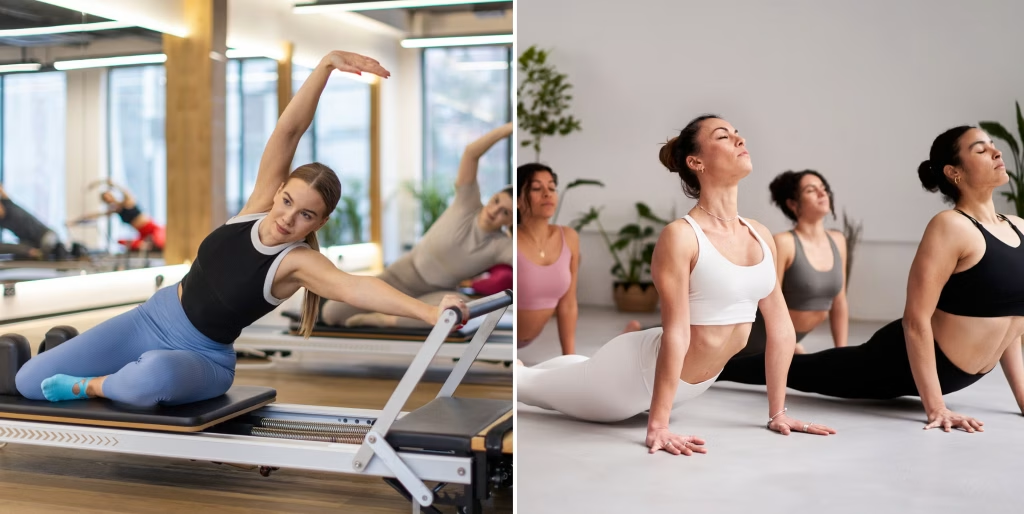
Difference Between Pilates and Yoga: Which Practice Is Right for You?
The difference between Pilates and yoga comes down to origin, philosophy, and purpose. Yoga is a 5,000-year-old practice combining postures, breathwork, and meditation. Pilates is a 20th-century conditioning system built around core strength and rehabilitation. Both use slow, mindful movement — but they are not the same practice.
If you have ever wondered about the difference between Pilates and yoga, you are not alone. Both involve floor-based exercises and a focus on breath — yet they are built on entirely different philosophies and deliver distinct benefits. Understanding how these two disciplines compare will help you make a confident, informed choice.
10 Key Differences Between Pilates and Yoga

1. Origins and Philosophy
Yoga is a 5,000-year-old practice rooted in Indian philosophy. It combines physical postures (asanas), breathwork (pranayama), and meditation to support mental, physical, and spiritual well-being. Pilates was developed in the early 20th century by Joseph Pilates as a rehabilitation and conditioning system — it has no spiritual or meditative dimension.
2. Core Focus vs. Whole-Body Integration
Pilates places a strong, explicit emphasis on core muscle activation in virtually every exercise. Yoga integrates the core as part of broader postural alignment rather than isolating it as the primary training target. If building deep abdominal strength is your main goal, Pilates leans more directly into that. If you want a whole-body practice that includes the mind, yoga covers more ground.
3. Breath Technique
In Pilates, breathing is used as a tool to engage the core — typically an inhale through the nose and an exhale through the mouth during exertion. Yoga breath (pranayama) is far more varied and layered, and breathing itself is considered a practice in its own right, not merely a support mechanism for movement.
4. Equipment and Setting
Many Pilates classes use specialist equipment — the Reformer, Cadillac, or Wunda Chair — which requires a studio and adds to the cost. Mat Pilates exists but is less central to the traditional method. Yoga requires only a mat and, occasionally, a strap or block. It translates naturally and completely to home practice, making it far more accessible.
5. Spiritual and Meditative Dimension
Yoga explicitly connects physical movement with mindfulness, meditation, and, in many traditions, a broader ethical framework (yamas and niyamas). Pilates is secular by design — it is an exercise system with no philosophical or spiritual component.
6. Flexibility vs. Strength Emphasis
Yoga systematically improves flexibility alongside strength, with poses designed to lengthen and open the body over time. Pilates develops functional strength and muscular endurance, especially in the posterior chain and core, but does not target flexibility as comprehensively. Yoga supports long-term flexibility gains that build gradually over weeks and months of consistent practice.
7. Mental Health Benefits
Both practices reduce stress, but yoga’s built-in meditation and pranayama components mean it addresses mental health more directly. Regular yoga practice supports the management of anxiety and low mood through consistent breath-focused movement. Pilates helps indirectly by reducing physical tension.
8. Pose Variety and Progression
Yoga offers an enormous library of poses — from gentle restorative postures to advanced inversions and arm balances. Progression is gradual and deeply personal. Pilates has a more standardised exercise sequence, especially in classical Pilates, with defined beginner, intermediate, and advanced levels.
9. Accessibility for Beginners
Both are beginner-friendly, but yoga offers a wider range of entry points — gentle yoga, chair yoga, and beginner-focused yoga programs make it easy to start regardless of age, fitness level, or mobility. Pilates with equipment can feel more intimidating and expensive as a starting point.
10. Community and Long-Term Habit
Yoga, particularly when practised in a live, structured program, builds a strong sense of community that supports long-term consistency — the single factor that matters most for any health benefit. Pilates studios tend to be smaller, costlier, and harder to sustain as a daily habit without ongoing financial and logistical commitment.
How to Get Started with Yoga or Pilates
What You Need to Begin
For yoga, all you need is a mat and comfortable clothing. No equipment, no gym membership, and no prior experience required. For Pilates, mat work needs only the same basics — but reformer-based classes require a studio.
Setting Realistic Goals
Start with 10–15 minutes of daily practice and build from there. Neither yoga nor Pilates delivers results from a single session — consistency over weeks is what gradually shifts how your body feels and moves. Set a simple, achievable target: practise at the same time each day, even briefly.
Start with the Basics
For yoga beginners, grounding poses like Tadasana (Mountain Pose), Balasana (Child’s Pose), and gentle forward folds are the best entry points. Focus on breath awareness from your very first session — it is what separates yoga from any other form of stretching or exercise.
Best Yoga Poses for Overall Well-Being
If you are exploring yoga as your practice of choice, these five foundational poses cover flexibility, strength, and calm — and they appear frequently in comparisons between yoga and Pilates.
Tadasana (Mountain Pose)
The foundational standing pose in yoga. Tadasana improves posture, grounds your awareness, and activates the legs and core simultaneously. It looks simple but demands full-body engagement when done with intention. Inhale as you lengthen the spine; exhale as you root through the feet.
Adho Mukha Svanasana (Downward-Facing Dog)
One of the most recognised poses in yoga, this inversion stretches the hamstrings, calves, and spine while building shoulder and arm strength. Breathe steadily, pressing the floor away and lifting the hips. It is often used as a transition and resting pose in flowing sequences.
Virabhadrasana I (Warrior I)
A powerful standing pose that builds leg strength, opens the hip flexors, and improves balance. Warrior I develops the kind of functional lower-body strength that Pilates also targets, but within a fuller mind-body context. Inhale to lift the arms; keep the back foot firmly grounded.
Balasana (Child’s Pose)
A deeply restoring pose that gently stretches the lower back, hips, and thighs. Balasana is used as a rest between more demanding postures and as a standalone calming practice. It is breath-focused by nature — lengthen the exhale to deepen the release. The benefits of Balasana extend well beyond stretching, supporting recovery and stress management with regular use.
Bhujangasana (Cobra Pose)
A gentle backbend that strengthens the spine, opens the chest, and engages the core. Bhujangasana activates the posterior chain in a way that complements core-focused training. Inhale as you lift; keep the elbows soft and the shoulders away from the ears.
Common Mistakes to Avoid
Skipping the Warm-Up
Jumping straight into deep stretches or demanding poses — in yoga or Pilates — raises the risk of strain. A brief warm-up, even five minutes of gentle joint rotations and breathing, prepares the body and sharpens your focus.
Holding Your Breath During Poses
Breath retention during effort is one of the most common errors beginners make. In yoga, the breath guides the movement — if you cannot breathe steadily, the pose is too intense. Ease back and let the breath lead.
Forcing Into Advanced Poses Too Soon
Progression in both yoga and Pilates is earned through consistent practice, not urgency. Forcing a deep backbend or a challenging exercise before your body is ready leads to injury and discouragement. Work within your current range and let improvement happen gradually.
Inconsistent Practice
Occasional intense sessions do far less than shorter, daily ones. The gap most people face is not motivation — it is the absence of a reliable structure and accountability. This is where a guided program with daily live sessions makes a measurable difference.
Who Should Try Yoga or Pilates?
Beginners
Both practices are genuinely beginner-friendly. Yoga’s broad range of difficulty levels — from restorative to dynamic — means anyone can find an appropriate entry point. The barrier to starting yoga at home is exceptionally low.
Women
Yoga’s benefits for hormonal balance, stress relief, and emotional regulation make it particularly well-suited to women across different life stages. Many women also find the community and consistency of a structured yoga program more sustainable than gym-based workouts.
Older Adults
Yoga supports joint mobility, balance, and gentle strengthening — all of which become increasingly important with age. Always consult a healthcare professional before starting any new physical practice if you have existing health conditions or mobility limitations.
Working Professionals
For those dealing with desk-related posture issues, chronic tension, and high stress, yoga addresses both the physical and mental dimensions through consistent, structured practice. Even a 20-minute daily session can gradually ease how you feel over the course of a workday.
Build Flexibility with a Routine That Actually Works
Understanding the difference between Pilates and yoga is the first step. The more important step is building a routine you will actually stick to. Sporadic practice in either discipline produces very little. What works is showing up daily, with proper guidance, in a format that fits your life.
Habuild’s Yoga Everyday program is built around exactly that: daily live guided sessions, a structured progression from beginner to advanced, no equipment needed, and a community that keeps you accountable. Online yoga classes with live guidance make it far easier to stay consistent than self-directed practice alone.
What You Get with Habuild’s Yoga Everyday Program:
- Daily live guided yoga sessions
- Beginner to advanced progression
- No-equipment and home-friendly practice
- Expert guidance to ensure correct form
- Community support to help you stay consistent
Start Your Yoga Journey
Name: ________________
Mobile Number: ________________
Curious how each system fits different goals and lifestyles? Explore the full yoga vs. Pilates comparison for a deeper look at which practice suits your specific needs.
FAQs
What is the difference between Pilates and yoga?
Yoga is an ancient practice combining physical postures, breathwork, and meditation — it addresses the body and the mind together. Pilates is a 20th-century exercise system focused primarily on core strength, muscular endurance, and postural alignment, with no meditative or spiritual component.
Is Pilates and yoga the same?
No. While both use slow, controlled movement and floor-based exercises, they differ significantly in origin, philosophy, goals, and technique. Yoga has a spiritual and meditative dimension; Pilates does not. Yoga requires no equipment; Pilates often does. The two practices complement each other but are not interchangeable.
Is Pilates or yoga good for beginners?
Both are accessible for beginners, but yoga offers a wider range of entry-level styles and can be started at home with nothing more than a mat. Habuild’s Yoga Everyday program is specifically structured to guide complete beginners through a safe, progressive practice from day one.
How often should I practise yoga or Pilates?
Daily practice — even 15 to 20 minutes — will gradually produce more noticeable benefits than two or three longer sessions per week. Consistency is the single most important factor in either discipline. A structured program with daily sessions makes this significantly easier to maintain.
Can I do yoga or Pilates at home?
Yoga translates entirely to home practice — you need only a mat and a reliable program. Mat Pilates can also be done at home, though many Pilates exercises are designed for reformer equipment found in studios. For home-friendly daily practice, yoga is the more practical option.
Do I need equipment for yoga or Pilates?
Yoga requires only a mat. Optional props like a block or strap can be helpful but are not necessary to start. Pilates mat work also needs just a mat, but many traditional Pilates exercises use a Reformer or other studio equipment, which adds cost and logistical complexity.
How long before I see results from yoga?
Most practitioners begin to notice gradual shifts in flexibility, posture, and stress levels within four to six weeks of consistent daily practice. Deeper changes in strength, body awareness, and mental calm typically develop over three months or more. Results depend heavily on how regularly you practise, which is why a structured daily program is far more effective than occasional sessions.