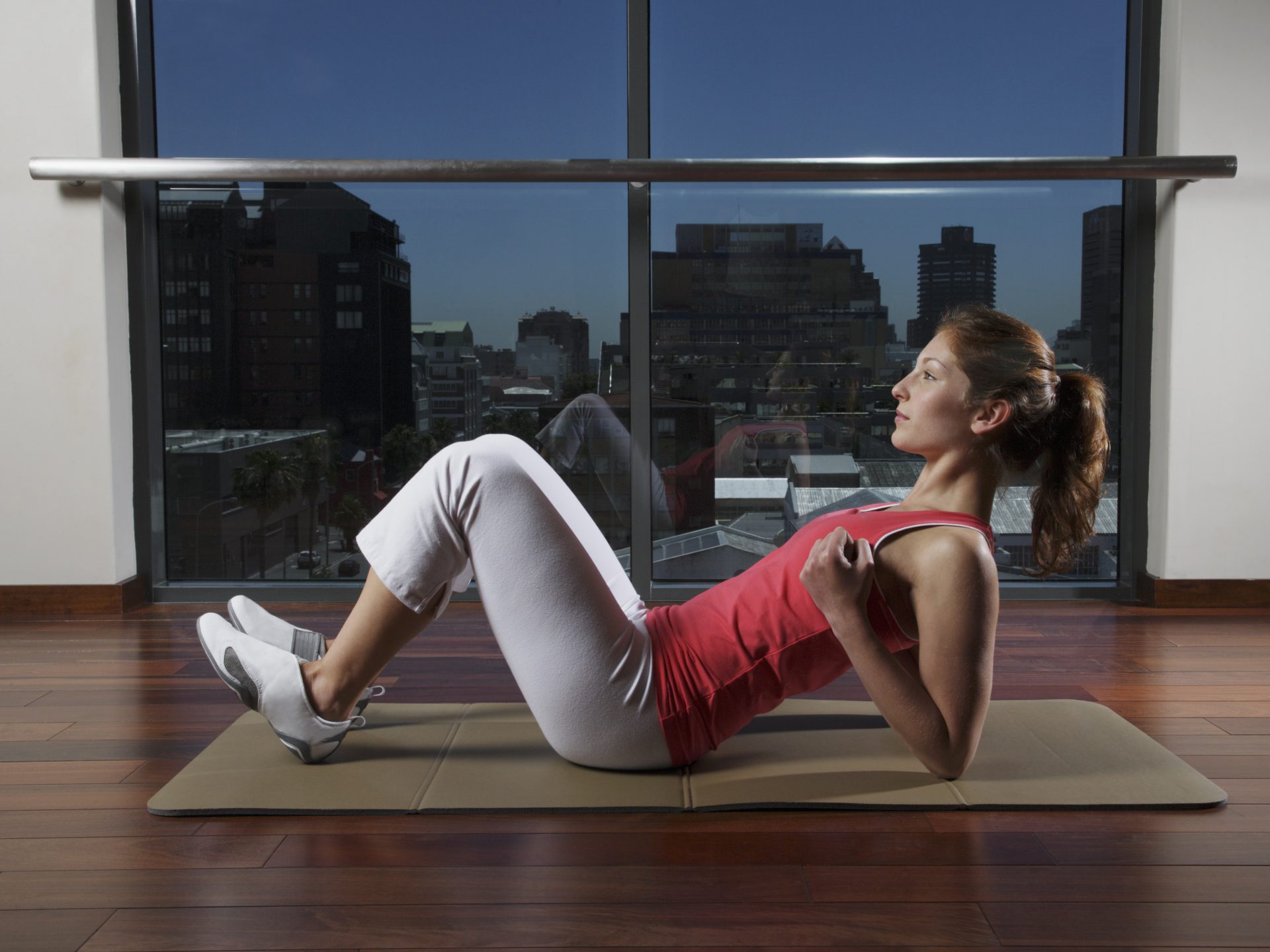
Crunches exercises are a family of bodyweight abdominal movements that involve curling the upper torso toward the pelvis, contracting the rectus abdominis (the long muscle running down the front of the abdomen). The standard crunch — lying on your back, knees bent, hands behind the head, lifting only the shoulder blades off the floor — is the foundational movement. From there, dozens of variations exist: bicycle crunches add rotation, reverse crunches reverse the lift to engage lower abs, full body crunch variations integrate the legs to engage the entire abdominal wall at once. Different variations emphasise different parts of the core, which is why a complete ab programme rotates between them rather than repeating one exercise.
The mechanism is simple but often misunderstood. The rectus abdominis flexes the spine — that is, it bends the torso forward. Crunches train this exact movement at high repetition under bodyweight load, building muscle fibre in the front abdominal wall. Crunch training does NOT burn the fat covering the abs — that requires overall calorie deficit through diet and full-body movement. Crunches build the muscle that becomes visible when fat reduces. The best ab cruncher results come from combining 3–4 crunch sessions per week with daily full-body activity and reasonable eating. For broader core development beyond just the rectus abdominis, our programme covers the obliques, transverse abdominis and lower-back stabilisers in the same session.
Visible Ab Definition Within 8–12 Weeks
Daily controlled crunch volume builds the rectus abdominis muscle thickness needed for visible definition once body fat drops below ~15% (men) or ~22% (women). Most members see meaningful definition by week 8–12 of consistent practice. Stat: research on abdominal exercise EMG and muscle response (Vispute et al., 2011, Journal of Strength & Conditioning Research) supports measurable abdominal hypertrophy with progressive crunch training over 12 weeks in untrained adults.
Improved Posture & Reduced Lower Back Pain
A strong rectus abdominis stabilises the pelvis and prevents anterior pelvic tilt — the postural flaw that creates the “pot belly” look and drives lower back pain in office workers. Daily crunch training corrects this within 4–6 weeks, lifting the rib cage and flattening the lower back in standing posture.
Functional Core Strength for Daily Movement
The abs aren’t just for aesthetics — they generate force in every athletic movement, from picking up a child to swinging a tennis racket. Crunch training builds the foundation of this functional strength. Stat: athletes with strong abdominal cores show measurably better performance in sports requiring rotational power, with sport-science literature reporting improvements in the 20–30% range for trunk-rotation power output.
Boosts Metabolism & Supports Fat Loss
While crunches don’t directly burn belly fat, the lean muscle they build raises resting metabolic rate, meaning you burn more calories all day. Combined with full-body movement and proper diet, crunch training accelerates total fat loss — including the abdominal fat covering the muscles themselves.
Exercise 1: Standard Crunch — Rectus Abdominis — 3 sets × 15–20 reps
Lie on your back, knees bent at 90°, feet flat on the floor, hands lightly behind the ears (not pulling on the neck). Curl the upper back off the floor, lifting only the shoulder blades — not the entire back. Squeeze the abs at the top, lower with control. 3 sets × 15–20 reps. The foundational ab movement and the cleanest way to train pure abdominal flexion. Modification: cross arms over chest if hands behind the head causes neck strain.
Exercise 2: Full Body Crunch — Upper + Lower Abs Together — 3 sets × 12–15 reps
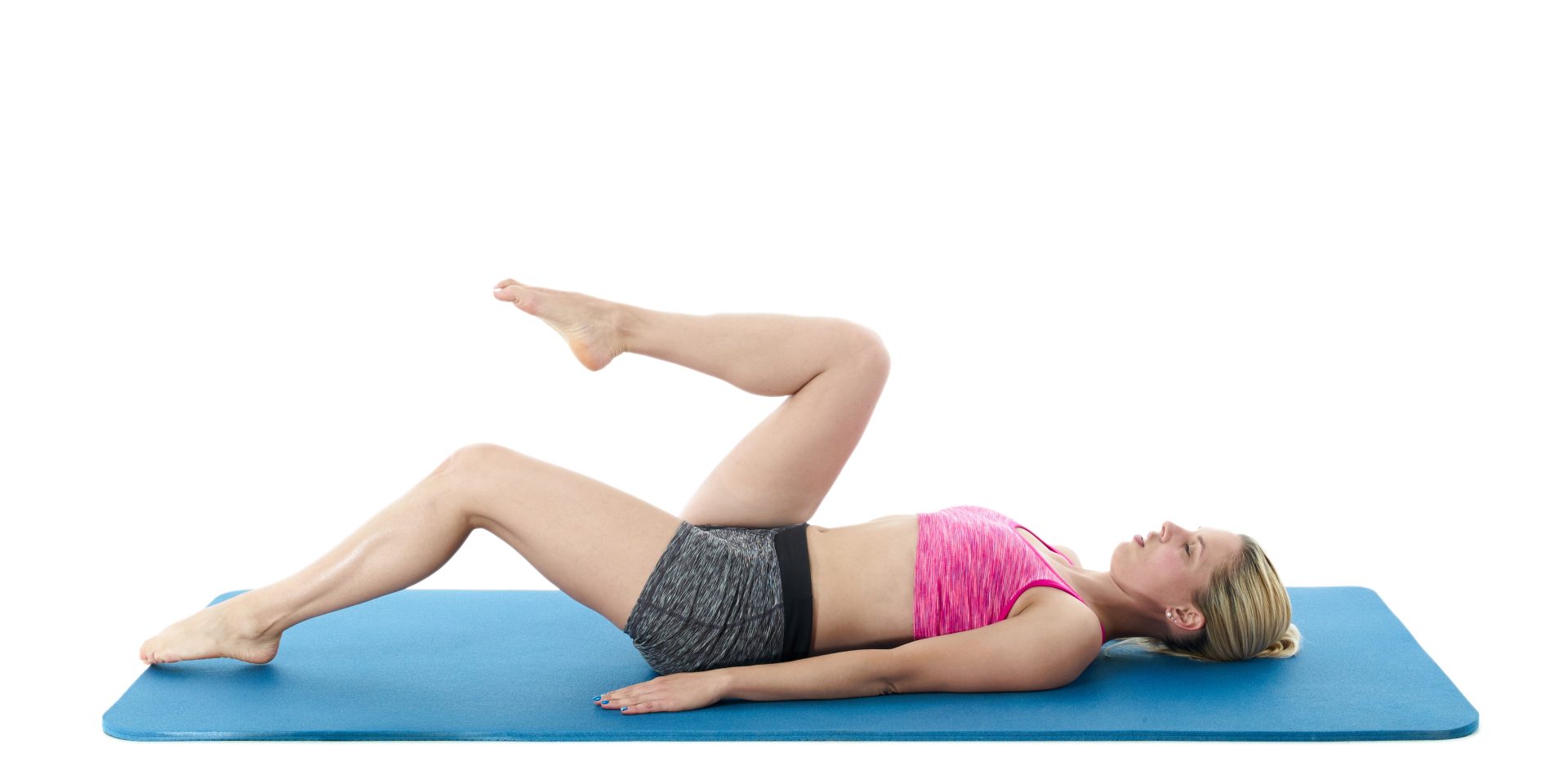
Lie on your back, legs extended, arms overhead. Simultaneously lift the upper torso AND bring the knees toward the chest, meeting in the middle. Lower both with control. 3 sets × 12–15 reps. Trains the entire abdominal wall in one movement — particularly effective for the often-neglected lower abs. Modification: bend knees throughout if straight-leg version is too intense.
Exercise 3: Bicycle Crunch — The Best Ab Cruncher Variation — Rectus + Obliques — 3 sets × 20 reps
Lie on your back, hands behind head, lift legs to 90°. Bring right elbow toward left knee while extending the right leg straight; switch. 1 rep = both sides. 3 sets × 20 reps with control (not speed). Combines flexion + rotation, hitting the abs and obliques simultaneously — one of the most efficient core moves in all of . Modification: keep one foot on the floor and only twist the upper body.
Mistake 1: Pulling on the Neck — Correction: Hands Lightly Behind Ears, Eyes on Ceiling
The most common crunch error: yanking the head forward with hands clasped behind the head, which strains the cervical spine and produces neck pain rather than ab burn. What to do instead: rest the fingertips lightly behind the ears (or cross arms over chest), keep eyes on the ceiling, and lift from the abs not the neck. The chin-to-chest tuck should be gentle, not crunched.
Mistake 2: Going Too Fast With Bad Form — Correction: 2 Seconds Up, 2 Seconds Down
Speed-crunching with momentum (40 reps in 30 seconds) trains nothing — the spine flexes and extends but the abs barely contract. What to do instead: slow tempo. 2 seconds up, 1-second hold/squeeze at top, 2 seconds down. 12 controlled reps beat 40 sloppy ones for muscle development. The crunch training quality is what produces results.
Mistake 3: Doing Only Crunches — Correction: Combine With Full-Body Movement
Even perfectly executed daily crunches don’t burn the belly fat covering the abs. Crunches reveal abs that already exist; they don’t create them through fat loss. What to do instead: 10 minutes of crunch work paired with 20 minutes of full-body movement (yoga flow, brisk walk, ) plus reasonable eating. The full programme is what produces visible abs.
Progressive Crunch Programming, Not Random Reps
Habuild’s daily sessions structure crunch work in a planned 4-week progression: week 1 builds form (15 reps × 3 sets), week 2 adds tempo (slow eccentric), week 3 introduces variation (bicycle, full body crunch), week 4 adds stability holds. Members don’t programme this themselves — it’s built into the live class flow.
Live Daily Sessions With Real-Time Form Correction
The neck-yank, the speed-crunch, the half-rep — all corrected on the call within seconds. The instructor catches what video tutorials cannot, which determines whether your ab work actually builds the rectus abdominis or just stresses your neck.
Full Core Programming Beyond Just Crunches
The rectus abdominis is one of seven core muscle groups. Habuild’s sessions also train obliques (side planks), transverse abdominis (hollow holds, vacuums), and the deep stabilisers — the layers most ab routines ignore but which determine whether your waist actually tightens.
Accountability, Streaks and Community
Visible abs require 8–12 weeks of unbroken practice. Daily streak tracking, the WhatsApp community and live morning sessions keep members on the mat through the slow weeks where the muscle is being built but isn’t yet visible.
Complete Beginners Starting from Zero
Crunches require only a floor and 30 seconds of space. The movement is intuitive and begins at the simplest possible range — even a tiny lift of the shoulders off the floor counts as a rep when starting out. The only requirement is showing up consistently — strength and technique follow from that.
Intermediate Trainees Looking to Fill a Gap
Crunches directly train the rectus abdominis through its primary function — spinal flexion — making them one of the most effective movements for building visible ab strength and definition. They are especially valuable for those who want a short, targeted core exercise that requires no equipment. Adding crunches exercises to an existing routine addresses a specific conditioning gap that most general workouts miss.
Those Building Ab Strength and Definition
Crunches directly train the rectus abdominis through its primary function — spinal flexion — making them one of the most effective movements for building visible ab strength and definition. They are especially valuable for those who want a short, targeted core exercise that requires no equipment.
Senior Citizens and Older Adults (50+)
Crunches Exercises can be adapted for older adults by controlling tempo, reducing range of motion, and using supported variations. Habuild’s live instructors modify exercises in real time for different fitness levels and physical conditions in the same session.
Is Crunches Exercises Good for Beginners?
Yes — absolutely. Crunches Exercises begin at very low intensity with fully accessible entry-level variations. Habuild’s live instructor adapts the session in real time so beginners and experienced trainees can train together without either being left behind.
How Often to Do Crunches Exercises — Frequency Guide
Train crunches exercises 4–5 times per week. This frequency gives the muscle and nervous system adequate stimulus without outpacing recovery. Consistency matters more than intensity in the early weeks — showing up regularly produces better results than infrequent all-out sessions.
When in Your Workout to Do Crunches Exercises
Place crunches exercises in a dedicated core block at the end of a session, after compound movements that already challenge the core indirectly. Sequencing exercises correctly ensures you bring maximum quality to crunches exercises rather than performing them under accumulated fatigue from earlier work.
What to Pair Crunches Exercises With
Combine crunches exercises with reverse crunches, planks, and Russian twists for a complete core programme that trains all layers and planes. This combination develops complementary muscle groups in the same session and builds the balanced strength that prevents compensation and injury.
How to Progress Crunches Exercises Over Time
Once the base movement feels controlled and repeatable, slow the eccentric phase (lower over 3–4 seconds), add a pause at the top, progress to bicycle crunches, then full sit-ups, then weighted crunches with a plate at the chest. Progress only when form is consistent — adding difficulty before mastering the base movement reinforces poor mechanics and stalls long-term results.
Habuild is India’s First Habit Building Program — and through its strength and fitness sessions, it brings the same habit-based philosophy to targeted exercise training. Every session is structured around your specific goal, not a one-size-fits-all class.
Goal-Specific Programming — Not a Generic Fitness Class
Every exercise, rep range, and rest period in Habuild’s crunches exercises sessions is chosen because it produces results for crunches exercises specifically. Habuild does not run the same session for every goal — the programme is structured to drive your specific outcome with every session, not general fitness that happens to include crunches exercises.
Live Daily Sessions with Real-Time Form Correction
Unlike pre-recorded videos, Habuild’s live daily sessions allow the instructor to see and correct your form in real time — the specific errors that limit crunches exercises results and increase injury risk. This live correction is the difference between training that works and training that wastes effort and creates bad habits.
Progressive Overload Built into Every Session
Members do not need to design their own progressive overload for crunches exercises — it is built into the programme structure. Each week, sessions are deliberately more challenging than the last, ensuring the body never fully adapts and results continue coming rather than stalling.
Accountability, Streaks, and Community
The most common reason people stop exercising is not effort — it is missing sessions until the habit breaks. Habuild’s streak system, live session accountability, and community of members training the same goal alongside you resolves this directly. Members who join with a specific goal like crunches exercises and stay consistent for 30 days almost universally report that showing up has become automatic.
"120-day streak. I'd been doing 50 crunches a day on my own for a year with zero visible change. Switched to Habuild's structured 15-rep, slow-tempo, 3-variation rotation — visible ab outline by week 10. Same volume, completely different result."
"180-day streak. Combined Habuild's daily core programme with my morning walks. 5 cm off the waist confirmed by tape measure at week 8. Old shirts fit again, and the lower-back pain I'd had for years quietly disappeared too."



Practice Strong Everyday with Trishala Bothra, an IIT-B and London School of Business alumni
Trishala is focused on making movement feel lighter, more engaging, and something you actually look forward to.
In just 3 years, over 50,000 people began their strength journey, and 10,000+ join every week to keep getting stronger.