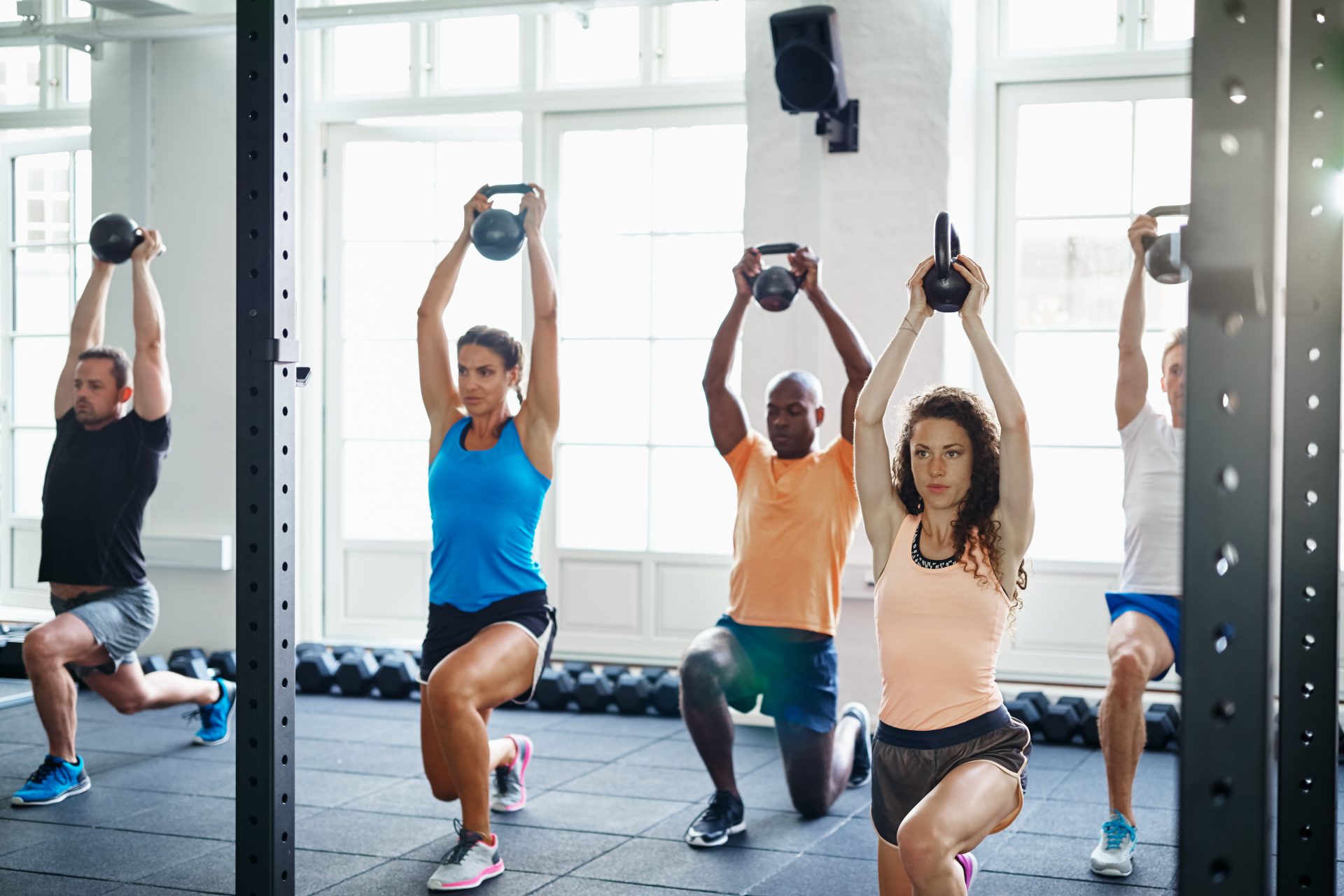
Standing ab exercises are movements performed in an upright position that specifically recruit the muscles of the anterior and lateral core — the rectus abdominis, obliques, and transverse abdominis — without requiring you to lie on the ground. Unlike general fitness workouts that target the core as a secondary outcome, these exercises are chosen precisely because they force the abdominal wall to resist, stabilise, and generate force against gravity and lever-arm loads. The distinction matters: a squat trains your legs and incidentally braces your core; a standing oblique crunch targets your core as the primary mover from start to finish. The mechanism is rooted in anti-rotation and anti-lateral-flexion demand. When you stand and move a limb away from your centre of gravity — through a knee drive, a side crunch, or a wood chop — your core muscles must fire to prevent your spine from collapsing under that load. This constant stabilisation response trains the deep stabilisers (especially the transverse abdominis) in a way that translates directly to everyday movement patterns like carrying, bending, and lifting. The result is functional core strength built in the position your body actually uses most: standing upright.
Benefit 1 — Stronger, More Stable Midsection for Daily Life The most immediate benefit is a core that supports everything you do — picking up a child, carrying groceries, sitting through a long workday. A strong midsection protects the lumbar spine by distributing load more efficiently across the trunk rather than placing it all on the lower back discs. Every organ, nerve, and blood vessel running through your torso benefits from that improved structural support. Research published in the Journal of Strength and Conditioning Research found that functional standing core exercises produce significantly higher activation of the transverse abdominis compared to equivalent supine movements — the key stabiliser most people never consciously train. Benefit 2 — Reduced Lower Back Discomfort Through Targeted Muscle Engagement Most people searching for standing abs are doing so because something hurts. Floor crunches compress the lumbar spine and strain the neck; standing variations remove both problems. Exercises like the standing oblique crunch, standing bicycle, and high-knee march counteract the anterior pelvic tilt and hip-flexor dominance that are the most common structural contributors to chronic lower back tension. By strengthening the lateral obliques and posterior core simultaneously, these movements address the muscular imbalance at its source. You can also explore posture-correcting exercises that complement standing ab work for even better spinal support. Benefit 3 — Long-Term Postural and Spinal Adaptation Consistent standing ab training reshapes how your body holds itself at rest. Over four to eight weeks of regular practice, the deep stabilisers develop enough endurance to maintain a neutral spine throughout the day without conscious effort. The World Health Organization recommends at least 150 minutes of moderate-intensity muscle-strengthening activity per week for adults — standing ab sessions done for 20–30 minutes, five days a week, sit comfortably within that threshold while delivering a disproportionate postural return for the time invested. Pairing them with dedicated core strength exercises accelerates this adaptation further. Benefit 4 — Better Energy, Balance, and Coordination A stronger core improves proprioception — your body’s sense of where it is in space. This translates into better balance, faster reaction time, and noticeably improved coordination across all physical activity. Members regularly report that better core stability reduces mid-afternoon energy crashes, likely because the body spends less metabolic energy simply holding itself upright during a desk-bound workday. These downstream benefits extend well beyond the gym: sharper focus, reduced fatigue, and quiet confidence in how you carry yourself through the day.
What you eat directly determines how fast you recover, how much you progress, and how consistently you can train. Here is what your nutrition plan should look like to support your standing ab training effectively. Protein — The Foundation of Strength Gains For strength-focused training, aim for 1.6–2.0 g of protein per kg of body weight daily. This higher intake supports muscle protein synthesis and repair after resistance sessions. Indian sources like eggs, paneer, dal, chicken, and moong work excellently here. Calcium and Vitamin D — Joint and Bone Health Strong bones provide the structural foundation for all movement — include calcium-rich foods like milk, curd, paneer, ragi, and sesame seeds (til) daily. Vitamin D is essential for calcium absorption; aim for 15–20 minutes of morning sunlight alongside dietary sources like eggs and fatty fish. Deficiency in either nutrient accelerates joint wear over time. Anti-Inflammatory Foods — Faster Recovery Recovery speed is directly influenced by your body’s inflammatory status. Turmeric with black pepper (curcumin + piperine), fresh ginger, and omega-3 fatty acids from flaxseeds, walnuts, and fatty fish all actively reduce exercise-induced inflammation. Include these consistently rather than only on hard training days. Hydration — Performance and Joint Lubrication Adequate hydration supports joint lubrication, muscle function, and nutrient transport — aim for 2.5–3 L of water daily. Drink at least 500 ml before your morning exercise session to prime circulation and joint mobility. Herbal teas and coconut water count toward your fluid intake and provide additional micronutrients. Magnesium — Muscle Function and Sleep Quality Magnesium governs over 300 enzymatic reactions including muscle contraction and relaxation — making it essential for any movement-based training. Include pumpkin seeds, bananas, dark chocolate (70%+), spinach, and whole grains in your daily diet. Many Indians are mildly deficient; if you experience frequent muscle cramps or poor sleep quality, a magnesium glycinate supplement may help.
Starting a new training programme is often the hardest part. Here is a clear, week-by-week plan to begin your standing ab training without injury or overwhelm. Before You Begin — Setting Your Baseline Before your first session, assess where you currently stand: can you perform 10 bodyweight squats with good form? Hold a plank for 30 seconds? These simple benchmarks tell you whether to start at the absolute beginner level or move slightly ahead. Set a concrete, measurable goal — for example, performing 3 sets of 15 controlled reps of your target movement within 8 weeks. Week 1–2: Foundation Prioritise form above all else — a slow, controlled rep with full range of motion builds more real strength than 20 sloppy ones. Expect some delayed onset muscle soreness (DOMS) 24–48 hours after your first two or three sessions; this is normal and will reduce as your body adapts. Keep sessions to 20–30 minutes and use 3 sets of 8–10 reps per exercise, resting 60–90 seconds between sets. Week 3–4: Building Consistency Once you can complete all sets comfortably with good form, begin adding volume — either one extra set per exercise or an additional exercise. Training at the same time each morning dramatically improves adherence; your body begins priming itself hormonally before you even start. Track each session with a simple log — even just noting reps completed — so you can see tangible progress week over week. Week 5–8: Progression Around weeks 4–6, most people notice their first meaningful strength gains — movements that felt hard now feel manageable, and posture often improves noticeably. Begin introducing progressive overload: increase resistance, slow the tempo, or add a pause at the hardest point of each rep. Your recovery capacity also improves in this phase, so you may be able to handle 4–5 sessions per week if your schedule permits. In strength training, consistency across weeks matters far more than any single intense session.
Exercise 1 — Standing Oblique Crunch — Lateral Core and Obliques — 3 × 15 each side What it does: The most direct standing equivalent of a side crunch. You lift one knee toward the same-side elbow while contracting the lateral waist — isolating the internal and external obliques without any spinal flexion stress. It suits core strength training because the obliques are the primary rotational and anti-rotational muscles of the trunk, and most people chronically underwork them. Dosage: 3 sets of 15 repetitions per side, with a deliberate pause at the top of each contraction. Beginner modification: Place one hand on a wall for balance. Slow the tempo to a 2-second lift, 2-second lower. Reduce range of motion until hip and shoulder mobility improve. Exercise 2 — Standing Wood Chop — Rotational Core and Obliques — 3 × 12 each side What it does: A diagonal movement from high-to-low (or low-to-high) that trains the obliques through their full rotational range. Wood chops replicate real-world movement patterns and develop anti-rotation stiffness under dynamic load — a quality that directly reduces injury risk in the lower back. Dosage: 3 sets of 12 repetitions per side. Use a light resistance band, a small dumbbell, or simply clasp both hands and use bodyweight leverage. Beginner modification: Perform without any weight. Focus on the rotation coming from the thoracic spine and waist — not the shoulders or arms alone. Exercise 3 — Standing Bicycle (High Knee with Elbow Drive) — Full Anterior Core — 3 × 20 alternating What it does: The standing version of the classic bicycle crunch. Alternating knee drives with opposite elbow pulls engage both the rectus abdominis and the obliques simultaneously while also elevating heart rate enough to add a mild cardiovascular benefit alongside the core work — making it one of the most time-efficient standing ab exercises available. Dosage: 3 sets of 20 alternating reps (10 per side). Maintain an upright chest — avoid rounding forward through the upper back. Beginner modification: Reduce speed significantly. Perform slow, controlled knee lifts touching the knee to the opposite hand rather than driving the elbow aggressively. Build tempo only when balance and coordination feel comfortable.
Mistake 1 — Using Momentum Instead of Muscle Contraction — Correction: Slow the rep down to a 2-second count What it is: The most widespread error in standing ab training. Swinging the leg up quickly or jerking the torso sideways lets the hip flexors and momentum do the work your obliques and abdominals should be doing. This completely undermines core strength development and transfers stress to the hip joint and lower back. What to do instead: Deliberately slow every rep to a 2-second lift and 2-second return. If you cannot control the movement at that pace, reduce range of motion first. Speed is earned — not started with. Mistake 2 — Holding the Breath During the Contraction — Correction: Exhale on every crunch or drive What it is: Breath-holding during ab exercises spikes intra-abdominal pressure and prevents the deep core muscles from engaging properly. For someone training specifically for core strength, this means the transverse abdominis — the deepest and most stabilising layer — never fully activates, stalling long-term progress. What to do instead: Exhale through slightly pursed lips on every contraction, inhale on the return. This breathing pattern naturally draws the deep abdominals inward and upward, recruiting the full core musculature with every rep. Mistake 3 — Training Only the Front of the Core and Ignoring the Posterior Chain — Correction: Pair ab sessions with glute and back activation work What it is: Focusing exclusively on crunches and knee drives strengthens the anterior core while the posterior chain (glutes, erector spinae, multifidus) remains weak. This imbalance creates a “strong front, weak back” pattern that increases lower back discomfort rather than reducing it — the opposite of what most people want. What to do instead: Pair every standing ab session with at least one posterior chain exercise — a glute bridge, a bird-dog, or a deadlift variation. Adding targeted glute and posterior chain work creates the balanced core stability that protects your spine from both directions. 50,000+ members already training with Habuild every morning. Live daily sessions · Expert instructor · Cancel anytime.
Standing Ab training is not a one-size-fits-all programme — but it is far more broadly accessible than most people assume. Here is who benefits most. Complete Beginners Starting from Zero You do not need any prior fitness experience to begin standing ab exercises. Every movement in a well-structured programme comes with easier modifications — for example, performing the exercise seated, with a reduced range of motion, or using a wall or chair for support. The only requirement is willingness to show up consistently; the strength and technique will follow. People With Muscle Weakness or Functional Strength Deficits This training is especially valuable for people managing Muscle Weakness or Functional Strength Deficits. Standing Ab exercises specifically target the muscular imbalances and movement patterns that drive these conditions. Always begin at a reduced intensity and range, and increase gradually as your body adapts. Office Workers and Sedentary Adults Sedentary adults who spend 6–8 hours sitting daily experience progressive losses in standing ab capacity — this training directly reverses that trend. A 20–30 minute morning session creates a positive hormonal and metabolic shift that persists throughout the working day. Even three sessions per week produce measurable improvements in energy levels, concentration, and posture. Active Adults and Athletes Experienced gym-goers and recreational athletes use standing ab training to address specific movement gaps and build functional capacity. This style of training bridges the gap between general fitness and sport-specific performance, reducing injury risk in the process. It works well as a primary programme or as targeted supplementary work alongside your existing routine. Seniors Maintaining Functional Independence Sarcopenia — the age-related loss of muscle mass — begins in the mid-30s and accelerates after 60 if not countered with resistance training. Standing Ab exercises are one of the most effective tools for preserving muscle mass, bone density, and functional independence in older adults. Progressive bodyweight and resistance training is safe, evidence-based, and highly effective for this group.
Core-Specific Programming — Not a Generic Fitness Class Every exercise selection, sequencing decision, and rest interval in Habuild’s strength training programme is chosen specifically for core strength outcomes. Sessions open with deep breathing and transverse abdominis activation — priming the stabilisers before any loaded movement begins — and close with controlled isometric holds that build endurance in the deep core layers. This sequencing prevents the compensatory patterns (hip flexor dominance, lower back bracing) that make ab training ineffective for most people training alone. Live Daily Sessions with Real-Time Form Correction Form errors in standing ab exercises are subtle but consequential — a dropped shoulder here, a jutted hip there. In a pre-recorded video, those errors go uncorrected and become ingrained habits. Habuild’s live daily format means your instructor sees your movement in real time and corrects the specific patterns preventing your core from developing. This is the single biggest structural advantage of a live session over any app or YouTube routine. Progressive Overload Built into Every Session Members do not need to design their own progression. Habuild builds progression into the programme week by week — increasing rep counts, introducing resistance variations, extending time-under-tension, and adding rotational complexity as members adapt. You simply show up. The programme takes care of the variables that most self-guided trainees either ignore or get wrong. Accountability, Streaks and Community The gap between knowing what to do and actually doing it every morning is closed by structure. Habuild’s streak tracking makes daily consistency visible and motivating. The WhatsApp community means you are training alongside tens of thousands of others at the same time — a social accountability layer that no solo programme can replicate. Members who reach a 30-day streak almost universally report that the habit has become self-sustaining by that point. For deeper work on strength and balance and stability training, the community discussion surfaces exercise combinations you would not find on your own.
I have been with Habuild for 1,050 days. My energy has increased and I don't feel drained by work anymore. My patience has grown — things that used to stress me out don't affect me the same way. My kids at home have also picked up the yoga habit. Most importantly, my knowledge about breathing and how it affects the entire body has transformed. My nervous system feels calmer, my digestion is better, and there is a steadiness in my body and mind that I had never experienced before.

My homeopathy doctor suggested yoga and I found Habuild. In the free 14 days, I already felt changes. The biggest surprise: I used to be unable to get down from a pavement by myself. Now I can jump. My core and lower body strength have rebuilt themselves through consistent practice. Habuild is a complete package — it strengthens everything, not just flexibility.


Practice Strong Everyday with Trishala Bothra, an IIT-B and London School of Business alumni
Trishala is focused on making movement feel lighter, more engaging, and something you actually look forward to.
In just 3 years, over 50,000 people began their strength journey, and 10,000+ join every week to keep getting stronger.