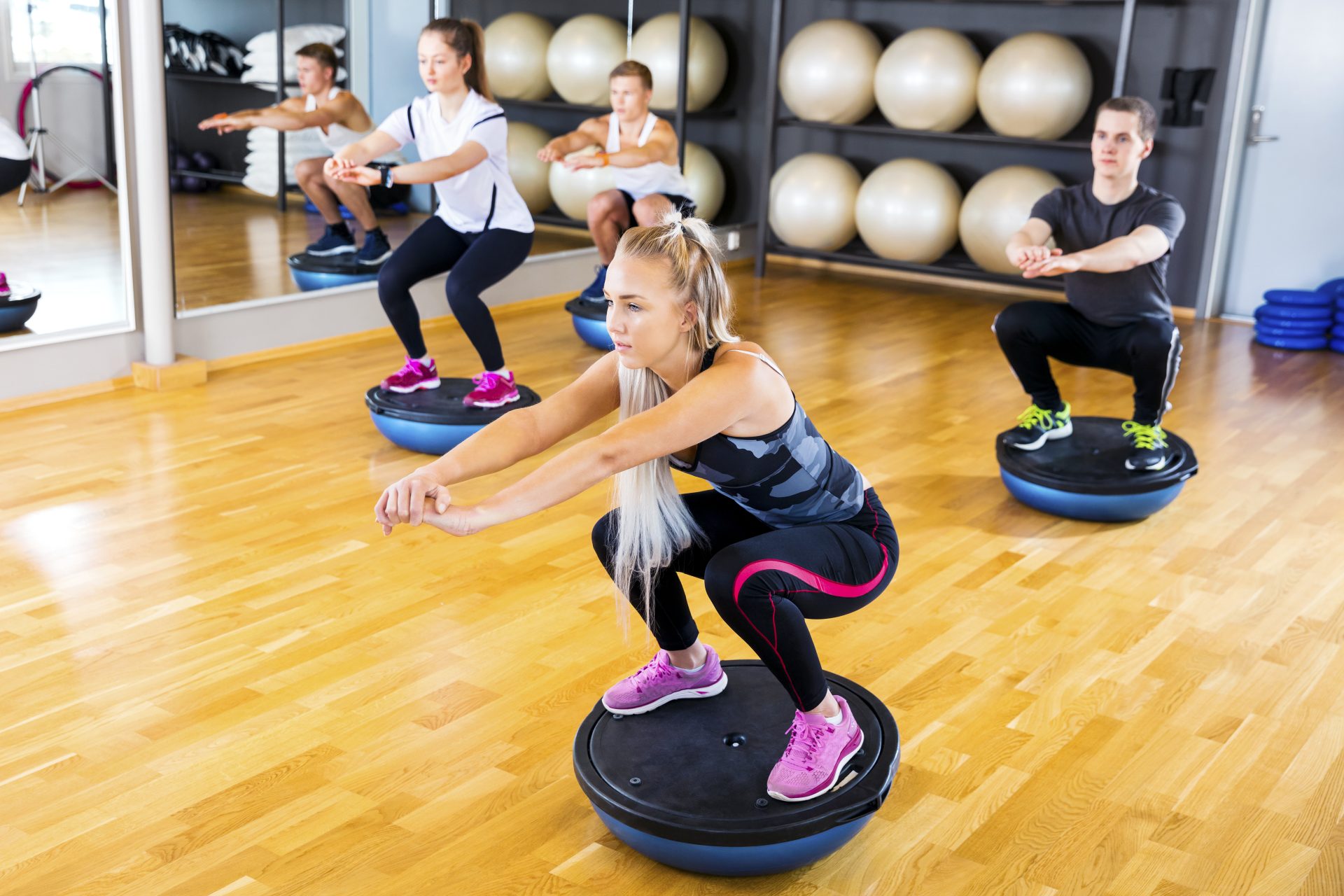
Balance training exercises are movements specifically chosen to challenge and improve the body’s ability to maintain controlled positions during both static holds and dynamic motion. Unlike standard strength or cardio workouts that train muscle mass or cardiovascular capacity in isolation, balance-focused movements recruit the smaller stabiliser muscles around your joints, your proprioceptive system, and your core — all at once. The result is neuromuscular coordination that directly transfers to how you move in everyday life. When you perform single-leg stands, lateral step-downs, or controlled weight shifts, your nervous system is forced to process rapid positional feedback and make micro-adjustments in real time. Over consistent practice, the pathways between your joints, muscles, and brain become faster and more efficient. This is why balance training gradually eases fall risk, supports joint stability management, and helps people with joint instability feel progressively more in control of their movement — not because of muscle size, but because of how well your body communicates with itself.
Better Functional Movement in Daily Life
The most immediate benefit of consistent balance training is how it changes the way you move off the mat. Climbing stairs, stepping off a curb, or carrying groceries on one side — all of these demand the same joint control and postural awareness that balance exercises develop. Every muscle group involved in upright movement gets challenged through a fuller range of coordination rather than isolated loading.
Research indicates that balance and proprioception training can reduce fall-related injuries by up to 37% in adults across age groups.
Relief from Joint Instability and Chronic Pain
Many people searching for balance training are dealing with wobbly knees, recurring ankle sprains, or lower back discomfort that flares during everyday activity. Targeted balance work — including single-leg deadlifts, heel-to-toe walks, and standing hip circles — directly addresses the muscular imbalances that make joints feel unstable.
These movements strengthen the supporting musculature without placing high compressive loads on already stressed joints, making balance training particularly suitable for people managing mild knee or ankle issues.
Stronger Core and Postural Alignment Over Time
Every balance exercise demands engagement from the deep core — the transverse abdominis, multifidus, and hip stabilisers that conventional crunches rarely target effectively. Over weeks of regular practice, these muscles adapt and become more consistently active throughout your day, not just during workouts.
The WHO recommends at least 150 minutes of moderate physical activity per week for adults; balance training counts towards this total and delivers postural benefits that standard aerobic activity does not.
Improved Focus, Reaction Time, and Body Awareness
Balance training has a direct cognitive component. Holding a single-leg pose or performing a dynamic lateral lunge requires sustained attention and real-time proprioceptive feedback processing. Regular practice has been linked to improvements in reaction time and spatial awareness — benefits that accumulate alongside the physical gains and affect how alert and coordinated you feel throughout the day.
What you eat directly determines how fast you recover, how much you progress, and how consistently you can train. Here is what your nutrition plan should look like to support your balance training effectively.
Protein — Supporting Tissue Repair and Recovery
Even therapeutic and rehabilitation-focused training benefits from consistent protein intake at 1.2–1.6 g/kg/day. Protein supports tissue repair and reduces the inflammatory response that slows recovery. Opt for easily digestible sources like eggs, moong dal, low-fat curd, and paneer.
Calcium and Vitamin D — Joint and Bone Health
Joint and connective tissue health depends heavily on calcium and Vitamin D working together. Aim for 1000–1200 mg of calcium daily from dairy (milk, curd, paneer), ragi, sesame seeds (til), and leafy greens. Get 15–20 minutes of morning sunlight on exposed skin to maintain Vitamin D levels and improve calcium absorption.
Anti-Inflammatory Foods — Faster Recovery
Recovery speed is directly influenced by your body’s inflammatory status. Turmeric with black pepper (curcumin + piperine), fresh ginger, and omega-3 fatty acids from flaxseeds, walnuts, and fatty fish all actively reduce exercise-induced inflammation. Include these consistently rather than only on hard training days.
Hydration — Performance and Joint Lubrication
Adequate hydration supports joint lubrication, muscle function, and nutrient transport — aim for 2.5–3 L of water daily. Drink at least 500 ml before your morning exercise session to prime circulation and joint mobility. Herbal teas and coconut water count toward your fluid intake and provide additional micronutrients.
Magnesium — Muscle Function and Sleep Quality
Magnesium governs over 300 enzymatic reactions including muscle contraction and relaxation — making it essential for any movement-based training. Include pumpkin seeds, bananas, dark chocolate (70%+), spinach, and whole grains in your daily diet. Many Indians are mildly deficient; if you experience frequent muscle cramps or poor sleep quality, a magnesium glycinate supplement may help.
Starting a new training programme is often the hardest part. Here is a clear, week-by-week plan to begin your balance training without injury or overwhelm.
Before You Begin — Setting Your Baseline
Begin by identifying the movements or positions that provoke your symptoms, and note their severity on a scale of 0–10. Therapeutic exercise should begin at an intensity where symptoms either stay the same or improve during and after the session. Set a conservative goal — reducing your discomfort score by 2–3 points — as your 4-to-6-week milestone.
Week 1–2: Foundation
Start with the easiest variation of each exercise and the shortest hold or rep count recommended. It is normal to feel mild fatigue in the working muscles, but you should not feel sharp pain — if you do, reduce the range or intensity immediately. Sessions of 15–20 minutes are sufficient at this stage; brevity and correct form matter more than volume.
Week 3–4: Building Consistency
Gradually increase duration and repetitions as your tolerance improves. Morning sessions work particularly well for therapeutic training because gentle movement helps reduce the stiffness that accumulates overnight. You may begin to notice that your symptoms are less severe after sessions — this positive reinforcement is an important sign of progress.
Week 5–8: Progression
Most people engaged in consistent therapeutic exercise report meaningful functional improvement between weeks 4 and 6. Begin loading the movement slightly — using bodyweight or light resistance — as your pain levels permit. The goal in this phase is not just pain reduction but restoring normal function and preventing recurrence.
With therapeutic training, gentle daily consistency produces far better outcomes than infrequent high-intensity sessions.
Single-Leg Stand — Ankle and Knee Stabilisers — 3 × 30–45 seconds per side
What it does: Forces the ankle, knee, and hip stabilisers to work together to maintain an upright position without compensation. It is the foundational movement for all balance work because it isolates proprioceptive demand to one limb at a time, exposing asymmetries that bilateral exercises mask.
Dosage: 3 sets × 30–45 seconds per side, 5 times per week. Progress by closing your eyes or standing on a folded towel once you can hold steadily for 45 seconds.
Beginner modification: Stand next to a wall and lightly rest fingertips on the surface. Reduce contact gradually over sessions until you no longer need support.
Single-Leg Deadlift — Hamstrings, Glutes, and Lower Back — 3 × 10 reps per side
What it does: Trains the posterior chain — hamstrings, glutes, and spinal erectors — under a balance demand. This movement closely mimics the mechanics of bending forward in daily life, making it one of the most functional exercises for stability. It also highlights left-right strength imbalances that contribute to poor balance. Dedicated glute strength work complements this movement well for those wanting to accelerate hip stability gains.
Dosage: 3 sets × 10 reps per side, 4–5 times per week. Bodyweight only to start; add a light dumbbell once form is consistent.
Beginner modification: Keep a slight bend in the standing knee and reduce the forward hinge depth to 45 degrees until hip hinge mechanics feel natural.
Lateral Band Walk — Hip Abductors and Outer Glutes — 3 × 15 steps each direction
What it does: Strengthens the hip abductors and gluteus medius — muscles that control lateral stability during walking, running, and any single-leg movement. Weakness here is one of the leading causes of knee valgus collapse and chronic hip instability. Pairing this with broader balance-focused exercise programming accelerates functional gains.
Dosage: 3 sets × 15 steps in each direction, 4 times per week. Use a light resistance band around the ankles; progress to a band above the knees as strength builds.
Beginner modification: Perform without a resistance band first, focusing on keeping the torso upright and steps controlled rather than wide.
Mistake 1 — Rushing Through Holds — Correction: Slow Down and Feel the Feedback
What it is: Many people treat balance exercises like a tick-box — they briefly wobble through a single-leg stand and move on. Speed defeats the entire purpose. Balance training works by forcing your nervous system to process instability and respond; if you rush the hold, that adaptation loop never completes.
What to do instead: Set a timer. Commit fully to the specified hold duration. If you fall out of the position, reset and continue the timer from where you left off rather than counting the attempt as complete.
Mistake 2 — Training Only on Flat, Stable Surfaces — Correction: Introduce Controlled Instability Progressively
What it is: Performing all balance work on a smooth, flat floor develops a narrow skill set. Real-life balance demands happen on uneven ground, on stairs, and during dynamic movement. Staying permanently on a flat surface limits the transfer of your training to actual daily situations.
What to do instead: Once you have mastered a movement on a flat surface, progress to a folded yoga mat, a balance disc, or an uneven outdoor surface. Introduce variability gradually — one new surface challenge per two to three weeks.
Mistake 3 — Ignoring the Weaker Side — Correction: Always Start Reps on the More Challenging Side
What it is: Most people have a dominant side that feels more stable. Training both sides equally in reps but always starting on the stronger side means the weaker side consistently gets less quality attention — fatigue sets in, form degrades, and the imbalance persists or widens over time.
What to do instead: Always begin your sets on the side that feels less stable. Complete full, quality reps on that side first, then match the same reps on the stronger side. Building core strength alongside balance training also helps reduce side-to-side compensation patterns.
Balance training is not a one-size-fits-all programme — but it is far more broadly accessible than most people assume. Here is who benefits most.
Complete Beginners Starting from Zero
You do not need any prior fitness experience to begin balance exercises. Every movement in a well-structured programme comes with easier modifications — for example, performing the exercise seated, with a reduced range of motion, or using a wall or chair for support. The only requirement is willingness to show up consistently; the strength and technique will follow.
People With Balance Deficits or Fall Risk
This training is especially valuable for people managing Balance Deficits or Fall Risk. Isometric and low-impact variations allow you to build strength at pain-free joint angles without aggravating sensitive tissues. Always begin at a reduced intensity and range, and increase gradually as your body adapts.
Office Workers and Sedentary Adults
Sedentary adults who spend 6–8 hours sitting daily experience progressive losses in balance capacity — this training directly reverses that trend. A 20–30 minute morning session creates a positive hormonal and metabolic shift that persists throughout the working day. Even three sessions per week produce measurable improvements in energy levels, concentration, and posture.
Active Adults and Athletes
Experienced gym-goers and recreational athletes use balance training to address specific movement gaps and build functional capacity. This style of training bridges the gap between general fitness and sport-specific performance, reducing injury risk in the process. It works well as a primary programme or as targeted supplementary work alongside your existing routine.
Seniors Maintaining Functional Independence
Older adults benefit significantly from balance training as it maintains the functional strength, balance, and joint health required for independent daily living. Even those who have been sedentary for years can make meaningful progress with a consistent, progressive programme. Starting with modified, low-impact variations and building gradually is the safest and most effective approach.
Balance-Specific Programming — Not a Generic Fitness Class
Every session in Habuild’s strength training programme is sequenced with balance outcomes in mind, not just calorie burn or muscle fatigue. Sessions open with dynamic warm-up movements — controlled hip rotations and ankle mobilisation — that prime the proprioceptive system before load is applied. They close with slow, isometric holds that train the nervous system to maintain stability under muscular fatigue, which is the exact condition in which most real-world balance failures occur.
Live Daily Sessions with Real-Time Form Correction
Balance errors are subtle — a slightly shifted hip, a collapsing arch, an overextended knee. These cannot be caught and corrected from a pre-recorded video. Habuild’s live daily format means your instructor sees your movement as it happens and calls out corrections in real time. The specific compensations that prevent balance improvement — leaning into the dominant side, gripping with the toes, locking the standing knee — are addressed on the spot, session after session.
Progressive Overload Built into Every Session
Members do not need to self-programme their progression. Habuild’s sessions are structured so that movement complexity, hold duration, and stability challenge increase week by week. In the first two weeks, movements are bilateral and grounded. By weeks five and six, single-leg variations with added rotational demands are introduced — removing the guesswork and ensuring your nervous system is consistently challenged at the right level.
Accountability, Streaks, and Community
Balance training requires weeks of consistent practice before the adaptations become clearly noticeable. That makes habit formation the critical variable. Habuild’s streak tracking system, daily session reminders, and WhatsApp community provide the social and accountability structures that keep members showing up on the days when motivation alone would not be enough. Members with 90-day streaks consistently report the most significant functional improvements.
I have been with Habuild for 1,050 days. My energy has increased and I don't feel drained by work anymore. My patience has grown — things that used to stress me out don't affect me the same way. My kids at home have also picked up the yoga habit. Most importantly, my knowledge about breathing and how it affects the entire body has transformed. My nervous system feels calmer, my digestion is better, and there is a steadiness in my body and mind that I had never experienced before.

My homeopathy doctor suggested yoga and I found Habuild. In the free 14 days, I already felt changes. The biggest surprise: I used to be unable to get down from a pavement by myself. Now I can jump. My core and lower body strength have rebuilt themselves through consistent practice. Habuild is a complete package — it strengthens everything, not just flexibility.


Practice Strong Everyday with Trishala Bothra, an IIT-B and London School of Business alumni
Trishala is focused on making movement feel lighter, more engaging, and something you actually look forward to.
In just 3 years, over 50,000 people began their strength journey, and 10,000+ join every week to keep getting stronger.