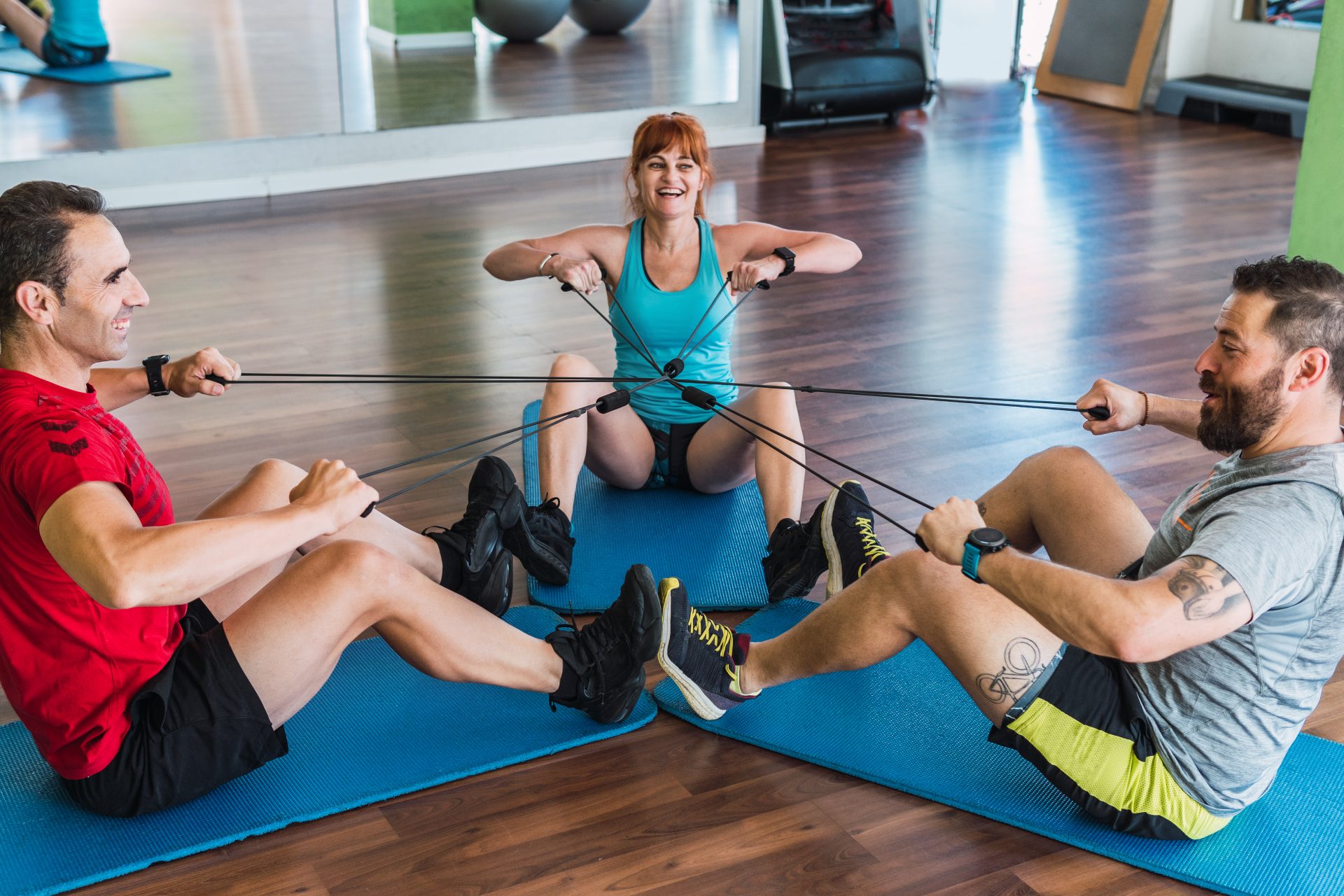
Traditional resistance training refers to structured exercise that uses external load — free weights, machines, resistance bands, or bodyweight — to create mechanical tension on the muscles, forcing them to adapt by growing stronger over time. Unlike circuit training, HIIT, or functional fitness classes, traditional strength training is built on three core principles: progressive overload (gradually increasing the challenge), compound movement patterns (squats, presses, rows, hinges), and adequate recovery between sessions. The goal is not just to burn calories during the session but to build a stronger, more capable body that functions better in every area of life. At its physiological core, traditional resistance training works by creating micro-damage in muscle fibres during the eccentric (lowering) phase of each repetition. The body responds during recovery by rebuilding the fibres thicker and stronger — a process called muscle protein synthesis. Repeated consistently over weeks and months, this cycle produces measurable increases in strength, muscle mass, and metabolic rate that distinguish traditional strength training from aerobic exercise. The systematic, sets-and-reps format — typically 3–5 sets of 6–15 repetitions per exercise — has been refined through decades of sports science research into the most reliable method for building human strength.
Start Your Free 14 Day Trial
Benefit 1: Builds Genuine Muscle Strength and Mass
Traditional strength training is the most evidence-backed method for building skeletal muscle mass and functional strength. Research indicates that adults who do not engage in regular resistance training lose 3–8% of muscle mass per decade after age 30, with the rate accelerating after 60. Progressive overload — the defining characteristic of traditional resistance training — produces greater hypertrophy and strength gains than any other training modality. Adults lose 3–8% of muscle mass per decade without resistance training. This rate accelerates after age 60, making traditional strength training a health imperative, not merely a fitness choice.
Benefit 2: Elevates Resting Metabolic Rate and Supports Fat Loss
Every kilogram of muscle tissue added through traditional strength training burns approximately 13 additional calories per day at rest. A gain of 3–5kg of lean muscle — achievable within 6–12 months — produces a metabolic uplift of 40–65 calories daily without any additional exercise. Over a year, this equates to the caloric equivalent of several kilograms of stored fat, making traditional resistance training the most sustainable long-term body composition strategy. 3–5kg of lean muscle gained through traditional strength training burns an additional 40–65 calories per day at rest — the most sustainable metabolic uplift available without pharmaceutical intervention.
Benefit 3: Strengthens Bones, Joints and Connective Tissue
Traditional resistance training applies mechanical load to bones, tendons, and ligaments, stimulating bone mineral density increases. The WHO recommends resistance-based exercise at least twice per week for bone health in all adults. Unlike high-impact activities, traditional strength training delivers full bone-loading benefit at low impact, making it safe for older adults and those with joint sensitivities when performed with correct form and appropriate load.
Benefit 4: Improves Mental Health, Confidence and Daily Function
Systematic reviews show that resistance training produces statistically significant reductions in anxiety and depression symptoms, with effects comparable to aerobic exercise. The progressive nature of traditional resistance training — lifting more, moving better, and visibly changing the body over weeks and months — builds the specific confidence that translates into everyday life. As part of a complete programme alongside full body workout sessions, traditional resistance training delivers these psychological benefits alongside the physical adaptations that make daily activities progressively easier.
Protein — The Foundation of What Is Traditional Resistance Training? A Complete Guide to Building Real Strength Training
Aim for 1.6–2.0g of protein per kg of bodyweight per day. Best sources include eggs, paneer, lentils (dal), chicken, Greek yoghurt, and whey protein. Distribute protein evenly across 3–4 meals rather than loading it all in one sitting. Adequate protein is non-negotiable — without it, training effort produces minimal adaptation regardless of programme quality.
Carbohydrates — Fuel for What Is Traditional Resistance Training? A Complete Guide to Building Real Strength Performance
Complex carbohydrates (oats, brown rice, sweet potato, whole wheat roti) should form 40–50% of total calories. Consume a carbohydrate-containing meal 60–90 minutes before your what is traditional resistance training? a complete guide to building real strength session to ensure glycogen availability. Post-session carbohydrates restore muscle glycogen within the critical 30-minute recovery window.
Anti-Inflammatory Foods for Recovery
Include turmeric (with black pepper for bioavailability), ginger, and omega-3 rich foods (flaxseeds, walnuts, fatty fish) daily. These directly reduce the systemic inflammation that accumulates with consistent training, speeding recovery between sessions.
Hydration — Often Underestimated
Aim for 35–40ml of water per kg of bodyweight daily. Add an additional 500ml for every 30 minutes of active training. Even mild dehydration (2% body weight) measurably reduces strength output and exercise capacity.
Before You Begin — Setting Your Baseline
Before beginning, assess your current fitness level honestly. Can you complete 10 bodyweight squats with good form? Can you hold a plank for 20 seconds? These are the practical baselines for this programme. Set a specific, measurable goal — not just ‘get stronger’ but ‘complete all sessions consistently for 8 weeks’. Identify what space and equipment you have available.
Week 1–2: Foundation and Form
Focus entirely on movement quality, not load or intensity. Every exercise should be performed through full range of motion with controlled tempo. Use this phase to build the motor patterns that make what is traditional resistance training? a complete guide to building real strength training safe and effective long-term. 3 sessions per week is the optimal starting frequency — enough stimulus for adaptation, enough recovery to avoid overuse.
Week 3–4: Building Progressive Load
Once form is consistent, introduce progressive overload by adding 1–2 reps per set or a small increase in resistance each week. Track your sessions in a simple log — date, exercises, sets, reps. This data tells you exactly when to progress and prevents both undertraining and overtraining.
Ongoing: Consistency Over Intensity
The single biggest determinant of what is traditional resistance training? a complete guide to building real strength results is session consistency over 8–12 weeks. Missing one session is inconsequential; missing two consecutive weeks disrupts adaptation. Habuild’s live daily sessions are specifically designed to remove the decision-making barrier — the session is always there, always structured.

Exercise 1: Barbell or Goblet Squat — Quadriceps, Hamstrings, Glutes, Core — 3 sets × 8–12 reps
The squat is the foundational lower body exercise and the movement pattern most directly linked to functional lower body strength. Loading the squat through a barbell, dumbbell, or goblet position progressively trains the quadriceps, hamstrings, glutes, and core stabilisers through a complete range of motion. The hormonal response to heavy lower body compound training stimulates muscle development throughout the body, making the squat the highest-return exercise in any traditional strength training programme. Beginner modification: Begin with a bodyweight squat or goblet squat using a light dumbbell. Focus on depth and knee tracking before adding load.
Exercise 2: Bench Press or Push-Up Progression — Pectoralis Major, Triceps, Anterior Deltoids — 3 sets × 8–12 reps
The horizontal pressing pattern — barbell bench press, dumbbell press, or weighted push-up — is the primary upper body pushing exercise in traditional resistance training. It develops the pectoral muscles, triceps, and front shoulder through a full range of pressing motion. As the trainee advances, progressive load in this movement directly reflects overall upper body strength development. Beginner modification: Perform a full-range push-up on the floor. Progress to weighted vest push-ups or incline dumbbell press before advancing to barbell variations.
Exercise 3: Bent-Over Row — Latissimus Dorsi, Rhomboids, Biceps, Rear Deltoids — 3 sets × 8–12 reps
The bent-over row is the essential pulling counterpart to the bench press. Loading the back muscles through a bilateral rowing pattern trains the latissimus dorsi, rhomboids, and biceps through the pulling range that presses cannot address, preventing the postural imbalances that arise when the push chain is over-developed. Regular rowing work is the most direct intervention for correcting the forward-rounded posture that develops from desk-based lifestyles. Beginner modification: Use a single dumbbell for unilateral rows with the free hand supported on a bench. Reduce load and prioritise full shoulder blade retraction over weight lifted.
Mistake 1: Prioritising Load Over Movement Quality
The defining error in traditional strength training is increasing the load before the foundational movement pattern is sound. Lifting more weight than the current technique can control shifts stress from the target muscles onto joints, tendons, and the spine — producing both inferior muscle stimulus and elevated injury risk. Reducing load, slowing the tempo, and training with a full range of motion consistently outperforms ego-lifting in both safety and long-term strength development. Correction: Master form before adding weight. Every traditional resistance training movement should be technically proficient at bodyweight or light load before external resistance is increased.
Mistake 2: Skipping the Progressive Overload Principle
Traditional resistance training is defined by progressive overload — the systematic increase of the training stimulus over time. Performing the same weight, sets, and reps in every session produces rapid adaptation in the first weeks followed by complete plateau. Most trainees who describe traditional strength training as ‘not working’ are performing the same session repeatedly without progression. Correction: Track each session. Add one extra rep per set, increase load by the smallest available increment, or reduce rest time between sets every 1–2 weeks.
Mistake 3: Neglecting Recovery and Treating More Sessions as Better
Muscle growth and strength adaptation occur during recovery, not during the training session itself. Performing traditional resistance training sessions on consecutive days for the same muscle groups prevents the muscle protein synthesis cycle from completing and limits the gains that the training would otherwise produce. Correction: Train 3–4 days per week with 48 hours between sessions targeting the same muscle groups. This produces superior results to daily training at the same volume.
Complete Beginners Starting from Zero
Traditional resistance training is the most accessible and safest starting point for complete beginners when bodyweight movements are used first. Every exercise has a beginner modification, and Habuild’s live instruction adapts corrections in real time so that form is correct from the first session.
Intermediate Trainees Who Have Hit a Plateau
The structured progressive overload of traditional resistance training breaks through the plateau that general fitness classes cannot, by systematically increasing the stimulus every session rather than repeating the same routine. Those with Body Composition or Strength Goals Whether the goal is muscle gain, fat loss, or functional strength for daily life, traditional resistance training’s compound movement foundation produces measurable results across all three because it addresses the primary physiological drivers of each. Adults Over 40 Concerned About Muscle and Bone Loss After age 40 the rate of muscle and bone density loss accelerates. Traditional resistance training is the most evidence-supported intervention for both — always work alongside medical guidance for any specific health conditions.
Traditional Strength-Specific Programming — Not a Generic Fitness Class Habuild’s traditional resistance training sessions are built around compound movements first, progressive overload built in week by week, and recovery structure that allows adaptation to occur. Sessions open with the most demanding compound movements — squat, press, and row patterns — while the muscles are fresh, before progressing to accessory work that addresses weaker links and improves movement quality.
Live Daily Sessions with Real-Time Form Correction
Every Habuild session is live — not pre-recorded. Instructors watch your form in real time and correct the specific technique errors that prevent strength development and increase injury risk — a caved knee in the squat, a rounded back in the row, a flared elbow in the press. Real-time correction in the first weeks prevents these patterns from becoming ingrained.
Progressive Overload Built into Every Session
Members do not need to programme their own progression. Duration, load, movement complexity, and volume are built in week by week. This is the element most commonly absent from self-directed traditional strength training programmes.
Accountability, Streaks and Community
Streak tracking, a WhatsApp community, and live daily sessions create the accountability and social structure that keep members consistent long enough to see measurable results. Traditional resistance training requires weeks of consistent effort before visible results appear — the community structure ensures members stay the course.


Practice Strong Everyday with Trishala Bothra, an IIT-B and London School of Business alumni
Trishala is focused on making movement feel lighter, more engaging, and something you actually look forward to.
In just 3 years, over 50,000 people began their strength journey, and 10,000+ join every week to keep getting stronger.