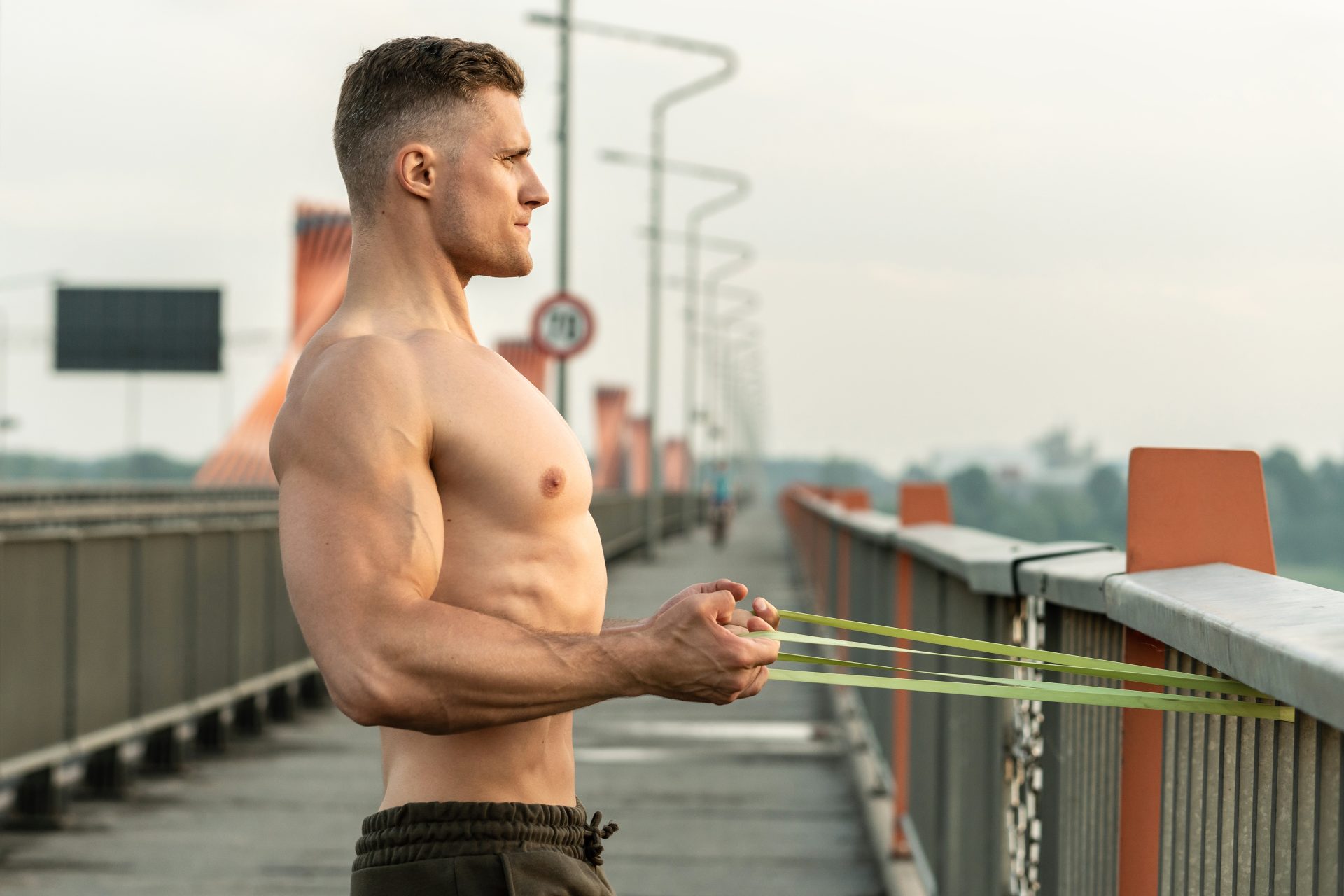
Strength training for triceps is a structured resistance programme specifically designed to achieve build toned, defined triceps — not just general fitness. Every exercise selection, rep range, and progression is chosen because it directly drives triceps results faster than generic workouts. The mechanism is tricep hypertrophy through elbow extension loading patterns. By progressively overloading the target muscles and movement patterns over time, the body adapts specifically to the demands of triceps — producing measurable, sustainable results that general fitness classes are not structured to deliver.
Start Your Free 14 Day Trial
Benefit 1: Toned, Defined Tricep Muscles
The triceps make up approximately two-thirds of the upper arm’s volume — targeted tricep training produces the arm definition and size that bicep-only training cannot deliver.
Benefit 2: Improved Pushing Strength
Stronger triceps directly improve all pushing movements — from press-ups to overhead activities. Many practitioners notice dramatically improved pushing capacity within 4–6 weeks of targeted tricep work.
Benefit 3: Better Arm Appearance and Reduced Upper Arm Fat
As the triceps strengthen and develop, the upper arm becomes firmer and more defined — reducing the loose skin or fat appearance at the back of the arm that many members want to address.
Benefit 4: Enhanced Shoulder and Elbow Joint Support
Strong triceps stabilise the elbow joint and assist in shoulder stability — reducing elbow discomfort in pushing activities and protecting the joint from overuse.
Protein — The Foundation of Triceps Training
Aim for 1.6–2.0g of protein per kg of bodyweight per day. Best sources include eggs, paneer, lentils (dal), chicken, Greek yoghurt, and whey protein. Distribute protein evenly across 3–4 meals rather than loading it all in one sitting. Adequate protein is non-negotiable — without it, training effort produces minimal muscle adaptation regardless of programme quality.
Carbohydrates — Fuel for Performance and Recovery
For triceps goals, carbohydrate intake should be calibrated to training intensity. Moderate carbohydrates from whole grains, oats, and starchy vegetables fuel training performance and support recovery without unnecessary caloric surplus.
Hydration and Micronutrients
Adequate hydration (2.5–3 litres daily) and micronutrients — especially Vitamin D, magnesium, and iron — support muscle function, recovery, and the energy metabolism that consistent training requires.
Before You Begin — Setting Your Baseline
Before beginning, assess your current fitness level honestly. Can you complete 10 bodyweight squats with good form? Can you hold a plank for 20 seconds? These are the practical baselines for this programme. Set a specific, measurable goal — not just ‘get stronger’ but ‘complete 15 bodyweight squats with full depth in 8 weeks’. Identify what space and equipment you have available. If you have any existing injuries or health conditions, consult your doctor before starting.
Week 1–2: Foundation Phase
Two sessions per week. Focus entirely on movement quality — correct joint alignment, controlled tempo, and full range of motion. Use bodyweight only or very light resistance. The most important thing in this phase is NOT to push hard — it is to practise the movement patterns correctly so that when you do add resistance in weeks 3–4, your form is already solid. Do not skip this phase.
Week 3–8: Progressive Loading Phase
Add resistance progressively — aim to add one more rep or a small amount of weight each week. For triceps goals, the rep range varies: if your goal is maximum strength, work in the 5–8 rep range with heavier loads; if your goal is muscular endurance and tone, stay in the 12–20 rep range with moderate loads. Add a third session in week 5–6 if recovery allows. Track your sessions — a simple note of sets, reps, and load each week makes progression deliberate rather than guesswork.
Week 9+: Goal-Specific Advancement
Introduce more advanced training variables: supersets (two exercises back-to-back with no rest), tempo manipulation (slower eccentrics for greater muscle stimulus), and periodisation (alternating heavier weeks with lighter deload weeks). At this stage, the programme should be producing clear, measurable results. If you’ve stalled, look at nutrition, sleep, and recovery first — these are the most common causes of plateau beyond the early adaptation phase.

Exercise 1: Bodyweight Squat Variations — Quadriceps, glutes, hamstrings | 3 sets × 12–15 reps
Compound multi-joint movement that builds triceps strength through the full functional range of motion — the most time-efficient starting exercise for this goal. Beginner modification: Reduce load or use bodyweight; ask the live instructor for a scaled modification.
Exercise 2: Resistance Band or Dumbbell Press — Primary pushing muscles, core stabilisers | 3 sets × 10–12 reps
Progressive pushing strength through the specific movement patterns most relevant to triceps development — adapts from bodyweight to loaded with a single piece of equipment. Beginner modification: Use bodyweight or light resistance bands; scale load to maintain clean form throughout.
Exercise 3: Plank and Core Variations — Core stabilisers, shoulder girdle | 3 sets × 30–45 seconds
Core stability underpins all triceps training — without a stable base, the target muscles cannot be loaded effectively. This foundational exercise is included in every session. Beginner modification: Begin with the lightest available resistance and build progressively with guidance from the live instructor.
Mistake 1: Skipping Progressive Overload
Without increasing the challenge week by week — through more reps, more sets, or more resistance — the body adapts and progress stalls. Every session should be slightly harder than the last. Track your reps and aim to improve them consistently.
Mistake 2: Training Without Adequate Recovery
Muscles grow during rest, not during training. Training triceps muscles every day without rest days slows progress and increases injury risk. Two to three sessions per week with recovery between them is the evidence-supported approach.
Mistake 3: Neglecting Nutrition Around Training
Strength training creates the stimulus for adaptation; nutrition provides the building blocks. Without adequate protein (1.6–2.0g per kg bodyweight) and sufficient calories, training effort produces minimal results. Nutrition is as important as the programme itself.
Complete Beginners Starting from Zero
This programme begins with bodyweight movements and progresses at each member’s own pace. Every exercise has a beginner modification, and the live instructor adapts cues in real time. No equipment or gym experience is required to start.
Intermediate Trainees Who Have Hit a Plateau
Goal-specific programming — the right exercises, the right rep ranges, and built-in progressive overload — is what breaks through the plateau that general fitness classes produce. When the training variable matches the goal, results return.
Those Who Have Tried Triceps Training Before Without Results
Most failed attempts at triceps training come from generic programmes without clear progressive overload, insufficient frequency, or no accountability structure. This programme addresses all three — with built-in progression, daily sessions, and community accountability.
Senior Citizens and Older Adults (50+)
Strength training for triceps is particularly important for adults over 50. After the age of 40, lean muscle mass decreases by approximately 1–2% per year without resistance training — affecting metabolism, balance, and physical independence. This programme offers modifications for every exercise that make strength training accessible and safe regardless of current fitness level. If you have existing health conditions, please consult your doctor before starting.
Is Strength Training for Triceps Good for Beginners?
Yes — Yes — with modifications for every exercise and live real-time guidance, this programme is specifically designed to be accessible from day one regardless of current fitness level.
Habuild is India’s First Habit Building Program for Yoga — and through its ‘Strong Everyday’ programme led by Trishala Bothra, it extends this same habit-building philosophy to structured strength and fitness training. Every session is designed for the specific goal rather than general fitness.
Goal-Specific Programming — Not a Generic Fitness Class
Every exercise selection, rep range, and rest period in the triceps programme is chosen because it produces triceps results specifically. Habuild does not run the same session for everyone regardless of goal — the programme is structured to drive your specific outcome with every session.
Live Daily Sessions with Real-Time Form Correction
Unlike pre-recorded videos, Habuild’s live daily sessions allow the instructor to see and correct form errors in real time — the specific errors that prevent triceps progress and increase injury risk. This live correction is the difference between training that works and training that wastes effort.
Progressive Overload Built into Every Session
Members do not need to design their own progressive overload — it is built into the programme structure. Each week, the sessions are deliberately more challenging than the last, ensuring the body never fully adapts and results continue coming.
Accountability, Streaks, and Community


Practice Strong Everyday with Trishala Bothra, an IIT-B and London School of Business alumni
Trishala is focused on making movement feel lighter, more engaging, and something you actually look forward to.
In just 3 years, over 50,000 people began their strength journey, and 10,000+ join every week to keep getting stronger.