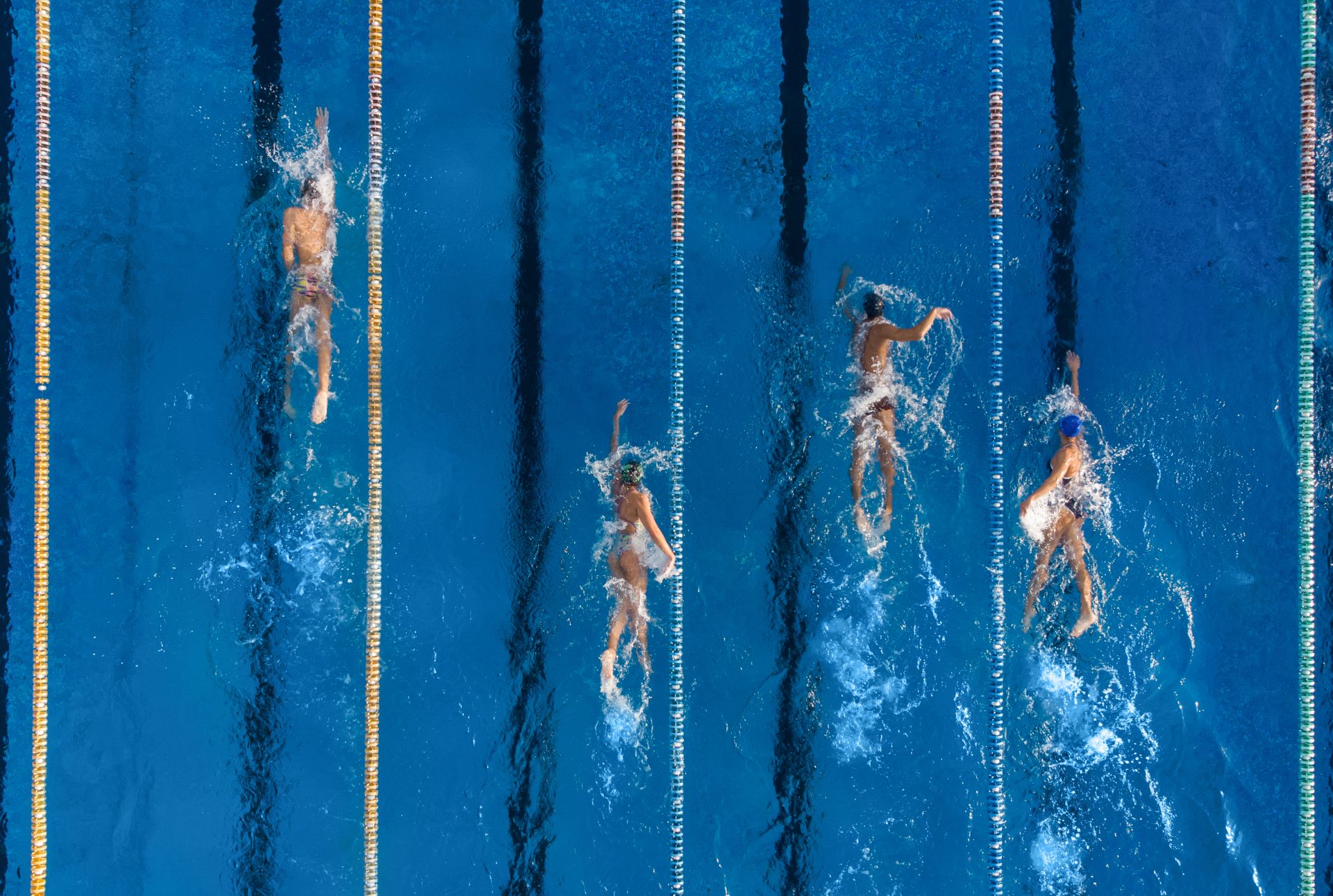
Strength training for swimmers is a specialised resistance programme built around the specific physical demands of aquatic performance — the rotational pulling power of the catch and pull phase, the core rotation that stroke mechanics depend on, the shoulder external rotation stability that high-volume swimming demands, and the kick power from hip flexors and glutes that propels the body through water. What makes swimmer-specific strength training distinct is its equal emphasis on performance development and shoulder injury prevention — the most common reason for career interruption in competitive swimming. The mechanism is strength-to-power transfer through dry-land training. The resistance training load (significantly higher than water resistance) develops the neuromuscular force production that translates directly into more powerful catches, pulls, and kicks in the water. The shoulder and rotator cuff work develops the structural resilience that allows high-volume training without the impingement and tendinopathy that undertrained swimmers develop. The core rotation training develops the hip-to-shoulder power sequence that propels each stroke.
Start Your Free 14 Day Trial
Benefit 1: Improved Stroke Power and Swimming Speed
Lat strength (the primary pull muscle), core rotational power, and hip flexor strength all directly produce faster swimming — more powerful catches, stronger kicks, and more efficient stroke mechanics. Swimmers typically notice speed improvements within 8–12 weeks of structured dry-land training.
Benefit 2: Reduced Shoulder Injury Risk
The rotator cuff external rotators — chronically underloaded by swimming’s internal rotation demands — require specific dry-land training to maintain the shoulder balance that prevents impingement and tendinopathy. This is the most important injury prevention benefit of swimming strength training.
Benefit 3: Better Stroke Endurance and Session Quality
Stronger supporting muscles (core, hip flexors, scapular stabilisers) maintain technical quality for longer into training sessions and races — delaying the technique breakdown that occurs when these muscles fatigue in undertrained swimmers.
Benefit 4: Improved Turn and Start Power
The explosive hip extension and push-off strength required for powerful starts and turns is not developed through pool training — it requires dry-land plyometric and strength work that directly translates to time off the wall and into the race.
Protein — The Foundation of Swimmers Training
Aim for 1.6–2.0g of protein per kg of bodyweight per day. Best sources include eggs, paneer, lentils (dal), chicken, Greek yoghurt, and whey protein. Distribute protein evenly across 3–4 meals rather than loading it all in one sitting. Adequate protein is non-negotiable — without it, training effort produces minimal adaptation regardless of programme quality.
Carbohydrates — Fuel for Swimmers Performance
Complex carbohydrates (oats, brown rice, sweet potato, whole wheat roti) should form 40–50% of total calories. Consume a carbohydrate-containing meal 60–90 minutes before your strength training for swimmers session to ensure glycogen availability. Post-session carbohydrates restore muscle glycogen within the critical 30-minute recovery window.
Anti-Inflammatory Foods for Recovery
Include turmeric (with black pepper for bioavailability), ginger, and omega-3 rich foods (flaxseeds, walnuts, fatty fish) daily. These directly reduce the systemic inflammation that accumulates with consistent training, speeding recovery between sessions.
Hydration — Often Underestimated
Aim for 35–40ml of water per kg of bodyweight daily. Add an additional 500ml for every 30 minutes of active training. Even mild dehydration (2% body weight) measurably reduces strength output and exercise capacity.
Before You Begin — What to Check
Discuss planned strength training with your coach to ensure it complements pool volume and does not conflict with key training sessions. Identify your primary stroke: freestyle/butterfly swimmers need greater lat and shoulder resilience emphasis; breaststroke and butterfly swimmers need more hip flexor and knee stability attention. Screen for any current shoulder symptoms before beginning upper body loading.
Your First 2 Weeks — Foundation Phase
Two sessions per week, timed away from key pool sessions. General upper body pulling strength, core rotation, and shoulder health foundation. No heavy internal rotation loading — focus on external rotation and scapular stability from the first session.
Weeks 3–8 — Progressive Loading Phase
Three sessions per week. Introduce stroke-specific power work: lat pulldown, rotational core, and hip flexor loading. Add start and turn power: jump squats and explosive hip hinge. Monitor shoulder symptoms carefully alongside pool training volume.
Beyond 8 Weeks — Long-Term Maintenance
Periodise around the swimming calendar: highest dry-land volume in pre-season, converted to power work in competition preparation, maintained at reduced volume during competition, and actively recovered in off-season. Shoulder health work (rotator cuff, scapular stability) is maintained year-round regardless of phase.
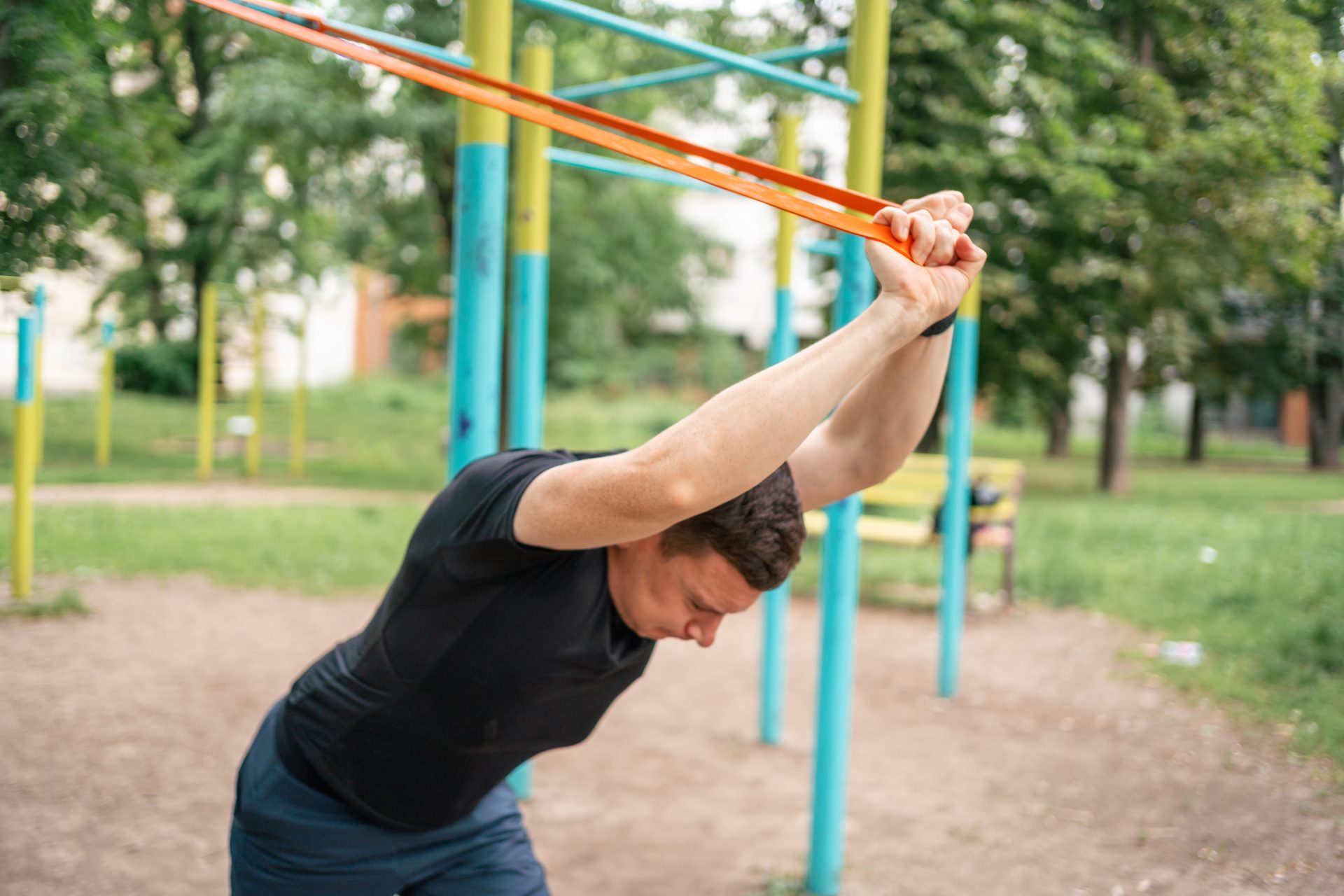
Resistance Band Lat Pull-Down (or Band Pull-Apart) — Latissimus Dorsi, Lower Trapezius, Scapular Stabilisers
The lat pull-down directly strengthens the primary swimming power muscle — the latissimus dorsi — through the overhead pulling movement that replicates the catch and pull phase of every stroke. It simultaneously develops the lower trapezius and scapular stabilisers that shoulder health requires. Beginner: use a light band attached overhead; focus on pulling the elbows down and back rather than pulling with the hands.
Band External Rotation (Both Positions) — Infraspinatus, Teres Minor, Posterior Shoulder Stabilisers
External rotation exercises are the single most important shoulder resilience exercise for swimmers — directly addressing the rotator cuff imbalance that internal rotation-dominant swimming creates. Performed at 0 degrees and 90 degrees of shoulder abduction, they develop the specific shoulder stability that sustains high-volume stroke mechanics. Beginner: use the lightest available band; perform slowly through the full range with the elbow held firmly at the side.
Core Rotation with Resistance Band — Obliques, Hip Flexors, Shoulder Internal Rotators — Stroke Power
Rotational core training develops the hip-to-shoulder power sequence that drives stroke efficiency — the same oblique and hip rotation that produces the body rotation that great swimmers use to add power to every stroke. Beginner: sit on a chair with a band attached beside you at shoulder height; rotate to pull the band across the body, focusing on initiating from the hips before the shoulders.
Mistake 1: Training Only Shoulder Pressing and Neglecting Rotator Cuff Health
Many swimmers add bench press and shoulder press to their dry-land work — exercises that further load the already-overloaded internal rotators. Without compensatory external rotation and scapular work, pressing exercises worsen the shoulder imbalance.
Mistake 2: Scheduling Heavy Strength Sessions the Day Before Key Pool Sets
Significant muscle fatigue from strength training directly impairs the power output and technique quality of subsequent pool sessions. Heavy dry-land work the day before a time-trial or key technical set undermines both.
Mistake 3: Neglecting Hip Flexor and Kick Strength
Most swimmer dry-land programmes emphasise upper body to the neglect of kick-related hip flexor and ankle plantarflexion strength. Kick power contributes 20–30% of propulsion in most strokes — the hip flexors generating the downbeat force.
Mistake 4: Over-Programming Dry-Land During Peak Pool Volume Phases
Adding heavy dry-land volume during the highest pool training phases produces accumulated fatigue that degrades both training modes. Dry-land training must be periodised to complement pool volume, not compete with it.
Complete Beginners Starting from Zero
No prior experience with strength training for swimmers is required to start. Every movement is taught from its most foundational form, with modifications for those who cannot yet perform the standard version. Live instructor feedback prevents the form errors that cause beginners to plateau or get injured before results arrive.
Intermediate Trainees Who Have Hit a Plateau
If you have been exercising inconsistently or without structured progressive overload, strength training for swimmers delivers the systematic load progression that general fitness classes do not. The programme targets the specific weaknesses and imbalances holding you back, producing results that months of unstructured training have failed to achieve.
Competitive and Recreational Athletes
Swimmers training delivers the greatest performance gains when integrated with sport-specific conditioning. Whether training for a race, a match, or personal bests, Habuild’s structured programme ensures the strength work complements rather than conflicts with existing sport training loads.
Live Daily Sessions with Real-Time Instructor Feedback
Habuild’s live sessions provide real-time form corrections for the specific technique issues that swimming strength training requires attention to. Unlike pre-recorded content, the live format means the instructor sees and corrects in the moment — building correct habits from the first session.
Condition-Specific Modifications in Every Session
Every exercise in the Habuild swimming strength training programme is selected and modified with this specific population and goal in mind — not a generic class with an optional modification. The programme is built from the ground up for swimming strength training outcomes.
Progressive Programming That Respects Your Timeline
The programme structure follows the physiological timeline of improvement — not an arbitrary 4-week marketing format. Progression is earned through demonstrated capacity and built in week by week.
Community of Members with the Same Goals


Practice Strong Everyday with Trishala Bothra, an IIT-B and London School of Business alumni
Trishala is focused on making movement feel lighter, more engaging, and something you actually look forward to.
In just 3 years, over 50,000 people began their strength journey, and 10,000+ join every week to keep getting stronger.