
Strength training for seniors is a carefully structured resistance programme adapted to the specific physiological realities of adults over 50 — accounting for the natural decline in muscle mass (sarcopenia), reduced bone density, longer recovery times, and the joint considerations that distinguish senior training from programmes designed for younger adults. What makes senior-specific strength training distinct is not lower ambition but appropriate adaptations: longer warm-ups, conservative initial loading, greater attention to balance and single-leg stability, and explicit focus on the functional movements that daily independence requires. The mechanism for seniors is threefold: muscle protein synthesis stimulation that counters sarcopenia (the age-related muscle loss of approximately 1–2% per year after 50), bone density preservation through weight-bearing mechanical loading, and proprioceptive (balance and coordination) improvement that is the most powerful modifiable fall risk factor. All three adaptations require resistance training specifically — cardio alone does not produce any of them.
Start Your Free 14 Day Trial
Benefit 1: Preserved Muscle Mass and Strength (Countering Sarcopenia)
Progressive resistance training is the only effective intervention against sarcopenia — the age-related muscle loss that reduces functional capacity. Even beginning training in the 60s, 70s, and beyond produces meaningful muscle mass preservation and strength improvements that directly extend the period of physical independence.
Benefit 2: Reduced Fall Risk Through Balance and Leg Strength
Falls are the leading cause of injury in adults over 65 — and the fear of falling further reduces activity, creating a dangerous cycle of increasing frailty. Resistance training builds the leg strength, hip stability, and single-leg balance that prevent falls, with research showing 40% fall risk reduction in consistently training seniors.
Benefit 3: Better Bone Density and Reduced Osteoporosis Risk
The mechanical loading of resistance training stimulates bone remodelling — maintaining the bone density that ageing and hormonal changes progressively reduce. Resistance training is more effective than calcium supplementation alone for preserving bone density in post-menopausal women.
Benefit 4: Greater Daily Functional Independence
Carrying groceries, climbing stairs, rising from a chair, and getting up from the floor all require minimum strength thresholds. Consistent resistance training maintains these thresholds — preserving the functional capacity that physical independence requires well into older age.
Protein — The Foundation of Seniors Training
Aim for 1.6–2.0g of protein per kg of bodyweight per day. Best sources include eggs, paneer, lentils (dal), chicken, Greek yoghurt, and whey protein. Distribute protein evenly across 3–4 meals rather than loading it all in one sitting. Adequate protein is non-negotiable — without it, training effort produces minimal adaptation regardless of programme quality.
Carbohydrates — Fuel for Seniors Performance
Complex carbohydrates (oats, brown rice, sweet potato, whole wheat roti) should form 40–50% of total calories. Consume a carbohydrate-containing meal 60–90 minutes before your strength training for seniors session to ensure glycogen availability. Post-session carbohydrates restore muscle glycogen within the critical 30-minute recovery window.
Anti-Inflammatory Foods for Recovery
Include turmeric (with black pepper for bioavailability), ginger, and omega-3 rich foods (flaxseeds, walnuts, fatty fish) daily. These directly reduce the systemic inflammation that accumulates with consistent training, speeding recovery between sessions.
Hydration — Often Underestimated
Aim for 35–40ml of water per kg of bodyweight daily. Add an additional 500ml for every 30 minutes of active training. Even mild dehydration (2% body weight) measurably reduces strength output and exercise capacity.
Before You Begin — What to Check
All seniors should consult their doctor before beginning, particularly those with cardiovascular conditions, osteoporosis, diabetes, joint replacements, or any condition affecting balance. Establish a baseline: chair stand test (how many times can you stand and sit from a chair in 30 seconds?), single-leg balance duration, and grip strength. Share any medications that affect exercise response (blood thinners, beta-blockers, diabetes medications) with the live instructor.
Your First 2 Weeks — Foundation Phase
Two sessions per week. Begin with chair-supported exercises: seated leg lifts, standing wall push-ups, chair squats (sit-to-stand). Focus on full range of motion and controlled movement. Initial soreness is normal; sharp joint pain is not. Allow 48–72 hours between sessions rather than the 24 hours younger adults use.
Weeks 3–8 — Progressive Loading Phase
Three sessions per week where recovery allows. Introduce standing exercises with support available. Begin very light resistance: resistance bands, small hand weights, or a weighted shopping bag. Prioritise functional movement patterns: standing from a chair, step-ups, and overhead reach movements.
Beyond 8 Weeks — Long-Term Maintenance
Progress is measured in functional terms: easier stair climbing, less discomfort in daily activities, better balance confidence. Introduce variety to prevent boredom and maintain motivation. Three sessions per week is the long-term maintenance target — consistent attendance matters more than session intensity.
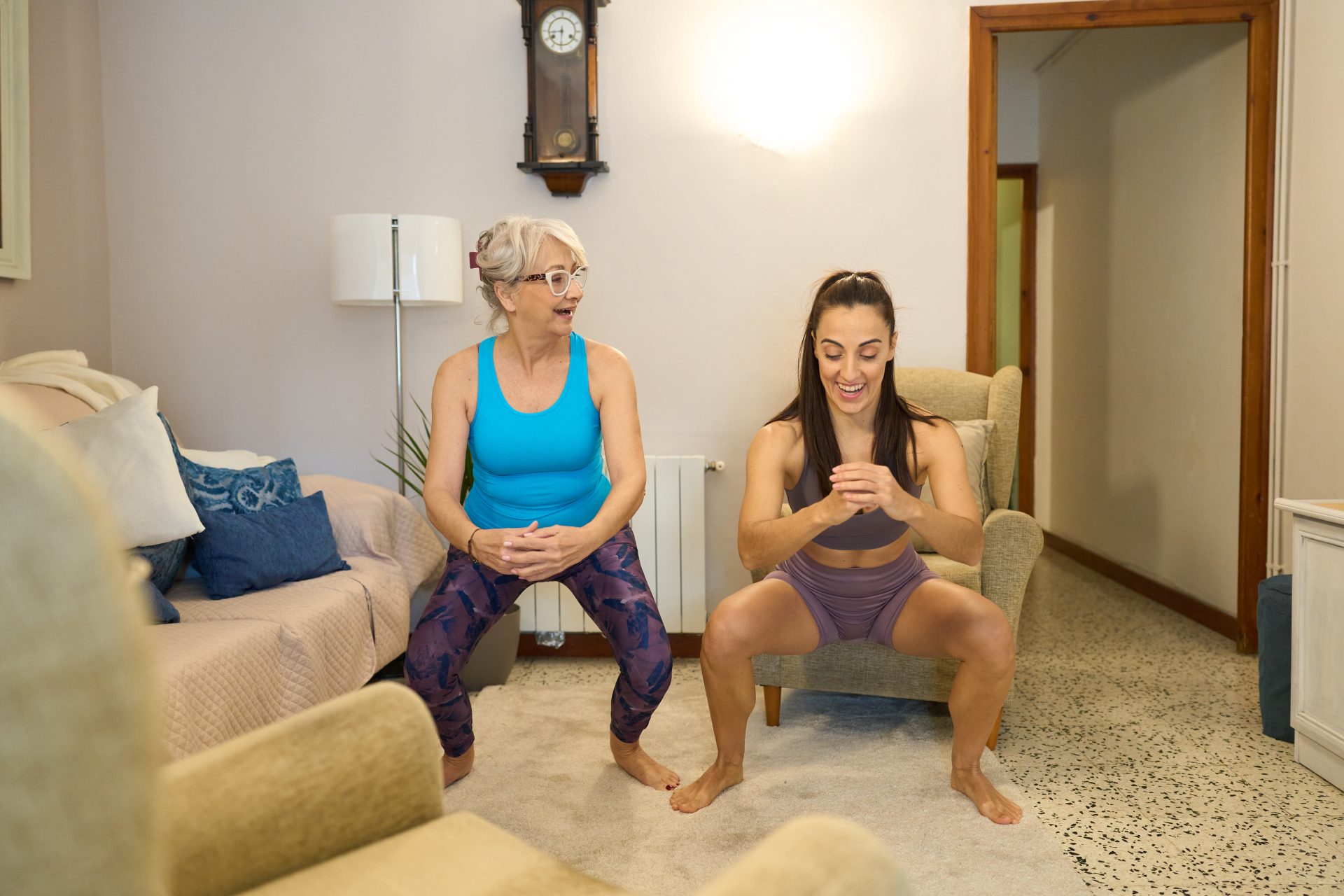
Chair Squat (Sit-to-Stand Progression) — Quadriceps, Glutes, Core, Hip Extensors
The chair squat — lowering toward a chair seat and standing back up — is the most important functional exercise for seniors, directly training the movement required for getting in and out of chairs and off toilets, and building the leg strength that fall prevention requires. It requires no equipment and can be started at any mobility level. Beginner: use the chair hands for support if needed; progress to hands-free, then add a bag or weight to increase challenge.
Standing Wall Push-Up to Incline Push-Up — Chest, Shoulders, Triceps, Core
The wall push-up provides upper body pressing strength training in a completely safe upright position — training the chest, shoulders, and triceps without floor-level movements that may be challenging. Upper body pushing strength supports the ability to push open heavy doors and recover balance when stumbling. Beginner: begin against a wall at arm’s length; progress toward a table-edge incline position as strength develops.
Single-Leg Balance Hold (Supported to Freestanding) — Hip Stabilisers, Ankle Stabilisers, Core, Proprioceptive System
Single-leg balance training is the most evidence-supported fall prevention exercise — directly training the proprioceptive responses that prevent falls on uneven surfaces and during the single-leg phases of walking and stair climbing. Even 2 minutes of daily single-leg balance practice produces meaningful fall risk reduction. Beginner: hold a chair or wall firmly; progress to fingertip support, then freestanding as balance confidence develops.
Mistake 1: Starting Too Intensely and Causing Excessive Soreness
Excessive soreness in seniors discourages return to training and can mask injury. Senior connective tissue and muscle recover more slowly than younger adults — beginning conservatively produces better long-term outcomes than starting aggressively.
Mistake 2: Avoiding Strength Training Due to Fear of Injury
Fear of exercise-related injury leads many seniors to remain sedentary — but the risk of injury from appropriate, supervised resistance training is significantly lower than the risk of frailty, falls, and loss of independence from inactivity.
Mistake 3: Only Doing Cardio and Neglecting Resistance Training
Walking and cardio exercise are valuable but do not prevent sarcopenia, maintain bone density, or build the fall-prevention muscle mass that resistance training specifically produces. Many seniors walk regularly but still decline physically in ways that resistance training would prevent.
Mistake 4: Training Only Seated and Avoiding Standing Balance Work
Many seniors choose only seated exercises to feel safe — but the standing, weight-bearing exercises that challenge balance are precisely the ones that produce fall prevention and bone density benefits.
Complete Beginners Starting from Zero
No prior experience with strength training for seniors is required to start. Every movement is taught from its most foundational form, with modifications for those who cannot yet perform the standard version. Live instructor feedback prevents the form errors that cause beginners to plateau or get injured before results arrive.
Intermediate Trainees Who Have Hit a Plateau
If you have been exercising inconsistently or without structured progressive overload, strength training for seniors delivers the systematic load progression that general fitness classes do not. The programme targets the specific weaknesses and imbalances holding you back, producing results that months of unstructured training have failed to achieve.
Older Adults and Those Prioritising Functional Fitness
Seniors training is especially high-value for those over 40, where maintaining functional strength and joint mobility directly impacts independence and quality of life. Every movement is taught with age-appropriate modifications, making the programme safe and effective regardless of starting fitness level.
Live Daily Sessions with Real-Time Instructor Feedback
Habuild’s live sessions provide real-time form corrections for the specific technique issues that senior strength training requires attention to. Unlike pre-recorded content, the live format means the instructor sees and corrects in the moment — building correct habits from the first session.
Condition-Specific Modifications in Every Session
Every exercise in the Habuild senior strength training programme is selected and modified with this specific population and goal in mind — not a generic class with an optional modification. The programme is built from the ground up for senior strength training outcomes.
Progressive Programming That Respects Your Timeline
The programme structure follows the physiological timeline of improvement — not an arbitrary 4-week marketing format. Progression is earned through demonstrated capacity and built in week by week.
Community of Members with the Same Goals


Practice Strong Everyday with Trishala Bothra, an IIT-B and London School of Business alumni
Trishala is focused on making movement feel lighter, more engaging, and something you actually look forward to.
In just 3 years, over 50,000 people began their strength journey, and 10,000+ join every week to keep getting stronger.