Strength training for PCOS (Polycystic Ovary Syndrome) is a structured resistance programme specifically designed to address the hormonal and metabolic drivers of the condition — not just general fitness. PCOS is fundamentally a hormonal disorder with strong metabolic components: insulin resistance, elevated androgens, and the weight gain that both contribute to. Strength training addresses all three through mechanisms that cardio alone cannot replicate. The mechanism is multi-layered: resistance training improves insulin receptor sensitivity in skeletal muscle — the primary site of glucose disposal — reducing the insulin resistance that drives elevated androgens in PCOS. Additionally, building lean muscle mass elevates the resting metabolic rate, supporting the body composition improvements that reduce PCOS severity. The hormonal response to resistance training (reduced cortisol over time, improved testosterone-to-oestrogen balance) directly supports the endocrine environment in which PCOS can be better managed alongside appropriate medical treatment.
Start Your Free 14 Day Trial
Benefit 1: Improved Insulin Sensitivity and Hormonal Balance
Resistance training improves muscle glucose uptake independently of insulin — directly reducing the hyperinsulinaemia that elevates androgens in PCOS. Many women with PCOS report improvements in cycle regularity and androgen-related symptoms (acne, hair growth) within 12–16 weeks of consistent resistance training.
Benefit 2: Better Body Composition and Weight Management
The combination of increased lean muscle mass and improved insulin sensitivity from strength training makes body weight management significantly easier for women with PCOS — addressing the metabolic resistance to weight loss that insulin resistance creates.
Benefit 3: Reduced PCOS-Related Inflammation
PCOS is characterised by chronic low-grade inflammation. Regular resistance training has anti-inflammatory effects that may reduce this systemic inflammation — potentially improving skin health, mood, and general wellbeing alongside the metabolic improvements.
Benefit 4: Improved Mental Health and Reduced PCOS-Related Anxiety
PCOS has a significantly higher association with anxiety and depression than the general population. The endorphin release and improved body image from consistent strength training provide meaningful mental health benefits alongside the physiological improvements.
Protein — The Foundation of Pcos Training
Aim for 1.6–2.0g of protein per kg of bodyweight per day. Best sources include eggs, paneer, lentils (dal), chicken, Greek yoghurt, and whey protein. Distribute protein evenly across 3–4 meals rather than loading it all in one sitting. Adequate protein is non-negotiable — without it, training effort produces minimal adaptation regardless of programme quality.
Carbohydrates — Fuel for Pcos Performance
Complex carbohydrates (oats, brown rice, sweet potato, whole wheat roti) should form 40–50% of total calories. Consume a carbohydrate-containing meal 60–90 minutes before your strength training for pcos session to ensure glycogen availability. Post-session carbohydrates restore muscle glycogen within the critical 30-minute recovery window.
Anti-Inflammatory Foods for Recovery
Include turmeric (with black pepper for bioavailability), ginger, and omega-3 rich foods (flaxseeds, walnuts, fatty fish) daily. These directly reduce the systemic inflammation that accumulates with consistent training, speeding recovery between sessions.
Hydration — Often Underestimated
Aim for 35–40ml of water per kg of bodyweight daily. Add an additional 500ml for every 30 minutes of active training. Even mild dehydration (2% body weight) measurably reduces strength output and exercise capacity.
Before You Begin — What to Check
Consult your doctor or gynaecologist before beginning. Discuss whether any current medications (particularly Metformin) require any adjustments around exercise. Establish a baseline: current weight, waist circumference, cycle regularity, and any blood markers your doctor considers relevant. Note any joint sensitivity or conditions associated with PCOS (such as hypothyroidism or adrenal involvement) that require exercise modifications.
Your First 2 Weeks — Foundation Phase
Two sessions per week at moderate intensity. Focus on compound lower body movements (squats, bridges) that activate the large muscle groups with the highest glucose disposal capacity. Bodyweight only or very light resistance. Expect initial fatigue — the metabolic response to resistance training can feel more intense in those with insulin resistance.
Weeks 3–8 — Progressive Loading Phase
Three sessions per week. Introduce progressive loading — add resistance or reps each week. Prioritise compound movements: squats, deadlifts, rows. Monitor energy and cycle response alongside training progression. Some women with PCOS find that consistent training begins to normalise cycle timing within 8–12 weeks.
Beyond 8 Weeks — Long-Term Maintenance
Aim for 3–4 sessions per week with periodisation — varying intensity and volume across weeks to prevent adaptation. Combine with appropriate nutrition (adequate protein, controlled refined carbohydrate) for maximum insulin sensitivity benefit. Continue monitoring hormonal markers with your healthcare team to track physiological progress alongside physical improvements.
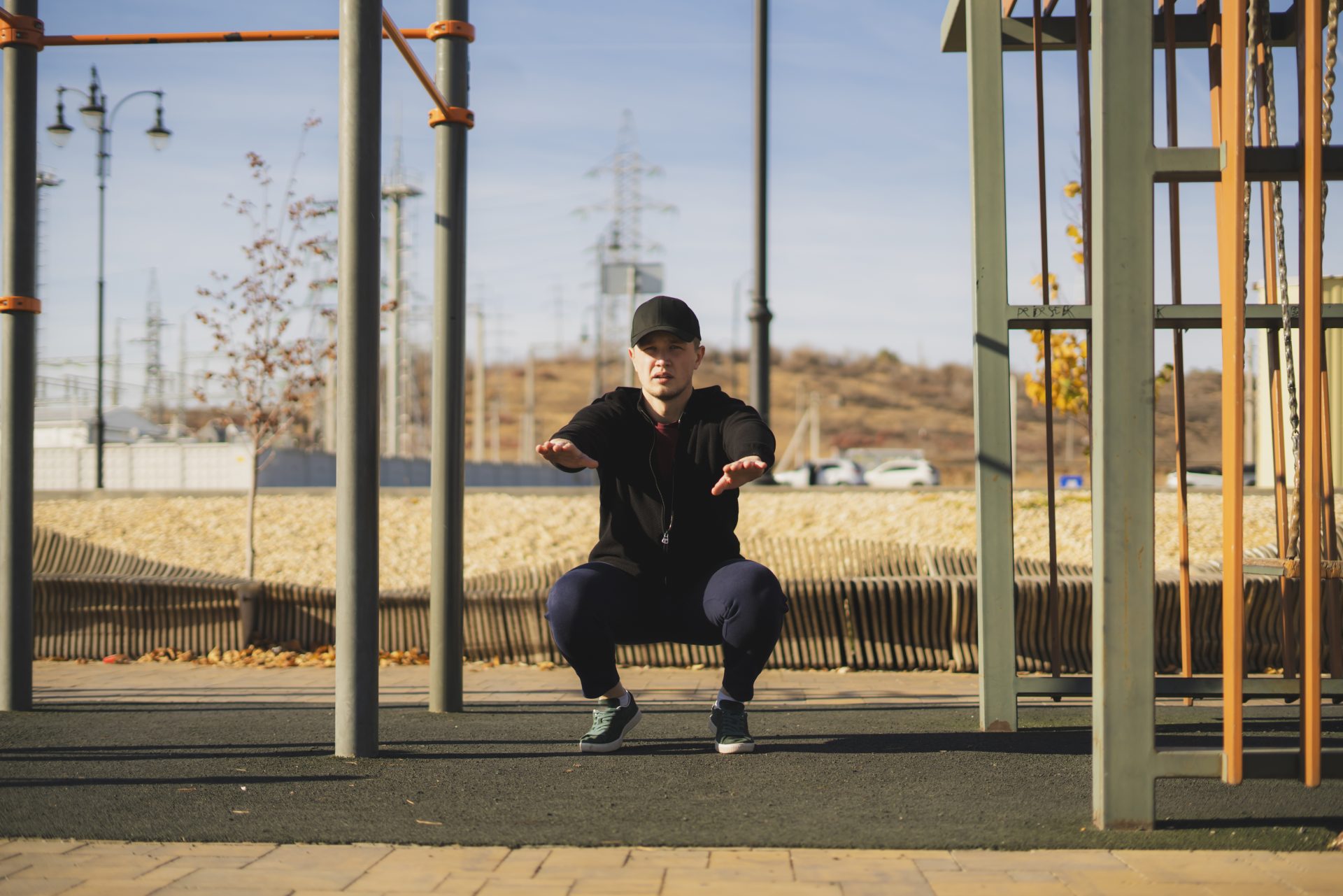
Bodyweight Squat to Goblet Squat — Quadriceps, Glutes, Hamstrings — High Glucose Disposal Muscles
The squat engages the body’s largest muscle groups — producing the greatest insulin-sensitising effect per exercise of any lower body movement. For PCOS, the specific benefit is the increased skeletal muscle glucose uptake that directly reduces hyperinsulinaemia. Beginner: chair-assisted squat at seat height; progress to free bodyweight squat before adding load.
Glute Bridge — Glutes, Hamstrings, Posterior Chain
The glute bridge develops the posterior chain muscles that support metabolic health and pelvic stability in PCOS. Strong glutes improve the hip mechanics that PCOS-related weight distribution can compromise. Beginner: standard bilateral bridge; progress to single-leg and weighted variations as strength develops.
Resistance Band Row — Upper Back, Rhomboids, Biceps — Postural and Metabolic
The horizontal row develops upper body pulling strength and postural muscles that support the confident, upright posture that PCOS-related body image challenges can affect. Including upper body resistance training in a PCOS programme ensures complete metabolic stimulus beyond lower body work alone. Beginner: seated band row; progress to standing and heavier resistance over weeks.
Mistake 1: Training at Excessively High Intensity Too Soon
Very high intensity training can temporarily elevate cortisol — a hormone that worsens insulin resistance when chronically elevated. For PCOS, consistent moderate-to-moderate-high intensity training produces better hormonal outcomes than maximal effort training done inconsistently.
Mistake 2: Only Doing Cardio and Skipping Resistance Training
Cardio improves cardiovascular fitness but does not produce the lean muscle mass increase that makes the most lasting difference to insulin sensitivity in PCOS. Resistance training builds the metabolically active tissue that improves the hormonal environment of PCOS over the long term.
Mistake 3: Skipping Rest Days in Pursuit of Faster Results
Overtraining elevates cortisol chronically — directly worsening the hormonal imbalance that PCOS involves. Rest and recovery are physiologically productive for PCOS management, not optional extras.
Mistake 4: Neglecting Protein Intake Around Training
Without adequate protein, resistance training produces minimal muscle development — and it is the lean muscle gain that provides the lasting insulin sensitivity benefit. PCOS management requires consistent adequate protein (1.6g per kg bodyweight) at every meal.
Complete Beginners Starting from Zero
No prior experience with strength training for pcos is required to start. Every movement is taught from its most foundational form, with modifications for those who cannot yet perform the standard version. Live instructor feedback prevents the form errors that cause beginners to plateau or get injured before results arrive.
Intermediate Trainees Who Have Hit a Plateau
If you have been exercising inconsistently or without structured progressive overload, strength training for pcos delivers the systematic load progression that general fitness classes do not. The programme targets the specific weaknesses and imbalances holding you back, producing results that months of unstructured training have failed to achieve.
Individuals Managing Pcos Through Lifestyle
For those using exercise as part of a broader health management plan for pcos, consistency and proper technique are non-negotiable. Habuild’s daily live sessions provide the structure and expert guidance that turns sporadic effort into a measurable health habit.
Live Daily Sessions with Real-Time Instructor Feedback
Habuild’s live sessions — delivered daily by expert instructors — provide real-time form corrections for the specific technique errors that PCOS training requires attention to. Unlike pre-recorded content, the live format means the instructor can see you and correct in the moment — the difference between building correct habits and reinforcing incorrect ones.
Condition-Specific Modifications in Every Session
Every exercise in the Habuild PCOS programme is selected and modified with this specific goal in mind. Members are not attending a generic fitness class with a modification option bolted on — they are in a programme designed from the ground up for PCOS outcomes.
Progressive Programming That Respects Your Recovery Timeline
The programme structure follows the physiological timeline of improvement — not an arbitrary 4-week or 8-week marketing format. Progression is earned through demonstrated capacity, not assumed by a calendar week.
Community of Members With the Same Goals


Practice Strong Everyday with Trishala Bothra, an IIT-B and London School of Business alumni
Trishala is focused on making movement feel lighter, more engaging, and something you actually look forward to.
In just 3 years, over 50,000 people began their strength journey, and 10,000+ join every week to keep getting stronger.