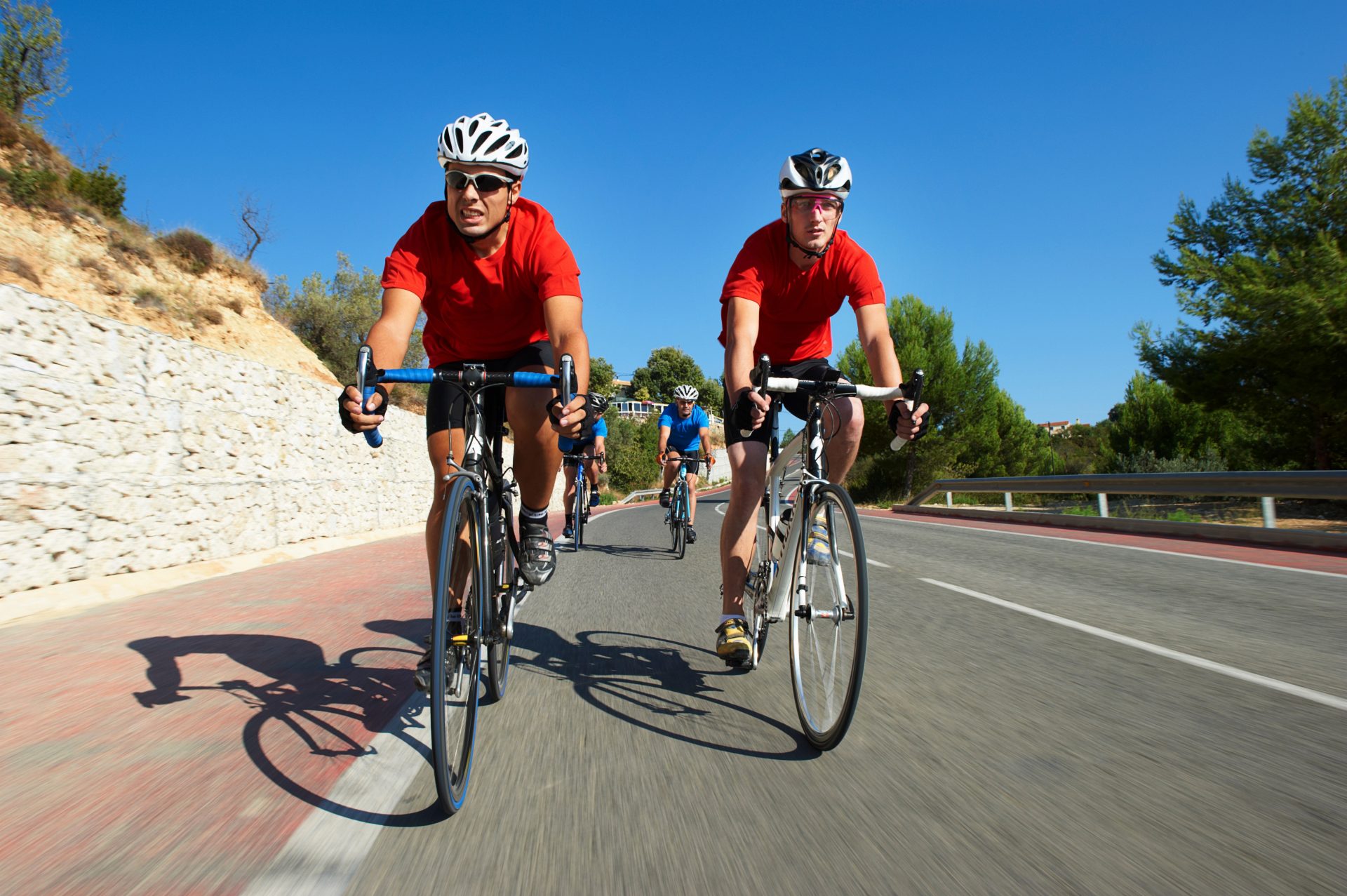
Strength training for cyclists is a structured off-bike resistance programme specifically designed to address the muscular imbalances, power deficits, and joint stability weaknesses that limit cycling performance and cause overuse injuries. Unlike general fitness training, cycling-specific strength training targets the exact muscle groups and movement patterns that transfer directly to pedal power — quadriceps, glutes, hamstrings, hip flexors, and the core stability chain that maintains optimal bike position under fatigue. Our strength training for legs programme provides the foundational lower body work that cycling strength builds upon. The mechanism is neuromuscular force transfer: the muscles that produce cycling power (primarily gluteus maximus and quadriceps) develop superior force output when trained through full range-of-motion strength work off the bike. Each additional kilogram of squat strength translates to measurably higher FTP (functional threshold power) on the bike because the same motor units are recruited more efficiently under the cyclical loading of pedalling. Strength training for endurance principles specifically govern the adaptation that makes cyclists faster — high force production at sub-maximal effort.
Start Your Free 14 Day Trial
Benefit 1: Higher Wattage and FTP Through Improved Neuromuscular Power
Stronger legs produce more force per pedal stroke — directly raising the power output sustainable over a ride. Research shows cyclists who complete a 10-week strength training programme improve FTP by 7–10% on average — a gain that typically takes 3–4 months of additional cycling alone to achieve. Stat: A 2016 Journal of Strength and Conditioning Research study showed 12 weeks of strength training produced an 8% FTP improvement in trained cyclists.
Benefit 2: Reduced Overuse Injury Risk — Especially Knee and Lower Back
Cycling’s repetitive single-plane movement creates muscular imbalances — overdeveloped quads, weak glutes, tight hip flexors — that drive the knee pain, IT band syndrome, and lower back problems that afflict most serious cyclists. Strength training corrects these imbalances directly. Cyclists who train off-bike show 40–60% lower overuse injury rates than those who cycle only.
Benefit 3: Improved Climbing and Sprint Performance
Climbing requires high muscular force at low cadence — the exact quality that heavy resistance training develops most specifically. Sprint performance requires peak power — the most direct strength training adaptation. Both the climb and the sprint are strength training results, not just cardiovascular ones. Our strength training for speed guide covers the speed-specific training variables.
Benefit 4: Better Bone Density and Longevity — Critical for Cyclists Over 50
Cycling is non-weight-bearing — it produces no bone density stimulus. Research shows cyclists have significantly lower bone density than age-matched runners and swimmers. Strength training provides the osteogenic loading stimulus that cycling cannot, protecting against osteoporosis — particularly important for strength training for seniors who cycle as their primary exercise. Stat: Resistance training increases bone density by 1–3% per year — directly offsetting age-related bone loss.
Protein — The Foundation of Cycling Strength
Target 1.6–2.0g of protein per kg of bodyweight daily — the range that maximises muscle protein synthesis for endurance athletes incorporating strength training. Best sources for cyclists: eggs (complete amino acid profile), Greek yoghurt (casein for overnight recovery), legumes (protein + carbohydrate), and lean chicken or fish. Timing: consume 20–40g of protein within 30 minutes post-strength session — the anabolic window for muscle repair is critical for cyclists training both on and off the bike.
Carbohydrates — Fuel for Endurance and Power Output
Cyclists need higher carbohydrate intake than pure strength athletes — maintain 4–6g of carbohydrate per kg of bodyweight on training days to fuel both cycling and strength sessions. On strength-only days, 3–4g/kg is sufficient. Best sources: oats, rice, sweet potato, banana, and whole grain roti. Do not reduce carbohydrates in the mistaken belief that lower carbs improve fat burning during strength training — adequate carbohydrate is essential for the high-intensity output that makes strength training effective.
Hydration and Micronutrients
Drink 35–40ml per kg of bodyweight daily — more on cycling and strength training days. Key micronutrients: Vitamin D (essential for muscle function and bone density — cyclists are commonly deficient due to UV exposure through clothing); magnesium (muscle contraction and recovery — 400mg daily); iron (endurance performance — monitor ferritin if fatigue is present); sodium and electrolytes (replace sweat losses on long rides alongside strength days).
Before You Begin — Setting Your Baseline
Assess your current cycling performance baseline: current FTP or average power, maximum heart rate, body composition (particularly leg muscle mass), and any existing injury patterns (knee pain, back pain, IT band). Identify your training goal — power for sprinting, endurance for climbing, or injury prevention. Determine equipment availability: bodyweight-only works for the first 8 weeks; resistance bands add value from week 3; access to a barbell or leg press becomes important for advanced progression.
Week 1–2: Foundation Phase
2 sessions per week, 30–40 minutes each. Focus exclusively on movement quality — bodyweight squats, single-leg balance, hip hinges, and plank holds. Do not add load. Common errors in week 1: too much volume (soreness interfering with bike training), neglecting hip hinge pattern (essential for glute development), and skipping the mobility work that makes strength training safe for cyclists with tight hip flexors.
Week 3–8: Progressive Loading Phase
Introduce external resistance — goblet squats, single-leg deadlifts, and split squats with dumbbells or a barbell. Rep ranges: 3–4 sets of 8–12 for hypertrophy and power. Increase load by 2.5–5% each week when all reps are completed with clean form. Begin integrating upper body pulling (rows, band pull-aparts) to address the forward-cycling posture that causes neck and shoulder problems on long rides.
Week 9+: Cycling-Specific Advancement
Introduce advanced power development: jump squats and box jumps for neuromuscular power transfer directly applicable to sprint and attack situations. Add single-leg loading to replicate the unilateral pedalling demand. For cyclists over 50, prioritise single-leg stability and Nordic hamstring curls over maximal load — injury prevention and longevity supersede peak performance. Consider periodising strength training to cycle intensity — heavy strength in the off-season, maintenance-only during peak race periods.
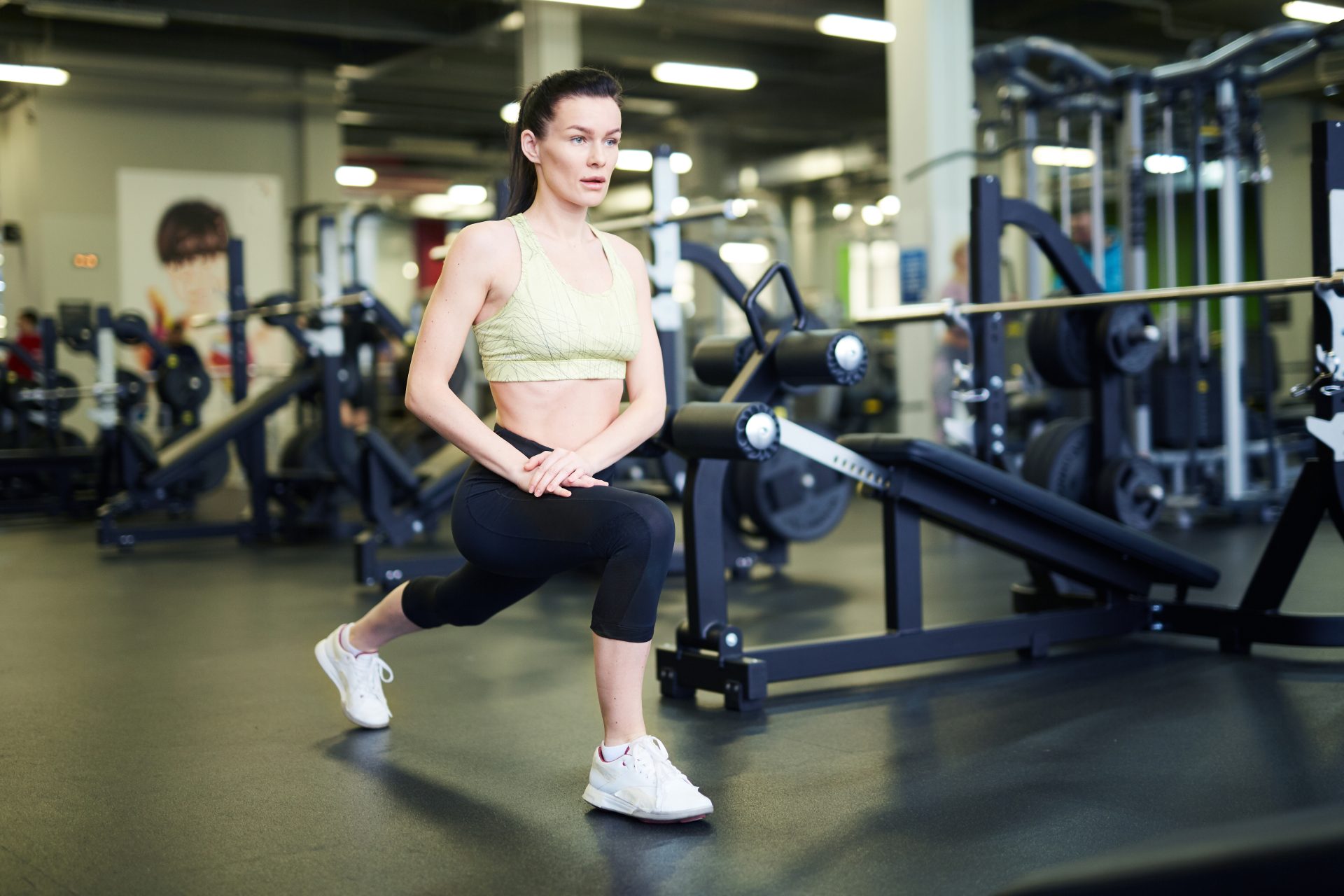
Exercise 1: Single-Leg Squat (Bulgarian Split Squat) — Quads, Glutes — 4 × 8/side
Rear foot elevated on a bench, front foot forward — lower the back knee toward the floor through full range and drive through the front heel to return. This is the single most cycling-specific strength exercise because it replicates the unilateral hip and knee extension of each pedal stroke under full bodyweight or loaded resistance. Research shows a 10% improvement in single-leg squat strength produces a measurable FTP increase. Sets: 4 × 8 each leg. Progression: add dumbbells when bodyweight is mastered. Modification: reduce range or use chair support for those with knee sensitivity. Combine with our strength training for legs programme for the complete lower body sequence.
Exercise 2: Romanian Deadlift — Hamstrings, Glutes, Lower Back — 3 × 10
Stand with feet hip-width, hinge at the hips maintaining a neutral spine, lower the weight along the shins until hamstring tension is felt, drive the hips forward to return. This develops the posterior chain — hamstrings, glutes, and spinal erectors — that most cyclists underactivate due to quad-dominant pedalling patterns. Strong hamstrings directly improve pedalling efficiency by producing force through the bottom and back of the pedal stroke. Sets: 3 × 10. Modification: bodyweight hip hinge for beginners before adding resistance. Our hamstring muscle workout guide provides the complete hamstring development sequence.
Exercise 3: Copenhagen Plank — Hip Adductors, Core Stability — 3 × 30 secs/side
Side plank with the top foot on a bench and the bottom leg lifted to meet it — creating the hip adductor and oblique co-contraction that stabilises the pelvis during single-leg pedalling. Cyclists chronically overload the hip abductors and neglect the adductors — this imbalance drives knee tracking problems and IT band syndrome. The Copenhagen plank is the most cycling-specific injury-prevention exercise available. Sets: 3 × 30 seconds each side. Modification: perform with the bottom knee on the floor for beginners. This is essential for any cyclist managing lower back strength workout alongside performance goals.
Mistake 1: Stopping Strength Training During the Cycling Season — Maintain Monthly Sessions
Most cyclists abandon strength training when cycling volume increases in spring and summer — losing the neuromuscular gains that took months to build. Research shows strength adaptations are lost within 4–6 weeks of complete detraining. Correction: reduce to 1 maintenance session per week during peak cycling season — preserving 90%+ of strength gains with minimal recovery cost.
Mistake 2: Training Too Heavy Too Soon — Build Force Gradually
Cyclists unfamiliar with resistance training often load too heavily in the first weeks — disrupting cycling sessions with excessive soreness and risking injury. The legs that are strong cyclists are not necessarily strong squatters. Correction: spend the first 3–4 weeks establishing movement patterns at bodyweight or light resistance. Strength gains come in the progressive loading phase, not the foundation phase.
Mistake 3: Neglecting Upper Body and Core — Cycling Performance Is Whole-Body
Many cyclists focus exclusively on leg strength while neglecting the core stability, shoulder strength, and thoracic mobility that determine how efficiently leg power transfers through the bike. A weak core leaks power; poor shoulder stability causes the upper body fatigue that undermines long-ride performance. Correction: include horizontal rows, Copenhagen planks, and thoracic extension in every session. Our full body strength training programme ensures no dimension is neglected.
Complete Beginners Starting from Zero
No prior strength training experience is required. Habuild’s cycling strength programme begins with bodyweight movement patterns — squats, hip hinges, and planks — that are accessible from day one regardless of gym experience. Modifications are available for every exercise. The live instructor adapts programming in real time for members with knee sensitivity, lower back conditions, or limited equipment.
Intermediate Cyclists Who Have Hit a Performance Plateau
If cycling performance has plateaued despite increasing ride volume, the limiting factor is almost certainly strength — specifically the neuromuscular force production that cycling volume alone cannot improve. Habuild’s cycling-specific programming breaks through this plateau by targeting exactly the power qualities that additional cycling hours cannot develop. Members consistently report FTP improvements within 8–10 weeks.
Those Who Have Tried Strength Training Before Without Results
Generic gym programmes, random YouTube workouts, and non-specific fitness classes produce fatigue without the cycling-specific adaptations that matter. The exercises chosen, the rep ranges used, and the programme sequencing all determine whether strength training helps or hinders cycling — Habuild’s cycling-specific programme addresses all three correctly.
Is Strength Training Good for Cyclists Over 50?
Yes — strength training for cyclists over 50 is not only effective but essential. The bone density benefits of resistance training are most critical for older cyclists (who are most at risk from cycling’s non-weight-bearing nature). The programme modifies load and intensity appropriately: emphasising single-leg stability, mobility, and injury prevention alongside the power development that benefits cyclists of all ages. See our strength training for seniors guide for the age-specific approach.
Cycling-Specific Programming — Not a Generic Fitness Class
Every exercise in Habuild’s cycling strength programme is selected for its direct transfer to on-bike performance. Sessions open with posterior chain activation (glute bridges, band walks) that correct the hip flexor-dominant posture of cycling, progress through the key compound movements (split squat, Romanian deadlift, Copenhagen plank), and close with the mobility work that maintains the hip and thoracic range that long rides erode. Nothing is generic.
Live Daily Sessions with Real-Time Form Correction
The most critical errors in cyclists’ strength training — excessive forward lean in squats, quad-dominant hip hinges, passive core in planks — go uncorrected in pre-recorded content. Saurabh Bothra’s live sessions provide the real-time cuing that transforms a movement from a general exercise into a cycling-specific performance tool.
Progressive Overload Built into Every Session
Members do not need to understand periodisation, rep ranges, or progressive overload — the programme builds these in automatically. Load, volume, and complexity increase week by week in a sequence specifically designed to peak for the cycling season and maintain through it.
Accountability, Streaks and Community
The consistency that produces cycling strength gains — 2–3 sessions per week, 8–12 weeks minimum — is the hardest part for most cyclists who already have demanding training schedules. Habuild’s streak tracking, WhatsApp community, and live session accountability make this consistency achievable even for those juggling work, family, and cycling.


Practice Strong Everyday with Trishala Bothra, an IIT-B and London School of Business alumni
Trishala is focused on making movement feel lighter, more engaging, and something you actually look forward to.
In just 3 years, over 50,000 people began their strength journey, and 10,000+ join every week to keep getting stronger.