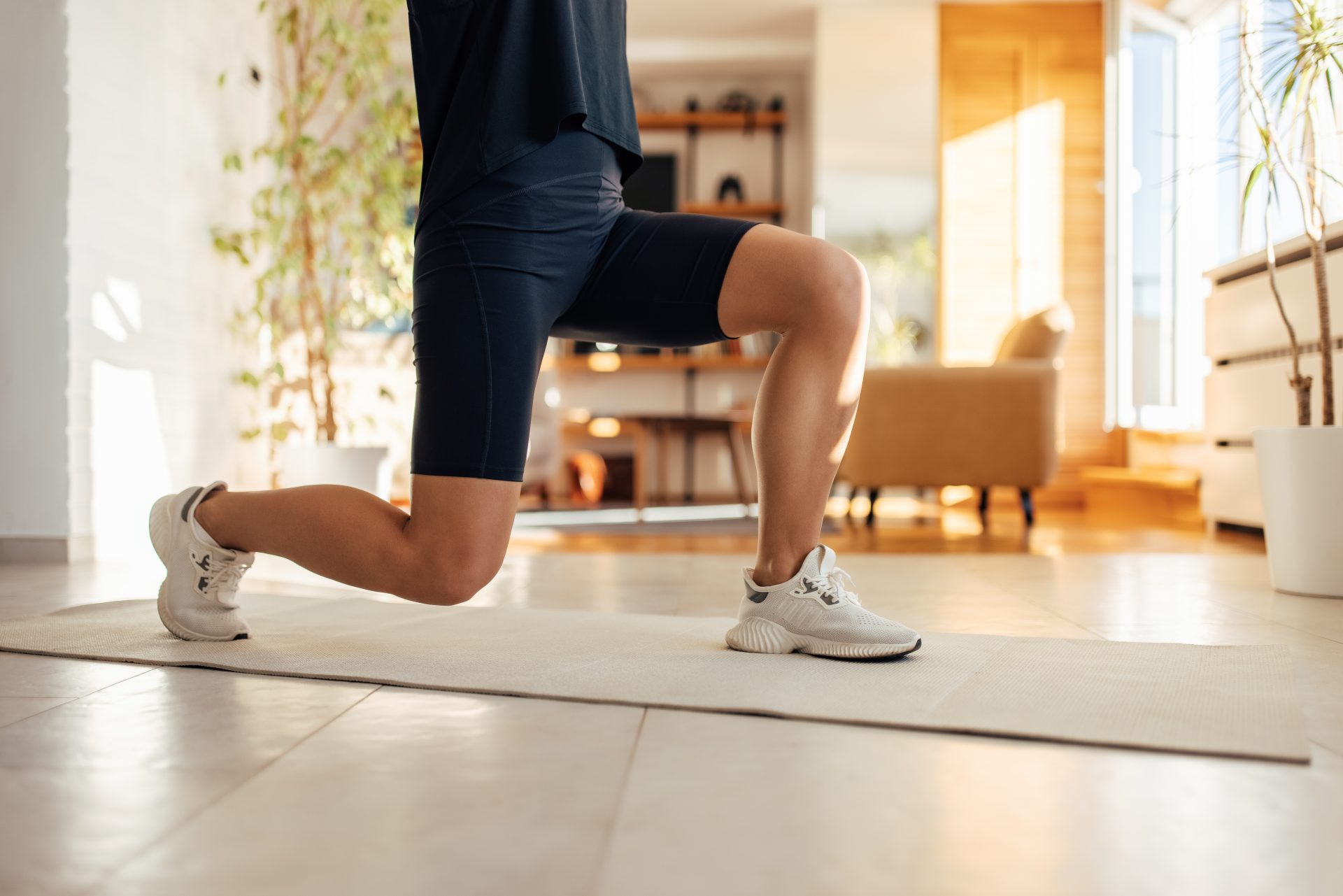
Quads strength exercises target the quadriceps femoris — the group of four muscles on the front of the thigh (rectus femoris, vastus lateralis, vastus medialis, and vastus intermedius) that collectively extend the knee and flex the hip. The quadriceps are the primary muscles involved in all forward movement, stair climbing, running, jumping, and standing from a seated position. A complete quad training programme trains all four heads through both the squatting (knee-dominant) and hip-flexed positions to ensure complete development. For full lower body development, pairing these with legs strength exercises ensures the hamstrings and glutes are developed in balance with the quadriceps. The quadriceps are trained through knee extension — the movement of straightening the leg against resistance. Best quad exercises use the full range of knee flexion to full extension under load to maximise the mechanical tension on all four quadricep heads. The VMO (the teardrop-shaped muscle above the inner knee) is particularly important for knee stability and is best targeted through the last 30 degrees of knee extension. Building this muscle through controlled, full-range squat workout patterns and terminal knee extension exercises is the most effective intervention for reducing patellofemoral knee pain.
Start Your Free 14 Day Trial
Benefit 1: Builds the Primary Muscles for Walking, Running and Climbing
The quadriceps are the engine of all forward movement. Every step taken on flat ground, every stair climbed, and every time a person stands from a seated position requires the quads to generate and absorb force. Building quadricep strength directly improves these daily activities while reducing the muscular fatigue that causes sedentary people to avoid physical exertion. Strong quadriceps reduce the risk of knee injury by up to 60% — the VMO specifically reducing patellofemoral pain through correct patellar tracking and reducing anterior knee stress.
Benefit 2: Protects the Knee Joint by Strengthening Its Primary Stabilisers
The vastus medialis — the teardrop-shaped quadricep head at the inner knee — is the primary muscular stabiliser of the patella. When it is underdeveloped relative to the vastus lateralis (outer quad), the patella tracks laterally during knee flexion, creating the anterior knee pain known as patellofemoral syndrome. Targeted exercises that specifically strengthen the VMO through terminal extension and inner-range quad work correct this imbalance and reduce knee pain significantly.
Benefit 3: Boosts Athletic Power, Speed and Jump Performance
Quadricep strength is the primary determinant of lower body explosive power — the ability to accelerate, jump, and change direction quickly. Strong quads produce the ground reaction forces that drive sprint starts, vertical jumps, and the deceleration control that prevents lower limb injuries in sport. Research shows every 10% increase in quadricep strength correlates with a 4% improvement in vertical jump height and a measurable reduction in sprint time across athletic populations.
Benefit 4: Supports Fat Loss Through High Metabolic Demand
The quadriceps are among the largest muscles in the body. Training them through high-rep, progressive quad exercises creates the high metabolic demand that elevates calorie burn during and after training. For trainees with body composition goals, combining quad-focused training with lower body workout sessions that also train the glutes and hamstrings maximises the total lower body muscle mass that drives long-term metabolic rate increases.
Protein — The Foundation of Quads Strength Exercises Training
Aim for 1.6–2.0g of protein per kg of bodyweight per day. Best sources include eggs, paneer, lentils (dal), chicken, Greek yoghurt, and whey protein. Distribute protein evenly across 3–4 meals rather than loading it all in one sitting. Adequate protein is non-negotiable — without it, training effort produces minimal adaptation regardless of programme quality.
Carbohydrates — Fuel for Quads Strength Exercises Performance
Complex carbohydrates (oats, brown rice, sweet potato, whole wheat roti) should form 40–50% of total calories. Consume a carbohydrate-containing meal 60–90 minutes before your quads strength exercises session to ensure glycogen availability. Post-session carbohydrates restore muscle glycogen within the critical 30-minute recovery window.
Anti-Inflammatory Foods for Recovery
Include turmeric (with black pepper for bioavailability), ginger, and omega-3 rich foods (flaxseeds, walnuts, fatty fish) daily. These directly reduce the systemic inflammation that accumulates with consistent training, speeding recovery between sessions.
Hydration — Often Underestimated
Aim for 35–40ml of water per kg of bodyweight daily. Add an additional 500ml for every 30 minutes of active training. Even mild dehydration (2% body weight) measurably reduces strength output and exercise capacity.
Before You Begin — Setting Your Baseline
Before beginning, assess your current fitness level honestly. Can you complete 10 bodyweight squats with good form? Can you hold a plank for 20 seconds? These are the practical baselines for this programme. Set a specific, measurable goal — not just ‘get stronger’ but ‘complete all sessions consistently for 8 weeks’. Identify what space and equipment you have available.
Week 1–2: Foundation and Form
Focus entirely on movement quality, not load or intensity. Every exercise should be performed through full range of motion with controlled tempo. Use this phase to build the motor patterns that make quads strength exercises training safe and effective long-term. 3 sessions per week is the optimal starting frequency — enough stimulus for adaptation, enough recovery to avoid overuse.
Week 3–4: Building Progressive Load
Once form is consistent, introduce progressive overload by adding 1–2 reps per set or a small increase in resistance each week. Track your sessions in a simple log — date, exercises, sets, reps. This data tells you exactly when to progress and prevents both undertraining and overtraining.
Ongoing: Consistency Over Intensity
The single biggest determinant of quads strength exercises results is session consistency over 8–12 weeks. Missing one session is inconsequential; missing two consecutive weeks disrupts adaptation. Habuild’s live daily sessions are specifically designed to remove the decision-making barrier — the session is always there, always structured.

Exercise 1: Bodyweight Squat — Quadriceps (All Four Heads), Glutes, Hamstrings — 3 sets × 15–20 reps
The squat is the most complete quad exercise because it loads all four quadricep heads through the full knee flexion-to-extension range while simultaneously engaging the glutes and hamstrings as stabilisers. Full-depth squats — with hips descending below parallel — produce greater quad activation than partial squats, particularly in the vastus medialis and rectus femoris that are only fully loaded in the bottom range of motion. Beginner modification: Squat to a chair for depth guidance. Hold a door frame for balance support. Reduce depth to where form can be maintained if hip or ankle mobility limits.
Exercise 2: Wall Sit — Quadriceps (Isometric), Glutes, Calves — 3 sets × 30–60 seconds
The wall sit is the most effective isometric quad exercise for building quadricep endurance and VMO activation. Holding a 90-degree knee angle against the wall while the back is supported isolates the quads in the mid-range position where they are most active during stair climbing and seated activities. Wall sits are particularly effective for improving the stability of the patellofemoral joint without the impact stress of dynamic exercises. Beginner modification: Start with a 45-degree knee bend and hold for 15–20 seconds. Progress to 90 degrees and longer holds as quad endurance develops.
Exercise 3: Step-Up — Quadriceps, Glutes, Single-Leg Stability — 3 sets × 12 reps each leg
The step-up trains the quadriceps through the single-leg knee extension pattern used in all stair-climbing and walking activities. As a unilateral exercise, it exposes and corrects strength asymmetries between the left and right quads while developing the balance and coordination that bilateral squats do not challenge. The step-up is the most functional of all best quad exercises because it directly replicates the movement demands of daily life. Beginner modification: Use a low step (15–20 cm) initially. Hold a rail for balance support. Progress to higher steps and added load as single-leg strength develops.
Mistake 1: Only Squatting to Parallel and Missing the Deep Quad Range
The deepest third of the squat range produces the greatest quad activation, particularly in the vastus medialis and rectus femoris. Consistently squatting to parallel only trains the quads through their mid-range, missing the full mechanical tension that drives complete quadricep development and VMO strengthening. Correction: Progressively deepen squat depth as mobility allows. Aim for hips below parallel. Use a heel elevation if ankle mobility limits depth.
Mistake 2: Neglecting Single-Leg Quad Work
Bilateral squats allow the dominant leg to compensate for the weaker quad indefinitely. Most knee injuries in sport occur during single-leg loading phases. Building unilateral quad strength through step-ups and split squats develops the individual leg strength and stability that bilateral training cannot replicate. Correction: Include step-ups or split squats in every quad session.
Mistake 3: Skipping the Terminal Extension Range
The final 30 degrees of knee extension specifically targets the vastus medialis oblique — the most important quad head for knee stability. Stopping short of full extension in all quad exercises consistently underloads the VMO, perpetuating the imbalance that causes most patellofemoral knee pain. Correction: End every squat and step-up with a full knee lock-out at the top of the movement. Squeeze the quad at full extension and hold for one second.
Complete Beginners Starting from Zero
No prior experience with quads strength exercises is required to start. Every movement is taught from its most foundational form, with modifications for those who cannot yet perform the standard version. Live instructor feedback prevents the form errors that cause beginners to plateau or get injured before results arrive.
Intermediate Trainees Who Have Hit a Plateau
If you have been exercising inconsistently or without structured progressive overload, quads strength exercises delivers the systematic load progression that general fitness classes do not. The programme targets the specific weaknesses and imbalances holding you back, producing results that months of unstructured training have failed to achieve.
Desk Workers and Sedentary Professionals
Extended sitting creates the exact muscle imbalances and weaknesses that quads strength exercises training corrects. No gym, no equipment, and no prior experience is required — the programme begins with bodyweight fundamentals and builds progressively from there. Habuild’s morning sessions fit into a working day without disruption.
Quads-Specific Programming — Not a Generic Fitness Class Habuild’s quads sessions open with terminal knee extension activation work before progressing to full-range squats and step-up patterns. This sequencing ensures the often-undertrained VMO is activated and engaged before the full quad complex is loaded under compound movements. Sessions close with a quad stretch and hip flexor release to restore the muscle length that full knee flexion in squats requires.
Live Daily Sessions with Real-Time Form Correction
Every Habuild session is live — not pre-recorded. Instructors watch your form in real time and correct the specific errors that limit progress and increase injury risk, particularly the knee tracking errors and incomplete extension range that perpetuate patellofemoral pain.
Progressive Overload Built into Every Session
Members do not need to design their own progression. Load, volume, tempo, and movement complexity are built in week by week. Every session is a step forward — not a repetition of the previous routine.
Accountability, Streaks and Community
Streak tracking, a WhatsApp community, and live daily sessions create the accountability structure that keeps members consistent long enough to see measurable results. Most strength adaptations require 6–12 weeks of sustained effort — the Habuild community structure ensures members stay the course through the full adaptation cycle.


Practice Strong Everyday with Trishala Bothra, an IIT-B and London School of Business alumni
Trishala is focused on making movement feel lighter, more engaging, and something you actually look forward to.
In just 3 years, over 50,000 people began their strength journey, and 10,000+ join every week to keep getting stronger.