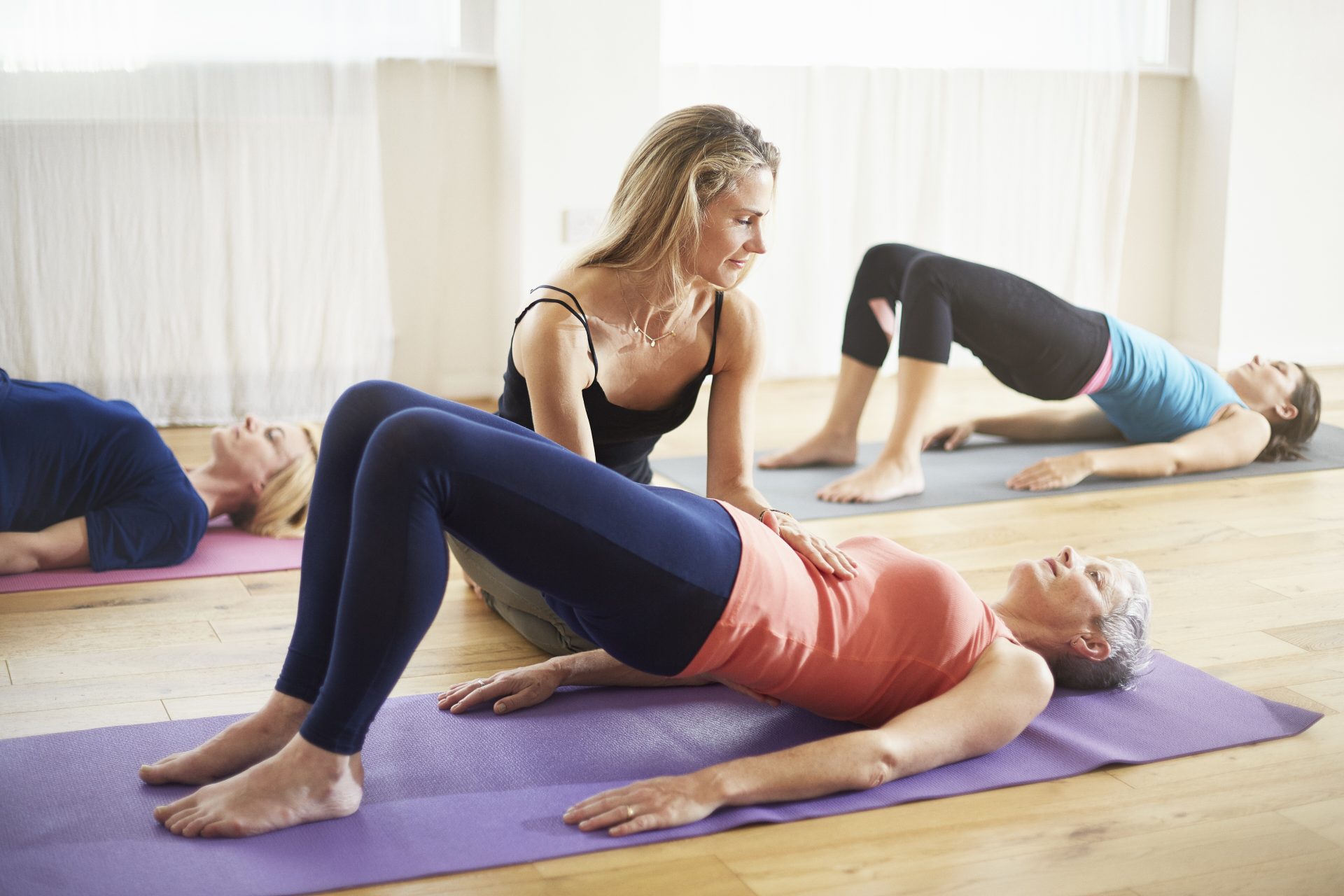
Pelvic floor strength exercises target the group of muscles, ligaments, and connective tissues that form the base of the pelvis — supporting the bladder, bowel, and uterus (in women) or bladder and bowel (in men). A complete programme does not focus solely on the well-known Kegel contraction but trains the pelvic floor as an integrated component of the deep core system. The pelvic floor co-contracts with the transverse abdominis, multifidus, and diaphragm to create the intra-abdominal pressure that stabilises the spine under load. Pelvic floor dysfunction — including urinary leakage, pelvic heaviness, and lower back instability — most commonly results from either weakness (inability to generate sufficient tension) or excess tension (inability to fully relax). For a holistic core approach, pairing pelvic floor training with core strength exercises develops the entire deep core system in balance. The pelvic floor muscles work in coordination with the breath — the pelvic floor naturally descends on inhalation and rises on exhalation. Training this breath-pelvic floor coordination is the foundation of effective pelvic strength exercises because it re-establishes the automatic co-contraction patterns that protect the pelvic organs and stabilise the spine during all activities. Pelvic floor exercises must develop both the fast-twitch (Type II) fibres that provide the reflexive contraction during coughing, sneezing, and jumping, and the slow-twitch (Type I) endurance fibres that maintain baseline tone. Both fibre types require specific training approaches. For women who have been through pregnancy, dedicated pelvic floor rehabilitation should be completed before returning to high-impact exercise or heavy abdominal workouts.
Start Your Free 14 Day Trial
Benefit 1: Reduces Urinary Leakage and Stress Incontinence
Stress urinary incontinence — the involuntary leakage of urine during coughing, sneezing, jumping, or exercise — affects approximately 1 in 3 women and is directly caused by insufficient pelvic floor strength and reflexive coordination. Pelvic strength exercises that build both the endurance tone and the fast-twitch reflexive contraction may significantly reduce or resolve stress incontinence symptoms. Pelvic floor muscle training is identified in research as the most effective first-line treatment for stress urinary incontinence in both women and men — more effective than medication for many presentations and with no side effects.
Benefit 2: Supports Spinal Stability and Reduces Lower Back Pain
The pelvic floor is the base of the deep core system. Without adequate pelvic floor tone, the intra-abdominal pressure that protects the lumbar spine under load cannot be fully generated, reducing spinal stability during all physical activities. Building pelvic floor strength as part of a complete deep core programme produces comprehensive lumbar protection from both the anterior (transverse abdominis) and inferior (pelvic floor) aspects of the core cylinder. The pelvic floor is the inferior base of the deep core cylinder. Without adequate pelvic floor co-contraction, intra-abdominal pressure cannot reach the levels required for lumbar spinal protection — making pelvic floor strength a direct determinant of lower back health.
Benefit 3: Aids Post-Pregnancy Pelvic Rehabilitation
Pregnancy and childbirth can stretch and weaken the pelvic floor muscles significantly. Post-natal pelvic floor rehabilitation through targeted strengthening exercises is the most evidence-based intervention for restoring pelvic floor function after childbirth. Beginning gentle pelvic floor exercises as early as 24–48 hours post-delivery (with healthcare provider guidance) and progressing systematically over weeks is the clinical standard for post-natal recovery.
Benefit 4: Improves Sexual Function and Pelvic Organ Support
Pelvic floor strength is directly associated with sexual function in both women and men. In women, adequate pelvic floor tone may improve sexual sensation and orgasmic function; in men, pelvic floor training may improve erectile function and ejaculatory control. Additionally, strong pelvic floor muscles provide the primary muscular support for the pelvic organs, reducing the risk of pelvic organ prolapse — a condition affecting an estimated 50% of women who have delivered children.
Protein — The Foundation of Pelvic Floor Strength Exercises Training
Aim for 1.6–2.0g of protein per kg of bodyweight per day. Best sources include eggs, paneer, lentils (dal), chicken, Greek yoghurt, and whey protein. Distribute protein evenly across 3–4 meals rather than loading it all in one sitting. Adequate protein is non-negotiable — without it, training effort produces minimal adaptation regardless of programme quality.
Carbohydrates — Fuel for Pelvic Floor Strength Exercises Performance
Complex carbohydrates (oats, brown rice, sweet potato, whole wheat roti) should form 40–50% of total calories. Consume a carbohydrate-containing meal 60–90 minutes before your pelvic floor strength exercises session to ensure glycogen availability. Post-session carbohydrates restore muscle glycogen within the critical 30-minute recovery window.
Anti-Inflammatory Foods for Recovery
Include turmeric (with black pepper for bioavailability), ginger, and omega-3 rich foods (flaxseeds, walnuts, fatty fish) daily. These directly reduce the systemic inflammation that accumulates with consistent training, speeding recovery between sessions.
Hydration — Often Underestimated
Aim for 35–40ml of water per kg of bodyweight daily. Add an additional 500ml for every 30 minutes of active training. Even mild dehydration (2% body weight) measurably reduces strength output and exercise capacity.
Before You Begin — Setting Your Baseline
Before beginning, assess your current fitness level honestly. Can you complete 10 bodyweight squats with good form? Can you hold a plank for 20 seconds? These are the practical baselines for this programme. Set a specific, measurable goal — not just ‘get stronger’ but ‘complete all sessions consistently for 8 weeks’. Identify what space and equipment you have available.
Week 1–2: Foundation and Form
Focus entirely on movement quality, not load or intensity. Every exercise should be performed through full range of motion with controlled tempo. Use this phase to build the motor patterns that make pelvic floor strength exercises training safe and effective long-term. 3 sessions per week is the optimal starting frequency — enough stimulus for adaptation, enough recovery to avoid overuse.
Week 3–4: Building Progressive Load
Once form is consistent, introduce progressive overload by adding 1–2 reps per set or a small increase in resistance each week. Track your sessions in a simple log — date, exercises, sets, reps. This data tells you exactly when to progress and prevents both undertraining and overtraining.
Ongoing: Consistency Over Intensity
The single biggest determinant of pelvic floor strength exercises results is session consistency over 8–12 weeks. Missing one session is inconsequential; missing two consecutive weeks disrupts adaptation. Habuild’s live daily sessions are specifically designed to remove the decision-making barrier — the session is always there, always structured.

Exercise 1: Kegel Contraction (Slow) — Pubococcygeus, Iliococcygeus, Levator Ani (Endurance Fibres) — 3 sets × 10 reps, hold 10 seconds each
The slow Kegel contraction trains the slow-twitch endurance fibres of the pelvic floor that maintain baseline resting tone. These fibres are responsible for the sustained support of the pelvic organs throughout the day. To perform correctly: contract the pelvic floor as if stopping the flow of urine, hold for a count of 10 while breathing normally, then fully release. The release is as important as the contraction — a pelvic floor that cannot fully relax is as dysfunctional as one that cannot contract. Beginner modification: Begin with 5-second holds if 10 seconds is challenging. Ensure full relaxation between each contraction. Perform lying down initially to reduce the effect of gravity.
Exercise 2: Kegel Contraction (Fast) — Pubococcygeus, Levator Ani (Fast-Twitch Reflexive Fibres) — 3 sets × 15 quick contractions
The fast Kegel contraction trains the Type II fast-twitch fibres that provide the reflexive pelvic floor response to sudden increases in intra-abdominal pressure — the cough, sneeze, and jump contractions that prevent stress incontinence. These quick-fire contractions require maximal effort in a fraction of a second — a neuromuscular skill that is lost with inactivity and must be specifically retrained. Beginner modification: Contract the pelvic floor as quickly and firmly as possible. Immediately fully release. Do not hold. Rest 2 seconds between each quick contraction.
Exercise 3: Bridge with Pelvic Floor Engagement — Pelvic Floor, Gluteus Maximus, Transverse Abdominis — 3 sets × 15 reps
The glute bridge with coordinated pelvic floor engagement trains the pelvic floor as an integrated part of the hip extension movement pattern. Contracting the pelvic floor on the exhalation as the hips rise replicates the natural breath-pelvic floor coordination used in all daily and athletic activities. This exercise is the most functional pelvic floor training movement because it integrates pelvic floor activation with the glute and core patterns used in walking, running, and lifting. Beginner modification: Begin with a basic glute bridge without focused pelvic floor engagement. Add the coordination once basic bridge form is established. Ensure the glutes are fully contracted at the top of each rep.
Mistake 1: Holding the Breath During Pelvic Floor Exercises
Holding the breath during Kegel exercises increases intra-abdominal pressure, which works against the pelvic floor contraction rather than supporting it. Breath-holding also trains an incorrect neuromuscular pattern that will not function reflexively during daily activities. Correction: Always breathe freely throughout. Contract the pelvic floor on the exhalation. Coordinating the pelvic floor contraction with a gentle exhalation is the physiologically correct pattern.
Mistake 2: Contracting the Gluteal and Abdominal Muscles Instead of the Pelvic Floor
The most common error in pelvic floor training is recruiting the gluteal muscles, inner thighs, or abdomen in place of the pelvic floor. This substitution produces no pelvic floor benefit and can actually increase the symptoms of pelvic floor dysfunction. Correct isolation requires relaxing the buttocks and abdomen before performing each contraction. Correction: Isolate the pelvic floor contraction. The glutes and abdomen should remain visibly relaxed throughout each Kegel.
Mistake 3: Neglecting Relaxation and Only Training the Contraction Phase
Pelvic floor hypertonia — excessive resting tension — is as common as weakness and produces symptoms including pelvic pain, difficult urination, and sexual discomfort. Training only the contraction phase without full relaxation between reps may worsen hypertonia. If pelvic pain is present, consult a specialist before beginning pelvic floor exercises. Correction: Give equal attention to the full release after every contraction. The release phase is not rest — it is the second half of the exercise.
Complete Beginners Starting from Zero
No prior experience with pelvic floor strength exercises is required to start. Every movement is taught from its most foundational form, with modifications for those who cannot yet perform the standard version. Live instructor feedback prevents the form errors that cause beginners to plateau or get injured before results arrive.
Intermediate Trainees Who Have Hit a Plateau
If you have been exercising inconsistently or without structured progressive overload, pelvic floor strength exercises delivers the systematic load progression that general fitness classes do not. The programme targets the specific weaknesses and imbalances holding you back, producing results that months of unstructured training have failed to achieve.
Women Across All Life Stages
From managing pelvic floor strength exercises to building long-term functional strength, women benefit from targeted, progressive training that respects hormonal fluctuations and individual capacity. Habuild’s all-women session options provide a supportive, non-intimidating environment.
Pelvic Floor-Specific Programming — Not a Generic Fitness Class Habuild’s pelvic floor sessions integrate pelvic floor work within a complete deep core programme rather than treating it as an isolated drill. Slow Kegel endurance training is followed by fast reflexive contractions and then bridge-with-engagement patterns that train the pelvic floor in functional movement context. Breathing coordination is emphasised throughout, establishing the natural breath-pelvic floor relationship that makes pelvic floor function automatic during daily activities.
Live Daily Sessions with Real-Time Form Correction
Every Habuild session is live — not pre-recorded. Instructors watch your form in real time and correct the specific errors — breath-holding, glute substitution, and incomplete relaxation — that limit pelvic floor development and can worsen dysfunction rather than improve it.
Progressive Overload Built into Every Session
Members do not need to design their own progression. Hold duration, contraction speed, functional integration, and movement complexity are built in week by week. Every session is a step forward — not a repetition of the previous routine.
Accountability, Streaks and Community
Streak tracking, a WhatsApp community, and live daily sessions create the accountability structure that keeps members consistent long enough to see measurable results. Pelvic floor improvements typically require 4–16 weeks depending on the severity of the starting dysfunction — the Habuild community structure ensures members complete the full rehabilitation cycle.


Practice Strong Everyday with Trishala Bothra, an IIT-B and London School of Business alumni
Trishala is focused on making movement feel lighter, more engaging, and something you actually look forward to.
In just 3 years, over 50,000 people began their strength journey, and 10,000+ join every week to keep getting stronger.