
High-Intensity Interval Training (HIIT) alternates periods of near-maximal effort (80–95% maximum heart rate) with active recovery periods at low intensity. This work-rest structure — typically 20–40 seconds of maximum effort followed by 10–20 seconds of rest — produces a metabolic disruption that steady-state cardio does not: the excess post-exercise oxygen consumption (EPOC) effect, during which the body continues burning calories at an elevated rate for 24–48 hours after the session ends. A 20-minute HIIT workout at home produces greater caloric expenditure over the subsequent 24 hours than 45 minutes of moderate-intensity steady-state cardio. HIIT workouts produce their results through three primary physiological mechanisms: acute caloric expenditure during the session from high-intensity effort; the EPOC metabolic elevation that persists for 24–48 hours post-session; and cardiovascular adaptation from repeated VO2 max stimulation. Research consistently shows that HIIT produces equivalent or greater improvements in cardiovascular fitness compared to 2–3 times the volume of steady-state training. At Habuild, HIIT programming integrates with strength training for fat loss for comprehensive body composition improvement.
Start Your Free 14 Day Trial
Maximises Caloric Burn in Minimum Time
The best HIIT workout produces 25–30% greater caloric expenditure per minute than moderate-intensity steady-state cardio — making it the most time-efficient training modality for fat loss and cardiovascular conditioning. A 20-minute HIIT session at home produces the same cardiovascular adaptation as 45–60 minutes of moderate-intensity jogging while fitting into schedules that longer sessions cannot accommodate.
Elevates Metabolism for 24–48 Hours Through EPOC
The EPOC effect — excess post-exercise oxygen consumption — is the metabolic acceleration that continues burning calories at an elevated rate for up to 48 hours after a HIIT session. This after-burn effect is absent from low-intensity steady-state cardio and is the primary metabolic mechanism behind HIIT’s superior fat loss results compared to moderate-intensity training of equivalent duration. Pairing HIIT with strength training for metabolism compounds the metabolic rate elevation for sustained fat loss.
Rapidly Improves Cardiovascular Fitness
HIIT repeatedly stimulates VO2 max — the maximum rate of oxygen utilisation — at near-maximal levels during each work interval. This repeated near-maximal cardiovascular stimulus produces faster VO2 max improvements than steady-state training: research documents equivalent or superior cardiovascular adaptations from HIIT in 2–3 times less training time. Most practitioners notice measurably improved stamina and reduced breathlessness within 3–4 weeks of consistent HIIT.
Preserves Muscle Mass During Fat Loss
Unlike prolonged steady-state cardio, which can stimulate muscle protein breakdown when sessions exceed 60 minutes, HIIT’s short high-intensity format preserves — and in beginners can even build — lean muscle mass during fat loss phases. This muscle preservation effect makes HIIT superior to long-duration cardio for body composition improvement, maintaining the metabolic rate that muscle mass supports.
Protein — The Foundation of HIIT Workouts Training
Aim for 1.6–2.0g of protein per kg of bodyweight per day. Best sources include eggs, paneer, lentils (dal), chicken, Greek yoghurt, and whey protein. Distribute protein evenly across 3–4 meals rather than loading it all in one sitting. Adequate protein is non-negotiable — without it, training effort produces minimal adaptation regardless of programme quality.
Carbohydrates — Fuel for HIIT Workouts Performance
Complex carbohydrates (oats, brown rice, sweet potato, whole wheat roti) should form 40–50% of total calories. Consume a carbohydrate-containing meal 60–90 minutes before your hiit workouts session to ensure glycogen availability. Post-session carbohydrates restore muscle glycogen within the critical 30-minute recovery window.
Anti-Inflammatory Foods for Recovery
Include turmeric (with black pepper for bioavailability), ginger, and omega-3 rich foods (flaxseeds, walnuts, fatty fish) daily. These directly reduce the systemic inflammation that accumulates with consistent training, speeding recovery between sessions.
Hydration — Often Underestimated
Aim for 35–40ml of water per kg of bodyweight daily. Add an additional 500ml for every 30 minutes of active training. Even mild dehydration (2% body weight) measurably reduces strength output and exercise capacity.
Before You Begin — Setting Your Baseline
Before beginning, assess your current fitness level honestly. Can you complete 10 bodyweight squats with good form? Can you hold a plank for 20 seconds? These are the practical baselines for this programme. Set a specific, measurable goal — not just ‘get stronger’ but ‘complete all sessions consistently for 8 weeks’. Identify what space and equipment you have available.
Week 1–2: Foundation and Form
Focus entirely on movement quality, not load or intensity. Every exercise should be performed through full range of motion with controlled tempo. Use this phase to build the motor patterns that make hiit workouts training safe and effective long-term. 3 sessions per week is the optimal starting frequency — enough stimulus for adaptation, enough recovery to avoid overuse.
Week 3–4: Building Progressive Load
Once form is consistent, introduce progressive overload by adding 1–2 reps per set or a small increase in resistance each week. Track your sessions in a simple log — date, exercises, sets, reps. This data tells you exactly when to progress and prevents both undertraining and overtraining.
Ongoing: Consistency Over Intensity
The single biggest determinant of hiit workouts results is session consistency over 8–12 weeks. Missing one session is inconsequential; missing two consecutive weeks disrupts adaptation. Habuild’s live daily sessions are specifically designed to remove the decision-making barrier — the session is always there, always structured.
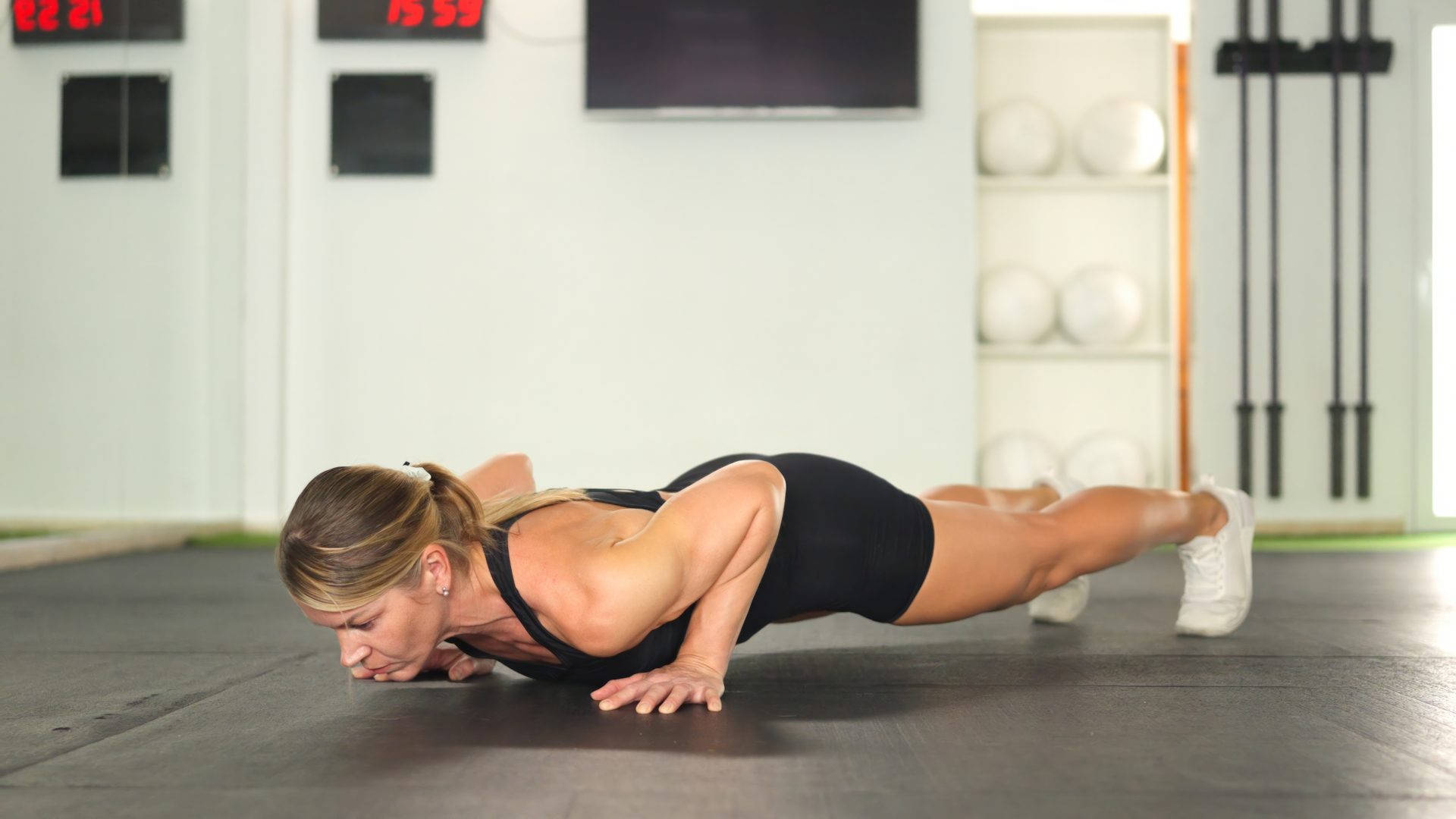
Tabata Protocol — 20 Secs On, 10 Secs Rest — 8 Rounds (4 Mins)
The Tabata protocol — 20 seconds of maximum effort followed by 10 seconds of rest, repeated 8 times for a 4-minute total — is the most research-validated HIIT format, originally documented to produce VO2 max improvements superior to moderate-intensity training in a fraction of the time. Choose one exercise per Tabata block (jump squats, burpees, mountain climbers) and perform at genuine maximum effort. 2–4 Tabata blocks with 1 minute between blocks constitutes a complete HIIT workout at home. Modification: Reduce impact (step rather than jump) for beginners or those with joint sensitivity.
HIIT Workouts for Beginners — 30:30 Protocol — 15 Mins Total
HIIT workouts for beginners use a more conservative 30-seconds-on, 30-seconds-rest ratio that allows higher-quality movement and controlled intensity while still producing the cardiovascular and metabolic benefits of interval training. Exercise selection should prioritise low-impact options (step jacks, standing mountain climbers, fast marching) that allow maximum effort without the injury risk that plyometric movements carry for deconditioned beginners. 15 minutes total: 5 exercise pairs, 3 rounds. Progress to 20:10 ratios after 4 weeks.
Circuit HIIT — Full Body — 40 Secs On, 20 Secs Rest — 4 Rounds
Full-body circuit HIIT — rotating through 5 exercises (squat jumps, push-ups, mountain climbers, reverse lunges, plank hold) for 40 seconds each with 20 seconds rest — combines cardiovascular conditioning with muscular endurance in a single session. 4 rounds of the 5-exercise circuit constitutes a complete 20-minute full-body HIIT workout at home. This format is the most effective for simultaneous fat loss and muscle conditioning. Combine with strength training for endurance for maximum cardiovascular and muscular adaptation.
Not working at genuine high intensity during work intervals — The metabolic benefits of HIIT — EPOC, VO2 max stimulus — require near-maximal effort during work intervals. A “high-intensity” interval performed at 60–70% maximum heart rate is functionally moderate-intensity cardio with rest periods. If you can sustain comfortable conversation during a HIIT work interval, the intensity is insufficient. Doing HIIT every day without recovery — HIIT places significant metabolic and musculoskeletal demand on the body — more so than steady-state cardio. Daily HIIT without recovery days produces overtraining, elevated cortisol, reduced performance, and increased injury risk. 3–4 HIIT sessions per week with active recovery on remaining days produces superior results to daily high-intensity training. Using excessive volume for beginners — HIIT workouts for beginners should begin at 15–20 minutes total and progress to 30 minutes over 6–8 weeks. Beginning with 45-minute HIIT sessions produces excessive muscle soreness, elevated injury risk, and the dropout that prevents beginners from developing the conditioning base that allows longer sessions to be productive.
Complete Beginners Starting from Zero
No prior experience with hiit workouts is required to start. Every movement is taught from its most foundational form, with modifications for those who cannot yet perform the standard version. Live instructor feedback prevents the form errors that cause beginners to plateau or get injured before results arrive.
Intermediate Trainees Who Have Hit a Plateau
If you have been exercising inconsistently or without structured progressive overload, hiit workouts delivers the systematic load progression that general fitness classes do not. The programme targets the specific weaknesses and imbalances holding you back, producing results that months of unstructured training have failed to achieve.
Desk Workers and Sedentary Professionals
Extended sitting creates the exact muscle imbalances and weaknesses that hiit workouts training corrects. No gym, no equipment, and no prior experience is required — the programme begins with bodyweight fundamentals and builds progressively from there. Habuild’s morning sessions fit into a working day without disruption.
HIIT-Specific Programming
Habuild’s HIIT sessions open with a dynamic mobility warm-up to prepare joints for high-impact movement, use Tabata or 40:20 work-rest protocols for the main block, and close with active recovery and parasympathetic breathing to manage post-HIIT cortisol. This sequencing prevents the injury and cortisol accumulation that poorly structured HIIT produces.
Live Daily Sessions with Real-Time Corrections
HIIT technique deteriorates under fatigue — the most common time for injury in interval training. Habuild’s live sessions provide real-time corrections during work intervals, ensuring that exercise form remains safe even as intensity approaches maximum. This supervision advantage is absent from pre-recorded HIIT programmes.
Progressive HIIT Structure
Habuild progresses HIIT systematically: beginners start with 30:30 low-impact protocols, advance to 40:20 moderate-impact circuits, and progress to 20:10 Tabata protocols as cardiovascular fitness develops. Work interval duration, rest period reduction, and exercise complexity all advance in a structured progression that prevents plateau without exceeding recovery capacity.
Community and Daily Accountability
HIIT results require 3–4 sessions weekly over 8–12 weeks for meaningful cardiovascular and body composition change. Habuild’s daily live format and community accountability create the session frequency and motivation that self-directed HIIT programmes — which experience high dropout rates — cannot sustain.


Practice Strong Everyday with Trishala Bothra, an IIT-B and London School of Business alumni
Trishala is focused on making movement feel lighter, more engaging, and something you actually look forward to.
In just 3 years, over 50,000 people began their strength journey, and 10,000+ join every week to keep getting stronger.