
A hamstring muscle workout is a targeted training programme for the three muscles of the posterior thigh — the biceps femoris (long and short head), semitendinosus, and semimembranosus — through both strengthening exercises and flexibility work. What makes a dedicated hamstring workout distinct from general leg training is its emphasis on both the eccentric (lengthening under load) and concentric (shortening) strength of the hamstrings, plus the flexibility work that addresses the chronic tightness that prolonged sitting, insufficient stretching, and sport-specific loading produce. The hamstrings must be both strong and flexible — weakness or tightness in isolation both increase injury risk. The mechanism is dual: eccentric loading develops the hamstring’s ability to decelerate and absorb force — the function most responsible for hamstring strain prevention, since most hamstring tears occur during the late swing phase of running when the muscle decelerates the lower leg. Strengthening the hamstrings in their lengthened position (through exercises like the Romanian Deadlift and Nordic Curl) produces the specific structural adaptation that protects against this injury mechanism. Flexibility work simultaneously addresses the chronic shortening that tight hip flexors and sitting patterns produce, improving the range of motion through which the hamstring can safely operate under load.
Start Your Free 14 Day Trial
Benefit 1: Significantly Reduced Hamstring Strain Risk
The hamstring is the most commonly strained muscle in runners, footballers, and most field sport athletes. Research published in the British Journal of Sports Medicine found that the Nordic Hamstring Curl — the primary eccentric hamstring exercise — reduces hamstring strain incidence by 51% when performed consistently twice weekly. Stronger hamstrings are more resilient to the high-speed deceleration forces that cause most hamstring tears.
Benefit 2: Improved Running Speed and Athletic Performance
The hamstrings are the primary hip extensors — the muscles that propel the body forward in running and generate power in jumping and cutting movements. Stronger hamstrings directly improve sprint speed, running economy, and the explosive lower body power that most sports require. Many athletes notice measurable performance improvements within 8–12 weeks of structured hamstring training.
Benefit 3: Reduced Lower Back Pain Through Pelvic Alignment
Tight hamstrings are a primary contributor to lower back pain — chronically short hamstrings pull the pelvis into posterior tilt, flattening the lumbar curve and increasing stress on the lumbar discs. Consistent hamstring stretching combined with strengthening can meaningfully reduce lower back pain caused by this pelvic alignment mechanism.
Benefit 4: Better Knee Health and Stability
The hamstrings are critical knee stabilisers — their strength balances the quadricep force acting on the knee joint. A significant hamstring-to-quadricep strength imbalance (strong quads, weak hamstrings) is a primary risk factor for ACL injury and patellofemoral pain. Targeted hamstring training restores this balance and protects long-term knee health.
Protein — The Foundation of Hamstring Strength
Aim for 1.6–2.0g of protein per kg of bodyweight daily. Best sources: eggs, chicken, paneer, dal, Greek yoghurt, and whey protein. The hamstrings are regularly loaded through walking and sport — consistent protein availability supports the tissue repair and hypertrophy that training stimulates. Post-training protein within 30–60 minutes is particularly important after eccentric-dominant sessions that produce significant muscle damage.
Carbohydrates — Fuel for Explosive Hamstring Work
Hamstring training — particularly eccentric loading and explosive hip extension — has significant energy demands. Moderate carbohydrate intake from oats, banana, and sweet potato before and after training sessions supports performance and recovery. Avoid training on an empty stomach for high-intensity hamstring sessions.
Hydration and Micronutrients
Adequate hydration (2.5–3 litres daily) supports muscle elasticity and reduces cramping risk — dehydrated muscles are more prone to both cramps and tears. Potassium from bananas and leafy vegetables supports muscle contraction quality. Magnesium aids recovery and reduces post-training soreness. Iron supports the oxygen delivery that sustained hamstring work requires.
Before You Begin — Setting Your Baseline
Assess your starting point with two practical tests: can you touch your toes with straight knees (basic hamstring flexibility)? Can you perform a single-leg Romanian Deadlift with bodyweight while maintaining balance? If you have a current or recent hamstring strain, obtain medical clearance before beginning eccentric loading and inform the live instructor. Note any posterior knee or buttock pain that may indicate proximal hamstring tendinopathy — a condition requiring modified exercise selection.
Week 1–2: Foundation Phase
Two sessions per week. Focus on gentle hamstring stretching and basic activation: supine hamstring stretch, glute bridge, and light hip hinge pattern development. Never stretch cold — always warm up with 5 minutes of walking or light movement first. Avoid the Nordic Hamstring Curl and heavy Romanian Deadlift in this phase. Eccentric loading before the foundational strength is established increases injury risk rather than reducing it.
Week 3–8: Progressive Loading Phase
Three sessions per week. Introduce progressive eccentric loading — Romanian Deadlift and its progressions — in the 10–12 rep range with controlled 3-second eccentric lowering. Begin Nordic Curl progressions at very low volume (2–3 reps per set) — quality of eccentric control matters more than quantity in weeks 3–4. Increase load by approximately 5–10% per week across the Romanian Deadlift. Continue daily hamstring stretching (2–3 minutes each side) on all training and non-training days.
Week 9+: Goal-Specific Advancement
Introduce more demanding movements: full Nordic Hamstring Curl, single-leg Romanian Deadlift, and hip hinge at greater loads. These are the exercises with the strongest evidence for hamstring injury prevention and performance improvement. Progress slowly — these movements are demanding and require the foundations established in weeks 3–8. Add plyometric integration for athletes: sprint-specific eccentric work and resisted leg curl where equipment allows.
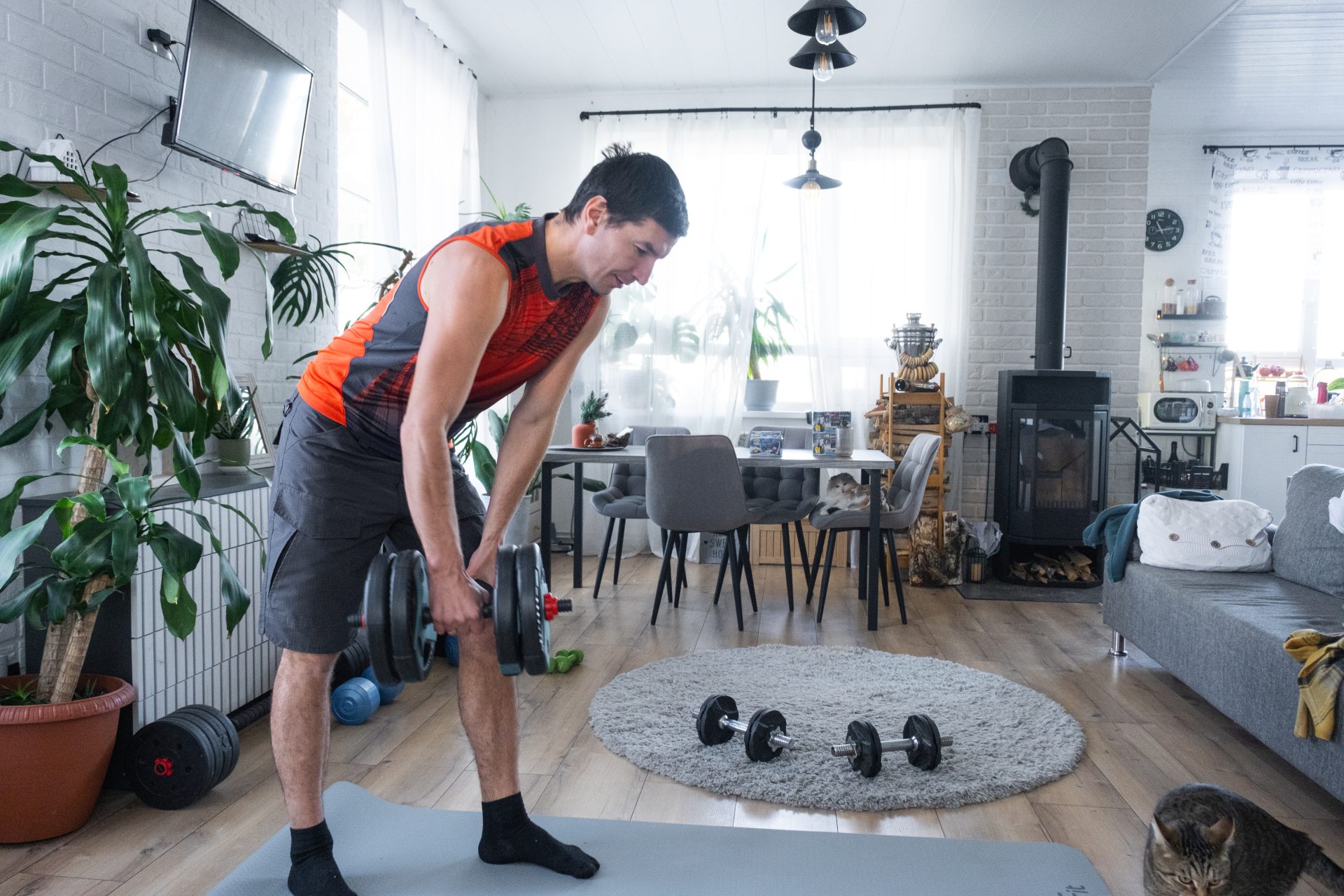
Romanian Deadlift — Hamstrings, Glutes, Spinal Erectors | 4 sets × 10–12 reps, 3-second eccentric
The Romanian Deadlift is the most effective hamstring strengthening exercise — loading the hamstrings in their lengthened position through the full hip hinge range with controlled eccentric lowering that produces maximum mechanical tension and muscle protein synthesis stimulus. Consistent RDL training with progressive loading produces the posterior chain strength that both performance and injury prevention require. Beginner: begin with bodyweight hip hinge (hands sliding down the thighs); add a light bag or dumbbells only after the neutral-spine hinge is fully established and confident.
Nordic Hamstring Curl (At-Home Version) — Hamstrings (Eccentric) | 3 sets × 5–8 reps
The Nordic Hamstring Curl — anchoring the feet under a sofa or with a partner and lowering the torso forward under eccentric hamstring control — has the strongest single-exercise evidence for hamstring strain prevention in sport. Even 3–5 reps per session twice weekly produces meaningful injury prevention benefit. The at-home version uses any fixed anchor point: sofa base, bed frame, or a partner holding the ankles. Beginner: lower as slowly as possible (5-second eccentric), using the hands to push back up to the starting position; the eccentric lowering is the goal, not the return.
Standing Hamstring Stretch — Hamstrings, Calves | 3 × 45 seconds each side
The standing hamstring stretch — one foot elevated on a chair or step with the torso hinged forward over the extended leg — is the most complete practical hamstring stretch, addressing both the knee and hip attachment points simultaneously. Performed daily, it addresses the chronic hamstring tightness that sitting and sport accumulate. Keep the spine long (do not round the back) and feel the stretch in the belly of the hamstring rather than behind the knee. Beginner: elevate the foot at a lower height (ankle-to-knee height) and reduce the forward lean until flexibility allows greater range.
Mistake 1: Aggressive Stretching of Cold or Previously Injured Hamstrings
Forcefully stretching cold hamstrings — particularly first thing in the morning or immediately after sitting — significantly increases strain risk. The hamstring requires progressive warm-up before it can safely accept the tensile load of deep stretching. Always walk for 5 minutes or perform gentle leg swings before any static hamstring stretch.
Mistake 2: Training Only the Quadriceps and Neglecting Hamstrings
The most common lower body training error is performing only quad-dominant exercises (squats, lunges, leg press) while giving hamstrings minimal attention. The resulting imbalance (strong quads, weak hamstrings) is the primary risk factor for ACL injury and the knee pain that many active people experience. Balance every quad-dominant exercise with a posterior chain exercise.
Mistake 3: Progressing Nordic Curls Too Aggressively Too Soon
Nordic Hamstring Curls are demanding eccentric exercises that require the foundational hamstring strength established through weeks of Romanian Deadlift training before being introduced. Beginning Nordic Curls without this foundation — or increasing volume too quickly — produces severe DOMS and risks the hamstring strain the exercise is designed to prevent. Begin with 2–3 reps per set and increase by no more than one rep per week.
Complete Beginners Starting from Zero
The hamstring stretch and bodyweight hip hinge are fully accessible from day one with no experience or equipment. The live instructor teaches correct technique from the first session — particularly the neutral spine requirement in the hip hinge that is the most common beginner error.
Runners and Field Sport Athletes
For any sport involving running, kicking, or jumping — including football, cricket, running, and badminton — targeted hamstring training is not optional. It is the most important structural investment for performance improvement and injury prevention in these activities.
Those Who Have Had Previous Hamstring Injuries
After medical clearance, a graduated hamstring strengthening programme beginning with gentle activation and progressing toward eccentric loading is the evidence-based rehabilitation path. The Nordic Curl specifically is used as a return-to-sport criterion in many rehabilitation protocols.
Is a Hamstring Muscle Workout Good for Beginners?
Yes — the hamstring stretch and bodyweight hip hinge are appropriate from day one. The Nordic Curl is introduced only in week 3 onward when foundational strength is established. No equipment is required to begin.
Habuild is India’s First Habit Building Program for Yoga — and through its ‘Strong Everyday’ programme, it integrates the evidence-based hamstring strengthening and flexibility work that injury prevention and athletic performance require as a daily habit.
Goal-Specific Programming — Not a Generic Fitness Class
The hamstring programme balances eccentric loading (Romanian Deadlift, Nordic Curl) with flexibility work (standing stretch, supine stretch) in the proportions that produce both strength and mobility — the dual requirement that most standalone programmes address in isolation.
Live Daily Sessions with Real-Time Form Correction
The Romanian Deadlift and Nordic Curl require precise technique to be effective and safe. Live instruction ensures the neutral spine and controlled eccentric tempo that make these exercises the powerful hamstring builders they are designed to be.
Progressive Overload Built into Every Session
Hamstring strength develops through consistent progressive overload — adding reps, load, or range of motion each week. This progression is built into the session structure, ensuring continued development rather than the plateau that fixed-difficulty programmes produce.
Accountability, Streaks, and Community


Practice Strong Everyday with Trishala Bothra, an IIT-B and London School of Business alumni
Trishala is focused on making movement feel lighter, more engaging, and something you actually look forward to.
In just 3 years, over 50,000 people began their strength journey, and 10,000+ join every week to keep getting stronger.