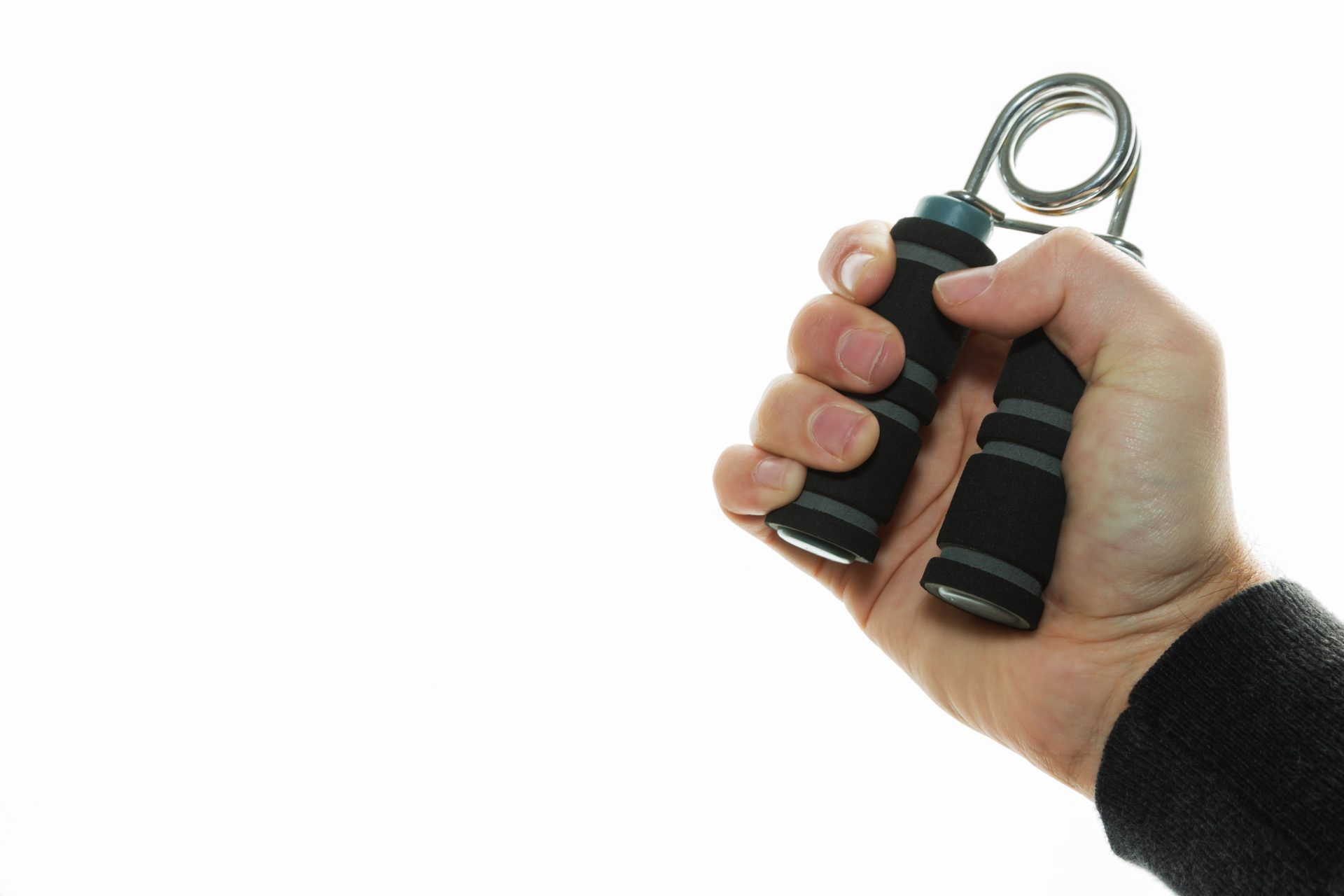
Grip strength exercises target the muscles of the hand, wrist, and forearm that generate and sustain gripping force — the flexor digitorum superficialis and profundus (finger flexors), the intrinsic hand muscles (thenar and hypothenar groups), the wrist flexors of the anterior forearm, and the finger extensors that provide the opposing force. A complete grip strength programme distinguishes between crush grip (closing the hand around an object), pinch grip (holding between the thumb and fingers), and support grip (sustaining a grip over time). Pairing dedicated grip work with a comprehensive forearm programme develops the grip and forearm together as the integrated arm-to-hand functional unit they form in all pulling and carrying activities. Grip strength is one of the most studied physical fitness markers and has been consistently shown in longitudinal research to predict all-cause mortality, cardiovascular health, and functional independence in later life more accurately than many traditional health metrics. The mechanism is bidirectional: poor grip reflects systemic muscle mass loss and metabolic dysfunction; building grip through resistance exercise simultaneously builds the forearm and hand musculature that improves all these health markers. For trainees who experience grip limiting their performance in rowing or pulling exercises, targeted grip-specific work removes this bottleneck and allows larger muscle groups to be trained to their full capacity.
Start Your Free 14 Day Trial
Benefit 1: Removes the Grip Bottleneck in Compound Pulling Exercises
Grip strength is the limiting factor in most pulling exercises for a significant proportion of trainees. A person may have fully capable back and bicep muscles but find that the grip fatigues before the target muscles during rows, pull-ups, or deadlifts — reducing the training stimulus to the primary muscles. Targeted grip exercises remove this bottleneck, allowing back and arm training to be performed at the loads and volumes required for optimal development. Most people’s back and bicep capacity substantially exceeds their grip capacity — meaning the primary pulling muscles are consistently undertrained. Targeted grip work removes this bottleneck and produces immediate improvements in all pulling exercise performance.
Benefit 2: Predicts and Supports Long-Term Health and Functional Independence
Research from multiple large-scale studies shows that grip strength is among the strongest predictors of all-cause mortality, cardiovascular disease risk, and functional independence in older adults. Each 5 kg reduction in grip strength was associated with an 8% increased risk of cardiovascular death in one major study. Building grip strength is therefore not merely a performance goal but a measurable investment in long-term health and the ability to remain physically independent throughout life. Each 5kg reduction in grip strength was associated with an 8% increased risk of cardiovascular death in a major longitudinal study. Grip strength is one of the most reliable biomarkers of overall health and functional longevity.
Benefit 3: Reduces Risk of Wrist Injury and Repetitive Strain
Strong grip muscles stabilise the wrist joint during all gripping and carrying activities, reducing the stress on the wrist ligaments and tendons that leads to repetitive strain injuries and carpal tunnel syndrome. Building grip strength symmetrically — training both flexors and extensors — creates the balanced wrist stability that desk workers and athletes alike require.
Benefit 4: Improves Performance in All Sports Involving Grip or Implement Use
Grip endurance — the ability to maintain gripping force over time without fatigue — is performance-limiting in climbing, cricket, tennis, badminton, golf, and all racquet sports. Building grip endurance through sustained carries and dead hangs directly improves the ability to sustain racquet head speed, batting grip, and climbing hold contact throughout extended activity.
Protein — The Foundation of Grip Strength Exercises Training
Aim for 1.6–2.0g of protein per kg of bodyweight per day. Best sources include eggs, paneer, lentils (dal), chicken, Greek yoghurt, and whey protein. Distribute protein evenly across 3–4 meals rather than loading it all in one sitting. Adequate protein is non-negotiable — without it, training effort produces minimal adaptation regardless of programme quality.
Carbohydrates — Fuel for Grip Strength Exercises Performance
Complex carbohydrates (oats, brown rice, sweet potato, whole wheat roti) should form 40–50% of total calories. Consume a carbohydrate-containing meal 60–90 minutes before your grip strength exercises session to ensure glycogen availability. Post-session carbohydrates restore muscle glycogen within the critical 30-minute recovery window.
Anti-Inflammatory Foods for Recovery
Include turmeric (with black pepper for bioavailability), ginger, and omega-3 rich foods (flaxseeds, walnuts, fatty fish) daily. These directly reduce the systemic inflammation that accumulates with consistent training, speeding recovery between sessions.
Hydration — Often Underestimated
Aim for 35–40ml of water per kg of bodyweight daily. Add an additional 500ml for every 30 minutes of active training. Even mild dehydration (2% body weight) measurably reduces strength output and exercise capacity.
Before You Begin — Setting Your Baseline
Before beginning, assess your current fitness level honestly. Can you complete 10 bodyweight squats with good form? Can you hold a plank for 20 seconds? These are the practical baselines for this programme. Set a specific, measurable goal — not just ‘get stronger’ but ‘complete all sessions consistently for 8 weeks’. Identify what space and equipment you have available.
Week 1–2: Foundation and Form
Focus entirely on movement quality, not load or intensity. Every exercise should be performed through full range of motion with controlled tempo. Use this phase to build the motor patterns that make grip strength exercises training safe and effective long-term. 3 sessions per week is the optimal starting frequency — enough stimulus for adaptation, enough recovery to avoid overuse.
Week 3–4: Building Progressive Load
Once form is consistent, introduce progressive overload by adding 1–2 reps per set or a small increase in resistance each week. Track your sessions in a simple log — date, exercises, sets, reps. This data tells you exactly when to progress and prevents both undertraining and overtraining.
Ongoing: Consistency Over Intensity
The single biggest determinant of grip strength exercises results is session consistency over 8–12 weeks. Missing one session is inconsequential; missing two consecutive weeks disrupts adaptation. Habuild’s live daily sessions are specifically designed to remove the decision-making barrier — the session is always there, always structured.
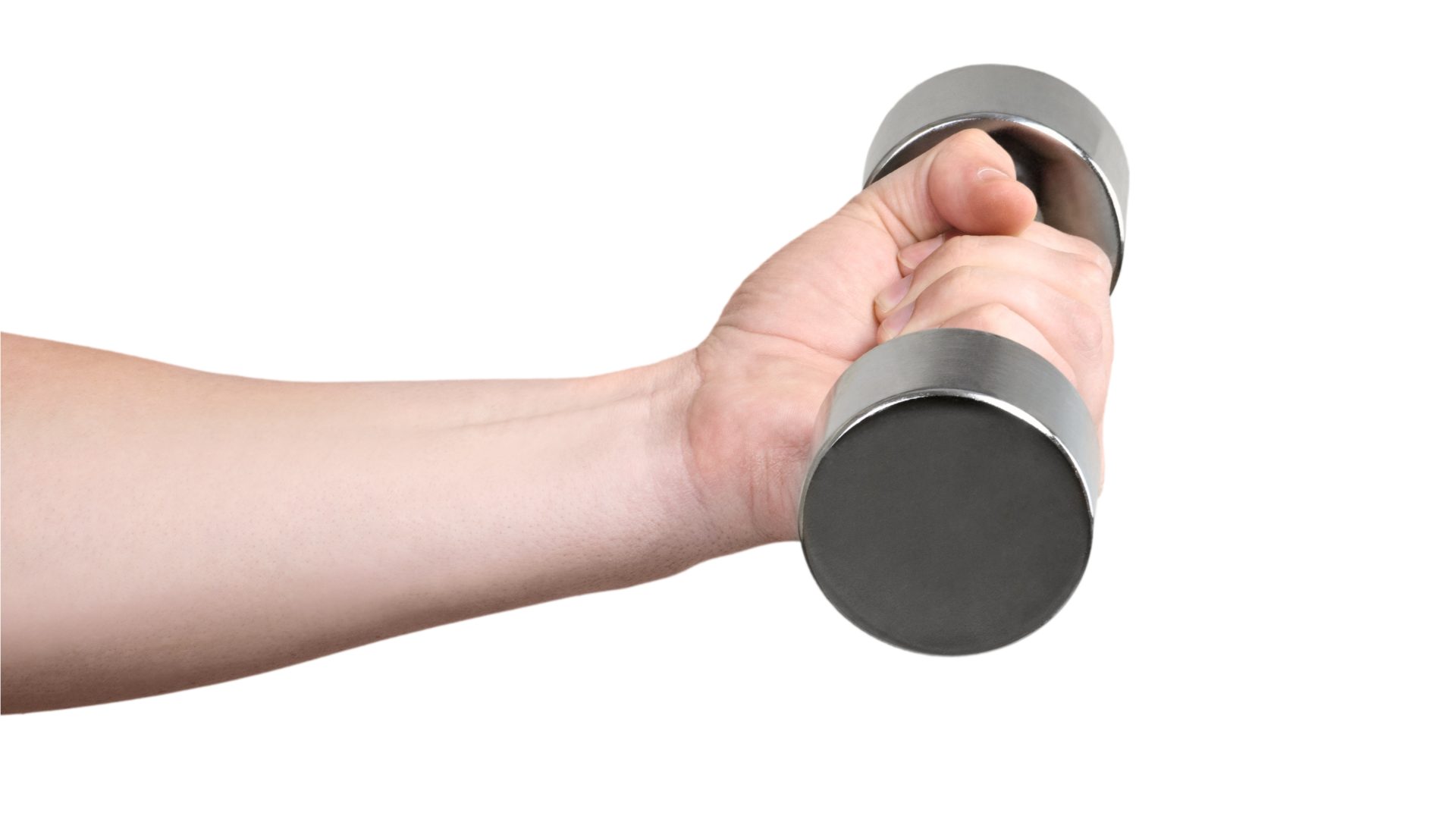
Exercise 1: Dead Hang — All Forearm Muscles, Intrinsic Hand Grip, Shoulder Decompression — 3 sets × 30–60 seconds
The dead hang is the most complete grip strength exercise available because it applies sustained load to every muscle involved in grip — from the intrinsic hand muscles through the finger flexors to the wrist flexors — simultaneously and under the maximal load of bodyweight. It also decompresses the shoulder joint and stretches the entire arm chain. Grip endurance improvements from consistent dead hangs transfer directly to all pulling exercises and daily carrying activities. Beginner modification: Hang from a low bar with bent knees. Reduce hang duration to 10–15 seconds and build progressively. Use chalk if grip slipping is an issue.
Exercise 2: Towel Pull-Up or Towel Row — Finger Flexors, Wrist Flexors, Forearm Muscles — 3 sets × 8–10 reps
Performing rows or pull-up holds using a towel requires the hand to grip a thicker, unstable implement than a standard bar — dramatically increasing the activation of the intrinsic hand muscles and deep finger flexors. This variation develops the pinch and wrap grip patterns that standard bar training neglects, producing more complete grip development than any bar-based exercise alone. Beginner modification: Perform an inverted row with a towel hooked around a table leg. Use a thick book or folded towel on a bar as a partial grip variation. Reduce range of motion if wrist discomfort is present.
Exercise 3: Wrist Curl and Reverse Wrist Curl — Wrist Flexors and Extensors — 3 sets × 20 reps each direction
Balanced wrist flexor and extensor training is essential for the joint stability that grip exercises demand. Wrist curls (palm up) train the flexors that drive crush grip force; reverse curls (palm down) train the extensors that provide the antagonist stability that prevents imbalance injuries. Performing both directions in equal volume maintains the forearm muscle balance that protects the elbow and wrist from the repetitive strain injuries most associated with grip-intensive activities. Beginner modification: Use very light resistance initially — extensor muscles are typically significantly weaker than flexors. Perform seated with the forearm resting on the thigh for wrist support.
Mistake 1: Relying on Lifting Straps for All Pulling Exercises
Lifting straps bypass the grip entirely by transferring the load to the wrist. While appropriate for maximal loading, using straps for all sets removes the grip training stimulus that pulling exercises naturally provide — the most efficient form of incidental grip development. Correction: Perform warm-up and working sets without straps. Use straps only for maximum-effort final sets where grip failure would otherwise prevent the target muscles from being trained to completion.
Mistake 2: Training Only Grip Strength Without Building Grip Endurance
Maximum grip force and grip endurance are distinct qualities requiring different training. Most grip training addresses only maximal force through short, intense contractions. Building grip endurance through sustained holds is more relevant to the daily and sporting use cases where grip fatigue is the limiting factor. Correction: Include at least one sustained grip exercise (dead hang, farmer carry) in every grip session alongside intensity work.
Mistake 3: Training Grip in Isolation Without Connecting It to Full Arm Training
Grip strength built in isolation but not transferred to compound pulling movements does not produce the performance improvements it should. Testing the newly trained grip under the conditions of rowing or pulling exercises within the same session transfers the grip development into functional strength. Correction: End grip sessions with a compound pulling movement where the trained grip is tested under load.
Complete Beginners Starting from Zero
No prior experience with grip strength exercises is required to start. Every movement is taught from its most foundational form, with modifications for those who cannot yet perform the standard version. Live instructor feedback prevents the form errors that cause beginners to plateau or get injured before results arrive.
Intermediate Trainees Who Have Hit a Plateau
If you have been exercising inconsistently or without structured progressive overload, grip strength exercises delivers the systematic load progression that general fitness classes do not. The programme targets the specific weaknesses and imbalances holding you back, producing results that months of unstructured training have failed to achieve.
Desk Workers and Sedentary Professionals
Extended sitting creates the exact muscle imbalances and weaknesses that grip strength exercises training corrects. No gym, no equipment, and no prior experience is required — the programme begins with bodyweight fundamentals and builds progressively from there. Habuild’s morning sessions fit into a working day without disruption.
Grip-Specific Programming — Not a Generic Fitness Class Habuild’s grip sessions open with dead hangs and towel rows to challenge the complete grip under maximal load before progressing to isolation wrist work. This sequencing ensures the grip is trained in its most functionally demanding pattern first, when the muscles are fresh, producing superior grip endurance development compared to programmes that begin with isolation work and end with sustained holds when the muscles are already fatigued.
Live Daily Sessions with Real-Time Form Correction
Every Habuild session is live — not pre-recorded. Instructors watch your form in real time and correct the specific errors — wrist position in dead hangs, grip width in towel rows, and unequal flexor-extensor loading — that limit grip development and increase wrist injury risk.
Progressive Overload Built into Every Session
Members do not need to design their own progression. Load, volume, hold duration, and movement complexity are built in week by week. Every session is a step forward — not a repetition of the previous routine.
Accountability, Streaks and Community
Streak tracking, a WhatsApp community, and live daily sessions create the accountability structure that keeps members consistent long enough to see measurable results. Grip strength adaptations require 6–8 weeks of consistent effort — the Habuild community structure ensures members complete the full adaptation cycle.


Practice Strong Everyday with Trishala Bothra, an IIT-B and London School of Business alumni
Trishala is focused on making movement feel lighter, more engaging, and something you actually look forward to.
In just 3 years, over 50,000 people began their strength journey, and 10,000+ join every week to keep getting stronger.