
Exercises to improve posture specifically address the muscular architecture that maintains spinal alignment — not simply the awareness to “sit up straight.” The desk-worker postural collapse pattern involves three simultaneous muscle-length imbalances: tight anterior chest and hip flexors that pull the skeleton forward; weak posterior chain muscles (rhomboids, lower trapezius, glutes) that have been lengthened and inhibited; and forward-head cervical dysfunction that places extraordinary load on the posterior neck musculature. Workouts for posture must address all three simultaneously. The mechanism: improved posture directly improves circulation through two pathways. First, thoracic extension opens the anterior chest, increasing lung capacity and the cardiovascular efficiency of each breath. Second, restored spinal alignment decompresses the vessels and neural structures that rounded posture compresses — improving the blood flow to the shoulders, neck, and brain that poor posture restricts. Best exercises for posture that combine strengthening (posterior chain activation) and lengthening (anterior chain release) produce both the structural change and the circulatory improvement that make postural correction lasting.
Start Your Free 14 Day TrialReduced Neck, Shoulder and Back Pain The most immediately experienced benefit of postural correction — as the muscular imbalances that load the posterior cervical and thoracic structures are corrected, the chronic pain they produce reduces. Best exercises for posture produce more lasting pain relief than massage or manipulation alone because they address the underlying muscle-length imbalance. Research: 10 weeks of targeted postural exercise produced 79% pain reduction in chronic neck and shoulder pain patients — Journal of Physical Therapy Science, 2017. Improved Respiratory Capacity and Energy Thoracic kyphosis mechanically restricts lung expansion — compressed lungs take in less oxygen per breath, reducing the oxygenation of every tissue. Workouts for posture that restore thoracic extension measurably improve tidal volume, oxygen saturation, and the sustained energy that adequate oxygenation produces. Improved Circulation to Head, Neck and Shoulders Forward-head posture compresses the suboccipital vessels and posterior cervical structures — reducing blood flow to the brain regions that produce the headaches, cognitive fog, and visual symptoms commonly associated with poor posture. WHO: Regular exercise including postural strengthening reduces musculoskeletal disease burden and cardiovascular risk by up to 35%. Improved Confidence and Psychological State Postural psychology research (power posing and embodied cognition) consistently shows that upright posture produces measurable improvements in testosterone, cortisol ratio, and self-reported confidence. Best exercises for posture produce both the physical and psychological benefits of a more expansive, upright carriage.
Protein — The Foundation of Exercises to Improve Posture Training
Aim for 1.6–2.0g of protein per kg of bodyweight per day. Best sources include eggs, paneer, lentils (dal), chicken, Greek yoghurt, and whey protein. Distribute protein evenly across 3–4 meals rather than loading it all in one sitting. Adequate protein is non-negotiable — without it, training effort produces minimal adaptation regardless of programme quality.
Carbohydrates — Fuel for Exercises to Improve Posture Performance
Complex carbohydrates (oats, brown rice, sweet potato, whole wheat roti) should form 40–50% of total calories. Consume a carbohydrate-containing meal 60–90 minutes before your exercises to improve posture session to ensure glycogen availability. Post-session carbohydrates restore muscle glycogen within the critical 30-minute recovery window.
Anti-Inflammatory Foods for Recovery
Include turmeric (with black pepper for bioavailability), ginger, and omega-3 rich foods (flaxseeds, walnuts, fatty fish) daily. These directly reduce the systemic inflammation that accumulates with consistent training, speeding recovery between sessions.
Hydration — Often Underestimated
Aim for 35–40ml of water per kg of bodyweight daily. Add an additional 500ml for every 30 minutes of active training. Even mild dehydration (2% body weight) measurably reduces strength output and exercise capacity.
Before You Begin — Setting Your Baseline
Before beginning, assess your current fitness level honestly. Can you complete 10 bodyweight squats with good form? Can you hold a plank for 20 seconds? These are the practical baselines for this programme. Set a specific, measurable goal — not just ‘get stronger’ but ‘complete all sessions consistently for 8 weeks’. Identify what space and equipment you have available.
Week 1–2: Foundation and Form
Focus entirely on movement quality, not load or intensity. Every exercise should be performed through full range of motion with controlled tempo. Use this phase to build the motor patterns that make exercises to improve posture training safe and effective long-term. 3 sessions per week is the optimal starting frequency — enough stimulus for adaptation, enough recovery to avoid overuse.
Week 3–4: Building Progressive Load
Once form is consistent, introduce progressive overload by adding 1–2 reps per set or a small increase in resistance each week. Track your sessions in a simple log — date, exercises, sets, reps. This data tells you exactly when to progress and prevents both undertraining and overtraining.
Ongoing: Consistency Over Intensity
The single biggest determinant of exercises to improve posture results is session consistency over 8–12 weeks. Missing one session is inconsequential; missing two consecutive weeks disrupts adaptation. Habuild’s live daily sessions are specifically designed to remove the decision-making barrier — the session is always there, always structured.
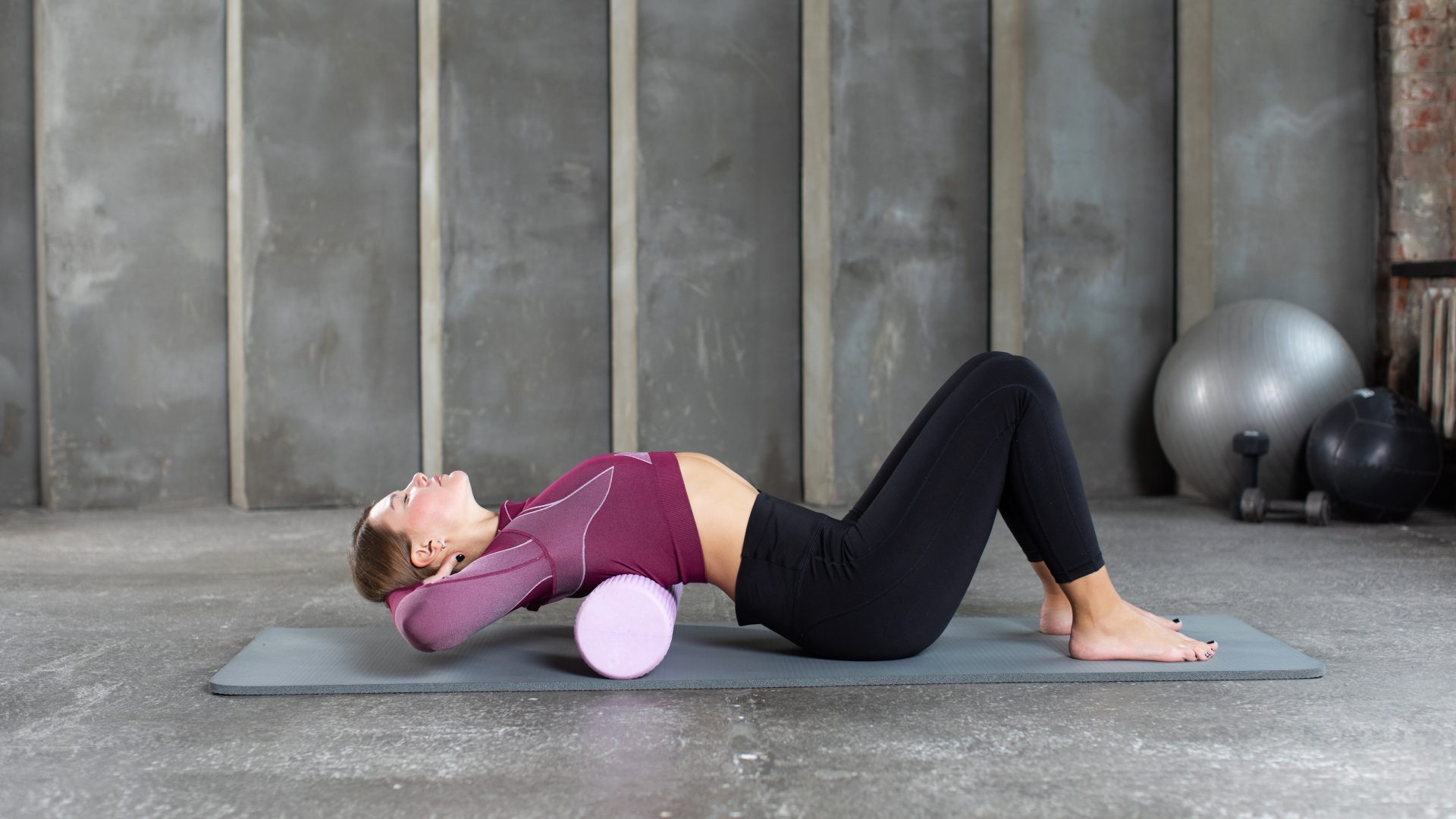
Wall Angels — Lower Trapezius + Rhomboids — 3 × 10 reps Target: Lower trapezius, rhomboids, deep cervical flexors, thoracic extensors. Why it works: Wall Angels are the single most evidence-supported exercise to improve posture — they simultaneously strengthen the lower trapezius (the most commonly inhibited postural muscle), retract the scapulae, and establish thoracic extension against the wall reference. Workouts for posture must begin here. Beginner modification: Reduce range — only move the arms as far as the lower back and shoulders stay in contact with the wall. Chin Tuck — Deep Cervical Flexors — 3 × 10 reps, held 5s Target: Deep cervical flexors (longus colli), suboccipital release. Why it works: The chin tuck directly activates the deep cervical flexors that are deactivated by forward-head posture — the foundational cervical postural correction exercise. Performed 10 times every hour of desk work, it produces more cervical postural improvement than any weekly exercise programme. Best exercises for posture for neck specifically. Thoracic Extension Over Foam Roll — Thoracic Spine Mobilisation — 3 × 10 breaths Target: Thoracic vertebral joints, anterior chest, intercostal muscles. Why it works: Desk work progressively stiffens the thoracic spine into flexion. Thoracic extension over a foam roll (or rolled towel) mechanically mobilises each thoracic segment, restoring the extension range that makes upright posture possible without muscular effort. Beginner modification: Rolled towel instead of foam roll; reduce to 5 breaths initially.
Only Stretching the Tight Muscles Without Strengthening the Weak Ones Chest stretching without lower trapezius strengthening produces temporary relief without lasting change — the stretched muscles re-shorten when the unopposed tight antagonists resume pulling. Fix: Every posture exercise session must include both anterior chain release (pectoral stretch, hip flexor release) AND posterior chain strengthening (wall angels, rows, glute activation) in equal volume. Balance, not just flexibility. Only Exercising Posture in Sessions — Not Addressing Desk Posture 1 hour of postural exercises undone by 8 hours of forward-head desk posture — the mismatch between exercise and lifestyle produces minimal lasting change. Fix: Chin tucks every hour, standing desk periods, screen at eye level, and lumbar support — these lifestyle adjustments combined with daily posture exercises produce the change that exercise alone cannot. Sitting Immediately After Postural Exercise Returning to the forward-head screen posture within minutes of postural correction exercises immediately begins reversing the muscular re-education that the session produced. Fix: 5-minute standing or walking period with active postural awareness after every posture session. The postural neural reprogramming requires a consolidation period before sedentary positioning is resumed. Correct Your Posture with Expert Daily Guidance — First 7 Days ₹1
Complete Beginners Starting from Zero
No prior experience with exercises to improve posture is required to start. Every movement is taught from its most foundational form, with modifications for those who cannot yet perform the standard version. Live instructor feedback prevents the form errors that cause beginners to plateau or get injured before results arrive.
Intermediate Trainees Who Have Hit a Plateau
If you have been exercising inconsistently or without structured progressive overload, exercises to improve posture delivers the systematic load progression that general fitness classes do not. The programme targets the specific weaknesses and imbalances holding you back, producing results that months of unstructured training have failed to achieve.
Older Adults and Those Prioritising Functional Fitness
Exercises to Improve Posture training is especially high-value for those over 40, where maintaining functional strength and joint mobility directly impacts independence and quality of life. Every movement is taught with age-appropriate modifications, making the programme safe and effective regardless of starting fitness level.
Circulation-Specific Programming — Posterior Chain First Habuild’s posture sessions open with chin tucks and wall angels (posterior chain activation), progress through thoracic mobilisation (structural correction), and close with integrated standing posture work in Tadasana — the most comprehensive postural exercise sequence available.
Live Daily Sessions with Real-Time Form Correction
Wall angel range, chin tuck direction, and thoracic extension depth require live correction to produce the intended postural muscle activation. Saurabh provides these corrections in every session.
Progressive Overload Built In
Scapular retraction range, hold durations, and postural exercise complexity are progressively increased — building the sustained postural muscle endurance that produces lasting structural change.
Accountability, Streaks and Community
Postural correction requires weeks of consistent daily practice to re-establish neural postural habits. Habuild’s daily format makes this consistency achievable.


Practice Strong Everyday with Trishala Bothra, an IIT-B and London School of Business alumni
Trishala is focused on making movement feel lighter, more engaging, and something you actually look forward to.
In just 3 years, over 50,000 people began their strength journey, and 10,000+ join every week to keep getting stronger.