
Exercises for increasing height operate through different mechanisms at different life stages. In adolescents and young adults (growth plates open): aerobic exercise and resistance training stimulate growth hormone (GH) secretion, which drives the longitudinal bone growth that determines final adult height. Stretches to get taller at this stage may also reduce the compressive loading on growth plates that excessive weight-bearing exercise produces. In adults (growth plates closed): all height-increase exercises work through postural and structural mechanisms — spinal decompression (rehydrating compressed discs), posture correction (standing at full structural height), and core strengthening (maintaining this improvement). The physiological mechanism: intervertebral discs lose approximately 1–2cm of height daily through gravitational compression and fluid loss during upright activity — this is why everyone is measurably taller in the morning than evening. Exercises to get taller that decompress the spine (inversions, hanging, cat-cow) restore disc height by allowing fluid reabsorption during decompression. Posture-correcting exercises address the additional 1–3cm that forward-head posture and thoracic kyphosis subtract from standing height by correcting the spinal curvature that reduces height. Together these all height increase exercise approaches produce the measurable height improvement available to adults.
Start Your Free 14 Day TrialImproved Standing Height Through Postural Correction The most reliably achievable height increase in adults — correcting the forward-head posture and thoracic kyphosis that most desk workers develop produces 1–3cm of measurable height improvement at medical measurement. All height increase exercise programmes should begin here as the most immediately achievable result. Research: Spinal decompression and posture correction interventions produce measurable height improvements of 1.2–2.8cm in sedentary adults — Journal of Physical Therapy Science, 2018. Spinal Disc Rehydration — Structural Height Recovery Daily hanging (dead hang from a bar) and inversion practices allow the intervertebral discs to reabsorb fluid, recovering the disc height that compression removes throughout the day. Consistent practice prevents the progressive disc height loss that produces the height reduction of aging. Growth Hormone Stimulation (Under 18) — Genuine Height Support For adolescents with open growth plates, vigorous exercise stimulates growth hormone production — the primary driver of longitudinal bone growth. Exercises to get taller during this growth window include sprint training, jumping exercises, and resistance training, all of which maximise GH secretion. WHO: Regular vigorous physical activity during adolescence (150 minutes+ per week) supports healthy growth and development including optimal height achievement. Improved Spinal Circulation — Long-Term Disc Health Spinal decompression exercises improve the fluid exchange in avascular intervertebral discs — the mechanism by which discs receive nutrition without direct blood supply. This circulation improvement supports long-term disc health, preventing the progressive height loss of disc degeneration.
Protein — The Foundation of Increasing Height Training
Aim for 1.6–2.0g of protein per kg of bodyweight per day. Best sources include eggs, paneer, lentils (dal), chicken, Greek yoghurt, and whey protein. Distribute protein evenly across 3–4 meals rather than loading it all in one sitting. Adequate protein is non-negotiable — without it, training effort produces minimal adaptation regardless of programme quality.
Carbohydrates — Fuel for Increasing Height Performance
Complex carbohydrates (oats, brown rice, sweet potato, whole wheat roti) should form 40–50% of total calories. Consume a carbohydrate-containing meal 60–90 minutes before your exercises for increasing height session to ensure glycogen availability. Post-session carbohydrates restore muscle glycogen within the critical 30-minute recovery window.
Anti-Inflammatory Foods for Recovery
Include turmeric (with black pepper for bioavailability), ginger, and omega-3 rich foods (flaxseeds, walnuts, fatty fish) daily. These directly reduce the systemic inflammation that accumulates with consistent training, speeding recovery between sessions.
Hydration — Often Underestimated
Aim for 35–40ml of water per kg of bodyweight daily. Add an additional 500ml for every 30 minutes of active training. Even mild dehydration (2% body weight) measurably reduces strength output and exercise capacity.
Before You Begin — Setting Your Baseline
Before beginning, assess your current fitness level honestly. Can you complete 10 bodyweight squats with good form? Can you hold a plank for 20 seconds? These are the practical baselines for this programme. Set a specific, measurable goal — not just ‘get stronger’ but ‘complete all sessions consistently for 8 weeks’. Identify what space and equipment you have available.
Week 1–2: Foundation and Form
Focus entirely on movement quality, not load or intensity. Every exercise should be performed through full range of motion with controlled tempo. Use this phase to build the motor patterns that make exercises for increasing height training safe and effective long-term. 3 sessions per week is the optimal starting frequency — enough stimulus for adaptation, enough recovery to avoid overuse.
Week 3–4: Building Progressive Load
Once form is consistent, introduce progressive overload by adding 1–2 reps per set or a small increase in resistance each week. Track your sessions in a simple log — date, exercises, sets, reps. This data tells you exactly when to progress and prevents both undertraining and overtraining.
Ongoing: Consistency Over Intensity
The single biggest determinant of increasing height results is session consistency over 8–12 weeks. Missing one session is inconsequential; missing two consecutive weeks disrupts adaptation. Habuild’s live daily sessions are specifically designed to remove the decision-making barrier — the session is always there, always structured.
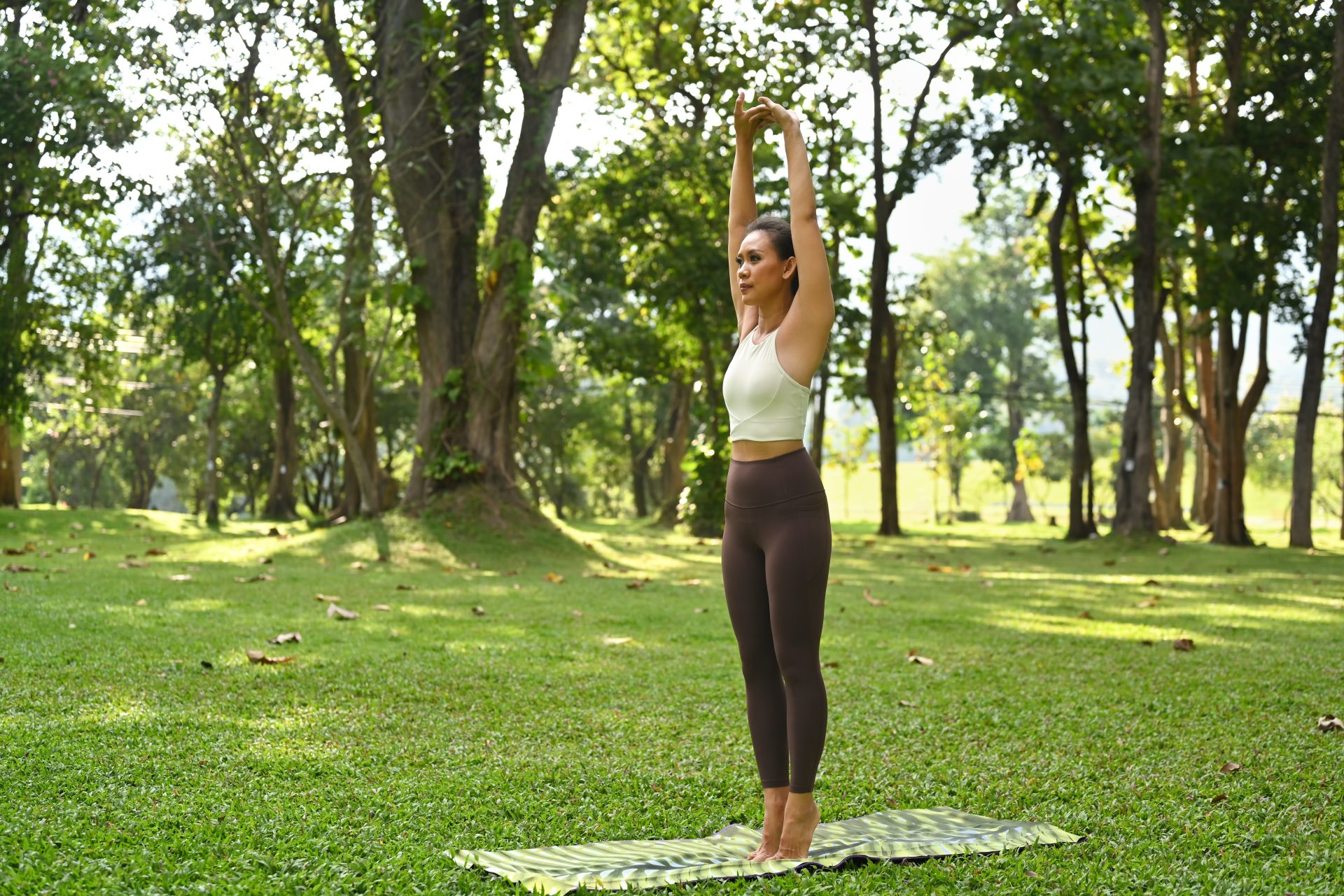
Dead Hang from Bar — Spinal Decompression — 3 × 30–60s daily Target: Intervertebral discs (L1–S1), shoulder girdle, grip. Why it works: Hanging from a bar allows gravity to traction the spine — decompressing each intervertebral disc and allowing fluid reabsorption that partially recovers disc height. Exercise to get taller that is most directly structural. Sets/duration: 3 × 30–60 seconds. Beginner modification: Feet lightly touching floor for partial body-weight dead hang initially. Tadasana (Mountain Pose) — Spinal Extension + Postural Height Recovery — Hold 2 minutes, 5×/day Target: Postural muscles, spinal extensors, cervical spine, thoracic kyphosis correction. Why it works: Perfect Tadasana — crown of head lifting, shoulders back, spine in optimal alignment — allows measurement of true standing height without postural compression. Daily Tadasana practice trains the postural muscles that maintain this alignment habitually. Stretches to get taller through posture: 5 minutes of Tadasana throughout the day produces measurable postural height improvement. Beginner modification: Back against wall as proprioceptive reference. Cobra Pose + Cat-Cow — Thoracic Extension + Disc Mobilisation — 3 × 10 breaths each Target: Thoracic vertebrae, intervertebral discs (all segments), erector spinae. Why it works: Cobra corrects the thoracic kyphosis that compresses height; Cat-Cow mobilises every vertebral segment, driving the fluid exchange that maintains disc height. The combination addresses both the postural and structural dimensions of adult height maintenance. All height increase exercise programmes should include both.
Expecting Height Increase After Growth Plates Close Marketing for height-increase exercises often implies structural height increase in adults. After the growth plates close (typically 18–21 for males, 16–18 for females), structural bone growth is not possible through exercise. Fix: Reframe the goal — 1–3cm of postural height recovery through improved posture and spinal decompression is the realistic and achievable adult outcome. This is significant and measurable, and the resulting posture carries additional confidence and health benefits. Only Hanging Without Postural Correction Hanging decompresses the spine but without the postural correction exercises to maintain the improved alignment, the compression returns immediately on resuming habitual posture. Fix: Combine hanging (decompression) with Tadasana and wall angle exercises (postural maintenance) in every height-increase session. The decompression benefit is only maintained if the postural correction is simultaneously developed. Sitting Immediately After Decompression Exercise Sitting immediately after hanging or inversion re-compresses the discs that were just decompressed — reversing the fluid reabsorption that height-increase exercises produce. Fix: 10 minutes of standing or gentle walking after every decompression exercise session allows the fluid reabsorbed during decompression to partially consolidate before compressive loading resumes. Optimise Your Height with Expert Daily Guidance — First 7 Days ₹1
Complete Beginners Starting from Zero
No prior experience with exercises for increasing height is required to start. Every movement is taught from its most foundational form, with modifications for those who cannot yet perform the standard version. Live instructor feedback prevents the form errors that cause beginners to plateau or get injured before results arrive.
Intermediate Trainees Who Have Hit a Plateau
If you have been exercising inconsistently or without structured progressive overload, exercises for increasing height delivers the systematic load progression that general fitness classes do not. The programme targets the specific weaknesses and imbalances holding you back, producing results that months of unstructured training have failed to achieve.
Older Adults and Those Prioritising Functional Fitness
Increasing Height training is especially high-value for those over 40, where maintaining functional strength and joint mobility directly impacts independence and quality of life. Every movement is taught with age-appropriate modifications, making the programme safe and effective regardless of starting fitness level.
Circulation-Specific Programming — Decompression + Posture Sequencing Habuild’s height sessions begin with Cat-Cow (spinal mobilisation and disc fluid exchange), progress through Cobra and Tadasana (thoracic extension and postural alignment), and close with dead hang (gravitational decompression) — the specific sequencing that addresses both the structural and postural dimensions of height optimisation.
Live Daily Sessions with Real-Time Corrections
Tadasana alignment precision and dead hang position require live observation to achieve the therapeutic effect. Saurabh provides the corrections that ensure every height exercise produces its intended benefit.
Progressive Overload Built In
Hang duration, postural hold times, and exercise progression are systematically increased — building the postural strength that makes tall, aligned standing permanent.
Accountability, Streaks and Community
Postural height improvement requires consistent daily practice over months. Habuild’s daily accountability makes this sustained practice achievable.


Practice Strong Everyday with Trishala Bothra, an IIT-B and London School of Business alumni
Trishala is focused on making movement feel lighter, more engaging, and something you actually look forward to.
In just 3 years, over 50,000 people began their strength journey, and 10,000+ join every week to keep getting stronger.