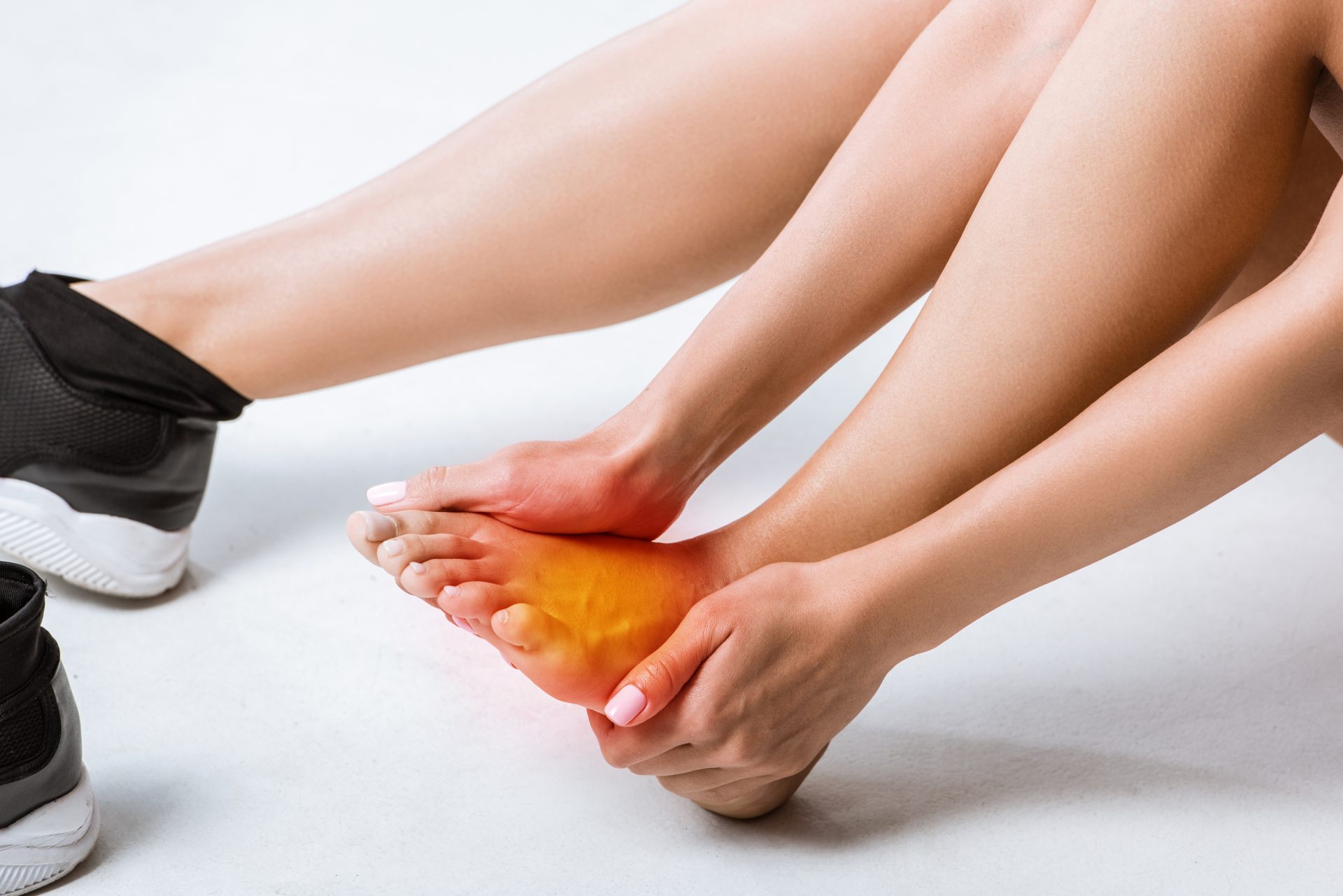
Exercises for foot pain target the intrinsic foot muscles (the small muscles within the foot itself), the extrinsic muscles of the lower leg that control foot movement, and the plantar fascia — the connective tissue band running along the sole of the foot. Most non-traumatic foot pain — including plantar fasciitis, metatarsalgia, heel pain, and flat foot discomfort — originates from a combination of intrinsic foot muscle weakness, restricted ankle dorsiflexion, and overloaded plantar fascia. Targeted foot arch exercises that build the small muscles of the sole and improve ankle mobility address all three of these contributing factors simultaneously. For those whose foot pain is associated with ankle stiffness, combining foot exercises with dedicated exercises for mobility produces the most complete lower limb rehabilitation approach. The longitudinal arch of the foot is maintained by both passive structures (the plantar fascia and ligaments) and active structures (the intrinsic foot muscles, particularly abductor hallucis and flexor digitorum brevis). When the intrinsic muscles are weak, the passive structures bear disproportionate load, leading to the microtearing and inflammation of plantar fasciitis. Foot arch exercises that activate the toe flexors and foot dome muscles redistribute load from the plantar fascia to the active muscular system, allowing the passive structures to recover. Pairing foot exercises with exercises for balance develops the ankle proprioception that foot pain rehabilitation requires — because single-leg stability demands and foot arch control operate as an integrated system in all walking and stair-climbing activities.
Start Your Free 14 Day Trial
Benefit 1: May Relieve Plantar Fasciitis and Heel Pain Through Arch Strengthening
Plantar fasciitis — the most common cause of heel and arch pain — may significantly improve with targeted intrinsic foot muscle strengthening and calf flexibility work. Research shows that patients who perform consistent foot arch exercises alongside calf stretching experience meaningful pain reductions within 4–8 weeks. Many practitioners report significant improvement in morning heel pain — the hallmark symptom of plantar fasciitis — with consistent toe flexor and foot dome exercises. Research shows consistent intrinsic foot muscle strengthening combined with calf stretching produces meaningful plantar fasciitis pain reductions within 4–8 weeks — the most evidence-supported non-injection intervention for heel pain currently available.
Benefit 2: Improves Foot Arch Support for Daily Walking and Standing
A strong, active foot arch absorbs ground impact forces more effectively than a collapsed or rigid arch, reducing the cumulative stress on the ankle, knee, and lower back with every step. Building intrinsic foot muscle strength through targeted foot arch exercises directly improves the dynamic arch support that the foot provides, reducing the fatigue and discomfort associated with prolonged standing on hard surfaces.
Benefit 3: Reduces Ankle Instability and Risk of Ankle Sprains
The intrinsic foot muscles and ankle stabilisers work together to maintain single-leg stability and respond to uneven ground. Building these muscles through foot strengthening exercises significantly reduces the risk of ankle sprain — the most common musculoskeletal injury in active adults. For those who have experienced recurrent ankle sprains, combining foot strengthening with dedicated balance and ankle proprioception training produces the complete stability rehabilitation that prevents reinjury. Ankle sprain recurrence rates exceed 70% in those who do not rehabilitate with targeted intrinsic foot muscle and proprioception training — making structured foot strengthening the single most important injury prevention investment for people with a history of ankle sprains.
Benefit 4: Supports Correct Lower Limb Alignment and Reduces Knee and Hip Pain
Excessive foot pronation (flat-footed collapse of the arch) creates a chain of compensatory malalignment through the lower limb — internal tibial rotation, knee valgus, and anterior pelvic tilt — that produces knee, hip, and lower back pain without any direct injury to these structures. Foot arch strengthening exercises that restore the active arch directly reduce this pronation-driven malalignment, frequently reducing knee and hip pain as a downstream effect.
Protein — The Foundation of Foot Pain Training
Aim for 1.6–2.0g of protein per kg of bodyweight per day. Best sources include eggs, paneer, lentils (dal), chicken, Greek yoghurt, and whey protein. Distribute protein evenly across 3–4 meals rather than loading it all in one sitting. Adequate protein is non-negotiable — without it, training effort produces minimal adaptation regardless of programme quality.
Carbohydrates — Fuel for Foot Pain Performance
Complex carbohydrates (oats, brown rice, sweet potato, whole wheat roti) should form 40–50% of total calories. Consume a carbohydrate-containing meal 60–90 minutes before your exercises for foot pain session to ensure glycogen availability. Post-session carbohydrates restore muscle glycogen within the critical 30-minute recovery window.
Anti-Inflammatory Foods for Recovery
Include turmeric (with black pepper for bioavailability), ginger, and omega-3 rich foods (flaxseeds, walnuts, fatty fish) daily. These directly reduce the systemic inflammation that accumulates with consistent training, speeding recovery between sessions.
Hydration — Often Underestimated
Aim for 35–40ml of water per kg of bodyweight daily. Add an additional 500ml for every 30 minutes of active training. Even mild dehydration (2% body weight) measurably reduces strength output and exercise capacity.
Before You Begin — Setting Your Baseline
Before beginning, assess your current fitness level honestly. Can you complete 10 bodyweight squats with good form? Can you hold a plank for 20 seconds? These are the practical baselines for this programme. Set a specific, measurable goal — not just ‘get stronger’ but ‘complete all sessions consistently for 8 weeks’. Identify what space and equipment you have available.
Week 1–2: Foundation and Form
Focus entirely on movement quality, not load or intensity. Every exercise should be performed through full range of motion with controlled tempo. Use this phase to build the motor patterns that make exercises for foot pain training safe and effective long-term. 3 sessions per week is the optimal starting frequency — enough stimulus for adaptation, enough recovery to avoid overuse.
Week 3–4: Building Progressive Load
Once form is consistent, introduce progressive overload by adding 1–2 reps per set or a small increase in resistance each week. Track your sessions in a simple log — date, exercises, sets, reps. This data tells you exactly when to progress and prevents both undertraining and overtraining.
Ongoing: Consistency Over Intensity
The single biggest determinant of foot pain results is session consistency over 8–12 weeks. Missing one session is inconsequential; missing two consecutive weeks disrupts adaptation. Habuild’s live daily sessions are specifically designed to remove the decision-making barrier — the session is always there, always structured.

Exercise 1: Towel Toe Scrunch — Intrinsic Foot Muscles, Toe Flexors, Plantar Fascia — 3 sets × 30 seconds each foot
Toe scrunching — gripping a towel with the toes and pulling it toward the heel — directly activates the intrinsic foot muscles that form the active arch. This exercise is the most targeted intervention for the muscle weakness that underlies most plantar fasciitis and flat foot pain, training the toe flexors and foot dome muscles in a controlled, seated position that places no stress on the heel or ankle. Beginner modification: Perform barefoot on any flat surface. Reduce duration if toe cramping occurs. Progress by using a thicker or heavier towel as strength develops.
Exercise 2: Calf Raise with Toe Grip — Gastrocnemius, Soleus, Intrinsic Foot Muscles — 3 sets × 15–20 reps
Standing calf raises with the toes actively gripping the floor trains both the calf muscles that control ankle plantar flexion and the intrinsic foot muscles simultaneously. The toe-gripping cue activates the foot dome muscles that support the longitudinal arch during the raised position, teaching the correct arch activation pattern used in all walking and running push-off movements. Beginner modification: Hold a wall for balance. Perform on flat ground before progressing to a step edge. Reduce height of the rise if heel or arch discomfort occurs.
Exercise 3: Single-Leg Balance Reach — Ankle Stabilisers, Foot Intrinsics, Hip Stabilisers — 3 sets × 10 reaches each leg
Standing on one leg while reaching the free leg forward, sideways, and behind challenges the intrinsic foot muscles and ankle stabilisers through the dynamic balance demands of single-leg loading. This exercise replicates the neuromuscular demands of walking and stair climbing, building the active foot arch control and ankle stability that static exercises alone cannot develop. Beginner modification: Hold a wall lightly for safety. Reduce the reach distance to maintain single-leg balance. Perform with eyes open until balance is reliable.
Mistake 1: Continuing High-Impact Exercise Through Acute Foot Pain
Running, jumping, and prolonged walking on an acutely inflamed plantar fascia or metatarsal region perpetuates the tissue stress that drives inflammation. During pain flares, switching to seated foot exercises, calf stretching, and upper body training allows the foot to recover while maintaining fitness. Correction: Rest from impact activities for 48–72 hours during acute pain flares. Continue gentle non-impact foot exercises (seated toe scrunches, calf stretches) to maintain progress without loading the inflamed tissue.
Mistake 2: Stretching Only and Neglecting Strengthening
Most people with foot pain default to stretching — calf stretches and plantar fascia rolls — without the strengthening work that actually addresses the underlying muscle weakness. Stretching increases passive tissue length but does not build the active muscular support that prevents the repetitive overloading of the fascia. Correction: Balance every calf or plantar fascia stretch with one strengthening exercise. The combination produces faster and more lasting pain relief than stretching alone.
Mistake 3: Wearing Shoes with Excessive Support That Prevents Foot Muscle Development
Highly cushioned and motion-control footwear provides passive arch support that reduces the need for intrinsic foot muscle activation. While this support is valuable during recovery, long-term reliance on it prevents the foot muscles from developing the strength to support the arch actively. Correction: Spend short periods daily on flat, firm surfaces in minimal footwear to allow intrinsic foot muscle activation. Gradually increase barefoot time on safe, flat surfaces as foot strength develops.
Complete Beginners Starting from Zero
No prior experience with exercises for foot pain is required to start. Every movement is taught from its most foundational form, with modifications for those who cannot yet perform the standard version. Live instructor feedback prevents the form errors that cause beginners to plateau or get injured before results arrive.
Intermediate Trainees Who Have Hit a Plateau
If you have been exercising inconsistently or without structured progressive overload, exercises for foot pain delivers the systematic load progression that general fitness classes do not. The programme targets the specific weaknesses and imbalances holding you back, producing results that months of unstructured training have failed to achieve.
People Recovering from Foot Pain Issues
Those who are actively managing foot pain discomfort benefit most from guided, structured movement — unguided exercise risks aggravating the condition. Habuild’s live instructor supervision ensures every session stays within a safe, therapeutic range, making consistent rehabilitation possible at home.
Foot-Specific Programming — Not a Generic Fitness Class Habuild’s foot pain sessions sequence intrinsic muscle activation (toe scrunches, short-foot exercises) before ankle mobility and single-leg balance work. This ordering ensures the small muscles of the foot are pre-activated before the proprioceptive and balance demands of single-leg exercises are applied, producing better foot muscle recruitment quality throughout the session and faster pain reduction outcomes.
Live Daily Sessions with Real-Time Form Correction
Every Habuild session is live — not pre-recorded. Instructors watch your form in real time and correct the specific errors — passive toe position, collapsing arch during calf raises, and gripping with the wrong muscles — that limit foot pain recovery and allow the underlying weakness to persist.
Progressive Overload Built into Every Session
Members do not need to design their own progression. Movement complexity, duration, and training load are built in week by week — every session is a measured step forward rather than a repetition of the previous routine.
Accountability, Streaks and Community
Streak tracking, a WhatsApp community, and live daily sessions create the accountability structure that keeps members consistent long enough to see measurable results. Most foot pain adaptations require 6–12 weeks of sustained effort — the Habuild community structure ensures members complete the full rehabilitation cycle.


Practice Strong Everyday with Trishala Bothra, an IIT-B and London School of Business alumni
Trishala is focused on making movement feel lighter, more engaging, and something you actually look forward to.
In just 3 years, over 50,000 people began their strength journey, and 10,000+ join every week to keep getting stronger.