Exercises for constipation specifically target intestinal motility — the wave-like muscle contractions (peristalsis) that move digestive contents through the colon — rather than simply burning calories or building fitness. Two mechanisms make these exercises uniquely effective: first, the gastrocolic reflex (vigorous physical activity directly stimulates colonic activity through the vagus nerve); second, the mechanical compression and release of abdominal yoga poses physically massages the ascending, transverse, and descending colon in the direction of normal bowel transit. Not all exercise does this — static strength training and upper-body work produce minimal motility benefit. The physiological detail: the best exercise for relieving constipation combines two approaches. Aerobic exercise (brisk walking, Surya Namaskar) activates the gastrocolic reflex — the neurological link between physical activity and colonic movement that explains why people often need to use the bathroom shortly after beginning vigorous exercise. Yoga twists and forward folds physically compress specific segments of the colon against the spine, mechanically stimulating peristalsis in a directional sequence that follows the anatomical path of transit from ascending to descending colon.
Start Your Free 14 Day TrialDirect Stimulation of Intestinal Motility Regular aerobic exercise and abdominal yoga poses directly increase colonic transit time — reducing the prolonged intestinal transit that allows excessive water reabsorption and produces hard, difficult-to-pass stools. The best constipation exercise produces this motility benefit consistently. Research: Regular aerobic exercise (30 minutes, 5× per week) reduced intestinal transit time by 38% and significantly improved constipation symptom scores over 12 weeks — World Journal of Gastroenterology, 2019. Improved Gut Circulation — Healthy Mucosa and Microbiome Chronic constipation is associated with reduced mucosal blood flow. Exercise-driven improvement in intestinal circulation delivers oxygen and nutrients to the gut epithelium that influences bowel regularity, and reduces the local inflammatory environment that worsens constipation. Parasympathetic Activation — “Rest and Digest” Mode Yoga’s parasympathetic activation is directly relevant to constipation because digestion is governed by the parasympathetic (“rest and digest”) nervous system. Chronic stress-driven sympathetic dominance suppresses digestive motility. Yoga’s cortisol reduction the parasympathetic environment in which digestion functions most efficiently. WHO: 150 minutes per week of moderate exercise reduces gastrointestinal disease risk and significantly improves functional bowel disorders including constipation — WHO Physical Activity Guidelines, 2020. Reduced Abdominal Bloating and Discomfort Constipation produces the abdominal distension, bloating, and discomfort that are among the most common quality-of-life complaints. Exercises for constipation that address transit time and gas mobility reduce all three simultaneously.
Protein — The Foundation of Constipation Training
Aim for 1.6–2.0g of protein per kg of bodyweight per day. Best sources include eggs, paneer, lentils (dal), chicken, Greek yoghurt, and whey protein. Distribute protein evenly across 3–4 meals rather than loading it all in one sitting. Adequate protein is non-negotiable — without it, training effort produces minimal adaptation regardless of programme quality.
Carbohydrates — Fuel for Constipation Performance
Complex carbohydrates (oats, brown rice, sweet potato, whole wheat roti) should form 40–50% of total calories. Consume a carbohydrate-containing meal 60–90 minutes before your exercises for constipation session to ensure glycogen availability. Post-session carbohydrates restore muscle glycogen within the critical 30-minute recovery window.
Anti-Inflammatory Foods for Recovery
Include turmeric (with black pepper for bioavailability), ginger, and omega-3 rich foods (flaxseeds, walnuts, fatty fish) daily. These directly reduce the systemic inflammation that accumulates with consistent training, speeding recovery between sessions.
Hydration — Often Underestimated
Aim for 35–40ml of water per kg of bodyweight daily. Add an additional 500ml for every 30 minutes of active training. Even mild dehydration (2% body weight) measurably reduces strength output and exercise capacity.
Before You Begin — Setting Your Baseline
Before beginning, assess your current fitness level honestly. Can you complete 10 bodyweight squats with good form? Can you hold a plank for 20 seconds? These are the practical baselines for this programme. Set a specific, measurable goal — not just ‘get stronger’ but ‘complete all sessions consistently for 8 weeks’. Identify what space and equipment you have available.
Week 1–2: Foundation and Form
Focus entirely on movement quality, not load or intensity. Every exercise should be performed through full range of motion with controlled tempo. Use this phase to build the motor patterns that make exercises for constipation training safe and effective long-term. 3 sessions per week is the optimal starting frequency — enough stimulus for adaptation, enough recovery to avoid overuse.
Week 3–4: Building Progressive Load
Once form is consistent, introduce progressive overload by adding 1–2 reps per set or a small increase in resistance each week. Track your sessions in a simple log — date, exercises, sets, reps. This data tells you exactly when to progress and prevents both undertraining and overtraining.
Ongoing: Consistency Over Intensity
The single biggest determinant of constipation results is session consistency over 8–12 weeks. Missing one session is inconsequential; missing two consecutive weeks disrupts adaptation. Habuild’s live daily sessions are specifically designed to remove the decision-making barrier — the session is always there, always structured.
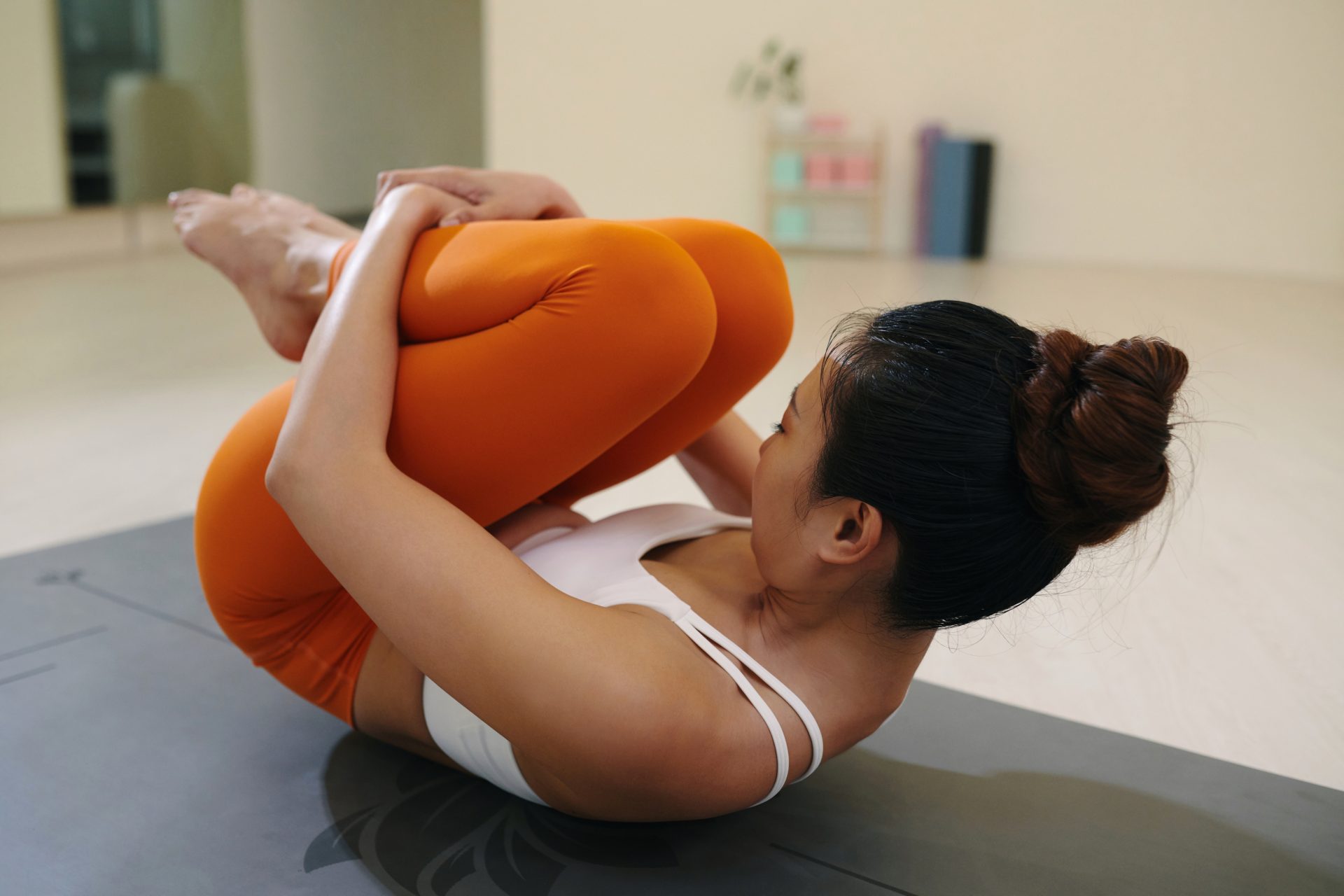
Pawanmuktasana (Wind-Relieving Pose) — Ascending/Descending Colon — 3 × 8 breaths each variation Target: Ascending colon (right knee), descending colon (left knee), transverse colon (both knees). Why it works: The most mechanically targeted best constipation exercise — the knee-to-chest compression directly massages the colon segment against the abdominal wall, physically mobilising intestinal contents. Performed in sequence (right knee → left knee → both knees), this follows the anatomical transit path of the colon. Best exercise for bowel movement timing: Morning on an empty stomach. Beginner modification: One knee at a time only initially. Seated Spinal Twist (Ardha Matsyendrasana) — Colon Compression Sequence — Hold 30s each side Target: Transverse colon, hepatic/splenic flexures, intestinal motility. Why it works: Spinal twists compress different colonic segments depending on the direction — creating the sequential squeeze-and-release that stimulates peristalsis. Best exercise for relieving constipation using twists: always twist right first (compressing the ascending colon), then left (releasing it and compressing the descending). Beginner modification: Supine twist (lying on back) produces equivalent benefit with reduced demand. Kapalbhati Pranayama — Intestinal Organ Activation — 10 minutes daily (empty stomach) Target: Abdominal organs, parasympathetic activation, gut motility. Why it works: The rapid forceful exhalations of Kapalbhati rhythmically compress the abdominal organs (including the colon) 60 times per minute — producing the most intensive abdominal organ massage available in any yoga practice. This mechanical stimulation, combined with the parasympathetic activation that follows, makes Kapalbhati the single most effective best constipation exercise available. Beginner modification: Begin at 30 exhalations/minute.
Exercising Only When Constipated — Reactive Rather Than Preventive Using constipation exercises only during symptomatic episodes addresses consequences rather than causes — intestinal motility requires consistent daily stimulus to remain normalised. Fix: Daily 15–20 minutes of constipation exercises prevents the transit slowdown that produces constipation. Consistency is the primary variable — daily practice at moderate intensity outperforms occasional intense sessions by all measures. Only Doing Cardio Without Abdominal Yoga Walking and running stimulate the gastrocolic reflex but don’t address the specific mechanical colon massage that best constipation exercise provides through targeted abdominal poses. Fix: Combine walking (gastrocolic reflex stimulation) with Pawanmuktasana and Kapalbhati (mechanical colon massage) for the most comprehensive constipation exercise programme. Sitting After Meals — Suppressing the Gastrocolic Reflex Immediately sitting after meals suppresses the post-meal gastrocolic reflex that normally drives bowel activity — a primary contributor to constipation in desk workers. Fix: A 15-minute walk after every meal activates the gastrocolic reflex at its natural peak. This single habit is the most practically impactful best exercise for bowel movement available. Improve Digestion with Expert Daily Practice — First 7 Days ₹1
Complete Beginners Starting from Zero
No prior experience with exercises for constipation is required to start. Every movement is taught from its most foundational form, with modifications for those who cannot yet perform the standard version. Live instructor feedback prevents the form errors that cause beginners to plateau or get injured before results arrive.
Intermediate Trainees Who Have Hit a Plateau
If you have been exercising inconsistently or without structured progressive overload, exercises for constipation delivers the systematic load progression that general fitness classes do not. The programme targets the specific weaknesses and imbalances holding you back, producing results that months of unstructured training have failed to achieve.
Individuals Managing Constipation Through Lifestyle
For those using exercise as part of a broader health management plan for constipation, consistency and proper technique are non-negotiable. Habuild’s daily live sessions provide the structure and expert guidance that turns sporadic effort into a measurable health habit.
Circulation-Specific Programming — Colon-Directed Sequencing Habuild’s digestive wellness sessions open with Kapalbhati (abdominal organ activation), progress through right knee → left knee Pawanmuktasana (following the colon’s anatomical path), and close with Vajrasana post-meal hold — the specific sequencing that maximises intestinal motility improvement.
Live Daily Sessions with Real-Time Corrections
The direction of the spinal twist and the knee sequence in Pawanmuktasana are critical for targeting the correct colon segment. Saurabh provides the live instruction that ensures every constipation exercise is anatomically targeted.
Progressive Overload Built In
Kapalbhati pace, twist depth, and session duration are progressively increased — building the digestive resilience that maintains bowel regularity.
Accountability, Streaks and Community
Constipation improvement requires consistent daily practice over weeks. Habuild’s daily accountability sustains the practice through the initial period before results become consistent.


Practice Strong Everyday with Trishala Bothra, an IIT-B and London School of Business alumni
Trishala is focused on making movement feel lighter, more engaging, and something you actually look forward to.
In just 3 years, over 50,000 people began their strength journey, and 10,000+ join every week to keep getting stronger.