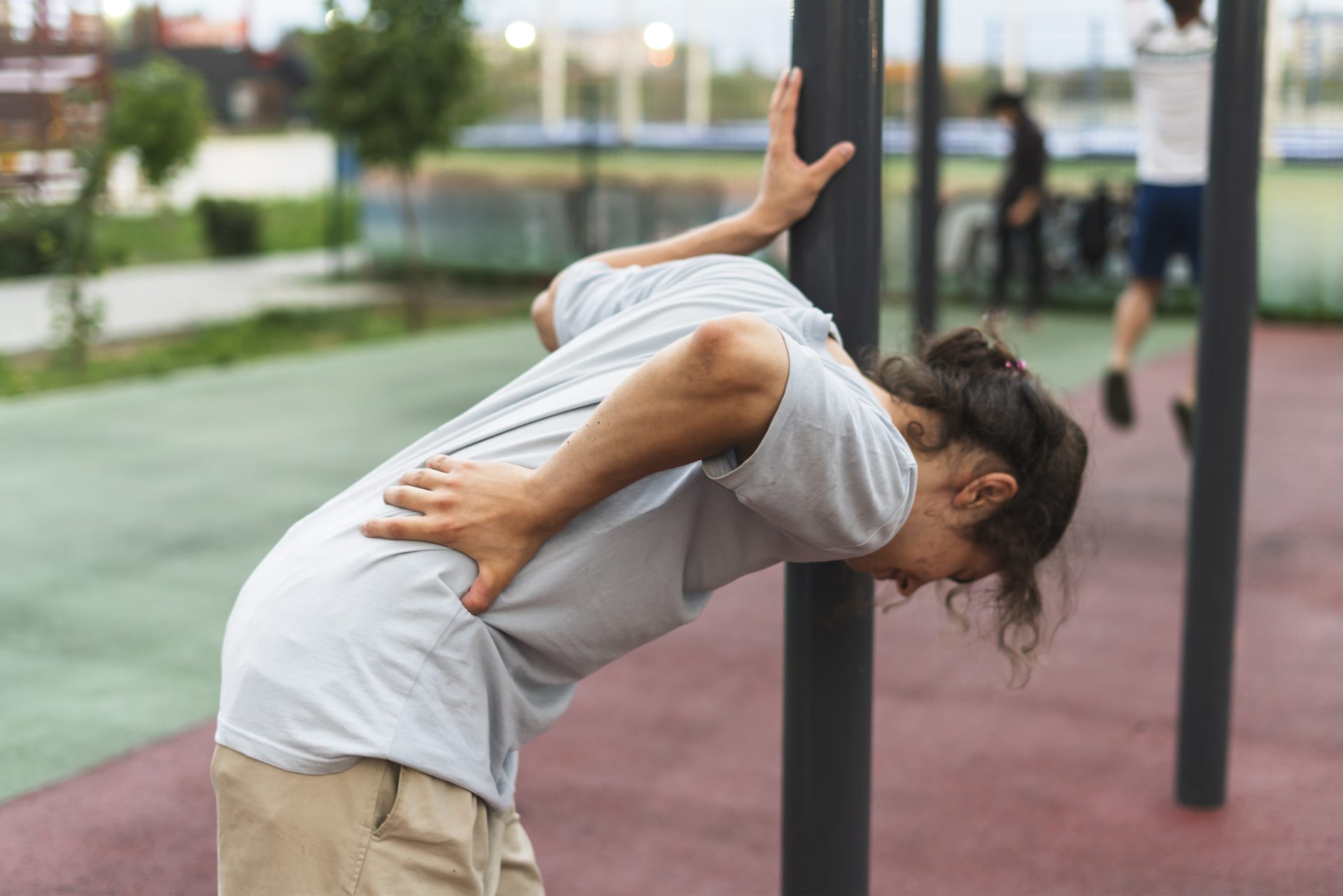
Lower backache — a dull, persistent aching in the lumbar region that worsens with prolonged sitting, standing, or bending — is the most prevalent musculoskeletal complaint globally, affecting 70–80% of adults at some point in their working lives. The primary functional causes are sedentary lifestyle (weakened core and gluteals, shortened hip flexors), poor ergonomics (sustained lumbar flexion loading), and stress-driven muscular tension in the paraspinal muscles. Exercise for lower backache addresses these functional causes through a combination of flexibility (releasing tight structures), strength (building supporting muscles), and movement quality (correcting the postural patterns that perpetuate daily loading). The best stretches for lower back pain work by lengthening the shortened structures that pull the lumbar spine into uncomfortable positions: tight hip flexors that increase anterior pelvic tilt, tight piriformis that refers pain into the lumbar region, and tight paraspinal muscles that restrict lumbar extension and increase disc loading. Stretches to relieve back pain combined with progressive core strengthening produce the most comprehensive resolution of chronic lower backache. At Habuild, exercise for lower backache is delivered within our yoga for back pain programme with real-time instruction for safe and effective lumbar pain management.
Start Your Free 14 Day Trial
Provides Rapid Relief Through Targeted Stretching
Best stretches for lower back pain produce immediate relief by releasing the muscular tension and joint restriction that generate most lumbar aching. Supine spinal twists release the paraspinal and quadratus lumborum; pigeon pose releases the piriformis; knee-to-chest stretches decompress the lumbar segments. Most practitioners report significant pain reduction within 10–15 minutes of a complete lower backache stretching session.
Corrects Hip Flexor Tightness — The Primary Postural Driver
Tight hip flexors from prolonged sitting rotate the pelvis anteriorly, increasing lumbar lordosis and compressing the lumbar facet joints and posterior disc spaces throughout the day. This sustained postural loading is the primary driver of chronic lower backache in working adults. Hip flexor stretches — low lunge (Ashwa Sanchalanasana), standing quad stretch — directly correct this tilt, reducing the postural loading that perpetuates lumbar aching. Combine with dedicated yoga for lower back pain for a comprehensive hip and lumbar flexibility programme.
Builds Gluteal Strength to Unload the Lumbar Spine
Weak gluteals force the lumbar erector spinae to compensate as hip extensors during daily activities — overloading the paraspinal muscles and producing the fatigue-driven aching that characterises chronic lower backache. Glute-strengthening exercises (glute bridges, Setu Bandhasana) directly unload the lumbar spine by restoring the gluteals to their primary role as hip extensors, significantly reducing the paraspinal overuse that drives chronic lower back soreness.
Reduces Chronic Pain Through Daily Movement Habit
Chronic lower backache worsens with inactivity — reduced circulation to the lumbar discs, stiffening of the facet joints, and progressive muscular deconditioning all accelerate with sedentary behaviour. Consistent daily exercise for lower backache — even 10–15 minutes of targeted stretching and core activation — measurably reduces chronic pain frequency and intensity over 6–8 weeks through cumulative movement, circulation, and conditioning improvements.
Protein — The Foundation of Lower Backache Training
Aim for 1.6–2.0g of protein per kg of bodyweight per day. Best sources include eggs, paneer, lentils (dal), chicken, Greek yoghurt, and whey protein. Distribute protein evenly across 3–4 meals rather than loading it all in one sitting. Adequate protein is non-negotiable — without it, training effort produces minimal adaptation regardless of programme quality.
Carbohydrates — Fuel for Lower Backache Performance
Complex carbohydrates (oats, brown rice, sweet potato, whole wheat roti) should form 40–50% of total calories. Consume a carbohydrate-containing meal 60–90 minutes before your exercise for lower backache session to ensure glycogen availability. Post-session carbohydrates restore muscle glycogen within the critical 30-minute recovery window.
Anti-Inflammatory Foods for Recovery
Include turmeric (with black pepper for bioavailability), ginger, and omega-3 rich foods (flaxseeds, walnuts, fatty fish) daily. These directly reduce the systemic inflammation that accumulates with consistent training, speeding recovery between sessions.
Hydration — Often Underestimated
Aim for 35–40ml of water per kg of bodyweight daily. Add an additional 500ml for every 30 minutes of active training. Even mild dehydration (2% body weight) measurably reduces strength output and exercise capacity.
Before You Begin — Setting Your Baseline
Before beginning, assess your current fitness level honestly. Can you complete 10 bodyweight squats with good form? Can you hold a plank for 20 seconds? These are the practical baselines for this programme. Set a specific, measurable goal — not just ‘get stronger’ but ‘complete all sessions consistently for 8 weeks’. Identify what space and equipment you have available.
Week 1–2: Foundation and Form
Focus entirely on movement quality, not load or intensity. Every exercise should be performed through full range of motion with controlled tempo. Use this phase to build the motor patterns that make exercise for lower backache training safe and effective long-term. 3 sessions per week is the optimal starting frequency — enough stimulus for adaptation, enough recovery to avoid overuse.
Week 3–4: Building Progressive Load
Once form is consistent, introduce progressive overload by adding 1–2 reps per set or a small increase in resistance each week. Track your sessions in a simple log — date, exercises, sets, reps. This data tells you exactly when to progress and prevents both undertraining and overtraining.
Ongoing: Consistency Over Intensity
The single biggest determinant of lower backache results is session consistency over 8–12 weeks. Missing one session is inconsequential; missing two consecutive weeks disrupts adaptation. Habuild’s live daily sessions are specifically designed to remove the decision-making barrier — the session is always there, always structured.

Supine Spinal Twist — Paraspinal Release — 60 Secs Each Side
The supine spinal twist — lying on the back, drawing one knee to the chest and rotating it across the body while the opposite arm extends — is one of the most effective stretches to relieve back pain because it simultaneously releases the paraspinal muscles, quadratus lumborum, and piriformis on the rotated side. Hold for 60 seconds per side with slow breathing. Ensure the shoulders remain grounded — the stretch comes from gentle spinal rotation, not shoulder lift. This is the most accessible single stretch for acute lower backache relief.
Low Lunge — Hip Flexor Release — 60 Secs Each Side
The low lunge — one knee on the floor, the opposite foot forward, the pelvis dropped toward the floor — provides the deepest hip flexor stretch of any floor-based position. Held for 60 seconds per side, it produces measurable lengthening of the iliopsoas and rectus femoris that reduces the anterior pelvic tilt driving most chronic lower backache. This is the best single stretch for lower back pain caused by prolonged sitting. Modification: Place a folded blanket under the rear knee for cushioning; hold a wall for balance.
Setu Bandhasana — Glute and Core Activation — 3 Sets × 15 Reps
Setu Bandhasana — lying supine, feet flat, lifting the hips toward the ceiling — simultaneously strengthens the gluteus maximus (primary lumbar unloader), hamstrings, and lower erector spinae while stretching the anterior hip and hip flexors. 3 sets of 15 reps with a 2-second hold at the top. This exercise is uniquely effective as an exercise for lower backache because it strengthens the muscles that must be strong (glutes, core) while stretching the muscles that must lengthen (hip flexors) in a single movement. Pair with yoga for cervical spondylosis for a complete spinal health programme addressing both lumbar and cervical regions.
Stretching only without strengthening — Stretches to relieve back pain provide immediate symptom relief but do not address the core and gluteal weakness that allows the postural loading causing chronic lower backache to recur. A complete exercise for lower backache programme must include strengthening — particularly glute bridges and bird dog — alongside the flexibility work that provides relief. Using standing toe-touch as a lower back stretch — Standing forward bending (toe-touch) without bent knees places significant lumbar flexion load on the discs and posterior ligaments — particularly problematic for disc herniation causes of lower backache. Prefer supine spinal twists and supported forward folds (Uttanasana with bent knees) that produce the same paraspinal stretch without the disc loading. Treating exercise as a substitute for medical assessment — Persistent lower backache that has not improved with 2–3 weeks of consistent exercise, backache associated with leg pain or numbness, or pain that wakes from sleep requires medical assessment. Exercise for lower backache is appropriate as a complementary self-care practice — it should not substitute for diagnosis of conditions requiring specific medical or physiotherapy management.
Complete Beginners Starting from Zero
No prior experience with exercise for lower backache is required to start. Every movement is taught from its most foundational form, with modifications for those who cannot yet perform the standard version. Live instructor feedback prevents the form errors that cause beginners to plateau or get injured before results arrive.
Intermediate Trainees Who Have Hit a Plateau
If you have been exercising inconsistently or without structured progressive overload, exercise for lower backache delivers the systematic load progression that general fitness classes do not. The programme targets the specific weaknesses and imbalances holding you back, producing results that months of unstructured training have failed to achieve.
People Recovering from Lower Backache Issues
Those who are actively managing lower backache discomfort benefit most from guided, structured movement — unguided exercise risks aggravating the condition. Habuild’s live instructor supervision ensures every session stays within a safe, therapeutic range, making consistent rehabilitation possible at home.
Lower Backache-Specific Programming
Habuild’s lower backache sessions open with lumbar decompression (supine twists and knee-to-chest), progress through hip flexor stretching (low lunge, Ashwa Sanchalanasana), include glute and core strengthening (Setu Bandhasana, bird dog), and close with parasympathetic breathing (Bhramari, Savasana). This sequencing — relieve then strengthen then calm — is the most effective order for chronic backache management.
Live Daily Sessions with Real-Time Corrections
Lower backache exercise errors — toe-touch without bent knees, insufficient hip flexor stretch depth, lumbar rounding in bridges — reduce therapeutic benefit and risk aggravation. Habuild’s live sessions provide real-time corrections for safe stretch depth and correct lumbar positioning, ensuring every session relieves rather than loads the painful structures.
Progressive Backache Resolution Programme
Habuild progresses lower backache exercise from gentle decompression and passive stretching to active core stabilisation, then to progressive gluteal strengthening and dynamic lumbar mobility. This graduated approach ensures the painful structures are adequately settled before load is introduced, producing steady resolution rather than cycles of aggravation and rest.
Daily Morning Backache Prevention Routine
Lower backache is most severe after prolonged overnight lumbar loading — making a structured morning movement routine the highest-yield intervention for daily symptom management. Habuild’s daily live morning sessions create the consistent 10–15 minute morning decompression and activation habit that prevents the cumulative daily loading that produces afternoon and evening backache.


Practice Strong Everyday with Trishala Bothra, an IIT-B and London School of Business alumni
Trishala is focused on making movement feel lighter, more engaging, and something you actually look forward to.
In just 3 years, over 50,000 people began their strength journey, and 10,000+ join every week to keep getting stronger.