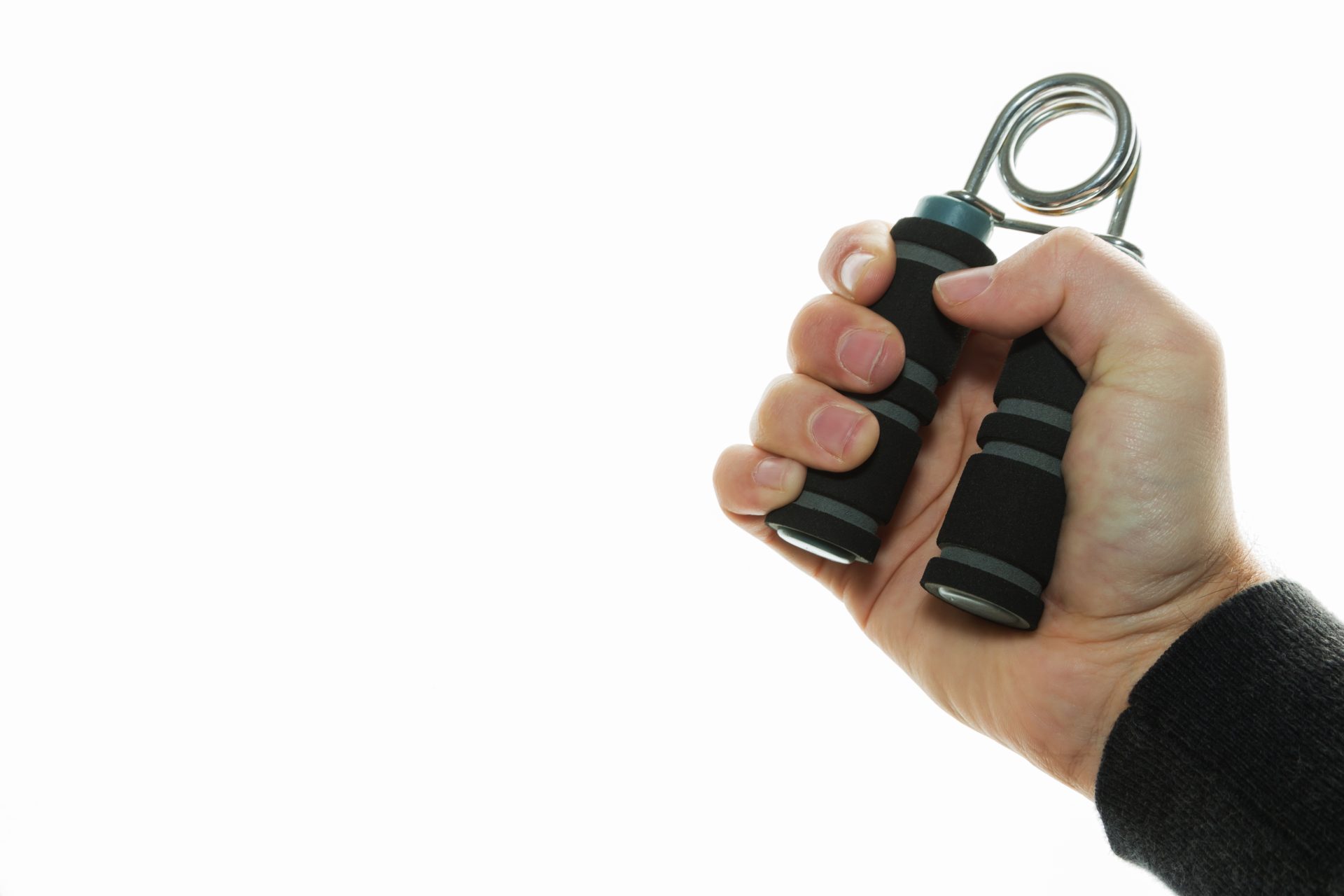
Exercise for hand strength specifically targets the three functional components of hand performance: crush grip (the maximum closing force of the hand), pinch strength (thumb-to-finger opposition force), and wrist stability (the isometric holding capacity of the wrist extensors and flexors that supports all loaded hand positions). Unlike general arm exercises that engage the forearm only secondarily, hand strengthening exercises directly and specifically load these structures — producing the adaptation that transfers to every gripping and manipulative activity in daily life and sport. The circulatory mechanism: the hand is supplied by the radial and ulnar arteries and their palmar arch anastomoses — a rich vascular network that supplies the high-metabolic-demand intrinsic hand muscles. Hand strength exercises at home that progress from low to high load improve this palmar vascular network through the same mechanisms as all resistance training: increased capillary density in the trained muscles, improved arterial compliance in the feeding vessels, and enhanced post-exercise blood flow that supports hand tissue recovery. Improved hand circulation also reduces the cold hands and tingling that characterise poor peripheral hand circulation — making hand strengthening exercises specifically valuable for those with Raynaud’s syndrome or peripheral circulation impairment.
Start Your Free 14 Day TrialGrip Strength — The Most Evidence-Supported Health Longevity Marker Grip strength measured by dynamometer is the single physical measure most strongly correlated with all-cause mortality, cardiovascular disease risk, and functional independence in aging — stronger grip predicts longer, healthier life more reliably than many clinical biomarkers. Hand strengthening is therefore not merely a performance goal but a direct health intervention. Research: Grip strength is a powerful predictor of all-cause mortality — each 5kg decrease in grip strength was associated with 17% higher all-cause mortality and 17% higher cardiovascular mortality — The Lancet, 2015 (139,691 participants). Improved Hand Circulation — Reduced Cold Hands and Tingling Regular hand strength exercises at home improve the peripheral vascular supply to the hands — increasing capillary density in the intrinsic hand muscles and improving arterial compliance in the distal hand vessels. This improved circulation directly reduces the cold hands and tingling of poor peripheral circulation. Wrist Injury Prevention — Tendon and Ligament Strengthening Hand strengthening exercises specifically load the wrist tendons, ligaments, and joint capsules — producing the collagen synthesis and structural strengthening that prevents the wrist sprains, carpal tunnel development, and de Quervain’s tenosynovitis that develop from weakly supported hand overuse. WHO: Regular strength training including hand and wrist-specific work reduces musculoskeletal injury risk by 65% and significantly improves functional capacity across all age groups. Improved Performance in All Pulling and Carrying Activities Pull-ups, deadlifts, rowing, racquet sports, martial arts — all activities requiring sustained gripping or pulling are directly limited by hand strength before larger muscle groups fatigue. Hand strength exercises at home remove this limiting factor, immediately improving performance across all grip-dependent activities.
Protein — The Foundation of Hand Strength Training
Aim for 1.6–2.0g of protein per kg of bodyweight per day. Best sources include eggs, paneer, lentils (dal), chicken, Greek yoghurt, and whey protein. Distribute protein evenly across 3–4 meals rather than loading it all in one sitting. Adequate protein is non-negotiable — without it, training effort produces minimal adaptation regardless of programme quality.
Carbohydrates — Fuel for Hand Strength Performance
Complex carbohydrates (oats, brown rice, sweet potato, whole wheat roti) should form 40–50% of total calories. Consume a carbohydrate-containing meal 60–90 minutes before your exercise for hand strength session to ensure glycogen availability. Post-session carbohydrates restore muscle glycogen within the critical 30-minute recovery window.
Anti-Inflammatory Foods for Recovery
Include turmeric (with black pepper for bioavailability), ginger, and omega-3 rich foods (flaxseeds, walnuts, fatty fish) daily. These directly reduce the systemic inflammation that accumulates with consistent training, speeding recovery between sessions.
Hydration — Often Underestimated
Aim for 35–40ml of water per kg of bodyweight daily. Add an additional 500ml for every 30 minutes of active training. Even mild dehydration (2% body weight) measurably reduces strength output and exercise capacity.
Before You Begin — Setting Your Baseline
Before beginning, assess your current fitness level honestly. Can you complete 10 bodyweight squats with good form? Can you hold a plank for 20 seconds? These are the practical baselines for this programme. Set a specific, measurable goal — not just ‘get stronger’ but ‘complete all sessions consistently for 8 weeks’. Identify what space and equipment you have available.
Week 1–2: Foundation and Form
Focus entirely on movement quality, not load or intensity. Every exercise should be performed through full range of motion with controlled tempo. Use this phase to build the motor patterns that make exercise for hand strength training safe and effective long-term. 3 sessions per week is the optimal starting frequency — enough stimulus for adaptation, enough recovery to avoid overuse.
Week 3–4: Building Progressive Load
Once form is consistent, introduce progressive overload by adding 1–2 reps per set or a small increase in resistance each week. Track your sessions in a simple log — date, exercises, sets, reps. This data tells you exactly when to progress and prevents both undertraining and overtraining.
Ongoing: Consistency Over Intensity
The single biggest determinant of hand strength results is session consistency over 8–12 weeks. Missing one session is inconsequential; missing two consecutive weeks disrupts adaptation. Habuild’s live daily sessions are specifically designed to remove the decision-making barrier — the session is always there, always structured.
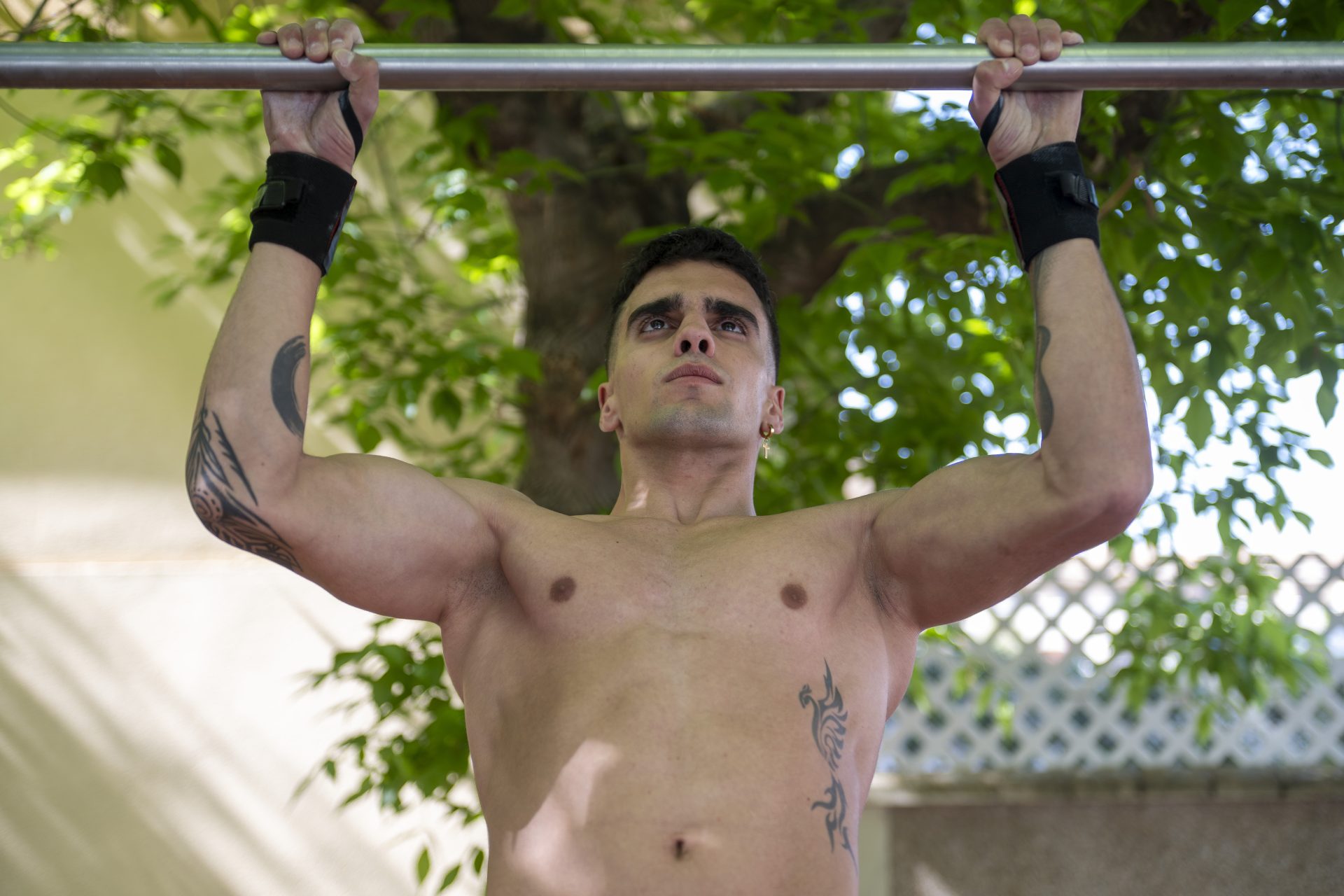
Dead Hang — Maximum Grip Endurance + Forearm Flexors — 3 × 20–60s Target: Finger flexors, palmaris longus, forearm flexor mass, grip endurance. Why it works: The dead hang is the most effective single exercise for hand strength at home — producing maximum isometric grip activation throughout the hold while simultaneously improving hand circulation through the sustained muscular demand. Hand strength exercises at home progression: two-handed → one-arm assisted → loaded vest. Beginner modification: Toes lightly touching the floor for partial body-weight hang; increase to full hang as grip capacity develops. Towel Wringing + Squeeze — Intrinsic Hand Muscles + Circulation — 3 × 10 reps each direction Target: Intrinsic hand muscles (lumbricals, interossei), thenar eminence. Why it works: Towel wringing activates the intrinsic hand muscles that are the most functionally important and most neglected in conventional grip training. The wringing motion simultaneously develops both wrist flexion and extension strength in the pattern used in all daily manipulation tasks. Hand strengthening bonus: The squeezing motion directly improves hand circulation through the pumping mechanism of repeated muscle contraction. Beginner modification: Dry towel; wet towel for additional resistance. Wrist Curls + Reverse Wrist Curls — Complete Wrist Strength — 3 × 15–20 each direction Target: Wrist flexors (palm side), wrist extensors (back of forearm), radial muscles. Why it works: Balanced wrist flexion and extension training is the foundation of hand strengthening that prevents the imbalance-driven overuse injuries (tennis elbow, carpal tunnel) that develop from grip-only training without extension work. Seated, forearms on thighs, wrists over knees — curl up, lower slow (wrist curls), then reverse (reverse wrist curls). Beginner modification: Light resistance band instead of dumbbells initially.
Only Training Grip (Flexion) — Missing Extension Training only the grip and ignoring wrist extension produces the chronic flexor dominance that causes lateral epicondylitis and carpal tunnel syndrome. Fix: Every set of wrist curls (flexion) must be matched with a set of reverse wrist curls (extension). Balanced hand strengthening prevents the muscular imbalances that cause the most common hand and wrist overuse injuries. Gripping Through Wrist or Elbow Pain Continuing hand strength exercises through pain signals wrist tendinopathy or elbow irritation that worsens with continued loading. Fix: Any pain during hand strength exercises at home signals 48–72 hours of rest from the aggravating movement. Replace with the opposite muscle group (if wrist flexion hurts, train extension instead) and seek assessment if pain persists beyond a week. Sitting Immediately After Hand Exercises — Allowing Venous Pooling in Hands After sustained gripping exercise, the extensive hand venous network pools if the hands are dropped immediately — slowing the post-exercise clearance that supports recovery. Fix: After every hand strength session, hold the hands elevated at shoulder height for 2–3 minutes and perform gentle finger extension stretches — allowing the hand venous drainage that accelerates recovery and reduces the “pump” sensation. Build Hand Strength with Expert Daily Training — First 7 Days ₹1
Complete Beginners Starting from Zero
No prior experience with exercise for hand strength is required to start. Every movement is taught from its most foundational form, with modifications for those who cannot yet perform the standard version. Live instructor feedback prevents the form errors that cause beginners to plateau or get injured before results arrive.
Intermediate Trainees Who Have Hit a Plateau
If you have been exercising inconsistently or without structured progressive overload, exercise for hand strength delivers the systematic load progression that general fitness classes do not. The programme targets the specific weaknesses and imbalances holding you back, producing results that months of unstructured training have failed to achieve.
Desk Workers and Sedentary Professionals
Extended sitting creates the exact muscle imbalances and weaknesses that exercise for hand strength training corrects. No gym, no equipment, and no prior experience is required — the programme begins with bodyweight fundamentals and builds progressively from there. Habuild’s morning sessions fit into a working day without disruption.
Circulation-Specific Programming — Grip First, Extension Always Follows Habuild’s hand strength sessions always pair every gripping exercise with an extension counterpart — preventing the imbalance that causes injury. Sessions close with forearm elevation and wrist stretches to restore post-exercise hand circulation.
Live Daily Sessions with Real-Time Corrections
The wrist position in wrist curls and the shoulder engagement in dead hangs require live observation to produce therapeutic benefit without injury. Saurabh provides the corrections that make every hand strength exercise productive and safe.
Progressive Overload Built In
Hang duration, grip resistance, and exercise complexity are systematically increased — building from towel squeezes to dead hangs to loaded carries over weeks of structured progression.
Accountability, Streaks and Community
Hand strength development requires consistent daily practice over months. Habuild’s daily accountability makes this sustained commitment achievable.


Practice Strong Everyday with Trishala Bothra, an IIT-B and London School of Business alumni
Trishala is focused on making movement feel lighter, more engaging, and something you actually look forward to.
In just 3 years, over 50,000 people began their strength journey, and 10,000+ join every week to keep getting stronger.