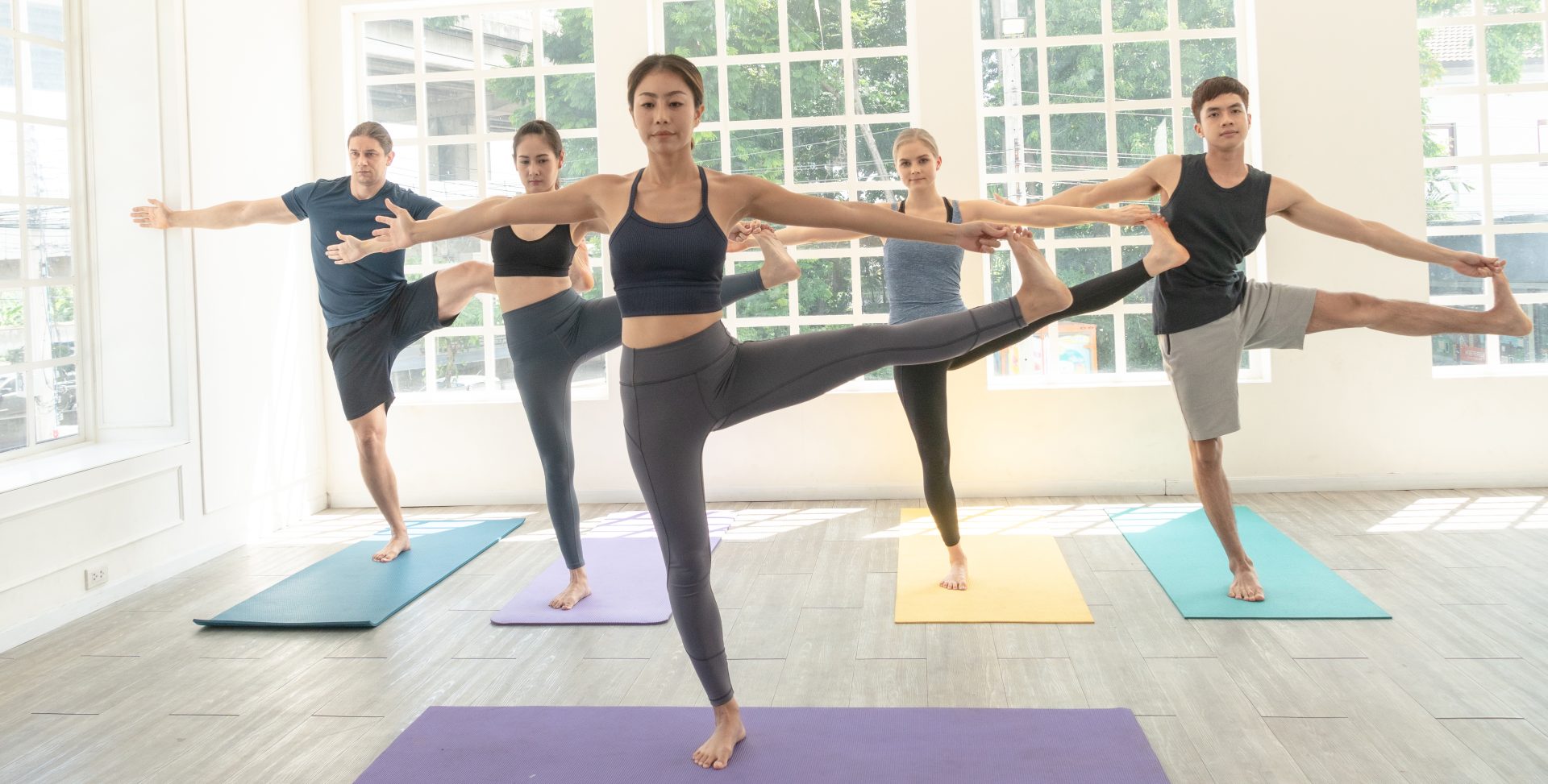
Exercises for balance are specifically chosen to challenge the body’s three balance systems simultaneously — the vestibular system (inner ear position sensing), the visual system (visual horizon reference), and the proprioceptive system (joint position sensors throughout the body). Unlike strength or cardiovascular exercise, balance training specifically develops the neural pathways that coordinate input from all three systems to maintain stable equilibrium. Exercises for balance and coordination do this most effectively when they progressively reduce the base of support, close the eyes, or add movement — each of these progressions forces greater neural adaptation. The mechanism: when balance is challenged, proprioceptors in the ankle, knee, and hip joints send rapid position-error signals to the cerebellum, which coordinates the corrective muscle contractions that restore equilibrium. Balance training exercises improve both the speed and precision of this feedback loop. Circulatorily, balance training drives blood through the cerebellar and vestibular circuits — the brain regions governing coordination — producing both neurovascular improvement and the structural cerebellar adaptations that make balance superior in trained individuals. This is why balance training exercises benefit cognitive function as well as physical stability.
Start Your Free 14 Day TrialFall Prevention — The Most Critical Benefit for Older Adults Falls are the leading cause of injury-related death in adults over 65. Balance training exercises are the single most evidence-supported intervention for fall prevention — reducing fall risk by 23–40% in systematic reviews. The ankle and hip strategy improvements from body balance exercises directly prevent the missteps that cause falls. Research: Regular balance training reduces fall incidence by 23% in community-dwelling older adults and by 35% when combined with strength training — Cochrane Review, 2019. Improved Athletic Performance and Coordination Every sport requiring running, jumping, direction change, or skilled movement depends on the balance and coordination developed through specific balance training exercises. Proprioceptive training improves reaction time, movement efficiency, and injury resistance in all athletic contexts. Enhanced Cerebellar Circulation — Brain Health and Cognitive Benefits Balance exercises specifically drive blood through the cerebellar and vestibular brain circuits — producing the neurovascular improvements associated with better cognitive function, reduced age-related cognitive decline, and improved spatial awareness. WHO: Regular moderate exercise including balance and coordination training reduces cardiovascular disease risk by up to 35% and significantly reduces age-related functional decline. Reduced Ankle and Knee Injury Risk Proprioceptive balance training improves the ankle and knee joint stability that prevents the most common sports injuries. Exercises for balance and coordination specifically develop the reactive muscle activation that prevents ankle sprains and ACL injuries during unexpected ground contact changes.
Protein — The Foundation of Balance Training
Aim for 1.6–2.0g of protein per kg of bodyweight per day. Best sources include eggs, paneer, lentils (dal), chicken, Greek yoghurt, and whey protein. Distribute protein evenly across 3–4 meals rather than loading it all in one sitting. Adequate protein is non-negotiable — without it, training effort produces minimal adaptation regardless of programme quality.
Carbohydrates — Fuel for Balance Performance
Complex carbohydrates (oats, brown rice, sweet potato, whole wheat roti) should form 40–50% of total calories. Consume a carbohydrate-containing meal 60–90 minutes before your exercises for balance session to ensure glycogen availability. Post-session carbohydrates restore muscle glycogen within the critical 30-minute recovery window.
Anti-Inflammatory Foods for Recovery
Include turmeric (with black pepper for bioavailability), ginger, and omega-3 rich foods (flaxseeds, walnuts, fatty fish) daily. These directly reduce the systemic inflammation that accumulates with consistent training, speeding recovery between sessions.
Hydration — Often Underestimated
Aim for 35–40ml of water per kg of bodyweight daily. Add an additional 500ml for every 30 minutes of active training. Even mild dehydration (2% body weight) measurably reduces strength output and exercise capacity.
Before You Begin — Setting Your Baseline
Before beginning, assess your current fitness level honestly. Can you complete 10 bodyweight squats with good form? Can you hold a plank for 20 seconds? These are the practical baselines for this programme. Set a specific, measurable goal — not just ‘get stronger’ but ‘complete all sessions consistently for 8 weeks’. Identify what space and equipment you have available.
Week 1–2: Foundation and Form
Focus entirely on movement quality, not load or intensity. Every exercise should be performed through full range of motion with controlled tempo. Use this phase to build the motor patterns that make exercises for balance training safe and effective long-term. 3 sessions per week is the optimal starting frequency — enough stimulus for adaptation, enough recovery to avoid overuse.
Week 3–4: Building Progressive Load
Once form is consistent, introduce progressive overload by adding 1–2 reps per set or a small increase in resistance each week. Track your sessions in a simple log — date, exercises, sets, reps. This data tells you exactly when to progress and prevents both undertraining and overtraining.
Ongoing: Consistency Over Intensity
The single biggest determinant of balance results is session consistency over 8–12 weeks. Missing one session is inconsequential; missing two consecutive weeks disrupts adaptation. Habuild’s live daily sessions are specifically designed to remove the decision-making barrier — the session is always there, always structured.

Single-Leg Stance — Ankle Proprioception — 3 × 30–60s each side Target: Ankle stabilisers, hip abductors, vestibular system. Why it works: Single-leg standing is the most accessible and most directly balance-challenging body balance exercise — every second of balance maintenance is a proprioceptive training repetition. Progress: eyes open on firm surface → eyes closed → eyes closed on foam/pillow. Sets/duration: 3 × 30 seconds each side, progressing to 60s. Beginner modification: Fingertip touch to wall for initial support; reduce as balance improves. Vrikshasana (Tree Pose) — Full Proprioceptive System — 5 breaths each side, 3 sets Target: Vestibular system, proprioceptors, hip abductors, core. Why it works: The fixed drishti (gaze point) of Tree Pose trains visual-vestibular integration — the coordination between visual and inner-ear balance inputs that is the most practically important balance skill. Balance training exercises progression: foot at ankle → foot at calf → foot at inner thigh, then add: eyes closed, arms overhead, on foam surface. Beginner modification: Foot at ankle, hand on wall initially. Tandem Walking (Heel-to-Toe Walk) — Dynamic Balance — 3 × 10 metres Target: Dynamic balance, vestibular system, hip-ankle coordination chain. Why it works: Dynamic balance (maintaining stability during movement) is more functionally relevant than static balance for fall prevention and daily activity. Tandem walking — placing each foot directly in front of the other — is the most direct dynamic balance challenge available without equipment. Beginner modification: Walk near a wall for reassurance; increase distance as confidence develops.
Looking Down During Balance Exercises Downward gaze removes the visual horizon reference that the balance system depends on — making balance exercises harder and failing to train the visual-vestibular integration that produces real-world balance improvement. Fix: Fix the drishti (gaze point) at a single point on the wall at eye level before entering any balance position. This gaze anchor is the most powerful balance stabiliser available — use it in every balance exercise. Never Progressing Beyond Easy Surfaces Always training on firm, flat surfaces produces balance improvements only for firm, flat surfaces — not for the uneven, unpredictable surfaces of real life where falls actually occur. Fix: Progressively introduce unstable surfaces (folded yoga mat, foam pad, cushion) once firm-surface balance is stable. The adaptation to unstable surfaces produces the most functionally transferable balance improvement. Sitting Immediately After Balance Training The vestibular calibration that occurs during balance training continues for several minutes after the session — sitting immediately cuts short this post-exercise neurological consolidation. Fix: 5-minute gentle walking cool-down after every balance session allows the vestibular system to consolidate the training stimuli in a naturalistic context. Build Balance with Expert Daily Guidance — First 7 Days ₹1
Complete Beginners Starting from Zero
No prior experience with exercises for balance is required to start. Every movement is taught from its most foundational form, with modifications for those who cannot yet perform the standard version. Live instructor feedback prevents the form errors that cause beginners to plateau or get injured before results arrive.
Intermediate Trainees Who Have Hit a Plateau
If you have been exercising inconsistently or without structured progressive overload, exercises for balance delivers the systematic load progression that general fitness classes do not. The programme targets the specific weaknesses and imbalances holding you back, producing results that months of unstructured training have failed to achieve.
Older Adults and Those Prioritising Functional Fitness
Balance training is especially high-value for those over 40, where maintaining functional strength and joint mobility directly impacts independence and quality of life. Every movement is taught with age-appropriate modifications, making the programme safe and effective regardless of starting fitness level.
Circulation-Specific Programming — Proprioceptive Progressions Habuild’s balance sessions open with single-leg stance (ankle proprioception), progress through Tree Pose with drishti training (vestibular-visual integration), and close with tandem walking (dynamic balance) — systematically challenging all three balance systems in each session.
Live Daily Sessions with Real-Time Form Correction
The drishti placement, foot position, and progression timing in balance exercises are critical technique elements that Saurabh corrects in real time — preventing the compensatory patterns that reduce the training benefit.
Progressive Overload Built In
Surface stability, eye condition, and movement complexity are systematically increased week by week — ensuring continuous balance system adaptation without plateau.
Accountability, Streaks and Community
Balance improvement requires consistent daily training. Habuild’s daily accountability sustains the practice that produces lasting balance development.


Practice Strong Everyday with Trishala Bothra, an IIT-B and London School of Business alumni
Trishala is focused on making movement feel lighter, more engaging, and something you actually look forward to.
In just 3 years, over 50,000 people began their strength journey, and 10,000+ join every week to keep getting stronger.