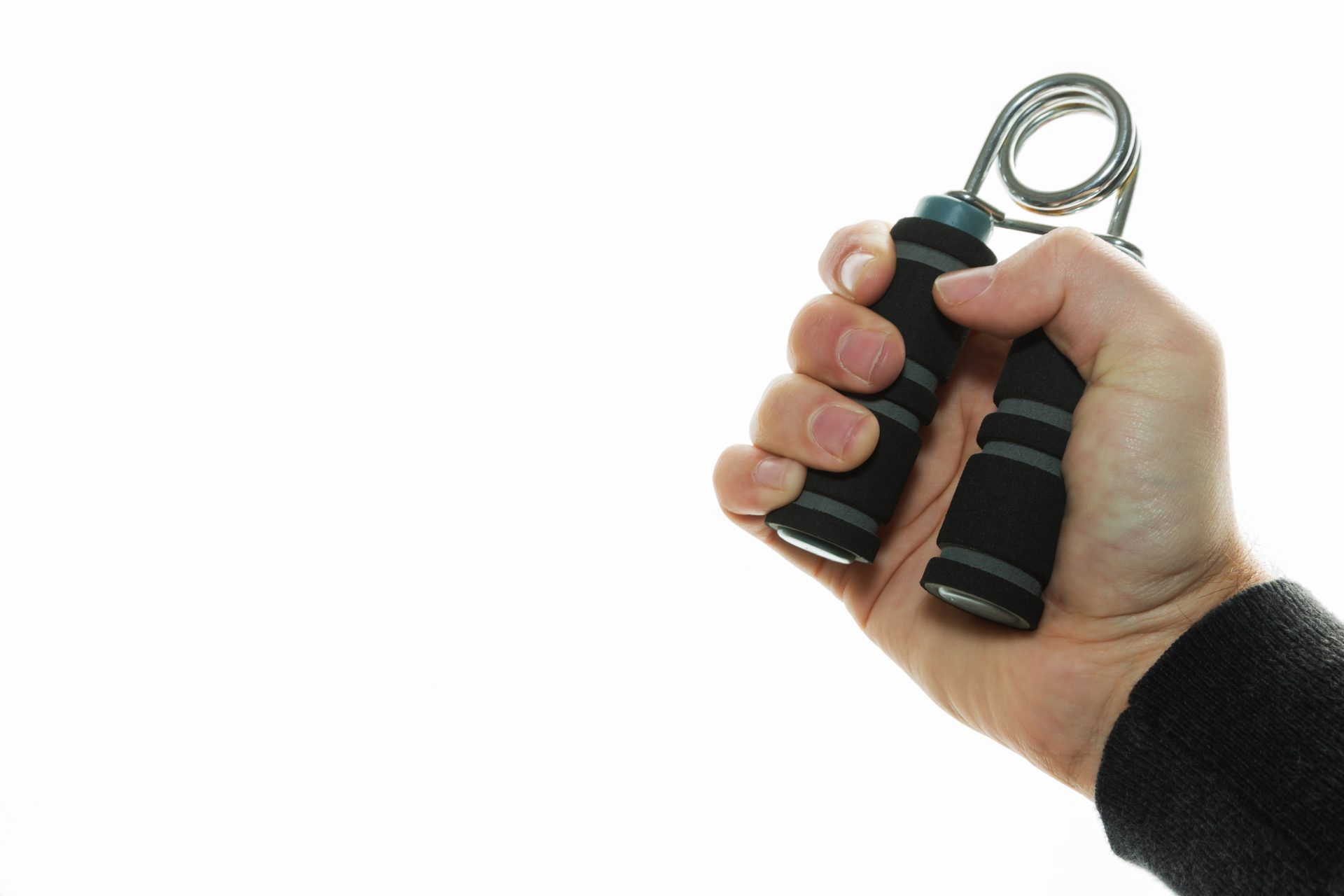
A grip strength workout is a targeted training programme for the forearm flexors, extensors, and intrinsic hand muscles — the muscles responsible for holding, pinching, and crushing with the hand. What makes a grip strength workout distinct from incidentally working the grip through pulling exercises is the specific isolation of all grip functions: crush grip (closing the fist), pinch grip (thumb and fingers), support grip (sustaining a hold under load), and wrist extension strength that balances the flexion-dominant demands of most activities. The mechanism is progressive loading of the forearm flexor-extensor complex and the intrinsic hand musculature through sustained and dynamic gripping exercises. The forearm contains 19 muscles responsible for wrist and finger movement — many of which are undertrained by general exercise. Targeted grip training develops tendon resilience alongside muscular strength, which is particularly important given that grip strength gains are as much about tendon adaptation as muscle hypertrophy.
Start Your Free 14 Day Trial
Benefit 1: Improved Performance in All Pulling Exercises
Grip strength is the limiting factor in most pulling movements — deadlifts, rows, and pull-ups are frequently grip-limited before the primary muscles fatigue. Building grip strength directly unlocks greater training volume in all pulling exercises.
Benefit 2: Better Tool Use and Daily Functional Capacity
From opening jars to carrying shopping bags, grip strength is one of the most functional physical capacities for daily life. Many people notice dramatic improvements in everyday ease within 4–6 weeks of targeted grip training.
Benefit 3: Reduced Risk of Tennis Elbow and Wrist Injuries
Balanced grip training — both flexion and extension — reduces the forearm flexor-extensor imbalance that produces lateral epicondylitis. Forearm extensors are chronically undertrained in most people, producing the imbalance that creates elbow pain.
Benefit 4: A Measurable Healthspan Marker
In adults over 50, grip strength is one of the most clinically validated measures of biological age and functional reserve. Maintaining and improving grip strength is one of the most impactful physical investments for long-term health.
Protein — The Foundation of Grip Strength Workout Training
Aim for 1.6–2.0g of protein per kg of bodyweight per day. Best sources include eggs, paneer, lentils (dal), chicken, Greek yoghurt, and whey protein. Distribute protein evenly across 3–4 meals rather than loading it all in one sitting. Adequate protein is non-negotiable — without it, training effort produces minimal adaptation regardless of programme quality.
Carbohydrates — Fuel for Grip Strength Workout Performance
Complex carbohydrates (oats, brown rice, sweet potato, whole wheat roti) should form 40–50% of total calories. Consume a carbohydrate-containing meal 60–90 minutes before your grip strength workout session to ensure glycogen availability. Post-session carbohydrates restore muscle glycogen within the critical 30-minute recovery window.
Anti-Inflammatory Foods for Recovery
Include turmeric (with black pepper for bioavailability), ginger, and omega-3 rich foods (flaxseeds, walnuts, fatty fish) daily. These directly reduce the systemic inflammation that accumulates with consistent training, speeding recovery between sessions.
Hydration — Often Underestimated
Aim for 35–40ml of water per kg of bodyweight daily. Add an additional 500ml for every 30 minutes of active training. Even mild dehydration (2% body weight) measurably reduces strength output and exercise capacity.
Before You Begin — What to Check
No specific medical clearance required for healthy individuals. Those with carpal tunnel syndrome, trigger finger, or existing wrist or elbow conditions should consult a physiotherapist before beginning. Establish a grip strength baseline: how long can you hang from a bar? How many towel-grip pull-up holds can you sustain? These are your reference points for progress.
Your First 2 Weeks — Foundation Phase
Two sessions per week. Towel or bar hangs (30-second holds), simple squeeze exercises with a stress ball or tennis ball (3 sets × 20 reps), and wrist curls in both flexion and extension with very light resistance. Focus on equal extension and flexion training from the first session.
Weeks 3–8 — Progressive Loading Phase
Three sessions per week. Introduce finger extension work (rubber band around fingers, open against resistance). Add loaded carries (farmer’s carry with a bag or dumbbells). Begin grip endurance work: timed bar hangs increasing by 5 seconds each week.
Beyond 8 Weeks — Long-Term Maintenance
Introduce more specific grip tools if available: gripper devices, pinch plates. Maintain the extension/flexion balance throughout — never train crush grip without equal extension work. Grip strength responds slowly to training; expect 8–12 weeks for meaningful measurable improvement.
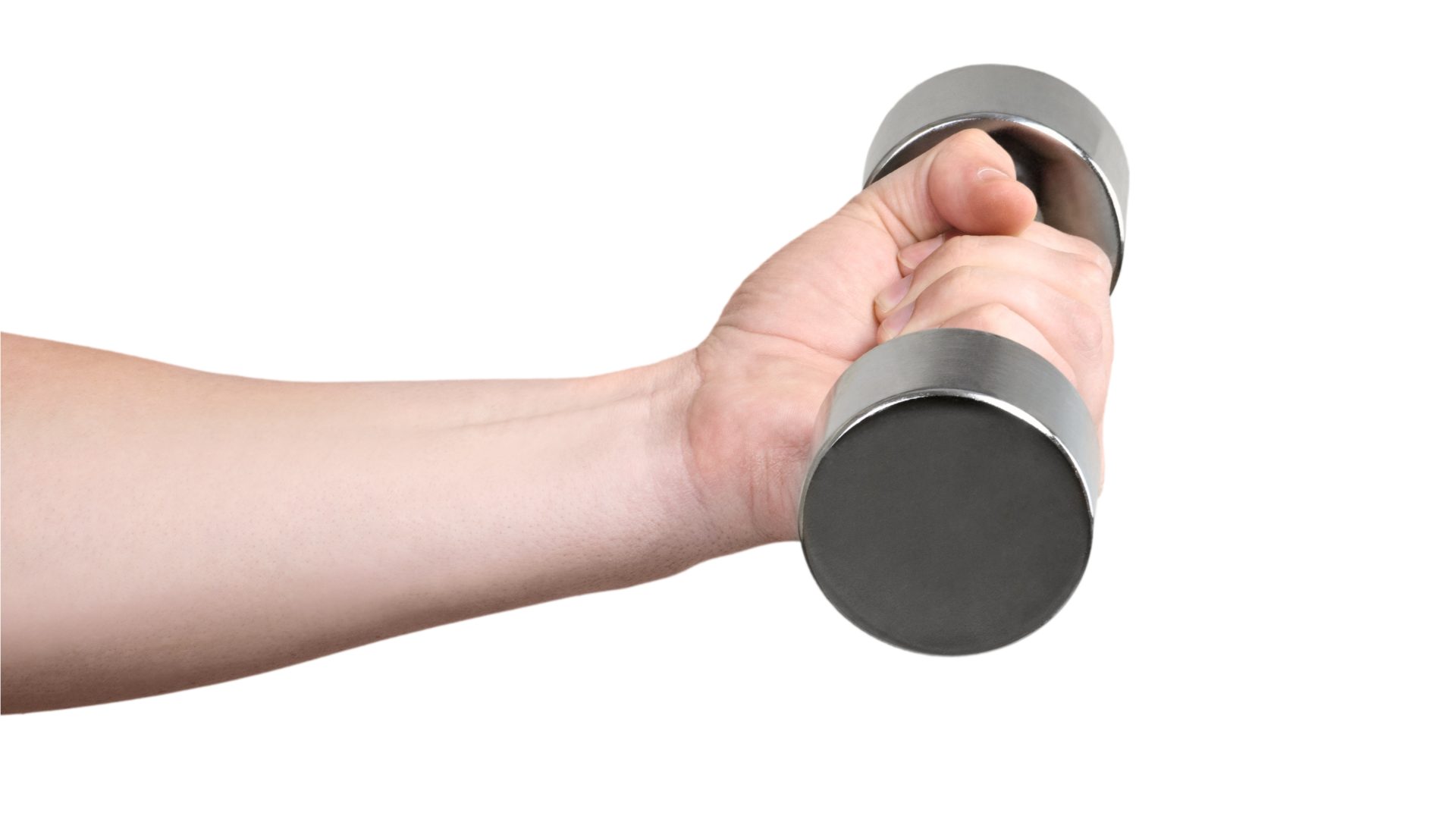
Farmer’s Carry — Grip Flexors, Forearms, Core, Traps — Loaded Grip Endurance
The farmer’s carry is the most functional grip exercise — developing the sustained crush grip endurance that daily carrying activities require, while simultaneously training the core, traps, and postural muscles. It is the single most effective grip exercise that also produces total body benefit. Beginner: use shopping bags with equal weight on each side; walk 20–30 metres before resting.
Bar Hang (Dead Hang) — Grip Flexors, Forearms, Shoulder Decompression
The dead hang is the most direct grip endurance exercise — requiring the entire grip complex to sustain body weight without assistance. It also provides spinal decompression and shoulder stability benefits. Even 30 seconds per session produces meaningful grip endurance improvement over 4–6 weeks. Beginner: use a doorframe pull-up bar; start with 15-second holds and add 5 seconds weekly.
Wrist Curl + Reverse Wrist Curl — Wrist Flexors + Wrist Extensors — Balanced Forearm Development
Pairing wrist flexion curls with reverse (extension) curls trains both sides of the forearm in balanced proportion — addressing the flexor-extensor imbalance that produces tennis elbow. The extension side is almost universally undertrained and is the primary cause of elbow pain in those with heavy grip demands. Beginner: use a 500ml water bottle; 3 sets × 15 reps each direction.
Mistake 1: Only Training Grip Flexion and Neglecting Wrist Extension
The most common grip training error is training only the closing/squeezing function (flexion) while completely ignoring wrist extension — the muscles on the back of the forearm that balance the flexors. This imbalance is the primary cause of lateral epicondylitis (tennis elbow).
Mistake 2: Using Grip Straps for Every Exercise
Using straps to circumvent grip limitations means the grip never receives the training stimulus to improve. Straps have a legitimate place in maximal-effort lifting — but for grip development, the grip must be challenged rather than bypassed.
Mistake 3: Training Grip to Failure Every Session
Grip training to failure every session overloads the small muscles and tendons of the forearm, which recover more slowly than large muscle groups. Cumulative tendon overload produces the elbow and wrist pain that excessive grip training causes.
Mistake 4: Neglecting Grip Training Entirely Until a Problem Develops
Most people only think about grip strength when it becomes a limiting factor in another exercise or when elbow pain develops. Proactive grip development is significantly easier and more effective than reactive rehabilitation.
Complete Beginners Starting from Zero
No prior experience with grip strength workout is required to start. Every movement is taught from its most foundational form, with modifications for those who cannot yet perform the standard version. Live instructor feedback prevents the form errors that cause beginners to plateau or get injured before results arrive.
Intermediate Trainees Who Have Hit a Plateau
If you have been exercising inconsistently or without structured progressive overload, grip strength workout delivers the systematic load progression that general fitness classes do not. The programme targets the specific weaknesses and imbalances holding you back, producing results that months of unstructured training have failed to achieve.
Desk Workers and Sedentary Professionals
Extended sitting creates the exact muscle imbalances and weaknesses that grip strength workout training corrects. No gym, no equipment, and no prior experience is required — the programme begins with bodyweight fundamentals and builds progressively from there. Habuild’s morning sessions fit into a working day without disruption.
Live Daily Sessions with Real-Time Instructor Feedback
Habuild’s live sessions — delivered daily by expert instructors — provide real-time form corrections for the specific technique errors that grip strength training requires attention to. Unlike pre-recorded content, the live format means the instructor can see you and correct in the moment — the difference between building correct habits and reinforcing incorrect ones.
Condition-Specific Modifications in Every Session
Every exercise in the Habuild grip strength programme is selected and modified with this specific goal in mind. Members are not attending a generic fitness class with a modification option bolted on — they are in a programme designed from the ground up for grip strength outcomes.
Progressive Programming That Respects Your Recovery Timeline
The programme structure follows the physiological timeline of improvement — not an arbitrary 4-week or 8-week marketing format. Progression is earned through demonstrated capacity, not assumed by a calendar week.
Community of Members With the Same Goals


Practice Strong Everyday with Trishala Bothra, an IIT-B and London School of Business alumni
Trishala is focused on making movement feel lighter, more engaging, and something you actually look forward to.
In just 3 years, over 50,000 people began their strength journey, and 10,000+ join every week to keep getting stronger.