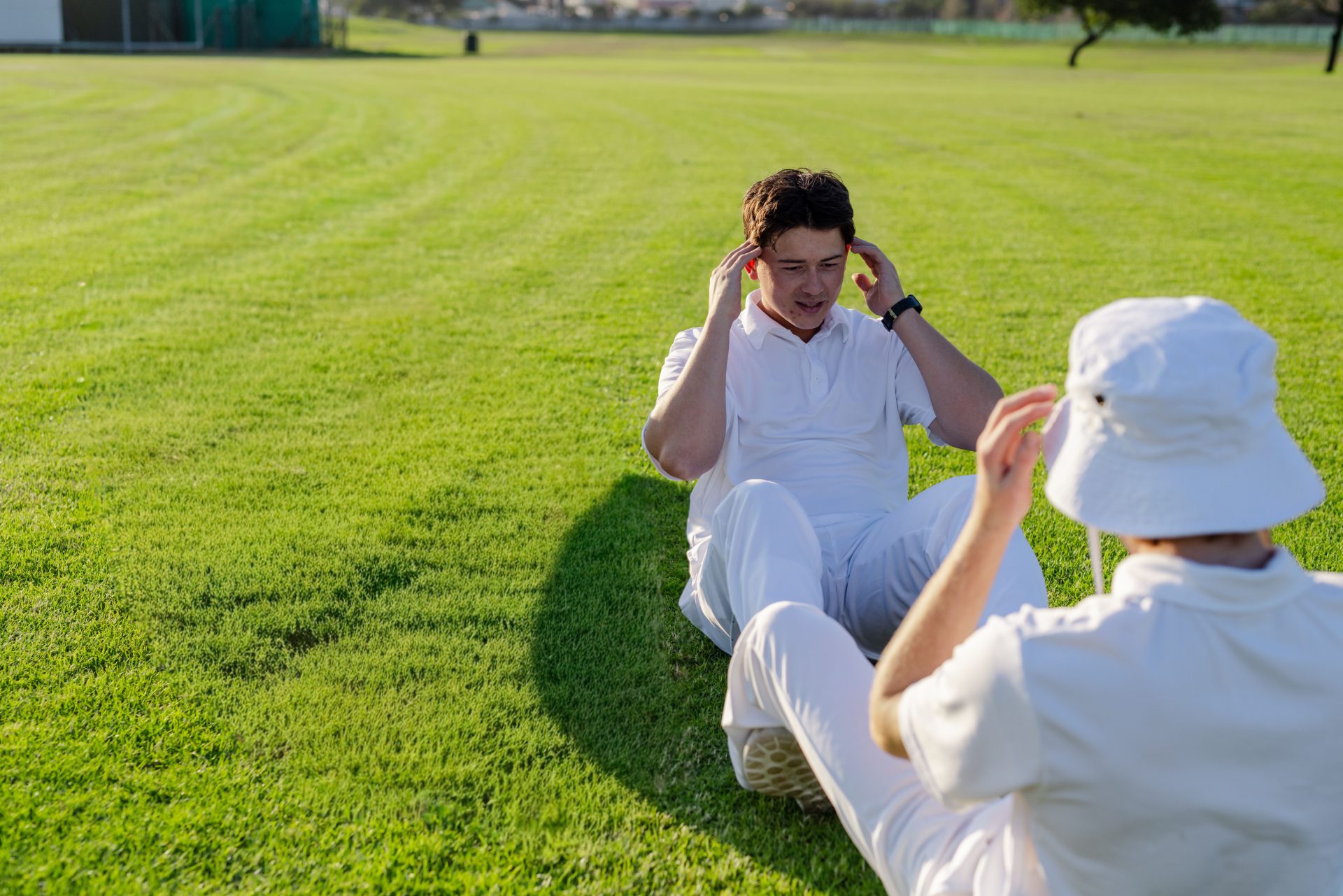
Strength training for cricketers is a sport-specific conditioning programme built around the unique physical demands of cricket — the explosive rotational power of batting, the full-body kinetic chain of fast bowling, the reactive speed of fielding, and the endurance required across long match formats.
What distinguishes cricket-specific strength training from general fitness is its emphasis on the rotational strength, single-leg stability, shoulder resilience, and posterior chain power that cricket performance specifically depends on.
The mechanism is transfer-specific training — selecting exercises that develop the exact muscle groups, movement patterns, and energy systems that cricket actions rely on.
Fast bowling, for example, requires peak hip-knee-ankle drive from the back leg, trunk rotation power from the core, and shoulder external rotation stability at ball release — three distinct physical capacities that generic upper body training does not develop together.
A cricket strength programme addresses each of these transfer-specific requirements systematically.
Benefit 1: Improved Bowling Speed and Endurance
Posterior chain strength — glutes, hamstrings, and spinal erectors — directly produces the ground reaction force that translates to bowling pace. Stronger hip drive and improved core rotation also contribute to sustainable bowling speed across long spells.
Benefit 2: Greater Batting Power and Control
Rotational core strength is the primary source of batting power — the hip-to-shoulder rotation sequence that drives ball speed. Targeted core rotation and hip strength exercises measurably improve batting power, particularly for pull shots, drives, and the powerful hitting that T20 formats require.
Benefit 3: Faster Fielding Reaction and Throwing Velocity
First-step quickness (hip flexor and glute strength), deceleration control (hamstring and knee stability), and throwing velocity (shoulder external rotator and scapular stability strength) are all trainable through cricket-specific resistance exercise.
Benefit 4: Reduced Injury Risk Across All Positions
Shoulder resilience for bowlers and fielders, hamstring strength for all positions, and lower back stability for fast bowlers are the three most important injury prevention targets. A structured strength programme addressing these specifically reduces season-ending injuries significantly.
Protein — The Foundation of Cricketers Training
Aim for 1.6–2.0g of protein per kg of bodyweight per day. Best sources include eggs, paneer, lentils (dal), chicken, Greek yoghurt, and whey protein. Distribute protein evenly across 3–4 meals rather than loading it all in one sitting. Adequate protein is non-negotiable — without it, training effort produces minimal adaptation regardless of programme quality.
Carbohydrates — Fuel for Cricketers Performance
Complex carbohydrates (oats, brown rice, sweet potato, whole wheat roti) should form 40–50% of total calories. Consume a carbohydrate-containing meal 60–90 minutes before your strength training for cricketers session to ensure glycogen availability. Post-session carbohydrates restore muscle glycogen within the critical 30-minute recovery window.
Anti-Inflammatory Foods for Recovery
Include turmeric (with black pepper for bioavailability), ginger, and omega-3 rich foods (flaxseeds, walnuts, fatty fish) daily. These directly reduce the systemic inflammation that accumulates with consistent training, speeding recovery between sessions.
Hydration — Often Underestimated
Aim for 35–40ml of water per kg of bodyweight daily. Add an additional 500ml for every 30 minutes of active training. Even mild dehydration (2% body weight) measurably reduces strength output and exercise capacity.
Before You Begin — What to Check
Assess baseline strength in key cricket patterns: single-leg squat control, shoulder external rotation strength, and rotational core power. Fast bowlers specifically should have their lumbar spine screened for any existing stress reactions before beginning loaded extension exercises. Discuss any current shoulder pain, lower back pain, or hamstring history with a sports physiotherapist before starting the programme.
Your First 2 Weeks — Foundation Phase
Two sessions per week. General movement quality and injury prevention focus. Exercises: single-leg squat (balance and stability), shoulder external rotation with band, glute bridge. Build the foundational strength and movement quality before cricket-specific loading is introduced.
Weeks 3–8 — Progressive Loading Phase
Three sessions per week. Introduce cricket-specific loading: rotational core exercises, loaded hip hinge patterns, shoulder press with rotator cuff supplementary work. Track bowling speed, throwing distance, or relevant performance metrics alongside physical strength metrics.
Beyond 8 Weeks — Long-Term Maintenance
Periodise around the cricket calendar: higher volume in pre-season, maintenance during competition, active recovery in off-season. Fast bowlers specifically benefit from bowling load management alongside strength work — coordination with coaches is valuable.
Medicine Ball Rotational Throw (Wall or Partner) — Obliques, Hip Flexors, Shoulder Internal Rotators — Cricket Rotation Pattern
The rotational throw directly trains the hip-to-shoulder power sequence that both batting and bowling depend on. It is the most cricket-specific core exercise available — developing explosive rotational force at the velocities and angles relevant to cricket actions. Beginner: perform against a wall at slow speed, focusing on the hip initiation before shoulder involvement; increase velocity as coordination and power develop.
Romanian Deadlift (Bowling Posterior Chain) — Hamstrings, Glutes, Spinal Erectors — Fast Bowling Power Source
The RDL develops the posterior chain strength that generates bowling pace — the same muscles responsible for the back-leg drive that produces ground reaction force in the delivery stride. Hamstring strength also reduces the hamstring strain risk that is common in cricketers who do significant running in training and matches. Beginner: bodyweight hip hinge pattern; add light load only after the hinge mechanics are secure.
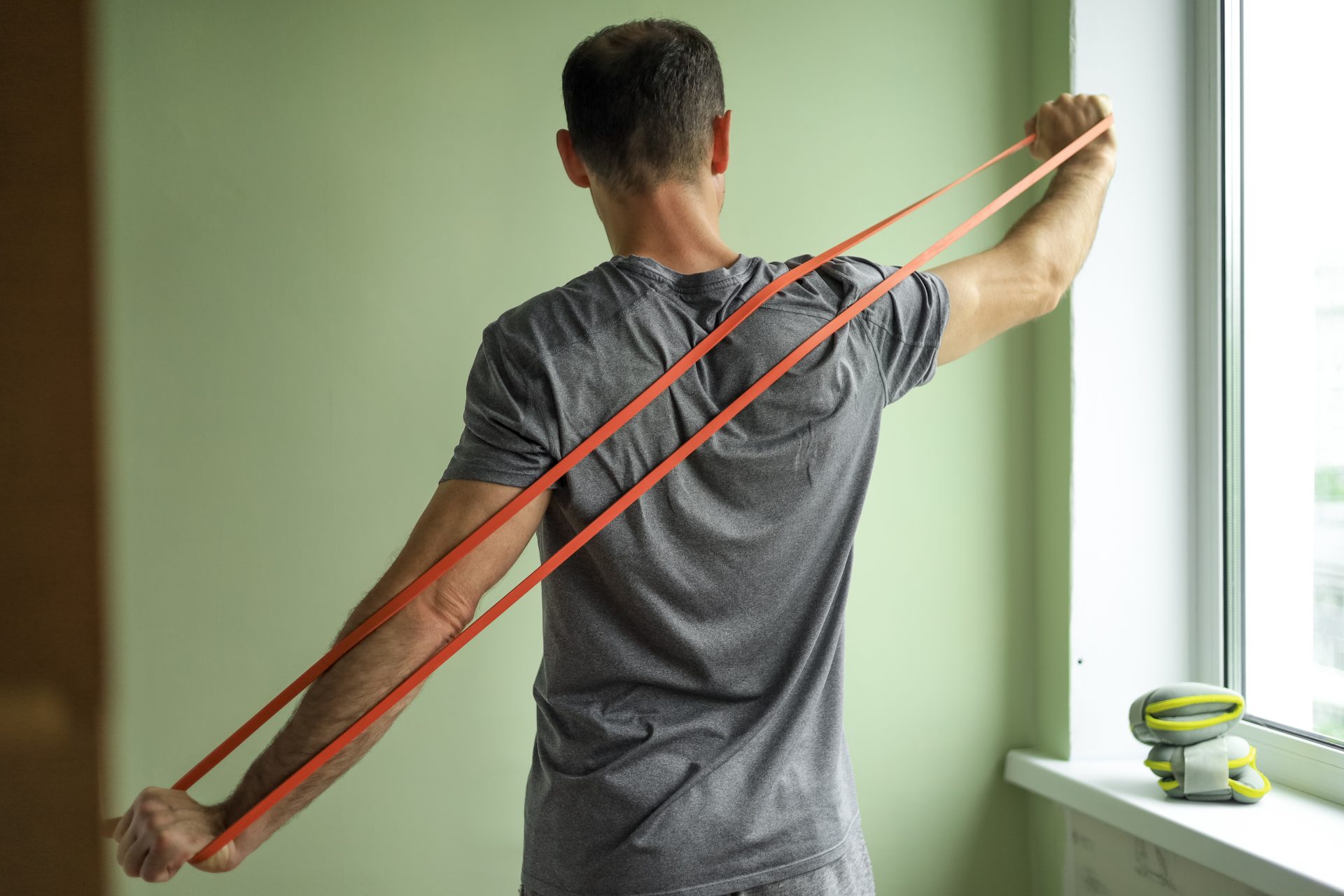
Band External Rotation (Bowling Shoulder Resilience) — Infraspinatus, Teres Minor, Posterior Shoulder Stabilisers
The rotator cuff external rotators are the most commonly overloaded and injured structures in bowlers and throwers. Resistance band external rotation at 0 and 90 degrees of abduction develops the specific shoulder resilience that protects the bowling action under high-velocity repetition. Beginner: light band only; perform slowly through full range, focusing on the posterior shoulder engagement.
Mistake 1: Skipping Shoulder Prehab in Favour of Only Power Training
Fast bowlers particularly are susceptible to prioritising pace and power training while neglecting the rotator cuff resilience that makes high-velocity bowling sustainable across a season. Shoulder injuries from this neglect are among the most common cricket career interruptions.
Mistake 2: Training Only the Batting Side in Rotational Core Work
Cricket creates asymmetric rotational loading — batting from one side, throwing with the dominant arm. Neglecting the non-dominant side in rotational training compounds existing asymmetries.
Mistake 3: Neglecting Single-Leg Work for Fielding Reactive Speed
Most cricket conditioning focuses on bilateral exercises (both feet on the ground) while fielding demands reactive single-leg loading — first steps, direction changes, and landing from diving are all single-leg events.
Mistake 4: Bowling at High Intensity While Fatigued from Strength Training
Performing high-intensity bowling sessions immediately after heavy strength training, or while in significant DOMS, increases injury risk significantly. Fast bowling under fatigue compromises mechanics in ways that create back and shoulder stress.
Complete Beginners Starting from Zero
No prior experience with strength training for cricketers is required to start. Every movement is taught from its most foundational form, with modifications for those who cannot yet perform the standard version. Live instructor feedback prevents the form errors that cause beginners to plateau or get injured before results arrive.
Intermediate Trainees Who Have Hit a Plateau
If you have been exercising inconsistently or without structured progressive overload, strength training for cricketers delivers the systematic load progression that general fitness classes do not. The programme targets the specific weaknesses and imbalances holding you back, producing results that months of unstructured training have failed to achieve.
Competitive and Recreational Athletes
Cricketers training delivers the greatest performance gains when integrated with sport-specific conditioning. Whether training for a race, a match, or personal bests, Habuild’s structured programme ensures the strength work complements rather than conflicts with existing sport training loads.
Live Daily Sessions with Real-Time Instructor Feedback
Habuild’s live sessions — delivered daily by expert instructors — provide real-time form corrections for the specific technique errors that cricket performance training requires attention to. Unlike pre-recorded content, the live format means the instructor can see you and correct in the moment — the difference between building correct habits and reinforcing incorrect ones.
Condition-Specific Modifications in Every Session
Every exercise in the Habuild cricket performance programme is selected and modified with this specific goal in mind. Members are not attending a generic fitness class with a modification option bolted on — they are in a programme designed from the ground up for cricket performance outcomes.
Progressive Programming That Respects Your Recovery Timeline
The programme structure follows the physiological timeline of improvement — not an arbitrary 4-week or 8-week marketing format. Progression is earned through demonstrated capacity, not assumed by a calendar week.
Community of Members With the Same Goals
I joined the Strength Session program to rebuild my yoga routine and bring back consistency after a long break.
I really enjoyed the Strength Session with Trishala — the timing fit perfectly into my routine.


Practice Strong Everyday with Trishala Bothra, an IIT-B and London School of Business alumni
Trishala is focused on making movement feel lighter, more engaging, and something you actually look forward to.
In just 3 years, over 50,000 people began their strength journey, and 10,000+ join every week to keep getting stronger.